

^^ Nice to see you are so eager to throw Ukraine, the Ukrainian people, your European 'allies', World peace, and large parts of Africa under the bus in pursuit of your countries myopic, losing agenda you useless idiot. Can't you even see what an abject failure this neocon foreign policy has been this century? Doubling down only makes it worse.
Results 10,001 to 10,025 of 15707
Thread: Ukraine war mega thread
-
04-11-2022, 05:39 AM #10001Thailand Expat


- Join Date
- Feb 2006
- Last Online
- @
- Posts
- 40,667
-
04-11-2022, 05:39 AM #10002Thailand Expat



- Join Date
- Aug 2011
- Last Online
- @
- Location
- Fuente del Berro
- Posts
- 27,925
There were many injustices beyond justice, The Holdomor , The Irish Famine slavery but of course this s now and ongoing
Russian war crimes - Wikipedia
Wik cites
Main article: War crimes in the 2022 Russian invasion of Ukraine
Further information: Claims of genocide of Ukrainians in the 2022 Russian invasion of Ukraine
See also: 2022 Zhytomyr attacks, Bucha massacre, Stara Krasnianka care house attack, Mykolaiv cluster bombing, and Kremenchuk shopping mall attack
On February 24, 2022, Russian forces invaded and attacked Ukraine from the north, south and east, which was interpreted as a form of extreme Russian irredentism.[89] HRW and Amnesty International accused Russia of using imprecise cluster munitions in civilian areas, including near hospitals and schools, which constitute unlawful attacks with weapons that indiscriminately kill and maim.[90][91] UN High Commissioner for Human Rights condemned Russia's military action as a violation of international law.[92] Amnesty International labeled it an act of aggression that is a crime under international law.[8] Numerous war crimes were recorded, including murder, torture, abductions, deportation, looting, rape against Ukrainian women, attacks on civilians, unlawful airstrikes or attacks against civilian objects, unlawful confinement, threats of violence, and inhumane treatment of POWs.[ Originally Posted by harrybarracuda

-
04-11-2022, 07:07 AM #10003Thailand Expat

- Join Date
- Dec 2009
- Last Online
- @
- Location
- Chiang Mai
- Posts
- 57,179
Russian Flag Disappears from Kherson Administration in First Signal of Potential Retreat
The Russian flag hanging in front of the regional administration in Ukraine’s occupied Kherson region has been taken down, pro-Russian Telegram channels said Thursday.
“I drove up to the building of the former government of the Kherson region; I confirm that there is no [Russian] flag over it,” pro-Kremlin war correspondent Alexander Kots said on his Telegram channel.
The Russian flag is still hanging at nearby buildings, he added.
Kherson’s Russian-installed administration has been evacuating tens of thousands of civilians to the left bank of the Dnipro River in the regional capital of the same name amid an advancing Ukrainian counteroffensive.
The flag’s removal is the first indication that the Russian military may be preparing to abandon the city of Kherson, the only regional capital that Moscow has captured in its eight-month invasion.
Kirill Stremousov, the deputy head of Kherson’s Moscow-installed administration, warned that Russian troops could move to the left bank of the Dnipro River in the coming days.
“Most likely, our units, our troops will go to the left bank part of the Kherson region,” Stremousov told Russian state television.
After capturing the city of Kherson just days into the invasion, Russian positions north of the river have grown increasingly vulnerable in recent months. Ukraine’s forces have strategically targeted the key bridges over the mammoth waterway, choking Russia’s supply lines to the city.
Footage Wednesday appeared to show six Ukrainian artillery strikes, likely carried out by U.S.-supplied HIMARS systems, on a Russian-built pontoon bridge running parallel to the Antonivsky Bridge 10 kilometers east of Kherson city, further cutting off Russian supply lines.
Retaking Kherson city, which remains largely intact despite the fighting across the region, would be a major coup for Kyiv.
Ukraine's counteroffensives have retaken thousands of square kilometers in the south and east of the country in the past two months.
Russian Flag Disappears from Kherson Administration in First Signal of Potential Retreat - The Moscow Times
-
04-11-2022, 07:49 AM #10004Heading down to Dino's
- Join Date
- Jun 2009
- Last Online
- @
- Posts
- 35,425
What nonsense is this clueless useful idiot spewing now? Originally Posted by sabang

-
04-11-2022, 07:57 AM #10005Thailand Expat
- Join Date
- Dec 2009
- Last Online
- @
- Location
- Chiang Mai
- Posts
- 57,179
Deportation, not evacuation. Why Kremlin pursues forcible displacement of population from Kherson region
Given the successful counter-offensive actions of the Armed Forces of Ukraine in the south of Ukraine and the liberation of dozens of villages on the right bank of the Dnipro, the Russian occupiers resorted to the mass displacement of the population of the Kherson region to the left bank.
Rumors have been circulating since at least the end of September, but collaborators dismissed them claiming that “there is no panic” and “there will be no evacuation.” But already on October 18, the head of the Russian occupation administration, Vladimir Saldo, announced it, referring to the threat of “shelling by the AFU” and a “strike on the Kakhovska HPP.”
The next morning, residents of Kherson and the region received an SMS calling for evacuation due to the alleged “shelling” plotted by Ukraine. On the same day, Russian President Vladimir Putin declared martial law in four newly occupied regions, and Saldo announced a seven-day ban on entering the right-bank part of the Kherson region due to the “tense situation” at the front.
But is it possible to call the movement of the population organized by the occupiers an evacuation? From the perspective of international humanitarian law — it’s not. The actions of Russians against the civilian population have all the signs of deportation. The Center for Strategic Communication and Information Security explains what exactly is happening in the Kherson region.
Why isn’t this an evacuation?
Art. 49 of the Fourth Geneva Convention provides for the possibility of evacuation of civilians by the occupying power only within the occupied territory (exceptions are allowed only in cases where this cannot be ensured due to material causes) and provided that the evacuees return home after the end of hostilities. That is, evacuation is a temporary measure, the purpose of which is to protect the civilian population from hostilities. Russia violates both of the above-mentioned requirements of the Convention:
● Residents of the Kherson region are taken out of the region: first to Dzhankoi in the occupied Crimea, and from there — to the Krasnodar, Stavropol Krais and to other regions of Russia.
● Russia does not plan to return the displaced population home: the “evacuees” are promised the “right to choose” a new place of residence in Russia and to receive “housing certificates.”
In addition, according to the Convention, Russia is obliged to inform Ukraine about the movement of its citizens. But, of course, the Russians “do not resort” to this.
So, this is not about evacuation, but about deportation — eviction from the place of permanent residence.
Why do Russians deport Ukrainians from the occupied part of Kherson region?
We are definitely not talking about any humanist considerations. Since the end of February, the occupiers have not allowed to organize a single “green corridor” in the Kherson region to evacuate civilians and deliver medicines, food, and other humanitarian goods. The Russians shot several evacuation columns, killing children and adults.
Today, the mass displacement of the population from the occupied territory allows Russians to solve several tasks at the same time:
● The Russian military can use civilian Ukrainians as a human shield. Transport corridors across the Dnipro are under fire control of the Armed Forces of Ukraine. Therefore, the displacement of civilians from right bank to left bank is used both to disguise military logistics and to protect them from Ukrainian artillery;
● The announcement of “evacuation” legalizes the massive facts of violation of the property and human rights of the “enemy” occupied population. People are deprived of the opportunity to manage their fate and make long-term plans. Property that one cannot take during the eviction will be looted or appropriated by the occupiers.
● Forced to retreat, the aggressors resort to the scorched earth tactics, aiming to leave the devastated, plundered, and depopulated land to the liberators.
● Deportations serve the purposes of Russia’s demographic policy. The population of the temporarily occupied territories is considered by Moscow as a trophy and a resource that can be pumped out of Ukraine. The deportees are moved to remote depressed regions of Russia, often dividing their families and preventing them from forming compact groups, thus integrating them into Russian society. The approach has already been tested in the Donbas.
● Instead, the families of Russian military, special services and civilian specialists are encouraged to move to the occupied territories, which Moscow plans to keep. The latter are motivated by double salaries and other forms of material incentives. Putin signed the relevant decree on October 17, just before the announcement of the “evacuation.” The new “Kherson residents” occupy the housing of Ukrainians who are forced to leave their homes.
The massive forced displacement of Ukrainians from the right to the left (Moscow-controlled) bank of the Dnipro has a sad precedent in the late 17th and early 18th centuries, called the “Great Deportation.” Even though the modern deportation takes place in entirely different historic conditions, the title can be applied to the crimes of the Russian occupation administration in the Kherson region as well.
How many Ukrainians did Russians manage to deport?
It is difficult to answer this question since the occupiers and collaborators cite dubious figures. Saldo discussed the plans to displace 60,000 people from the Kherson region, and even reported about “15,000 evacuees in two days.” Considering that it took four passages across the Dnipro with the help of boats and ferries, ensuring such indicators was problematic at least.
On October 28, the collaborators reported on the “completion of organized evacuation,” without citing the number of people displaced.
Head of the Crimean occupation administration Sergey Aksyonov stated in October that 5,000 Kherson children will be “hosted” on the peninsula, allegedly “for health improvement.” It should be noted that the displacement of children from Kherson region to Crimea began in the summer. But they were not sent home “for safety reasons.” Instead, their parents were “generously” allowed to visit them.
According to the Crimean Tatar Mejlis representative Eskender Beriyev, 1,939 children from Kherson and Zaporizhia regions stayed on the peninsula at the end of October, with the occupiers planning to place them in local schools. Most of these children have parents who have stayed on the “mainland.”
The displacement of children and the actual blackmail aimed at forcing their parents to move to the occupied Crimea and Russia testifies to the Kremlin’s interest in changing the ethnic composition of the population of both the occupied territories and regions of Russia. The Putin regime will try to turn the deported Ukrainians into Russians. The Kremlin has a special hope in the “re-education” of Ukrainian children. This is evidenced not only by Putin’s statements about the “one people,” but also by the confessions of other war criminals, including so-called “children’s ombudsman” Maria Lvova-Belova. She boasted how children kidnapped from Mariupol “learn to love Russia.”
Thus, the deportation of the civilian population from the occupied part of Kherson region is another war crime of Russia. The Russians see the population of the occupied territories exclusively as a resource that can be used for their own benefit. Therefore, only the expulsion of the occupiers will put an end to the abduction of children, other violations of rights and save the lives of Ukrainian citizens. Ukraine will also make every effort to bring the deportees back to their homeland and reunite families.
Deportation, not evacuation. Why Kremlin pursues forcible displacement of population from Kherson region
-
04-11-2022, 09:22 AM #10006Thailand Expat
- Join Date
- Feb 2006
- Last Online
- @
- Posts
- 40,667
Perhaps the Russians should go to Russia- although this includes Crimea & Donbas. Might be one way towards peace.
-
04-11-2022, 09:51 AM #10007Days Work Done!

- Join Date
- Oct 2007
- Last Online
- Yesterday @ 08:44 PM
- Location
- Roiet
- Posts
- 36,067
If voluntarily might be. Not aware the Ukraine ever prohibted any citizen migrating to Russia? Originally Posted by sabang
-
04-11-2022, 10:08 AM #10008Thailand Expat
- Join Date
- Dec 2009
- Last Online
- @
- Location
- Chiang Mai
- Posts
- 57,179
How Russian soldiers ran a 'cleansing' operation in Bucha
BUCHA, Ukraine (AP) — The first man arrived at 7:27 a.m. Russian soldiers covered his head and marched him up the driveway toward a nondescript office building.
Two minutes later, a pleading, gagged voice pierced the morning stillness. Then the merciless reply: “Talk! Talk, f—ing mother-f—er!”
The women and children came later, gripping hastily packed bags, their pet dogs in tow.
It was a cold, gray morning, March 4 in Bucha, Ukraine. Crows cawed. By nightfall, at least nine men would walk to their deaths at 144 Yablunska street, a building complex that Russians turned into a headquarters and the nerve center of violence that would shock the world.
Later, when all the bodies were found strewn along the streets and packed in hasty graves, it would be easy to think the carnage was random. Residents asking how this happened would be told to make their peace, because some questions just don’t have answers.
Yet there was a method to the violence.
What happened that day in Bucha was what Russian soldiers on intercepted phone conversations called “zachistka” — cleansing. The Russians hunted people on lists prepared by their intelligence services and went door to door to identify potential threats. Those who didn’t pass this filtration, including volunteer fighters and civilians suspected of assisting Ukrainian troops, were tortured and executed, surveillance video, audio intercepts and interviews show.
The Associated Press and the PBS series "Frontline" obtained surveillance camera footage from Bucha that shows, for the first time, what a cleansing operation in Ukraine looks like. This was organized brutality that would be repeated at scale in Russian-occupied territories across Ukraine — a strategy to neutralize resistance and terrorize locals into submission that Russian troops have used in past conflicts, notably Chechnya.
Ukrainian prosecutors now say those responsible for the violence at 144 Yablunska were soldiers from the 76th Guards Airborne Assault Division. They are pursuing the commander, Maj. Gen. Sergei Chubarykin, and his boss, Col. Gen. Alexander Chaiko — a man known for his brutality as leader of Russia’s troops in Syria — for the crime of aggression for waging an illegal war.
Police ended up recovering nearly 40 bodies along Yablunska street alone. Prosecutors have identified 12 around 144 Yablunska; AP reporters documented a 13th body in the stairwell of one of the buildings in the complex, in photos and videos taken on April 3.
Taras Semkiv, Ukraine’s lead prosecutor for the 144 Yablunska street case, told the AP and “Frontline” that it’s unusual to see war crimes play out on video and that the CCTV footage and eyewitness accounts from March 4 are key elements for the prosecution.
“The results of the criminal evidence we’ve gathered so far reveal that it wasn’t just isolated incidents of military personnel making a mistake but a systematic policy targeting the Ukrainian people," Semkiv said.
The Kremlin didn't respond to detailed questions sent by the AP.
___
This story is part of an AP/FRONTLINE investigation that includes the War Crimes Watch Ukraine interactive experience and the documentary “ Putin’s Attack on Ukraine: Documenting War Crimes,” on PBS. The AP and “Frontline” reviewed hundreds of hours of video from surveillance cameras in Bucha and vetted audio recordings of phone calls by Russian soldiers.
Together with SITU Research, a New York-based visual investigations firm, we reconstructed events using a 3D model of Bucha, drawn from data from drones flown over Bucha this spring. AP reporters verified the locations of the security cameras, and The Dossier Center, a London-based investigative group funded by Russian opposition figure Mikhail Khodorkovsky, verified the identity of soldiers whose phone calls were intercepted by the Ukrainian government by cross-referencing Russian phone numbers, social media accounts, public reporting and information in leaked Russian databases.
___
THE FALL OF BUCHA
Around lunchtime on March 3, three armored Russian vehicles appeared just beyond the quarry at the western edge of Bucha. Maksym Stakhov, a veteran of the 2014 war against Russian-backed forces in eastern Ukraine’s Donbas region, spotted them. He jumped in his car and raced around town, hollering: “Hide! Run away! The Russians are coming!”
Stakhov and a few dozen other volunteers, along with a handful of soldiers, set up three checkpoints to inspect people’s documents and help with evacuations along Yablunska street, a strategic road that roughly divides Bucha from neighboring Irpin. Most of the volunteers had never handled weapons before, Stakhov and another fighter told the AP, and they scrounged what few guns they could.
Civilians headed to the well-fortified basement of an office building in an industrial complex at 144 Yablunska street for shelter, unaware that what they believed was a safe haven would soon become a prison.
At 12:45 p.m., two Ukrainian soldiers took up a post in the driveway of No. 144 and began directing traffic. They were soon joined by around 20 more men, who made a brief last stand, their guns and grenade launchers aimed to the west. One soldier lay on his stomach in the road and fired off rounds on his rifle.
Analysts from the Royal United Services Institute and the Centre for Information Resilience reviewed CCTV footage from the AP and confirmed that the camouflage and markings of their uniforms indicate they were Ukrainian.
Meanwhile, a seemingly endless convoy of Russian firepower was winding into town along the railroad tracks. The volunteers’ radios crackled with a warning: Russian forces are moving in with heavy weapons. Evacuate.
“We had almost no weapons. It made no sense to fight them,” Stakhov said. “Guys were crying. We didn’t want to retreat.”
They fled across the fields to a mall in Irpin, which Ukraine still controlled.
Shortly before 1 p.m., most of the Ukrainian soldiers at 144 Yablunska street clambered into a black van and sped off to the east. Four stragglers fired off a few final rounds. By 12:57 p.m., the Ukrainians were gone.
To the west, Yablunska was burning. Half an hour after the Ukrainians disappeared, the first detachment of Russian soldiers emerged from smoke and flames and crept on foot down the street.
In the chaos of the Russian advance, eight Ukrainian checkpoint volunteers got separated from the others. One, a taxi driver named Ivan Skyba, said in court papers that he had volunteered to help Ukraine’s territorial defense but was not officially part of the military. All the men had was body armor, walkie-talkies, a Kalashnikov rifle and a hand grenade.
The volunteers ducked into a pale brick house at 31 Yablunska street and listened in silence to the searing crack of nearby rifles and endless rumble of Russian tanks. At 5:49 p.m., Andrii Dvornikov, another checkpoint volunteer, got a message from a Ukrainian fighter who had made it from Bucha to Irpin. He knew he was in trouble.
“Do you have food?” his friend asked.
“I can’t think about food now,” Dvornikov messaged back. “We want to get to Irpin.”
“Don’t go out at all!” his friend warned.
Around 9 p.m., Russian troops and military vehicles groaned down the long driveway of No. 144 under flurries of snow and sleety rain. By the morning of March 4, the Russians controlled Yablunska.
The cleansing was about to begin.
MARCH 4: CLEANSING
As more tanks rolled in, Russian soldiers shook hands, chatted and laughed with one another. Henry Schlottman, a former U.S. military intelligence analyst who reviewed surveillance footage from the AP, traced visible symbols and markings on Russian military vehicles and a munitions crate AP reporters found at 144 Yablunska to the 76th Guards Airborne Assault Division and related units.
The paratroopers swept up and down Yablunska, checking people’s documents, examining their phones and interrogating them, according to interviews with local residents. In some cases, they already had the names of the people they wanted to find.
Around 10 a.m., Dvornikov called his wife, Yulia Truba, from the house on Yablunska. He told her to delete all evidence of their communications.
Not long after, Russian soldiers broke down the door of 31 Yablunska and hauled Dvornikov, Skyba, six other volunteers and the owner of the house out to the yard. They made them take off their shoes, called them Banderivtsi — implying they were Nazis — and accused them of acting as spotters for the Ukrainian military.
Then two Russian soldiers led the men at gunpoint down the wet, icy road to 144 Yablunska, cursing at them as they shuffled along in their stockinged feet.
It was 11:08 a.m.
Soldiers forced them to their knees behind a Russian military vehicle in the driveway of the complex and kicked them. Then Skyba saw them lift up the man next to him and shoot him in the head.
One of the volunteers, fearing for his life, confessed they’d been manning a checkpoint, Skyba said. The young man, nicknamed "The Saint,” survived the carnage at Yablunska street. But Ukrainians later hunted him down and investigated him for treason, according to documents and photographs seen by the AP and “Frontline.”
Over the next few hours, soldiers delivered more and more people to 144 Yablunska. They had been repeatedly told — by Russian President Vladimir Putin, among others — that they would be welcomed by their Ukrainian brothers and sisters as liberators and anyone who resisted was likely a fascist, an insurgent, not a real civilian.
Shortly before noon, four men were marched in. Then a lone man, hands behind his back. Two women and a man, with a red suitcase and a small dog in tow. A cluster of four civilians. Another pair, then a man, trailed by a woman and a black dog and then a cluster of five people and four dogs.
Then, at 12:48 p.m., soldiers led a man with a sack over his head away by the elbows. One minute later, an elderly woman hobbled in on her cane.
One of the people picked up that morning was 20-year-old Dmytro Chaplyhin, a baby-faced store clerk everyone called Dima. Soldiers went to his home, just off Yablunska, and found images of Russian tanks on his phone. They accused him of helping the Ukrainian military.
As the soldiers took Dima away, his grandmother, Natalia Vlasenko, fell to her knees.
“God, I begged them not to touch him,” she said. “He pointed a rifle at me and said, ‘If you won’t give him up the easy way, then we’ll do it the hard way.’”
“Grandma, don’t worry!” Dima called as he left with the soldiers and headed for 144 Yablunska street. “I will come back!”
It was the last time she saw him alive.
Meanwhile, Russian soldiers were breaking into people’s homes, forcing locks and busting through high fences with their tanks, CCTV footage shows. They told locals they were looking for weapons. Residents said the soldiers also stole tools, electronics gear, food and liquor.
They systematically took out every CCTV camera they found. Screen after screen cut to black.
Out front of their makeshift headquarters, Russian soldiers sat on top of their tank, sharing a bottle of Coca-Cola and playing with a pistol. Behind them, the crowd of civilians at No. 144 had thickened.
Barking dogs ran wild. Incongruously, some soldiers handed out tinned meat and matches and told people they were being freed from Nazi oppression, while others conducted public executions.
When the Russians marched Iryna Volynets to 144 Yablunska, she recognized one of the men lined up in the driveway as her old school friend Andrii Verbovyi. He was slumped over on his side in a fetal position, an alarmingly long trail of blood running from his body, she said.
Volynets knew her friend was still alive because she could see him trembling. They locked eyes. She thought she should cover him with a cloth that lay nearby, but her courage failed her.
Shaken, Volynets didn’t immediately notice that her own son, Slava, was also kneeling in the line of doomed men. She finally recognized him by his jacket and pants. He’d taken a blow to the ribs and was breathing heavily.
Soldiers began to lead the kneeling men into the office building two at a time, Volynets said. She was panicked, desperate to negotiate Slava’s release. The Russians took a young man over to take a close look at Slava.
“Is it him?” they asked.
“No, not him,” the young man answered.
Slava got his boots back and lived.
Russians let most of the civilians go that day, first the women, then the men. But the volunteers were not released.
Skyba was hit in the face so hard it knocked his teeth out. His eyebrow split open, and blood gushed down his face.
Russians tied his hands with tape behind his back, put a bucket over his head and kneeled him against a wall inside the office complex. They piled bricks on his back until he fell over, then hauled him up and beat his head through the bucket until he lost consciousness.
“What should we do with them?” Skyba heard a Russian say. “Kill them,” another answered. “But take them away first so they’re not laying around here.”
Russian soldiers led Sykba and other volunteers around the corner of the office building to a small courtyard where there was already one dead body. Then two soldiers started shooting.
Skyba felt something pierce his side, and he hit the ground. He had taken a bullet clean through his abdomen, a photograph shows. He pretended to be dead, terrified the Russians would see his exhalations cloud the cold air.
“I was waiting for the darkness,” he said. “Terrible ... I cannot explain ... . Just terrible.”
Once it was silent, Skyba worked his wrists out of the tape that bound them, crawled through the corpses of his comrades from the checkpoint and stole boots from the body of the only man who still had them on. He ran to a neighboring house and curled up on the sofa, trying to get warm.
Then he heard voices. Russians.
“Is anybody here in the house?” a man called. Skyba pretended to be the owner.
Believing him to be an injured civilian, the soldiers took him back to 144 Yablunska, this time for medical treatment, Skyba said. They led him to the basement, where more than 100 people were being held.
For the next three days, Skyba huddled there, telling no one about his bullet wound. The only toilet was broken. Children cried. Adults prayed. The smell of human waste was overpowering.
On March 7, Skyba and the others were allowed to leave the basement. Everyone else who had been captured with him, except for "The Saint,” was dead. He retrieved his eyeglasses, which had fallen near the body of one of the checkpoint volunteers. Then he walked out of 144 Yablunska street.
‘I THINK I'M GOING CRAZY'
As their advance to Kyiv stalled and losses mounted, Russian troops continued to cleanse the streets of Bucha and surrounding towns with rising levels of sometimes drunken violence.
On March 14, a soldier nicknamed Lyonya called his mother from a cell tower near Bucha.
“There are civilians on the streets with their brains out,” he said. His mother wanted to know who had shot them.
“Our people,” Lyonya said.
“Maybe they were just peaceful civilians,” his mother said.
“Mom, there is fighting going on. And suddenly he jumps out! You understand? What if he’s got a grenade launcher?” Lyonya said.
One time, Lyonya described, they stopped a young boy and checked the Telegram account on his phone. The app had information about the location and logistics of the Russians.
“He was shot on the spot,” Lyonya told his mom.
On March 17 and 18, a Russian soldier named Ivan called his mother from Bucha. She’d forgotten which military unit he belonged to and he reminded her: 74268 — the 234th Guards Airborne Assault Regiment, which is part of the 76th Guards Airborne Assault Division.
Ivan said that Russians “shoot everyone, who gives a f— who it might be: a child, a woman, an old lady, an old man. Anyone who has weapons gets killed. Absolutely everyone.”
He explained that his unit goes out for “cleansing” on its tanks, seizing weapons, strip-searching people and examining their phones “to see if there is information or who is against us.”
“If we have to — we will kill,” he said.
On March 21, a soldier named Maksym called his wife from outside Kyiv. He told her he’d been drinking — everyone was drinking — because life here without liquor was too much to bear.
“How will you protect yourself if you are tipsy?” his wife worried.
“Totally normal," he replied. "It’s easier to shoot civilians.”
He was scared, shocked by what he’d seen and very close to the front line.
“You know how many civilians I killed here? Those men leaked information,” he said.
“Don’t say anything!” his wife warned.
“Hide the weapons from me! I think I’m going crazy. I’ve already killed so many civilians.”
Later, she asked: “Why the f— did you go there?”
A SYMBOL OF ACCOUNTABILITY
What happened at 144 Yablunska is case No. 1 for the office of Ukraine’s prosecutor general.
Ukraine is scrambling to build a system that can handle tens of thousands of complex war crimes investigations. There are more than 3,500 investigations in Bucha alone, and things have fallen through the cracks. In the case files for 144 Yablunska two dates were off, the AP found. Prosecutors said they were also checking into the 13th body AP reporters identified in April.
“Such grave tortures — we never had such a huge number of them,” Yurii Bielousov, the head of Ukraine’s war crimes department, told the AP and “Frontline.” “That’s why I’m sure that, unfortunately, especially in Bucha, because it was one of the first, lots of mistakes were done at the first stage.”
Some low-level perpetrators may get away due to mismanagement of evidence and procedural challenges, he said, but prosecutions of mid- and top-level commanders won’t be undermined.
For now, the families of Bucha must wait.
What relief Dvornikov’s widow, Yulia Truba, has found did not come from a court. A month after she buried her husband, he came to her in a dream.
“I feel bad without you. How can I talk to you if I already buried you?” she told him in the dream. “I am alive,” he said. His face was luminous.
She jolted awake, weeping. Then she realized his voice was not sad.
“We still have this connection,” she said. “After this, I felt better.”
What she wants Ukraine may not be able to deliver on its own. Truba — along with Skyba and relatives of two other people killed at 144 Yablunska — has filed a case against Russia at the European Court of Human Rights.
She wants the world to recognize how her husband died, his body left for weeks in a trash-filled courtyard.
“All the civilized world must recognize it was murder,” she said. “I want to prove it’s not fake and that it really happened.”
How Russian soldiers ran a 'cleansing' operation in Bucha
-
04-11-2022, 10:14 AM #10009Heading down to Dino's
- Join Date
- Jun 2009
- Last Online
- @
- Posts
- 35,425
Nope. That ship has sailed. Originally Posted by sabang
-
04-11-2022, 12:23 PM #10010Thailand Expat

- Join Date
- Mar 2006
- Last Online
- 01-04-2026 @ 01:05 AM
- Location
- Germany/Satthahip
- Posts
- 7,279
You're supposed be funny not stupid. Originally Posted by sabang
Common its Friday....let one out
-
04-11-2022, 01:46 PM #10011Thailand Expat

- Join Date
- Nov 2008
- Last Online
- Yesterday @ 07:47 PM
- Location
- Berlin Germany
- Posts
- 7,494
UN nuclear inspectors shut down Russian ‘dirty bomb’ claim against Ukraine | Ukraine | The Guardian
The UN nuclear watchdog has confirmed it found no sign of undeclared nuclear activity after inspecting three sites at Ukraine’s request in response to Russian allegations that work was being done on a “dirty bomb”.
Moscow has accused Ukraine of planning to use such a bomb – a conventional explosive device laced with radioactive material – and said institutes linked to the nuclear industry were involved in preparations, without presenting evidence. Ukraine’s government denies the accusation.
Volodymyr Zelenskiy, the Ukrainian president, hailed the conclusion, calling it “quite obvious” in his latest national address.
“We have invited the IAEA to check, we have given them full freedom of action at the relevant facilities, and we have clear and irrefutable evidence that no one in Ukraine has created or is creating any dirty bombs,” he said.
“The only thing that is dirty in our region now is the heads of those in Moscow who, unfortunately, seized control of the Russian state and are terrorising Ukraine and the whole world.”
Some Ukrainian and western officials have accused Moscow of making the allegation to give itself cover to detonate its own dirty bomb and pin the blame on Kyiv.
The US rejected as “transparently false” Russia’s accusations. The secretary of state, Antony Blinken, noted that “the world would see through any attempt by Russia to use this allegation as a pretext for escalation”.
In a statement released late on Thursday, the Vienna-based International Atomic Energy Agency said: “Over the past few days, the inspectors were able to carry out all activities that the IAEA had planned to conduct and were given unfettered access to the locations.
“Based on the evaluation of the results available to date and the information provided by Ukraine, the agency did not find any indications of undeclared nuclear activities and materials at the locations.”
The IAEA said in October it would inspect two locations in Ukraine after a request by Kyiv. On Monday it said those inspections had begun and on Thursday it said they had been completed at three locations rather than two, all of which had been mentioned by Russia.
The IAEA named the locations as the Institute for Nuclear Research in Kyiv, Eastern Mining and Processing Plant in Zhovti Kody, and Production Association Pivdennyi Machine-Building Plant in Dnipro.
The IAEA chief, Rafael Grossi, said evaluation of the results “did not show any sign of undeclared nuclear activities and materials” and environmental samples that were taken at the sites would be sent for lab analysis with results to be reported “as soon as possible”.
-
04-11-2022, 04:38 PM #10012Heading down to Dino's
- Join Date
- Jun 2009
- Last Online
- @
- Posts
- 35,425
Of course, they did. It was bullshit from the start. Fuck the Russians and their lies, even worse the idiots who swallow them. Originally Posted by Takeovers
-
04-11-2022, 06:40 PM #10013Heading down to Dino's
- Join Date
- Jun 2009
- Last Online
- @
- Posts
- 35,425
Hitting the cowardly war criminals as they retreat. Send them all to hell...
https://twitter.com/bayraktar_1love/...91385577279491
-
04-11-2022, 06:43 PM #10014Heading down to Dino's
- Join Date
- Jun 2009
- Last Online
- @
- Posts
- 35,425
Death to the invaders! Slava Ukraini!
-
04-11-2022, 06:44 PM #10015Heading down to Dino's
- Join Date
- Jun 2009
- Last Online
- @
- Posts
- 35,425
-
04-11-2022, 08:44 PM #10016Thailand Expat
- Join Date
- Feb 2006
- Last Online
- @
- Posts
- 40,667
Or vice versa. I personally think that an optimal end to this conflict will involve some voluntary population shifts.Not aware the Ukraine ever prohibted any citizen migrating to Russia?
In spite of the unrelenting propaganda, this war is not going as well for the US/ Ukrainian side as is broadcast.
-
04-11-2022, 09:43 PM #10017Thailand Expat

- Join Date
- Sep 2009
- Last Online
- @
- Posts
- 108,193
No it doesn't, you gormless twit. Originally Posted by sabang
Don't believe everything the war criminal tells you.
-
04-11-2022, 09:44 PM #10018Thailand Expat
- Join Date
- Sep 2009
- Last Online
- @
- Posts
- 108,193
I agree. Originally Posted by sabang
Russians should voluntarily fuck off back to Russia.
-
04-11-2022, 10:51 PM #10019Thailand Expat
- Join Date
- Feb 2006
- Last Online
- @
- Posts
- 40,667
And the Ukrainians back to Ukraine.
-
05-11-2022, 02:34 AM #10020Thailand Expat

- Join Date
- Mar 2007
- Last Online
- 21-10-2023 @ 08:08 AM
- Location
- Way, Way South of the border now - thank God!
- Posts
- 33,190
They're already there. Interesting how you still justify the murder io tens of thousands of people . . . for invented 'reasons' by Putin. Originally Posted by sabang
An apt cartoon re. the grain corridor
-
05-11-2022, 07:34 AM #10021Thailand Expat
- Join Date
- Dec 2009
- Last Online
- @
- Location
- Chiang Mai
- Posts
- 57,179
Medvedev Rails Against West to Mark Russian Unity Day
Russia's former president Dmitry Medvedev marked Russian Unity Day on Friday with a blistering Telegram post in which he excoriated the West, Ukraine, and some of Russia's erstwhile allies for a litany of percieved transgressions and betrayals.
In a post entitled "Why our cause is just," Medvedev used the occasion of Russian Unity Day – a holiday introduced by President Vladimir Putin in 2005 to celebrate Russia's 1612 victory over invading Polish forces – to condemn Russia's enemies, chiefly in Ukraine, whom he said belonged to "a dying world."
"They are a bunch of insane Nazi drug addicts, a nation drugged and intimidated by them, and a large pack of barking dogs from the Western kennel," Medvedev wrote.
Stressing that Russia's immense size and wealth meant that it didn't need any new territory, the former president nevertheless stressed the existence of land "which is sacred for us, where our ancestors lived and where our people live today. And we will not cede it to anyone."
"We are fighting for all our people, for our land, for our thousand-year history," Medvedev continued.
Suggesting Russia had a messianic role in liberating the Earth from the West, Medvedev wrote "our awakening was awaited by other countries, raped by the masters of darkness, the slave masters and oppressors, who dream of their monstrous colonial past and yearn to maintain their power over the world."
"We were abandoned by some frightened partners, who cares about them," Medvedev said, adding: "Cowardly traitors and greedy defectors fled to faraway lands – let their bones rot in a foreign place."
Tens of thousands of Russians rushed to leave the country after Putin launched an unprovoked attack on Ukraine on Feb. 24. A second wave left after Putin announced the mobilization of 300,000 reservists on Sept. 21.
Since the invasion began, the 57-year-old Medvedev has often taken to social media to write increasingly anti-Western posts and has made a name for himself as one of the most vocal cheerleaders of the war.
Medvedev Rails Against West to Mark Russian Unity Day - The Moscow Times
-
05-11-2022, 07:35 AM #10022Thailand Expat
- Join Date
- Sep 2009
- Last Online
- @
- Posts
- 108,193
I'm pretty sure they would love to go home once the war criminal has stopped bombing it. Originally Posted by sabang
Especially the ones the war criminal forcibly removed.
-
05-11-2022, 07:36 AM #10023Thailand Expat
- Join Date
- Sep 2009
- Last Online
- @
- Posts
- 108,193
Of course he has, he's another Putin sock puppet. Originally Posted by misskit
-
05-11-2022, 10:20 AM #10024Excommunicated

- Join Date
- Apr 2006
- Last Online
- Yesterday @ 01:20 PM
- Posts
- 25,583
as opposed to stalin's involuntary population shifts ? Originally Posted by sabang
-
05-11-2022, 11:25 AM #10025last farang standing

- Join Date
- May 2015
- Last Online
- 31-05-2026 @ 11:27 PM
- Location
- Ban Bumfuknoware
- Posts
- 4,433
Isn't hindsight a beautiful thing? Vietnam was a mistake. Iraq could have been a great success story. The post war was terribly misshandled The US excluding all BAAth party members, not recognising many were members from neccessity, greatly contributed to govt incompetence and corruption and the post war breakdown and the rise of ISIS. Afghanistan with competing warlords and post war government corruption was never going to work. Both needed a UN administration in the short term leading to eventual elections rather than the hasty installation of corrupt puppet governments. Whether that would have worked we'll never know now. At least most of those could be considered intervention in internal conflicts which is always fraught with disaster. One only needs to look at Haiti at the moment or the many current conflicts in Africa. I dont believe you can classify Russias war on Ukraine as an internal conflict. This is a straight out war for power and influence in the region by Putin in which he has seriously miscalculated. Even so that does not excuse the war crimes. Originally Posted by Iceman123

 Reply With Quote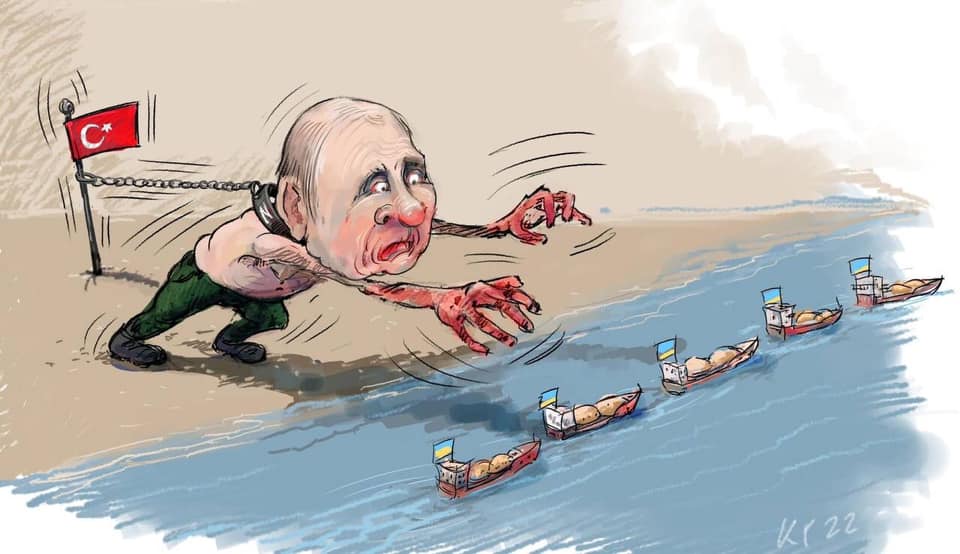
Thread Information
Users Browsing this Thread
There are currently 2 users browsing this thread. (0 members and 2 guests)
