

One of Russia’s greatest military victories came with the coldest European winter in 500 years. At the beginning of the eighteenth century, Tsar Peter the Great struggled to repel the formidable forces of Charles XII of Sweden, advancing on Moscow. Then came the Great Frost of 1708–9. Birds were said to have frozen in midflight and dropped dead to the ground. Charles’s army of more than 40,000 men soon lost half its strength from exposure and starvation. In an attempt to escape the cold, the Swedish king led the remnants of his army south into Ukraine to join the Cossack leader, Hetman Ivan Mazepa, and his forces. But the damage was done. The following summer, Peter’s Russian army routed Charles’s weakened forces at the Battle of Poltava, bringing an end to Sweden’s empire and its designs on Russia.
The Swedes were neither the first nor the last European army to suffer the ravages of “General Winter” on Russia’s frontiers. Exacerbated by the vast expanse of the Eurasian landmass, winter fighting there has often proved to be the downfall of great armies. For centuries, this phenomenon has often worked to Russia’s advantage, as a succession of powerful militaries have succumbed to inadequate equipment, deficient supply lines, and poor preparation. But as Russian President Vladimir Putin’s war in Ukraine enters the harshest months of the year, there are many indications that this time it may be Russia, rather than its adversary, that suffers the worst consequences.
His Empire for a Horse
Europe’s best-known winter defeat in Russia came in 1812—just over a century after the Battle of Poltava—when Napoleon’s Grande Armée retreated from Moscow. Russia’s scorched-earth tactics, which left the French with no food or shelter along the line of withdrawal, made the effect even more deadly. Yet the greatest casualties had occurred earlier.
The Grande Armée had been almost half a million strong when it crossed the River Neman, the frontier between Prussia and Russia, in June 1812. But it soon lost a third of its strength from summer heat, disease, hunger, and exhaustion as the emperor forced his men on toward Moscow. Although the retreat into Russia’s expanse was unintended at first, Tsar Alexander I’s commanders soon realized the advantage. They kept withdrawing east and did not make a stand until General Mikhail Kutuzov was ordered to halt Napoleon at Borodino, 75 miles west of Moscow. The battle proved a costly victory for the French, even though it enabled them to enter Moscow unopposed.
But it was the approaching winter that proved fatal for the invaders. Napoleon wasted five weeks in Moscow expecting the tsar to come to terms. When the Grande Armée finally started to withdraw to central Europe on October 19, the soldiers were still wearing their summer uniforms. They had also lost their baggage trains and could expect little food along the way. Their greatest deficiency was in cavalry to hold off marauding Cossacks. The shaggy Cossack ponies were accustomed to the winter blizzards, which began a month later, while the last of the chargers and draft horses from western Europe collapsed from the cold and lack of forage. Starving soldiers hacked off their meat even before they were dead. Desertion or surrender was far from a guarantee of survival. Avenging Cossacks waited to skewer enemy soldiers on their long lances; Russian peasants simply slaughtered them with scythes. By early December, Napoleon feared a coup d’état during his absence, and, abandoning his army, headed for Paris before his frozen men could reach safety. By this point, his forces had suffered nearly 400,000 casualties, and he had lost his reputation for invincibility on the battlefield.
Less well known, although perhaps equally significant, was the way Russia won. Despite having lost 200,000 of its own men, Russia’s military leadership was far less concerned about casualties than was Napoleon. Russian officers still treated their peasant soldiers as little better than serfs (and serfdom would not be abolished in Russia for another 50 years). This lack of interest in soldiers’ well-being—and the casual attitude to massive losses through so-called meat-grinder tactics—are apparent in Putin’s army in Ukraine today.
Red Terror, White Frost
Another half century later, in World War I, the attitude of Russia’s military authorities had barely changed. Their men were expendable. Trench life for the rank and file along the eastern front that ran through Belorussia, Galicia, and Romania from 1915 to 1917 was an inhuman experience. And many resented that officers retired each night to the warmth and relative comfort of peasant log huts behind the front.
“Having dug themselves into the ground,” the Russian writer and anti-tsarist Maxim Gorky observed of the enlisted men, “they live in rain and snow, in filth, in cramped conditions; they are being worn out by disease and eaten by vermin; they live like beasts.” Many lacked boots and had to resort to bast shoes made from birch bark. Stations for treating the wounded at the front were almost as primitive as they had been in the Crimean War. This reality was in cruel contrast to the photographs of the tsarina and her grand duchess daughters immaculately dressed as nurses before the February 1917 revolution.
Winter conditions in the Russian Civil War (1917–[at]21) were even worse. The most pitiful victims were the civilian refugees fleeing the Bolshevik onslaught, or what became known as the Red Terror. During the winter of 1919, the collapse of Admiral Kolchak’s White Russian armies in Siberia produced terrible scenes along the jammed Trans-Siberian Railroad. Aristocrats, middle-class families, and anti-Bolsheviks of all backgrounds were trying to escape to Vladivostok in the Russian Far East to avoid capture by the Communist Red Army, which was advancing from the Urals.
By mid-December of that year, the Reds caught up with the tail of the line and took the southern Siberian city and industrial hub of Novo-Nikolaevsk (present-day Novosibirsk), along with numerous trains still blocked there. The city itself was in the grip of a typhus epidemic. All horses, carts, and sledges available had already been taken, so the desperate set out on foot, not knowing that farther ahead in Krasnoyarsk cases had reached more than 30,000.
“A mass retreat is one of the saddest and most despairing sights in the world,” Captain Brian Horrocks, a British officer in the Allied intervention in Russia, wrote. “The sick just fell down and died in the snow.” He was horrified by the squalid conditions faced even by those refugees who had managed to find a place in packed cattle wagons. Most wagons lacked any heating as temperatures dropped to as low as minus 22 degrees Fahrenheit. “The thing which impressed me most was the fortitude with which the women, many of them reared in luxury, were facing their hopeless future,” he wrote. “The menfolk were much more given to self-pity.” Kolchak’s staff officers were by then drinking themselves into oblivion.
As White Russian, Czech, and Polish commanders argued bitterly over priority for their troop trains, starving and frozen refugees were dying at an alarming rate. One officer wrote that trains at some Siberian stations were unloading hundreds of bodies of people who had died from cold and disease. “These bodies were stacked up at the stations like so much cordwood,” another officer wrote. “Those who remained alive never talked, never thought of anything save how they might escape death and get farther and farther away from the Bolsheviks.”
In the northern Caucasus, known for its blazing summer heat, winter could sometimes produce drops in temperature of more than 22 degrees Fahrenheit in less than an hour. In February 1920, General Dmitry Pavlov’s cavalry divisions were caught in the open by a sudden blizzard. Pavlov “lost half of his horses which froze in the steppe,” the Red Army high command noted. But the human losses were far worse. “We left behind in the steppe thousands of men frozen to death, and the blizzard buried them,” a Cossack officer recounted. Those who survived did so by huddling against their horses. Pavlov, who had ignored warnings of the possible change in the weather, suffered severe frostbite himself.
Stalin’s Ice Breakers
By the twentieth century, winter conditions on the Eurasian landmass posed a growing threat not just to humans and horses but also to military weaponry. Sometimes this worked to Russia’s detriment. Despite its disproportionate strength and its massive expenditure of ammunition, the Soviet army failed to break Finnish resistance in the Winter War of 1939–40, following Stalin’s invasion of Finland. The Finns, proving themselves even better practitioners of winter tactics than their invaders, terrorized Red Army soldiers by day and night as their white-camouflaged ski troops launched surprise attacks from forests, then disappeared like ghosts. Their bravery and skill persuaded Stalin to accept Finland’s independence. But it also served as a lesson for the war to come.
During the rapid military mechanization between the two world wars, the Soviet Union had created the largest tank force in the world. The Red Army at least learned that guns and engines needed special lubricants in extreme conditions. Such measures proved key in Stalin’s ability to block Hitler’s armies in front of Moscow in December 1941. Both the German army and the Luftwaffe were unprepared. They had to light fires under their vehicles and aircraft engines to defrost them.
German soldiers referred bitterly to winter conditions as “weather for Russians.” They envied the Red Army’s winter uniforms, with white camouflage suits and padded cotton jackets, which were far more effective than German greatcoats. Russian military historians have attributed the comparatively low rate of frostbite and trench foot among Soviet forces to their old military practice of using layered linen foot bandages instead of socks. German soldiers also suffered more rapidly because their jackboots had steel studs that drained any warmth. In February 1943, when the remnants of Field Marshal Paulus’s Sixth Army finally surrendered at Stalingrad—the psychological turning point of World War II—more than 90,000 German prisoners limped out of the city on frost-ravaged feet. Yet their suffering had been caused less by cold than by Hitler’s orders to hold on there and the inability of German panzers with their narrow tracks to counterattack in the snow.
General Winter also played a major role in the Red Army’s final victory in 1945. The great Soviet breakthrough in January, a charge from the River Vistula to the River Oder, depended on the weather. Russian forecasters had predicted “a strange winter,” with “heavy rain and wet snow” after the hard frosts of January. An order went out to repair boots. Stalin and the Red Army’s supreme command set January 12 as the start date for the offensive, so that the Soviets’ tank armies could take advantage of the deep-frozen ground before any thaw set in. Characteristically, Stalin falsely claimed that he had advanced the date from January 20 to take pressure off the Americans in the Ardennes. (U.S. forces had already halted the German offensive there just after Christmas.) In fact, there was another motive: Stalin wanted to control the bulk of Polish territory before he met U.S. President Franklin Roosevelt and British Prime Minister Winston Churchill at Yalta in the first week of February.
Stalin’s commanders did not let him down. “Our tanks move faster than the trains to Berlin,” boasted the ebullient Colonel Iosif Gusakovsky. He had not bothered to wait for bridging equipment to reach the frontlines before attempting to cross the River Pilica. He simply ordered his leading tanks to smash the ice with gunfire, then to drive straight across the riverbed. The tanks, acting like icebreakers, pushed the ice aside “with a terrible thundering noise,” a terrifying experience for the poor drivers. The German eastern front in Poland collapsed under the armored onslaught, once again because the Soviet T-34’s broad tracks could cope with the ice and snow far better than any German panzer.
After 1945, the Red Army’s achievements in winter warfare gave it a fearsome reputation in the West. It was not until the Soviet Union’s ill-planned invasion of Czechoslovakia in the summer of 1968—the Warsaw Pact forces lacked maps, food supplies, and fuel—that Western analysts first began to suspect that they might have overestimated the Soviets’ warfighting abilities.
Finally, in the 1980s, the collapse of the Soviet empire was marked by its doomed struggle to control Afghanistan, a terrain that made winter warfare impossible for conventional armies. Then, during the economic collapse in the 1990s, Russian President Boris Yeltsin’s government often proved unable to pay officers and soldiers alike and corruption became institutionalized. Conscripts were frequently on the edge of starvation because their rations were sold off; theft, bullying, and ill discipline became rampant. Spare parts from vehicles, as well as anything from fuel to light bulbs, boots, and especially any cold weather kit, disappeared onto the black market.
Corruption became even worse following Russia’s chaotic invasion of Georgia in 2008. Putin began throwing money at the armed forces. The waste on prestige projects encouraged contractors and generals alike to pad their bank accounts. Little appears to have been done in reassessing military doctrine. The Russian idea of urban warfare had still not evolved from World War II, with their artillery, the “god of war,” smashing everything to rubble. This approach would continue during Russian intervention in the Syrian civil war from 2015.
Yet Putin’s greatest triumph in Russian eyes was the covert seizure of Crimea the year before by infiltrating it with un-uniformed “little green men” from special forces. This was part of Putin’s angry reaction to the Maidan revolution in Kyiv, which forced his ally President Viktor Yanukovych to flee and led to the start of fighting in the Donbas region of Russian-speaking eastern Ukraine.
Putin in Denial
In February 2022, eight years later, Putin launched his “special military operation” in Ukraine. At the time, the vanguard was told to bring their parade uniforms ready to celebrate victory—one of the greatest examples of military hubris in history. Yet seven disastrous months later, when the Kremlin was finally forced to order a “partial mobilization” of the Russian population, it had to warn those called up that uniforms and equipment were in short supply. They would have to provide their own body armor and even ask their mothers and girlfriends for sanitary pads to use instead of field dressings. The lack of bandages is astonishing, especially now as winter intensifies, since they are vital to keep frost from entering open wounds. Adding to the dangers are mortar rounds hitting frozen ground: unlike soft mud, which absorbs most of the blast, frozen ground causes fragments to ricochet, in sometimes lethal ways.
Putin’s new commander in chief in the south, General Sergei Surovikin, is determined to clamp down on attempts by some conscripts to avoid combat. Many have been resorting to the sabotage of fuel, weapons, and vehicles, to say nothing of self-inflicted wounds and desertion. Yet the Russian army’s long-standing structural problem—its shortage of experienced noncommissioned officers—has also led to a terrible record of maintaining weapons, equipment, and vehicles. These problems will become especially costly in winter with sensitive technology such as drones.
As both sides enter a far more challenging season of fighting, the outcome will largely depend on morale and determination. While Russian troops curse their shortages and lack of hot food, Ukrainian troops are now benefiting from supplies of insulated camouflage suits, tents with stoves, and sleeping bags provided by Canada and the Nordic nations. Putin seems to be in denial about the state of his army and the way that General Winter will favor his opponents. He may also have made another mistake by concentrating his missiles against Ukraine’s energy network and its vulnerable civilian population. They will endure the greatest suffering, but there is little chance that they will break.
Russia’s New Winter War: Could Putin Go the Way of Napoleon and Hitler?
Results 11,726 to 11,750 of 15707
Thread: Ukraine war mega thread
-
01-01-2023, 08:15 AM #11726Heading down to Dino's


- Join Date
- Jun 2009
- Last Online
- @
- Posts
- 35,408
Russias New Winter War Could Putin Go the Way of Napoleon and Hitler?
-
01-01-2023, 08:42 AM #11727Isle of discombobulation


- Join Date
- Nov 2020
- Last Online
- @
- Location
- Mai Arse
- Posts
- 17,567
Putin is a Nazi, pure and simple.
Needs a bullet between his eyes .
-
01-01-2023, 09:35 AM #11728Thailand Expat
- Join Date
- Feb 2006
- Last Online
- @
- Posts
- 40,667
But, unlike Napoleon and Hitler, he is not invading Russia.
It is a bit rich for Zelensky groupies to describe Putin as Hitler.
-
01-01-2023, 10:02 AM #11729Thailand Expat

- Join Date
- Sep 2009
- Last Online
- @
- Posts
- 108,163
But, like Hitler, he eliminated all his domestic opposition and then embarked on a campaign to invade other countries or prop up fellow dictators. Originally Posted by sabang

So not rich at all.
-
01-01-2023, 10:28 AM #11730last farang standing

- Join Date
- May 2015
- Last Online
- 31-05-2026 @ 11:27 PM
- Location
- Ban Bumfuknoware
- Posts
- 4,433
On another note the Ukraine war has spurred an unprecedented number of orders from lockheed for HIMARS including from Poland and Taiwan to name two. No doubt there will be further orders for them and probably patriots when the system proves useful in Ukraine. At the same time these armament companies are getting first hand operational war conditions experience of their systems free of charge. The U.S. money spent on armaments to Ukraine may well return in future weapon sales, where in Russia it will just be further depletion and expense combined with a sanctioned economy that they may well take years to recover from. The Russians will fall even further behind the U.S. technologically. Originally Posted by bsnub
Aint capitalism a wonderful thing? How to make even war profitable and thats even before the huge post war rebuild starts.
-
01-01-2023, 11:32 AM #11731Thailand Expat
- Join Date
- Sep 2009
- Last Online
- @
- Posts
- 108,163
I expect Finland and Sweden will pick some up after they join NATO, too. Originally Posted by Hugh Cow
-
01-01-2023, 02:19 PM #11732Thailand Expat
- Join Date
- Feb 2006
- Last Online
- @
- Posts
- 40,667
So Doghouse the opinion thread- and let the News thread turn into an opinion thread. Enlightened modding.

We've Reached Peak Zelensky. Now What?
When the president of thepoorest,most corrupt nation in Europe is feted with multiple standing ovations by the combined Houses of Congress, and his name invokedin the same breath as Winston Churchill, you know we've reached Peak Zelensky.
It's a farcical, almost psychotic over-promotion, probably surpassed only by the media's shameful, hyperbolic railroading of the country into war with Iraq, in 2003. Paraphrasing Gertrude from Hamlet, "Methinks the media doth hype too much."
Finally, the neo-cons who have led the U.S. into the serial debacles of Afghanistan, Iraq, and now Ukraine, costing the country tens of trillions of dollars and even greater amounts of destroyed reputational capital, will claim their customary immunity from any accountability for their savage failures and cheerily move on to their next calamity.Let's remember that before ascending to his country's presidency, Volodymyr Zelensky's greatest claim to fame was that he could play the piano with his penis. I'm not joking. And he ran on a platform to unite his country for peace, and for making amends with Russia. Again, I'm not joking.
Now, he's Europe's George Washington, FDR, and Douglas MacArthur all rolled into one and before whom the mighty and powerful genuflect.
Please. The only place to go from here is down. And, that is surely coming. Soon.
Consider some inconvenient facts that the fawning media, which is essentially the public relations arm of the weapons industry, doesn't want you to know.
The European Commission President, Ursula von der Leyen,recently let slip that the Ukrainian army has lost more than 100,000 troops in the eight months since the beginning of the war. Over the nine-year span of the Vietnam War, the U.S. with a population six times that of Ukraine, lost a total of 58,220 men.
In other words, on a per day, per capita basis, Ukraine is losing soldiers at a rate 141 TIMES that of U.S. losses in Vietnam. The U.S. lost the public on Vietnam when middle class white boys began coming home in body bags. Does anybody with half a brain believe such losses in Ukraine are sustainable? Does anybody have another plan to avert such slaughter?
Von der Leyen is among the shrewdest public figures in the world. What she is doing is laying the predicate for Western withdrawal from Ukraine and ending the War. If you look at the facts on the ground, not the boosterish propaganda ladled out by the media, you can understand why.
In a matter of weeks, Russia, with its hypersonic missiles, destroyed half of Ukraine's electrical power infrastructure. This, as winter is coming on. It can just as easily take out the other half, effectively bombing Ukraine back into the Stone Age. Is that what anybody wants?
The startling, indeed, terrifying part of this is that neither Ukraine nor the West have any defense against these hypersonic missiles. They travel so fast, and on variable trajectories, they cannot be shot down, even by the most advanced Western systems. They represent one of the greatest asymmetries in deliverable destructive power in the history of warfare, probably dwarfed only by the U.S.'s possession of atomic bombs at the end of World War II.
Again, there is no effective defense against them. The Russians have them. The Ukrainians don't. Game over. Can you understand why leaders in the West are beginning to wake up?
On the conventional front, the Ukrainians are having trouble securing even conventional weapons to defend themselves. U.S. arms suppliers are working around the clock to replace their own stocks and the stocks that European countries have given to Ukraine. But the backlog is running into years. A recent headline from The Wall Street Journal stated, "Europe is Rushing Arms to Ukraine but Running Out of Ammo."
Finally, the U.S. has committed $112 billion to Ukraine. That includes $45 billion just slipped into the omnibus funding bill against the likelihood that a Republican-controlled House will cut such funding, almost certainly substantially.
That's more than $10 billion per month since the war started in February. And that doesn't even count the subsidies, both material and financial, from the EU which amount to billions of dollars more per month.
Without such subsidies, Zelensky would not have lasted a month in the war. How many hours do you think he is going to last once that flow dries up? And it surely is.
The Europeans are coming to realize that their continent is being de-industrialized, literally moved backwards an entire epoch in economic terms, because of their willingness to serve as the doormat for the U.S.' imperial war against Russia. Not even they, with their supine fealty to U.S. domination, are willing to commit collective economic suicide on behalf of the U.S.
France's Macron and Germany's Scholz are suggesting that accommodations to Russian interests must be devised in order to bring about a peaceful settlement of the war.
Macron suggestedin a television address to his nation that an antagonized Russia is not in the security interests of Europe. "We need to prepare what we are ready to do…to give guarantees to Russia the day it returns to the negotiating table."
Scholz was even more specific. In anarticle in Foreign Affairs he declared, "We have to go back to the agreements which we had in the last decades and which were the basis for peace and security order in Europe."
This is a direct repudiation of the U.S.'s maximalist position before the start of the War, that Russia's security needs were of no interest to a marauding NATO.
Even U.S. Secretary of State Anthony Blinken is now mooting the idea that territorial concessions must be on the table. In aWall Street Journal article, Blinken stated that, "Our focus is…to take back territory that's been seized from [Ukraine] since February 24th."
Notice, that this is a significant climb down from the U.S.' earlier position that all Russian gains since 2014, including Crimea, must be reversed before negotiations could begin. And this is just Blinken's opening hand. More concessions are sure to follow as Russian gains become greater and their likelihood of being reversed, lesser.
Put these four things together: staggering, unsustainable losses of soldiers; terrifying, indefensible asymmetries of destructive power; inability to supply oneself with even conventional defensive weapons; and categorically reduced support from your most important backers.
Does that sound like the formula for winning a war? It is not. It's the formula for losing the war, which is why von der Leyen, Macron, Scholz, and Blinken are now laying pipe for getting out. The tide is going out under Zelensky. He will soon be remembered as a Trivial Pursuits question, or an answer on Jeopardy: "The only modern head of state known to be able to play the piano with his penis." Ding. "Contestant #3?" "Who is Volodymyr Zelensky?"
A peace will soon be declared. Russia will keep the Donbas and Crimea in recognition of the facts on the ground. Both sides will be better off for this. The Donbas is ethnically, linguistically, religiously, and culturally Russian, which is why it voted overwhelmingly for assimilation into Russia. Besides, if Kiev loved them so much, it wouldn't have murdered 14,000 of them over the past eight years and resumed massive shelling in early February of this year, before the Russian invasion.
Ukraine will foreswear any future affiliation with NATO. This is Putin's highest priority and what he asked for--and was denied--in his request to the U.S. and NATO last December, before the invasion was launched. If Russia begins its much-feared winter offensive, as many expect, Ukrainian generals will dispatch Zelensky in a coup rather than send their few remaining soldiers to certain annihilation.
U.S. grain and pharma conglomerates will buy up Ukrainian farmland—some of the best in the world—for pennies on the dollar. This is the standard MO of U.S. multinational vultures coming in after the kill to pick apart the carcasses. U.S. weapons makers will look for and help provoke the next feeding frenzy, much as they materialized Ukraine barely a year after the humiliating U.S. defeat in Afghanistan derailed their last gravy train.
Russia and China, driven together by U.S. bullying, will continue to constellate the nations of the Global South into an anti-Western bloc committed to collaborative, mutually profitable, peaceful development. The U.S. and its closest allies will cower behind the walls they've constructed of the ever-shrinking share of the global economy that they can manage to hold as their own.
Ukraine will prove a turning point in the dismantling of U.S. hegemony over global affairs that it has enjoyed—and, let's be honest, often abused--since 1945. The U.S. public is not psychically prepared for such a come down. But that is the cost of living in the fantasy world that the media lavishes up to keep that self-same public ignorant, fearful, confused, entertained, and distracted.
Finally, the neo-cons who have led the U.S. into the serial debacles of Afghanistan, Iraq, and now Ukraine, costing the country tens of trillions of dollars and even greater amounts of destroyed reputational capital, will claim their customary immunity from any accountability for their savage failures and cheerily move on to their next calamity. We need to be on the lookout for their next gambit to pillage the treasury and advance their own private interests above those of the nation. It will surely come.
https://www.commondreams.org/opinion...ng-ukraine-war
-
01-01-2023, 02:23 PM #11733Thailand Expat
- Join Date
- Feb 2006
- Last Online
- @
- Posts
- 40,667
Diplomacy Watch: Ukraine seeks help with peace plan from India, UN
Kyiv’s proposal to end the war will face an uphill battle in the coming months.
DECEMBER 30, 2022
In a Monday phone call, Ukrainian President Volodymyr Zelensky asked for Indian Prime Minister Narendra Modi’s help in promoting Kyiv’s peace plan for the ongoing conflict with Russia.
The conversation came as India, which has dramatically expanded trade with Russia since the invasion, took over leadership of the G20. “It was on this platform that I announced the peace formula and now I count on India’s participation in its implementation,” Zelensky tweeted after the meeting.
For their part, Modi’s team said he “strongly reiterated his call for an immediate cessation of hostilities,” and emphasized the need for diplomacy in order to end the brutal war. New Delhi also declared its “support for any peace efforts” but stopped short of explicitly endorsing Zelensky’s proposal.
The call is the latest step in Ukraine’s rollout of its 10-point peace plan, which Kyiv says will be the center of a “peace summit” at some point in the next couple of months. Zelensky said last week that President Joe Biden agreed to support the proposal, though U.S. officials have yet to confirm that claim.
Some notable demands include a full Russian withdrawal from Ukraine, including Crimea, and the creation of a special tribunal for Russian war crimes.
“The United Nations could be the best venue for holding this summit,” Kyiv’s foreign minister, Dmytro Kuleba, told the Associated Press. “This is really about bringing everyone on board.”
There is, however, one significant exception to the guest list. Per Kuleba, Russia can only attend the summit after facing prosecution for war crimes. “They can only be invited to this step in this way,” Kuleba said, adding that he is also working to expel Moscow from the United Nations.
Russia quickly rejected the plan and reiterated its demand that Kyiv accept Moscow’s annexation of Crimea and attempted seizure of large swathes of eastern Ukraine. “As for the duration of the conflict, the ball is on the side of the [Kyiv] regime and Washington that stands behind its back,” said Russian Foreign Minister Sergei Lavrov. “They may stop senseless resistance at any moment.”
“I do believe that the military confrontation will go on, and I think we’ll have still to wait for a moment in which serious negotiations for peace will be possible,” Guterres said.
In other diplomatic news related to the war in Ukraine:
— Russia announced Tuesday that it will not sell oil to countries that attempt to enforce a price cap agreed by Western countries, according to Al Jazeera. The decision sets Moscow up for a clash with the G7 and the European Union, both of which agreed to only purchase Russian at $60 per barrel — a significant drop from the current market price of $78 per barrel.
— In his Christmas homily, Pope Francis renewed his call for peace in Ukraine and lamented the impact the war has had on innocent people around the world, according to AP News. “Let us also see the faces of our Ukrainian brothers and sisters, who are experiencing this Christmas in the dark and cold, far from their homes due to the devastation caused by 10 months of war,” the pontiff said, noting that the conflict has put “entire peoples at risk of famine, especially in Afghanistan and in the countries of the Horn of Africa.”
— A top Putin aide visited the Zaporizhzhia nuclear power plant, which has faced months of intermittent shelling since Russian forces took control of it earlier this year, according to Reuters. The advisor “checked the safety of the facility and the working conditions of Rosatom employees,” according to a Russia-backed local leader.
— On Wednesday, French Defense Minister Sebastien Lecornu visited Kyiv and pledged to support Ukraine through weapons transfers and maintenance for French arms already in the country, according to Al Arabiya. “France has chosen several ways to help Ukraine,” Lecornu said, adding that “maintenance of what has already been given to Ukraine is just as important as the new equipment.” So far, France has lagged behind its European peers in providing aid to Ukraine. This high-level visit could be an effort to undercut accusations that Paris is not doing enough to support Kyiv’s war effort.
https://responsiblestatecraft.org/20...from-india-un/
-
01-01-2023, 02:55 PM #11734Elite Mumbler

- Join Date
- Apr 2008
- Last Online
- @
- Location
- Isolation
- Posts
- 8,829
Russia hasn't used hypersonic missiles in months, and have only used 3 of them in Ukraine. They have about 10 left. I'm sure the rest of your piece is full of lies too, but I stopped reading there. Originally Posted by sabang
-
01-01-2023, 03:03 PM #11735Thailand Expat
- Join Date
- Feb 2006
- Last Online
- @
- Posts
- 40,667
What is your source for this? Personally I very much doubt that- but that is my opinion. Refer back to the last page for the pictorial on how many times western media has said "Russia is running out of missiles". Certainly no evidence of that yesterday, when Ukraine received one of it's heaviest missile barrages yet.They have about 10 left.
-
01-01-2023, 03:05 PM #11736Thailand Expat
- Join Date
- Feb 2006
- Last Online
- @
- Posts
- 40,667
Damn, can't edit. Does it not occur to you that the media organs that repeatedly come out with an outright falsehood (Russia is running out of missiles/ ammo etc) are proven liars?
-
01-01-2023, 03:15 PM #11737Thailand Expat
- Join Date
- Feb 2006
- Last Online
- @
- Posts
- 40,667
A response to the Wapo opinion piece:-
Putin, unaccustomed to losing, is increasingly isolated as war falters
A new gulf is emerging between the president and much of the country’s elite
The above headline is from today's Washington Post. The unfounded basic assumption of the piece is that Russia is failing in its war. Its conclusions rest on some Carnegie 'expert' and anonymous sources in Russia. It is contradicted by the reality of the war and the results of current polls in Russia which show strong support for Putin and the government. It also ignores the fact that Russia has good relation with most of the rest of the world and that it also has powerful allies:
Russian President Vladimir Putin and Chinese leader Xi Jinping vowed Friday to deepen their bilateral cooperation against the backdrop of Moscow’s 10-month war in Ukraine, which weathered another night of drone and rocket attacks following a massive missile bombardment.'Increasingly isolated' seems to mean something different to the Washington Post writer than to the rest of the world.
...
Putin, during his call with Xi, noted that military cooperation has a “special place” in the relationship between their countries. He said the Kremlin aimed to “strengthen the cooperation between the armed forces of Russia and China.”Xi, in turn, said through a translator that “in the face of a difficult and far from straightforward international situation,” Beijing was ready “to increase strategic cooperation with Russia, provide each other with development opportunities, be global partners for the benefit of the peoples of our countries and in the interests of stability around the world.”
Ties between Moscow and Beijing have grown stronger since Putin sent his troops into Ukraine on Feb. 24. Just last week, Moscow and Beijing held joint naval drills in the East China Sea.
China, which has promised a “no limits” friendship with Russia, has pointedly refused to criticize Moscow’s actions in Ukraine, blaming the U.S. and NATO for provoking the Kremlin, and has blasted the punishing sanctions imposed on Russia.
Russia, in turn, has strongly backed China amid the tensions with the U.S. over Taiwan.
https://www.moonofalabama.org/2022/12/lack-of-good-analyses-contributes-to-the-decline-of-the-west.html#more
And that doesn't even mention amicable relations and strong trade links with India. Isolated from the West, most certainly- Lavrov announced that over 9 months ago.
Kinda reminds me of that Times headline, 1901- "Fog on the Channel. Continent isolated".
Last edited by sabang; 01-01-2023 at 03:22 PM.
-
01-01-2023, 03:19 PM #11738last farang standing
- Join Date
- May 2015
- Last Online
- 31-05-2026 @ 11:27 PM
- Location
- Ban Bumfuknoware
- Posts
- 4,433
More words of wisdom from TDs resident whack-a-mole. Originally Posted by sabang
-
01-01-2023, 03:25 PM #11739Heading down to Dino's
- Join Date
- Jun 2009
- Last Online
- @
- Posts
- 35,408
Just more crap from his propaganda outlets, completely disconnected from reality, like most of the useful idiots. Originally Posted by Hugh Cow
-
01-01-2023, 03:49 PM #11740Thailand Expat
- Join Date
- Feb 2006
- Last Online
- @
- Posts
- 40,667
Retired US General McCaffrey: Armed Forces of Ukraine suffer huge losses and are in danger
The Ukrainian army is suffering huge losses and is in a precarious position, retired US General Barry McCaffrey said in an interview with MSNBC.
“Ukraine is suffering huge losses and is in great danger,” he said.McCaffrey believes that Ukraine will not be able to achieve success on the battlefield only with defense systems.
He noted that the Armed Forces of Ukraine needed long-range tactical ground-to-ground missiles and tanks for resistance.
At the end of November, the head of the European Commission, Ursula von der Leyen, said that, according to her, over 100 thousand Ukrainian soldiers had died since the beginning of the special operation.
After that, the European Commission removed the words of the official from the written and video statements.
Writing for The American Conservative, George O'Neill, Jr., board member of the Institute for American Ideas, expressed the view that the West's silence on the true losses of Ukrainian troops is beginning to crack.
Retired US General McCaffrey: Armed Forces of Ukraine suffer huge losses and are in danger - Teller Report
-
01-01-2023, 03:53 PM #11741Thailand Expat
- Join Date
- Feb 2006
- Last Online
- @
- Posts
- 40,667
US Lieutenant Colonel Davis said there is no scenario for Ukraine's vict
Retired American Lieutenant Colonel Daniel Davis said there was no scenario for Kyiv's victory in the Ukrainian conflict due to the inability of the Armed Forces of Ukraine to resist the Russian army.
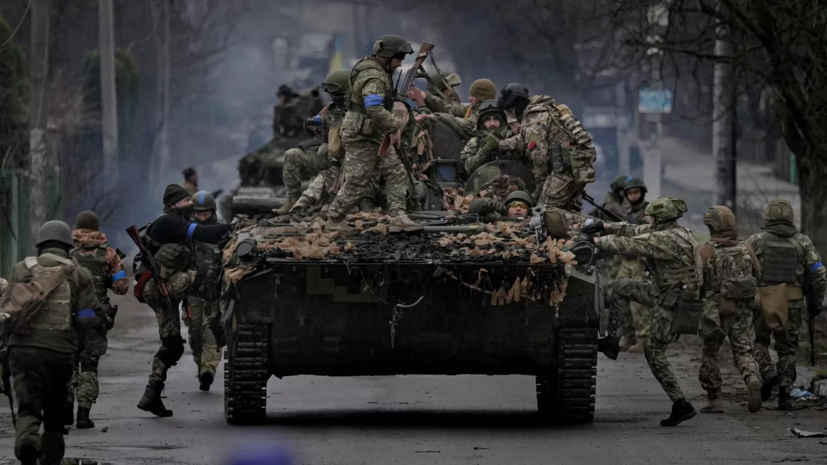
“There is no scenario that would predict the victory of the Ukrainian army.
The military reality is that the Armed Forces of Ukraine are not equipped and equipped with the necessary means to conduct a major offensive operation of sufficient power, ”19FortyFive quotes him as saying.
He added that in the United States, the priority is to avoid direct involvement in the conflict, no matter how the situation develops.“To allow our armed forces to be drawn into a war against Russia when we are not under direct attack would disrupt the first stronghold of good foreign policy and jeopardize the second and third: our armed forces would be weakened in any war as a result of combat losses, and our economy would be undermined. a serious threat,” Davis said.
Earlier, columnist for The American Spectator Francis Sempa said that the US administration doubts the possibility of Kyiv's victory.
Russian Deputy Foreign Minister Sergei Ryabkov, in an interview with RT, said that the biggest strategic miscalculation of Western countries was the desire to inflict a “strategic defeat” on Russia in Ukraine.
According to him, Russia will never be defeated.
https://www.tellerreport.com/news/2023-01-01-19fortyfive--us-lieutenant-colonel-davis-said-there-is-no-scenario-for-ukraine-s-victory.HJgJZ86AFo.html
-
01-01-2023, 04:03 PM #11742Heading down to Dino's
- Join Date
- Jun 2009
- Last Online
- @
- Posts
- 35,408
Oh, a Fox News pundit and an "article" cherry-picking and distorting Gen. McCaffrey's words.
Oh, look here. The General quoting Major Spencer on Twitter....
https://twitter.com/mccaffreyr3/stat...88574275092480
-
01-01-2023, 04:03 PM #11743Thailand Expat

- Join Date
- Dec 2009
- Last Online
- @
- Location
- Chiang Mai
- Posts
- 57,145
Here is the interview. Starts about 1/2 way.
Gen. McCaffrey: ‘A stalemate is not a good option for Putin’
-
01-01-2023, 04:09 PM #11744Heading down to Dino's
- Join Date
- Jun 2009
- Last Online
- @
- Posts
- 35,408
From Gen. McCaffrey's twitter…
[QUOTE]MSNBC. 29 Dec 22. Ukraine can’t negotiate an end to the war until they unravel the Russian ground combat forces. Passive air defense causes no pain to Russian aggression.[QUOTE]IMPORTANT. Bradley Fighting Vehicle is the kind of technology edge can help Ukraine bring this war to a close. Also need to add M1 Abrams tank. ATACMS 300 km missiles. Armed Reaper drones. Backed up by contractor maintenance in Poland and Rumania.
Actually Putin just murders his opponents domestically or abroad in brutal ways. Poisoned. Thrown out of windows. Beaten to death. Jailed. Takes their money. Exiles thousands. He’s a gangster. He’s wrecking Mother Russia. NATO is a rock wall.MSNBC. JOSE DIAZ BALART. 23 Dec 22. Time for the US and NATO to reassess our policy on Ukraine and provide offensive military technology: ATACMS. ARMED DRONES. M1 TANKS. A war prolonged will devastate Ukraine.https://twitter.com/mccaffreyr3These Russian State TV pundits are cartoon characters of evil. Their rants are a horrible embarrassment to Russia’s global stature. The North Koreans were the world champs of mad raves. Not so much now. This lad is a goofy little angry goblin.
-
01-01-2023, 05:17 PM #11745Thailand Expat

- Join Date
- Jul 2010
- Last Online
- 24-07-2024 @ 09:54 PM
- Location
- Where troubles melt like lemon drops
- Posts
- 26,242
Kosachev Konstantin
Косачев Константин – Telegram
"Now Hollande's confessions, following Poroshenko and Merkel, that the Minsk agreements were needed only as a gain in time for the accumulation of military power by Kyiv, speak of at least two things.
First, for the West, the integrity of Ukraine (as opposed to, say, the integrity of Great Britain with its Scotland and Spain with its Catalonia) is precisely control over the territories, and not public consent. These are lands, not people. This is violence, not negotiations. This is the occupation of a part of one's own country against the will of a part of its citizens. And all this is directly opposite to the so-called European values, which were blown up from the inside by Ukrainian-style geopolitics.
And the second. Our country turned out to be the only co-author of the Minsk agreements (although Moscow did not sign them), which consistently and honestly tried to act as their guarantor. It was Russia, unlike Ukraine, Germany and France, that was in this case on the side of the people, leaving aside the issue of territories - as long as (at least in theory) it was still possible to implement the Minsk agreements as it was written there.
And then it became clear that it was impossible. The secret became clear. The sabotage of the Minsk agreements by frenzied Kyiv and irresponsible collective Brussels launched the development of events according to the only remaining scenario. When Russia, albeit almost alone, albeit by other means, actually continues to protect people in those territories that were thoughtlessly rejected from Ukraine by Kyiv on the Maidan and, as it now turns out, betrayed by Berlin and Paris in Minsk.
Exactly. The confessions of Merkel and Hollande are a fixation of betrayal. The southeast of then Ukraine was initially betrayed by the West, despite the verbal tinsel around. The price of this betrayal was thousands of human lives over the last eight years of the civil war in Ukraine. Which was not initially stopped by the West, which turned the Minsk agreements into a flimsy letter. But which Russia is now forced to stop with its special military operation. "
A tray full of GOLD is not worth a moment in time.
-
01-01-2023, 05:23 PM #11746Thailand Expat
- Join Date
- Sep 2009
- Last Online
- @
- Posts
- 108,163
What is that nonsense supposed to be?
-
01-01-2023, 05:49 PM #11747Heading down to Dino's
- Join Date
- Jun 2009
- Last Online
- @
- Posts
- 35,408
About all they post is nonsense. Originally Posted by harrybarracuda
-
01-01-2023, 06:30 PM #11748Heading down to Dino's
- Join Date
- Jun 2009
- Last Online
- @
- Posts
- 35,408
Originally Posted by sabang

-
02-01-2023, 01:31 AM #11749Elite Mumbler
- Join Date
- Apr 2008
- Last Online
- @
- Location
- Isolation
- Posts
- 8,829
Already posted it in this thread a while ago. You should try reading people's replies to your bullshit. You know, like the Intel Slava Z fakery. And since I dug those sources out again for you, and you haven't retracted your post yet, you can kiss my ass. Quite the long lunch you're having, innit? Originally Posted by sabang
Originally Posted by sabang
Maybe Canada should join Nato.
-
02-01-2023, 03:37 AM #11750Thailand Expat
- Join Date
- Feb 2006
- Last Online
- @
- Posts
- 40,667
We'll see who has been spinning the porkies by facts on the ground. Second month of Winter now, will the fabled Ukrainian Winter offensive start soon, or not at all? Will the Ukrainian army throw the Russians out of their annexed territories by military means? It will be awfully embarrassing for some posters here if not...


 Reply With Quote
Thread Information
Users Browsing this Thread
There are currently 1 users browsing this thread. (0 members and 1 guests)
