

Stop trying to be a smart arse. You are fooling no one , and you are really not very good at it.
Results 926 to 950 of 3295
Thread: The View, from China
-
01-04-2022, 02:35 PM #926Thailand Expat


- Join Date
- Aug 2017
- Last Online
- 11-02-2026 @ 06:00 AM
- Location
- Sanur
- Posts
- 8,969
-
01-04-2022, 03:05 PM #927Thailand Expat


- Join Date
- Jul 2010
- Last Online
- 24-07-2024 @ 09:54 PM
- Location
- Where troubles melt like lemon drops
- Posts
- 26,242
Are you talking to yourself, again? Originally Posted by Switch

-
01-04-2022, 03:07 PM #928Thailand Expat
- Join Date
- Aug 2017
- Last Online
- 11-02-2026 @ 06:00 AM
- Location
- Sanur
- Posts
- 8,969
Makes my advice seem even more pertinent. Carry on fooling your self if you want. I don’t mind and you don’t really matter. Originally Posted by OhOh
A simple case of mind over matter.
-
01-04-2022, 04:51 PM #929Thailand Expat
- Join Date
- Feb 2006
- Last Online
- @
- Posts
- 40,667
Murdoch empire borrows US$100m from state-owned Bank of China
Despite his media operations slamming Xi Jinping's regime, the Murdochs accepted a megamillion-dollar loan from the government-run bank.
In a classic case of “do as I say, not as I do”, the Murdoch family has tapped into a US$100 million loan from a Chinese government bank, at the same time as its global media empire is going to war with the Chinese Communist Party.
The Murdochs have gerrymandered control over two public companies — News Corp and Fox Corp — and ever since COVID hit two years ago their outlets — such as Sky News Australia, The Australian, Fox News and The New York Post — have become virulent critics of the Chinese regime.
However, China has become even more toxic globally in recent weeks given its collaboration with Vladimir Putin, and concerns in Australia have been amplified by its attempts to establish a naval base in the Solomon Islands.
So what should the world make of News Corp’s decision to accept a US$100 million loan from the state-owned Bank of China’s New York branch as part of a massive US$1.25 billion loan package revealed on Thursday? Is it a case of Beijing seeking to influence the Murdochs by stepping up as a key family financier?
And should the Murdochs have refused the money, effectively joining the global ESG boycott of Russia in which more than 400 global companies have pulled out or temporarily closed their Russian operations?
The Bank of China is the second biggest player in the 13-bank News Corp syndicate after Bank of America, which is contributing US$111.7 million. The Bank of China is massive — it has an estimated US$3.7 trillion in assets and is the largest and oldest bank on the Chinese mainland.
Murdochs borrow US$100m from state-owned Bank of China

-
01-04-2022, 05:05 PM #930Thailand Expat
- Join Date
- Feb 2006
- Last Online
- @
- Posts
- 40,667
Not strictly a 'View from China', but a damn good idea. Just to remind, China will be the worlds largest economy by the end of this decade. High time to address the ignorance deficit.

-
01-04-2022, 05:07 PM #931Thailand Expat
- Join Date
- Feb 2006
- Last Online
- @
- Posts
- 40,667


Sexism! Racism! You could influence me anytime.
-
02-04-2022, 01:16 AM #932Thailand Expat
- Join Date
- May 2008
- Last Online
- @
- Posts
- 14,694
Yes please Originally Posted by Switch
Do define "communism" to me
Nah
You can't
You weren't programmed for that
Don't comment on politics, SwitchBy the time China gets around to producing its own quality products, the cheap labour will be gone, along with the entrepreneurial skill’s that communism has seen fit to demonize as profiteering.
You aren't up to it
Spot on, mate Originally Posted by Switch
Stick to Formula One or such
-
02-04-2022, 07:06 AM #933Thailand Expat
- Join Date
- Aug 2017
- Last Online
- 11-02-2026 @ 06:00 AM
- Location
- Sanur
- Posts
- 8,969
A cheeky little collage there Helge. Very amusing. Originally Posted by helge
If I really need to explain the obvious to a poorly educated Scandinavian, then all hope is lost for you.
-
02-04-2022, 12:52 PM #934Thailand Expat
- Join Date
- Jul 2010
- Last Online
- 24-07-2024 @ 09:54 PM
- Location
- Where troubles melt like lemon drops
- Posts
- 26,242
China successfully produces goods for sale world-wide. See their export trade growth current and historically. Originally Posted by Switch
An example transaction:
1. An enquiry for goods is made to a Chinese supplier.
2. The Chinese supplier agrees with the purchaser on the requirements and specifications. They are fit for their market requirements for them to make a profit.
3. The supply quatity, date and costs are agreed.
4. The supplier delivers a sample of the goods to the purchasers requirements and specifications.
5. The purchaser confirms the goods are to its requirements and specifications. They are fit for their market requirements for them to make a profit.
6. The Chinese supplier fulfils the order and receives payment from the purchaser, wherever they are in the world.
7. The Chinese supplier continues to subsequent orders as requested.
8. Of course some purchasers, around the world, require different requirements and specifications.
Those that are fit for, their purchasers, market requirements for them to make a profit.
9. Go 2.
The fact that some purchasers only want to buy poor quality goods, due to its target market, is their decision, not the suppliers.
If the spec is for a toilet seat to a purchaser "VVV" spec, there is a price agreed.
If the toilet seat is to a purchaser "ZZZ" spec, there is a price agreed. They are fit for their market requirements for them to make a profit.
As for China not being able to produce "world-class +++" goods for sale, I suggest you examine current Chinese exports to world-wide markets, as well as those that China produces for its domestic market only.A tray full of GOLD is not worth a moment in time.
-
02-04-2022, 01:27 PM #935Thailand Expat
- Join Date
- Feb 2006
- Last Online
- @
- Posts
- 40,667
If the spec is for a toilet seat to a purchaser "VVV" spec, there is a price agreed.
Only the Pentagon Could Spend $640 on a Toilet Seat
What your tax dollars go towards at America’s defense headquarters.
Only the Pentagon Could Spend $640 on a Toilet Seat | The Nation

And ya wonder why them Chinese are making out like bandits.
-
02-04-2022, 01:35 PM #936Elite Mumbler

- Join Date
- Apr 2008
- Last Online
- @
- Location
- Isolation
- Posts
- 8,846
How about gold plated toilet paper holders on Putins yacht. Paid for with taxpayers roubles.
-
02-04-2022, 01:57 PM #937Thailand Expat
- Join Date
- Jul 2010
- Last Online
- 24-07-2024 @ 09:54 PM
- Location
- Where troubles melt like lemon drops
- Posts
- 26,242
Beware, this post may contain toxic, to some readers, facts.

It is information released by the male/female Chinese Foreign Ministry. It is posted every Monday to Friday, except public holidays. Questions are put to the spokesperson and fully answered, except where the question has already been answered previously or is more suited to another Chinese Ministry.
As such, it has a Chinese perspective.
Any TD members who find it difficult to accept China News, from the horse's mouth so to speak, should ignore all content and move along.
For more acceptable for some, multi gender foreign biased media, 24/7 "rolling news" and foreign government official news/misspeaking, this is not the place you will find it.
Enjoy your day, wherever you lay your head at night.
A busy friday at the CFM.
Foreign Ministry Spokesperson Zhao Lijian’s Regular Press Conference on April 1, 2022
CCTV:
Can you share more information on the extended meeting of the China-US-Russia consultation mechanism on the Afghan issue?
Zhao Lijian:
On March 31, the extended meeting of the China-US-Russia consultation mechanism on the Afghan issue was held in Tunxi, Anhui Province. The meeting was chaired by Ambassador Yue Xiaoyong, Special Envoy for Afghan Affairs of China’s Ministry of Foreign Affairs and attended by special representatives for the Afghan issue of Russia, the US and Pakistan. The four representatives had in-depth exchange of views on the current situation in Afghanistan and ways to enhance coordination on issues related to Afghanistan. They also held talks with representative of the Afghan interim government.
The four parties agreed that Afghanistan enjoying peace and stability is in the interest of the international community and the country should be a platform of international cooperation, not an arena for geopolitical tussle. They reaffirmed their staunch support to the Afghan people and stressed that they will provide more humanitarian assistance to Afghanistan. They called on parties in Afghanistan to conduct substantial talks and negotiation for national reconciliation, and work for a more broad-based, inclusive and united political structure in the future. They emphasized that various terrorist forces in Afghanistan remain a threat to regional security and demanded that relevant sides in Afghanistan take more visible measures to live up to its counter-terrorism commitments, and dismantle and eliminate all forms of terrorist organizations. They encouraged all sides to work with Afghanistan in such fields as economy, trade, investment, connectivity and infrastructure through business-led and market-oriented efforts to enhance practical cooperation, and help Afghanistan improve capacity for self-generated development and achieve economic independence.
All participants highly commended China’s hosting of meetings of foreign ministers of the neighboring countries of Afghanistan, including the extended meeting of the China-US-Russia consultation mechanism on the Afghan issue. They gave full recognition to China’s constructive role on Afghan-related issues. The representative of the Afghan interim government said that they are committed to stabilizing the situation and ensuring peace for the people, developing economy and improving people’s livelihood, and will actively promote all social undertakings including education. They hope to see more assistance to the country. Afghanistan will honor its commitment to the international community and will by no means allow any terrorist forces to use its territory to harm other countries.
CCTV:
Russian Foreign Ministry’s spokesperson Maria Zakharova said that the NATO summit in Brussels demonstrated the absolute loyalty of the organization’s member states to Washington, their readiness to follow the total containment of Russia and the alliance’s interest in continuing hostilities between Russia and Ukraine. Do you have any comment?Zhao
Zhao Lijian:
As a product of the Cold War, NATO should have been disbanded after the collapse of the former Soviet Union. In the early 1990s, former US Secretary of State James Baker made his “not one inch eastward” assurance regarding NATO expansion to then President of the Soviet Union Mikhail Gorbachev. As the culprit and the leading instigator of the Ukraine crisis, the US has led NATO in pursuing five rounds of eastward expansion in the two decades or so since 1999. NATO’s membership has increased from 16 to 30 countries and the organization moved over 1,000 kilometers eastward to somewhere near Russia’s borders, pushing the latter to the wall.
Neither the world nor Europe needs a new Cold War. The Ukraine crisis has dragged on for more than one month, and the overwhelming majority of the international community hope to promote peace talks and stop hostilities as soon as possible. NATO should reflect on what role it played in the European security issue and the Ukraine crisis.
Phoenix TV:
My first question is on China-EU Summit. It is reported that the EU is keen for assurances from China that it will neither supply Russia with arms nor help Moscow circumvent Western sanctions. EU officials said any help given to Russia would damage China’s international reputation and jeopardize its trade relations with the EU and the US. What is your response? Second question, Australian Treasurer Josh Frydenberg said Australia will invest more to find new buyers for its exports in an effort to ease trade dependence on China in the face of “economic coercion” from China. Do you have any comment?
Zhao Lijian:
Let me start with your first question. Uncertainties are apparently mounting amid the rising volatility in the international situation. China and the EU both have global influence. Maintaining strategic communication, enhancing strategic mutual trust, and expanding consensus on cooperation between the two sides helps to promote sustained and sound development of China-EU relations, and injects stability and positive energy into the international situation. This China-EU Summit bears great significance and draws wide attention. We hope the EU side can work with China to ensure a smooth and successful meeting.
As for the Ukraine issue, I want to reiterate that China is committed to an independent foreign policy of peace and makes a conclusion independently based on the merits of each matter. We have been easing the situation and working for peace talks in our own way, and played a constructive part in preventing a humanitarian crisis. At the same time, every country has the right to independently decide its own foreign policy. Forcing others to take a side is ill-advised. Adopting a black-and-white, friend-or-foe approach is unwise. And the Cold War mentality and bloc confrontation, in particular, should be rejected. This position of China on the Ukraine issue is shared among many countries including developing countries.
On sanctions, China always opposes unilateral sanctions. The problem now is not about who wants to help Russia circumvent the sanctions, but about the fact that the normal trade exchanges between countries, China included, and Russia have already been unnecessarily hurt. Also, some forces are trying to use the issue of sanctions to escalate tensions and divide the world. I have heard that a Russian conductor was fired by a certain Western orchestra for refusing to condemn his motherland, Russian movies were excluded from film awards, Fyodor Dostoyevsky’s works are banned in university courses, and the usage of the letter “Z” is deemed illegal in some countries just because the letter is painted on Russian tanks. Western politicians often say that literature, art and music know no borders. What have Russian writers and musicians done to deserve all this? They also stress the inviolability of private property. And yet the private property of so many Russian individuals has been frozen or even confiscated. D id they ever think about their principles when all this is happening?
Their irrational moves will not do anything good for cooling the situation. It is hoped that all parties can calm down and focus on promoting talks for peace, rather than scale up sanctions and escalate tensions.
Now coming to your second question. In the spirit of openness, inclusiveness and mutual benefit, China is committed to building an open world economy and sharing development opportunities with other countries. Australia has benefited greatly from its cooperation with China and is a beneficiary of China’s development. The accusation of “economic coercion” cannot be leveled against China. Instead, it is Australia that stands guilty of the following. It has taken measures against market principles and even bullying acts, and imposed unwarranted restrictions on normal exchanges and cooperation between the two countries, disrupting the good momentum of bilateral practical cooperation. Meanwhile, it has played the victim to put the blame on China, ganged up to pressure China, and grossly interfered in China's internal affairs and harmed China's core interests in violation of international law and basic norms governing international relations.
The responsibility of the current difficulties in China-Australia relations lies entirely with the Australian side. It is imperative that Australia face up to the crux of the setbacks in bilateral relations, abandon the Cold War mentality and ideological bias, respect basic facts, take an objective and rational look at China and its development, earnestly follow the principles of mutual respect and equality when handling bilateral relations. The Australian side should also stop playing up “China coercion” narrative for selfish political gain and do more to enhance mutual trust and strengthen cooperation.
Xinhua News Agency:
The 2022 Hong Kong Policy Act Report released by the US Department of State on March 31 made irresponsible remarks on the Hong Kong policy of the central government of China, threatening that Hong Kong’s status as a global financial hub will continue to be affected. Do you have any comment?
Zhao Lijian:
Hong Kong is a Special Administrative Region of China and Hong Kong affairs are China’s internal affairs which brook no foreign interference. This report released by the US made irresponsible remarks on Hong Kong affairs and made groundless accusations against the central government of China and the HKSAR government in total disregard of facts. China deplores and rejects this. The US should stop its erroneous acts and speak and act with prudence on issues related to Hong Kong.
Since Hong Kong’s return to China, the policy of One Country, Two Systems under which the people of Hong Kong administer Hong Kong with a high degree of autonomy has been earnestly implemented. The rights and freedoms enjoyed by Hong Kong residents have been fully protected in accordance with the law. The Chinese government is firmly resolved in acting in strict accordance with the Constitution and the Basic Law and fully and faithfully implementing the policy of One Country, Two Systems.
China enacts and implements the Law of the PRC on Safeguarding National Security in the HKSAR and improves the electoral system in Hong Kong in accordance with law, in an effort to uphold Hong Kong's stability and prosperity and One Country, Two Systems. The national security law cracks down on a handful of criminals endangering our national security and protects lawful rights and freedoms of Hong Kong people and foreign nationals in the SAR. Since the implementation of the legislation, rule of law in Hong Kong has been earnestly improved and better safeguarded, the SAR’s rule of law index continues to rank among the top in the world, and foreign investors’ confidence in Hong Kong has been further enhanced. These facts are undeniable.
Global Times:
Recently, Russia has spoken about the US’ bio-military activities in Ukraine on multiple occasions, saying that relevant activities violate the Biological Weapons Convention (BWC), designating US-funded labs in Russia’s neighboring countries as “bio-weapons labs” and stressing that more and more evidence indicates that the US has conducted synthetic biology research for military purposes in Ukraine. It also expressed hope that the BWC state parties will have consultation on the issue of compliance and launch investigations into possible violations of the convention. Do you have any comment?
Zhao Lijian:
I noted relevant reports and the fact that the US has not yet made any constructive response to Russia’s accusations.
The US has conducted the most bio-military activities in the world, yet it is the only country opposing the establishment of a multilateral verification mechanism. The international community has good reason to question the US’ bio-military activities. As a state party to the BWC, the US has the obligation to abide by the stipulations of the convention and endeavor to address the international community’s concerns by making clarifications or through consultations.
We welcome a fair, objective and professional assessment by the international community on the documents disclosed by the Russian side under the framework of the BWC and the United Nations, during which the US’ clarifications will also be included and considered. Through such process, the international community will be able to make a fair judgment on the US' compliance with the Convention . We hope the US will give constructive responses so as to restore the international community’s confidence in its compliance with the convention.
I want to stress that the US has been apt to point fingers at others. Without solid evidence, it accused other countries of not observing the convention and demanded that they accept verification, using that as a pretext to impose illegal unilateral sanctions and even waging wars while circumventing the UN Security Council. However, when it comes to its own compliance, the US has tried to muddle through, which is unacceptable. The question of whether a country complies with the BWC or not bears on international peace and security, and thus can by no means decided by the US alone with double standard.
In the meantime, ensuring compliance through verification is a consensus of the international community. Setting up a verification mechanism is the best means to ensure the authority and efficacy of all treaties in the fields of arms control and disarmament, and there should no exception for bio-safety. Such endeavor should still less be held back due to the opposition from the US, the one and only country doing so. The US should stop standing alone in obstructing the resumption of the negotiations on a verification protocol under the BWC.
Reuters:
The government of the Solomon Islands has said that it will not allow a Chinese military base despite the initialed but not yet signed security deal between the Solomon Islands and China. What’s the Chinese government’s comment?
Zhao Lijian:
The aim of China and Solomon Islands’ security cooperation is to protect people’s life and property safety and has no military undertones. Relevant remarks and speculations in the media are groundless and ill-intentioned. Speaking of militarization in the South Pacific region, certain countries, regardless of the strong opposition of regional countries, have put the region at the risk of nuclear proliferation and insisted on creating a military clique, which poses serious threats to regional security and stability. This is wanton affront to and sabotage of the existing mechanism for stability in the region.
RIA Novosti:
Financial Times said that Chinese tech companies risk violating sanctions if they keep shipping phones and telecom gear to Russia. What is China’s comment?
Zhao Lijian:
I haven’t seen the reports you mentioned. China has stressed its position on the issue of sanction on many occasions. China does not approve of resolving issues through sanctions, and opposes unilateral sanctions and long-arm jurisdiction that have no basis in international law. We have said many times that sanctions, like war, solve no problems and create new ones. We also urge relevant politicians in the US to stop threatening to use sanctions at every turn. They should take concrete measures to help cool the situation down in Ukraine and resolve the Ukraine crisis through peaceful consultations.
The Paper:
The Yemeni-Yemeni Talks hosted by the Gulf Cooperation Council (GCC) is ongoing in Riyadh, the capital of Saudi Arabia. This meeting aims to offer a dialogue platform for the political settlement of the Yemeni issue. What is China’s comment?
Zhao Lijian:
China welcomes the Yemeni-Yemeni Talks hosted by the GCC, and supports the positive role of the GCC in easing tensions in Yemen and promoting the political settlement of the Yemeni issue. We hope this meeting can help restore security and stability in Yemen at an early date.
AFP:
The President of the Philippines Duterte said the Chinese leader has requested a meeting with him next Friday. Do you have any confirmation of this?
Zhao Lijian:
On the high-level interactions between China and the Philippines, I don’t have any information to offer at the moment. We will release information if there is any in a timely manner.
Shenzhen TV:
The UK released a Six-monthly Report on Hong Kong, the 50th of its kind, on March 31 and criticized China’s Hong Kong policy, especially the Law of the PRC on Safeguarding National Security in the HKSAR. What is your comment?
Zhao Lijian:
In disregard of China’s solemn position, the British side once again released the so-called Six-monthly Report on Hong Kong, which distorts facts and confounds right with wrong as always, grossly interferes in Hong Kong’s affairs and China’s internal affairs, and gravely violates international law and basic norms governing international relations. China strongly condemns and firmly opposes this.
Since Hong Kong’s return to the motherland, the Chinese side has been committed to fully and faithfully implementing the policy of One Country, Two Systems under which the people of Hong Kong administer Hong Kong with a high degree of autonomy. Hong Kong residents enjoy far more rights and freedoms in accordance with law than they did before 1997. Since the implementation of the national security law, national security has been protected, rule of law and justice have been upheld, and the legitimate rights and freedoms of Hong Kong residents and foreign nationals in Hong Kong have been better protected. We believe that with the full support from the Central Government and the joint efforts of all communities of Hong Kong, the SAR will enjoy lasting prosperity and stability, and its status as an international financial, shipping and trading center will be further consolidated. Any attack and smear against the national security law cannot hold back the trend of Hong Kong’s transition from chaos to stability and prosperity. The British side’s attempt to disrupt Hong Kong's public opinion will never succeed, whether by publishing reports, manipulating the BNO passport, or pressuring judges to resign.
I also want to stress that, after Hong Kong’s return to the motherland, the UK has no sovereignty, no jurisdiction and no right of supervision over Hong Kong. And there is no “historical responsibility” whatsoever. The British side has repeatedly cited the Sino-British Joint Declaration and passed judgment on Hong Kong affairs with the so-called semiannual report. The UK is hurting its own image by lecturing others and replaying its same old tune. The UK should face squarely the fact that Hong Kong returned to the motherland nearly 25 years ago, abandon the colonial mindset, respect China’s sovereignty and unity, stop interfering in Hong Kong’s affairs and other internal affairs of China, and avoid making more trouble for China-UK relations.
Dragon TV:
It is reported that according to data published on March 30 on the website of the Gun Violence Archive, a US non-profit organization, at least 10,362 people were killed and 8,172 wounded by gun violence in the US in the first three months of this year, both up from the same period last year. However, the US government has been peddling its democracy and human rights across the globe. In this context, do you have any comment on the report?
Zhao Lijian:
I have noted the figures you mentioned. It means that in the first three months of this year, more than 115 people lost their lives and more than 90 people were injured in the US due to gun violence on an average day. Other studies estimate that the US, a country which accounts for only 5% of the world’s population, owns 46% of the world’s guns. There are as many gun stores in US as drugstores. In the US, civilians own nearly 400 million guns of all kinds, or about 120 guns per 100 people. These statistics show that the US, as the world’s leading power, is riddled with the most severe gun violence.
According to reports, gun manufacturing and trading in the US has formed a huge industrial chain. Relevant interest groups make generous political contributions to the US presidential and congressional elections. In the US, the military-industrial complex featuring “politicians plus arms dealers” has a profound influence on US policy and public opinion. Because of the joint manipulation of multiple players in the military-industrial complex, previous US administrations were unable to restrict the use of guns no matter how much they would like to, and different forms of gun control bills eventually fell apart due to various reasons. With increasing number of cases, gun violence has become a typical example of the drawbacks of the US system. The US government should restrain the demon of gun violence and let the American people enjoy “democracy and human rights” free of gun violence.
Reuters:
You just said that as part of the security pact, there was no plan on China’s part of any sort of military element there. How about in the future? Does China have any hope of establishing any kind of military base in the Solomon Islands?
Zhao Lijian:
We have made clear our position on China-Solomon Islands policing and security cooperation on many occasions. In November last year, serious unrest broke out in Solomon Islands, putting the lives and property of the people at great risk. China firmly supports the Solomon Islands government in ending the violence and chaos and maintaining stability. China has provided multiple batches of police equipment and sent an ad-hoc police advisory team to the country to conduct training and help its police strengthen capacity-building, which has been widely praised by the Solomon Islands government and all sectors of society. As two sovereign and independent states, China and Solomon Islands conduct normal law enforcement and security cooperation on the basis of equality and mutual benefit, which conforms to international law and international customary practice. Such cooperation is conducive to upholding social order in Solomon Islands, promoting regional peace and stability, and enhancing the common interests of China, Solomon Islands and other countries in the region. We hope relevant sides can view this in an objective and calm manner and avoid reading too much into it.
Reuters:
China has given out visas to several Americans representing the NTSB to take part in the continuing investigation into the China Eastern plane crash. Will these American experts have to do quarantine and if so, for how long?
Zhao Lijian:
I am not aware of the specifics of the issue you mentioned and refer you to civil aviation authorities.
In observance of the Qingming Festival (Tomb-sweeping Day), our press conference will be adjourned for April 4 (Monday) and April 5 (Tuesday) and resumed on April 6 (Wednesday). During the adjournment, you may reach the spokesperson’s office by fax, email or WeChat as usual.
Foreign Ministry Spokesperson Zhao Lijian’s Regular Press Conference on April 1, 2022
-
02-04-2022, 02:07 PM #938Thailand Expat
- Join Date
- Jul 2010
- Last Online
- 24-07-2024 @ 09:54 PM
- Location
- Where troubles melt like lemon drops
- Posts
- 26,242
China-funded largest sewage plant in South Asia begins operations
By Global Times Published: Apr 01, 2022 09:03 PM
"The China-funded Dasherkandi Sewage Treatment Plant in Bangladesh, the largest sewage plant in South Asia, officially began operating on Friday.
The project provides 1,000 local jobs and processes sewage for nearly 5 million people in Dhaka daily.
The project was designed and constructed by Chengdu Engineering Corporation under PowerChina, with one year of operations and maintenance. The company received the handover certificate on Thursday.
The project is a significant part of the Bangladesh-China-India-Myanmar Economic Corridor and the China-proposed Belt and Road Initiative, which started construction on August 1, 2017.
The project construction includes an off-site sewage lifting pumping station, sewage conveyance trunk pipe, the main sewage treatment plant which can process 500,000 tons of sewage per day, and a sludge drying-incineration system with a processing capacity of 580 tons per day.
The Dasherkandi Sewage Treatment Plant has created several records, such as the first and the largest modern sewage treatment plant in Bangladesh, the largest single sewage treatment plant in South Asia, and the first modern sludge drying-incineration in Bangladesh.
There are not many projects like the Dasherkandi Sewage Treatment Plant undertaken by Chinese enterprises overseas, Hao Yuanlin, general manager of Chengdu Engineering Corporation, said.
The team gave full play to its leading role in design and rich construction experience in the water sector, carrying out a refined design with innovative management model, which significantly improved work efficiency and quality control, according to Hao.
The team also overcame obstacles such as dengue fever, terrorist attacks and the COVID-19 epidemic, successfully completing and handing over the project in less than five years.
Bilateral trade between China and Bangladesh in 2021 reached $25.15 billion, a year-on-year increase of 58.4 percent, according to data from the Ministry of Commerce. Among which, China's exports to Bangladesh accounted for $24.1 billion, up 59.8 percent, while importing $1.05 billion in products from the country, an increase of 30.9 percent."
China-funded largest sewage plant in South Asia begins operations - Global Times
-
02-04-2022, 04:45 PM #939Thailand Expat
- Join Date
- Aug 2017
- Last Online
- 11-02-2026 @ 06:00 AM
- Location
- Sanur
- Posts
- 8,969
^ Oh dear. Is that the same white noise masquerading as a press release, or is it another waste of bandwidth?
Anyone slapping themselves on the back for their perceived brilliance is in danger of hurting themselves.
Do you read this nonsense? No one else does. Please confine your self to just one press announcement/release. They are all much of a muchness’s anyway. Predictable, dull and oh so repetitive.
-
02-04-2022, 09:39 PM #940Thailand Expat
- Join Date
- Jul 2010
- Last Online
- 24-07-2024 @ 09:54 PM
- Location
- Where troubles melt like lemon drops
- Posts
- 26,242
Of course, how would I select his most cutting replies to the foreign press. Originally Posted by Switch
Nobody is forcing you to read this thread, or post replies. I politely answer your questions and add thoughtfully selected irritations for you to enjoy!
The CFM daily press conferences do come with a guidance note:
If you have any news/views from China, why not post it. If not currently, you are not adding anything, and you appear to wasting your time on this thread. Originally Posted by OhOh
I will bear no responsibility if you continue to subject yourself to mental anguish.
This may take away your pain, an image of a famous Chinese person, quite an achiever it seems:
"Zhou Enlai was the first Premier of the People's Republic of China.
Serving from 1 October 1949 until his death on 8 January 1976.
Zhou served under Chairman Mao Zedong and helped the Communist Party rise to power.
Later helping consolidate its control, form its foreign policy.
As well as develop the Chinese economy."
Print out a large copy, stick it on your cell door, ask the ward orderly for some rubber tipped darts and spend your day throwing them at it.Last edited by OhOh; 02-04-2022 at 10:07 PM.
-
03-04-2022, 11:17 AM #941Thailand Expat

- Join Date
- Sep 2009
- Last Online
- @
- Posts
- 108,228
Chinese Facts = Oxymoron. Originally Posted by OhOh
Warning: Be cautious if you are a fragile pink
Perhaps this thread needs some uplifting music about chinkystan.
-
04-04-2022, 01:00 AM #942Thailand Expat
- Join Date
- Jul 2010
- Last Online
- 24-07-2024 @ 09:54 PM
- Location
- Where troubles melt like lemon drops
- Posts
- 26,242
Lijian Zhao 赵立坚
@zlj517
Apr 2
China government official
"When the US pressures others to take sides, it actually means…"
Last edited by OhOh; 04-04-2022 at 01:08 AM.
-
04-04-2022, 07:14 AM #943Thailand Expat
- Join Date
- Sep 2009
- Last Online
- @
- Posts
- 108,228
-
04-04-2022, 07:39 AM #944Thailand Expat
- Join Date
- Feb 2006
- Last Online
- @
- Posts
- 40,667
Hong Kong's Covid divide: Expats get more perks while domestic workers lose their home
Maria was just about to start a new job as a domestic worker in Hong Kong last month when she found out she had Covid-19.
She immediately told her employer, who urged her to get to a hospital. But once she was there, she said she was turned away, with staffers explaining there was no room. They advised her to go home and quarantine.
The problem? Her place of work was her home and "my employer didn't want me to come back," said Maria, noting that they had "kids in the house."
"I said, 'I don't know where I can go. We don't have a place,'" she told CNN Business, breaking into tears. She asked not to publish her real name, for fear of reprisals from current or future employers, and to not worry her family abroad. CNN Business agreed to call her "Maria."
Foreign domestic workers are required to live with their employers in Hong Kong, under a longstanding government mandate that has been contested for years.
Maria, who is from the Philippines, returned to the hospital, where she spent the night sleeping on a chair in the emergency room, along with a friend in a similar situation. But the next day, they were told by a nurse more expressly to "go away," she said.
Not knowing what else to do, they set up camp on the street.
"We cannot express what [we] feel [at] that time — just crying only," said Maria.
Maria and her friend eventually found a shelter to stay in, run by the charity HELP for Domestic Workers.
Maria is one of dozens of migrant domestic workers who have been abandoned — and temporarily made homeless — in Hong Kong after testing positive for the coronavirus, according to the charity. Her story, and others like it, shine a light on deep-seated inequalities in the city that are worsening under a devastating fifth wave of Covid-19.
To be sure, workers across the spectrum are struggling in Hong Kong, given its rigid pandemic measures.
But as top companies give their employees more flexibility and even help pay for expensive hotel quarantines, local businesses are teetering on the brink of collapse. And while some expatriates can command higher salaries for simply agreeing to move to the city, the city's poorest are struggling just to afford food or basic necessities.
Heading for the exits
The widening gap comes at a time when Hong Kong is facing an exodus of expats, despite the additional benefits on offer, which continues to raise questions about its future as a global business hub.
Many foreigners have had enough of the city's unwavering commitment to its "zero Covid" policy, even as cases surge to record highs and cause more fatalities, overloading the health care system and delivering a huge punch to the economy.
Throughout 2020 and 2021, more residents left Hong Kong than came in, according to official population statistics. That marked a reversal from early 2019, when the population was going up.
Last month alone, more than 94,000 people departed the city, while only about 23,000 came in, immigration data showed.
"The recent wave of emigration is leading to a shortage of skilled workers and impacting businesses of all sizes," the Hong Kong General Chamber of Commerce said in a statement earlier this month.
The group's chairman, Peter Wong, said the city was "facing an exodus of educated workers on a scale not seen since the early 1990s."
"This will have a material knock-on impact on the economy," he added. "There is real cause for concern if we cannot stem the current brain drain."
The city has been largely sealed off from the rest of the world for the last two years, in part because most inbound travelers must quarantine in hotel rooms at their own expense for two weeks. Previously, the requirement was for three weeks.
The issue has increasingly forced companies to rethink where their employees should be based, if only for now.
Last month, Mandarin Oriental (MAORF) CEO James Riley told the Financial Times that the former British colony had become a "very, very poor" base due to the restrictions.
According to the newspaper, the hotel group recently advocated for senior executives to temporarily live abroad, away from its Hong Kong headquarters. Mandarin Oriental declined to comment to CNN Business.
Last year, Cathay Pacific (CPCAY) said that it would consider letting some of its pilots live abroad for a few months as aircrew continued to face arduous self-isolation measures. The carrier later said that its workers spent more than 73,000 nights in government-mandated quarantine in 2021.
French spirits maker Pernod Ricard (PDRDF) has also asked top executives from its Hong Kong office to work abroad for some time, according to unidentified sources who spoke with the FT. The company did not respond to repeated requests for comment.
Meanwhile, other players have moved away entirely.
In November, FedEx (FDX) said it would shut down its crew base in Hong Kong and relocate pilots, citing the city's "pandemic requirements."
From the start of the pandemic through the end of last year, at least 84 companies have either closed or moved their regional headquarters out of Hong Kong, according to CNN Business calculations based on government data.
Asked about the figure, a government spokesperson responded that "Hong Kong remains a competitive city globally and a major regional base for international companies."
The representative also pointed to emerging opportunities in the Greater Bay Area, a zone connecting Hong Kong, the southern Chinese province of Guangdong and the city of Macao as "a market of 86 million people." Many banks have honed in on the area as a key priority in the coming years.
The government, which includes mainland Chinese companies in its annual tally of international businesses in Hong Kong, said that the number had recently "risen to a record high of 9,049."
But the exodus amongst Western players may not slow down this year.
BASF (BASFY), a German chemicals giant, recently relocated its chief for Asia Pacific, excluding Greater China, to Singapore "after careful consideration of her office's strategic location in the region," according to the company.
The decision was based on "the requirement for proximity to relevant stakeholders and markets," it told CNN Business in a statement.
Others may be biding their time. Hong Kong recently brought forward the end of the school year for some institutions to March or April, giving families more time to reevaluate their options before the new term begins in September.
In some sectors, bonus season typically takes place around this period, too.
"I suspect there's a lot of international bankers who may be waiting till then before they decide whether they've had their fill of Hong Kong," said a person working in the finance industry, who spoke on condition of anonymity due to the sensitivity of the matter.
https://edition.cnn.com/2022/03/14/b...mic/index.html
-
04-04-2022, 10:29 AM #945Thailand Expat

- Join Date
- Jul 2007
- Last Online
- Yesterday @ 09:14 PM
- Location
- The Kingdom of Lanna
- Posts
- 13,363
Difficult to distinguish between "peaceful" Federal police and the Army? Originally Posted by Backspin
-
05-04-2022, 03:15 AM #946Thailand Expat

- Join Date
- Mar 2006
- Last Online
- 01-04-2026 @ 01:05 AM
- Location
- Germany/Satthahip
- Posts
- 7,279
Who is the bigger pervert ? This communist swine or the pervert who is posting this crap? Originally Posted by OhOh
I have to admit splattering over 10 million people and cheering it on gives me the quivers.
List of massacres in China 1949-1976
Chinese land reform 1949–1953 1,000,000 – 4,700,000
Campaign to Suppress Counterrevolutionaries 1950–1953 712,000 – 2,000,000
Three-anti and Five-anti campaigns 1951–1952 Exact death toll is unknown est. 876
Sufan movement 1955–1957 53,000
Anti-Rightist Campaign 1957–1959 Exact death toll is unknown est. 550,000O
Xunhua Incident 1958 435
1959 Tibetan uprising 1959 87,000
Violence in the Great Chinese Famine 1959-1961 2,500,000
Socialist Education Movement 1963–1965 77,560
Red August 1966 1,772
Guangxi Massacre 1966–1976 100,000 – 150,000
Inner Mongolia incident 1967–1969 16,632 – 100,000
Qinghai Massacre 1967 173
Guangzhou Laogai Fan Incident 1967 187-197
Anti-Peng Pai Incident 1967 >160
Qingtongxia Incident 1967 101
Yangjiang Massacre 1967–1969 3,573
Daoxian massacre 1967 9,093
Shaoyang County Massacre 1968 991
Dan County Massacre 1968 >700
Ruijin Massacre 1968 >1000
Zhao Jianmin Spy Case 1968–1969 17,000
Shadian Incident 1975 1,600
Total 10,255,231 people massacred
List of massacres in China - Wikipedia
-
05-04-2022, 03:23 AM #947Thailand Expat
- Join Date
- Mar 2006
- Last Online
- 01-04-2026 @ 01:05 AM
- Location
- Germany/Satthahip
- Posts
- 7,279
Could you send us a picture of your ugly mug. I'am sure it could become a big seller here on TD Originally Posted by OhOh
We could even have a contest.
Target OhOh
Doormat OhOh
Toiletpaper OhOh
Swine OhOh (my favourite)
-
05-04-2022, 05:47 AM #948Thailand Expat
- Join Date
- Feb 2006
- Last Online
- @
- Posts
- 40,667
The positive role of trade in world peace, stability and prosperity
The positive role of trade in world peace, stability and prosperity
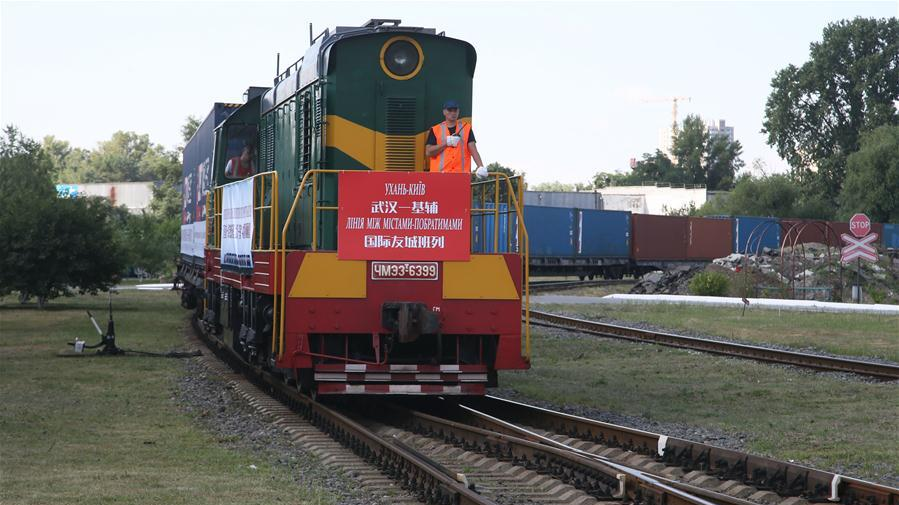
Wang Huiyao is the president of the Center for China and Globalization. The article reflects the author's opinions and not necessarily the views of CGTN.
The current conflict between Russia and Ukraine has lasted for more than a month. According to the United Nations, as of March 30, the conflict has caused over 4 million Ukrainian refugees to flee their homeland, and as of April 1, there are at least 1,276 Ukrainian civilians were known to have died and 1,981 injured. Europe faces its largest influx of refugees since World War II. Not only have global energy resources and trade activities been impacted, European security and the international system formed after World War II have also been challenged. At one point, Russia even indicated it could use nuclear weapons if its survival was threatened.
The ongoing COVID-19 pandemic together with the Russia-Ukraine conflict has brought the human race face to face with a new Bretton Woods moment. We need to think about how humanity has maintained peace for the past 77 years and why it has come to the edge of world war again.
The Bretton Woods Conference, held in July 1944, established international institutions like the International Monetary Fund and the International Bank for Reconstruction and Development (predecessor of the World Bank) to manage the post-war international monetary system, which promoted the construction of a new post-war international monetary system. For decades, the world economic landscape developed based on the Bretton Woods system, including the General Agreement on Tariffs and Trade and now the World Trade Organization, has contributed to a virtuous cycle of openness, trade, prosperity and stability. Global trade has become the greatest stabilizer of world peace since World War II.
At the end of World War II trade accounted for merely 5 percent of global GDP. Global foreign direct investment increased eight-fold from 1950 to 1970. By the end of the previous century, total global import and export trade accounted for 50 percent of global GDP. In 1950, global import and export trade totaled $61 billion, total global trade reached a record $28.5 trillion in 2021, an increase of as much as 466 times.
In recent years, however, the role of international military alliances increased as the international power landscape evolved. For example, NATO has expanded eastward five times. The U.S. probably wants to create a smaller version of NATO in Asia through multilateral military alliances with Japan, South Korea, Australia and India. This is in addition to the security pact "AUKUS" that has already been established by the U.S., the UK and Australia. The outbreak of the Russia-Ukraine conflict shows the increased danger of confrontation with military alliances, which could cause a new arms race due to isolation and suspicion, leading to accidental conflicts or regional conflicts that threaten security and stability. The world needs to continue to foster the prosperity and development that had been achieved through institutions like the World Trade Organization, the International Monetary Fund, World Bank, AIIB and others.
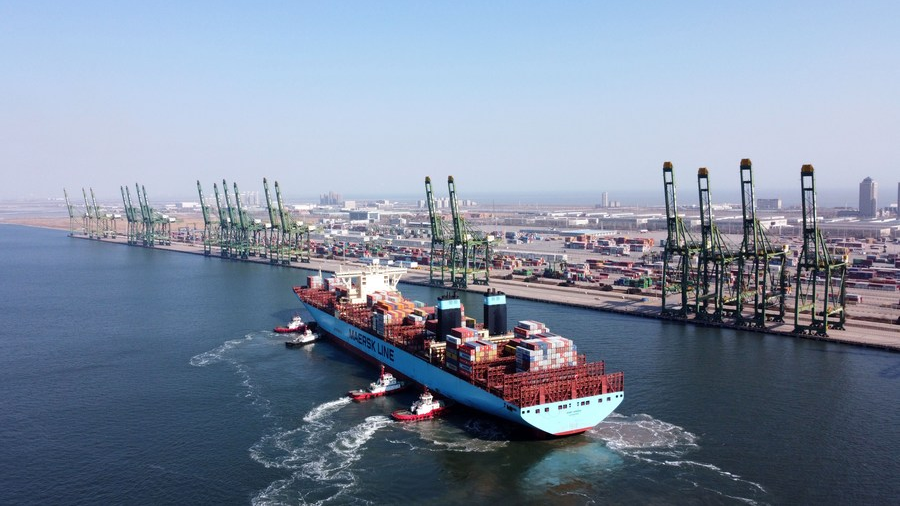
A container vessel sails into Tianjin Port in north China's Tianjin Municipality, February 22, 2021. /Xinhua
Economic globalization remains a major trend in world development. In the future, avoiding new regional and world wars means relying on economic alliances rather than military alliances. Economic cooperation and regional alliances, as a manifestation of economic globalization, are more aligned with the interests and needs of global development and more sustainable in the long run. These alliances create larger interconnected markets that complement regional advantages, provide mutual benefit, enhance regional prosperity and development, and encourage friendly exchanges and cooperation.
In recent years, China embraced an even more open attitude to the world, expanding the circle of its trade and achieving rapid development. Part of this has been the China-led Belt and Road Initiative (BRI), the Asian Investment Bank and the China-Africa Cooperation Forum. China also joined the Regional Comprehensive Economic Partnership Agreement, signed the China-Europe Investment Agreement, and applied to join the Comprehensive and Progressive Trans-Pacific Partnership Agreement as well as the Digital Economy Partnership Agreement. China is currently the largest trading partner for over 130 countries. By deepening international economic and trade cooperation and aligning with international rules, China has released more potential and cooperated with other countries to create mutual benefit, and link its own prospects with those of other countries around the world, which has succeeded in creating goodwill and trust.
There is a lot of room for cooperation between China and the United States. Given the major role the U.S. and Europe have taken in the Russia-Ukraine conflict, China's potential role as a neutral mediator stands out. Chinese President Xi Jinping has expressed his willingness to provide further humanitarian assistance, and called on all parties to work together to support dialogue and negotiations between Russia and Ukraine. In this regard, China could seek to form a multiparty talk mechanism including the five permanent members of UN Security Council, Ukraine and the EU within the UN framework, and facilitate a ceasefire between the two sides. This would ultimately bring stability back to Europe and reduce the potential for a return of instability after the ceasefire
Other global areas in which there is room for cooperation include infrastructure, climate and carbon neutrality. China and the U.S. should work together with countries from around the world to strengthen the docking of development projects and enhance the linkage of economic interests. These parties should work together to promote infrastructure initiatives like the BRI, Build Back Better World and the EU's Global Gateway, strengthen third-party market cooperation, and cooperate in developing infrastructure, especially in developing countries. The Asian Infrastructure Investment Bank should consider taking the lead and work with the World Bank, Asian Development Bank, European Bank for Reconstruction and Development, European Investment Bank, Islamic Development Bank, African Development Bank and Inter-American Development Bank to build a global infrastructure investment bank alliance to concentrate on infrastructure and climate change.
In the Indo-Pacific region, the U.S. is working to create a four-nation alliance comprising the U.S., Japan, India and Australia – the Quad – which India stressed is meant to enhance economic cooperation. In this regard, while strengthening trade and cooperation between China and India, it is also possible for China and the U.S. to do the same in the Asia-Pacific region. Under the right conditions, there could be an economic mechanism, including China, through which all parties could cooperate on regional economic development and trade to expand the space for cooperation and enhance mutual understanding and trust.
The world is becoming increasingly unstable, uncertain and insecure. Throughout history, military alliances and confrontations have brought unrest and humanitarian disasters, while economic cooperation and alliances have been proven to bring integration, development, mutual trust and goodwill. Given the rising distrust among the major powers, perhaps China, the U.S., and the countries of Europe, Asia, Africa and Latin America should consider revising the rules of global economic governance, enhancing multilateral economic and trade cooperation and playing more positive roles in trade to ensure peace, stability and prosperity.
The positive role of trade in world peace, stability and prosperity - CGTN
-
05-04-2022, 06:01 AM #949Thailand Expat
- Join Date
- Aug 2017
- Last Online
- 11-02-2026 @ 06:00 AM
- Location
- Sanur
- Posts
- 8,969
^Assuming this is correct, why did Putin choose the military option of invasion, instead of applying all the principles espoused in your post?
Is it because he is afraid or stupid. Probably both because his concerns are not for mother Russia, but his own falsely elevated command, and the untold wealth he has amassed.
-
05-04-2022, 06:11 AM #950Thailand Expat
- Join Date
- Feb 2006
- Last Online
- @
- Posts
- 40,667
Probably both. But this is not just to do with Putin or Russia- it's a Global Times Op-Ed, or 'View from China'. The premise is true- Trade is a facilitator of global peace. Russian and Europe are much better off trading for mutual benefit than fighting, ditto China and India and so on.Is it because he is afraid or stupid. Probably both

 Reply With Quote
Thread Information
Users Browsing this Thread
There are currently 3 users browsing this thread. (0 members and 3 guests)
