

Problems here in Thailand got me thinking. Extreme weather events. 1st up, Canada and their fires.
NASA - Extreme Weather and Climate Change
How do scientists determine if changes in extreme weather events are linked to climate change?
Scientists use a combination of climate models (simulations) and land, air, sea, and space-based observations to research how extreme weather events change over time. First, scientists examine historical records to determine the frequency and intensity of past events. Many of these long-term records date back to the 1950s, though some start in the 1800s. Then scientists use climate models to see if the number or strength of these events is changing, or will change, due to increasing greenhouse gases when compared to what has happened historically.
NASA Science Live: Climate Edition - Extreme Weather
_________
Largest study of 2023 wildfires finds extreme weather fuelled flames coast to coast
The largest study of Canada's catastrophic 2023 wildfire season concludes it is "inescapable" that the record burn was caused by extreme heat and parching drought, while adding the amount of young forests consumed could make recovery harder.
And it warns that the extreme temperatures seen that year were already equivalent to some climate projections for 2050.
"It is inescapable that extreme heat and moisture deficits enabled the record-breaking 2023 fire season," says the study, published Tuesday in the journal Nature Communications.
That season burned 150,000 square kilometres -- seven times the historical average -- forced 232,000 Canadians from their homes and required help from 5,500 firefighters from around the world, as well as national resources and the military. Smoke drifted as far as western Europe.
"In 2023, we had the most extreme fire weather conditions on record over much of the country," said Piyush Jain, a scientist with Natural Resources Canada. "I think the connection is pretty clear."
The paper finds that although there were differences in how the 2023 fire season played out in Western, Northern, Eastern and Atlantic Canada, the underlying causes were the same. That season had more extreme fire weather -- defined as a combination of heat and drought that exceeds 95 per cent of all fire season days -- than any year since records began in 1940.
Temperatures across the country averaged 2.2 degrees above normal during the fire season.
Results 1 to 15 of 15
Thread: Extreme Weather
-
25-08-2024, 02:01 PM #1Guest Member



- Join Date
- Sep 2008
- Last Online
- @
- Location
- left of center
- Posts
- 30,050
Extreme Weather
Keep your friends close and your enemies closer.
-
29-08-2024, 05:03 PM #2Guest Member
- Join Date
- Sep 2008
- Last Online
- @
- Location
- left of center
- Posts
- 30,050
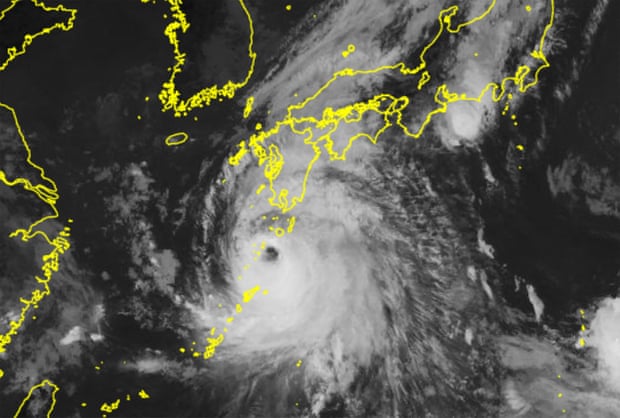
Typhoon Shanshan: Japan prepares for ‘major disaster’ as storm makes landfall
Japan’s strongest typhoon of the year has made landfall in the country’s south-west, bringing torrential rain and winds of up to 252 km/h (157 mph), strong enough to destroy homes.
The meteorological agency said Typhoon Shanshan, referred to in Japan as Typhoon No 10, made landfall on the island of Kyushu at around 8am. The power company said 254,610 houses were already without electricity.
The meteorological agency predicted 1,100mm (43in) of precipitation in southern Kyushu in the 48 hours to Friday morning, around half the annual average for the area, which comprises Kagoshima and Miyazaki prefectures.
Authorities issued a rare special typhoon warning for most parts of Kagoshima, a prefecture in southern Kyushu. Residents in at-risk areas have been urged to remain on high alert, with transport operators and airlines cancelling trains and flights.
The potential for major damage is high given Shanshan’s sluggish speed. The storm is moving northwards at just 15km/h, the meteorological agency said.
There have already been reports of deaths in landslides – a major hazard in mountainous areas – while tens of thousands of people have been advised to evacuate.
“Typhoon Shanshan is expected to approach southern Kyushu with extremely strong force through Thursday,” chief cabinet secretary Yoshimasa Hayashi told reporters earlier. “It is expected that violent winds, high waves and storm surges at levels that many people have never experienced before may occur.”
The approach of the storm prompted automaker Toyota to suspend production at all 14 of its factories. Other major car manufacturers have followed suit, according to the Kyodo news agency.
Three members of a family died after a landslide buried a house in the central city of Gamagori, Kyodo reported early on Thursday, citing local government officials.
The victims included a couple in their 70s and a son in his 30s, while two adult daughters in their 40s were injured, Kyodo added.
The agency also issued its highest “special warning” for violent storms, waves and high tides in parts of the Kagoshima region, with authorities there advising 56,000 people to evacuate.
Video footage on public broadcaster NHK TV showed roof tiles being blown off houses, broken windows and felled trees.
“Our carport roof was blown away in its entirety. I wasn’t at home when it happened, but my kids say they felt the shaking so strong they thought an earthquake happened,” one resident in Miyazaki told NHK. “I was surprised. It was completely beyond our imagination.”
The warnings indicate the “possibility that a major disaster prompted by [the typhoon] is extremely high,” Satoshi Sugimoto, chief forecaster of the meteorological agency, told a news conference.
Japan Airlines cancelled 172 domestic flights and six international flights scheduled for Wednesday and Thursday, while ANA scrapped 219 domestic flights and four international ones across Wednesday, Thursday and Friday.
The cancellations affected about 25,000 people.
Kyushu Railway said it would suspend some bullet train services between Kumamoto and Kagoshima Chuo from Wednesday night and warned of further possible disruption. Trains between Tokyo and Fukuoka, the most populous city on Kyushu, may also be cancelled depending on weather conditions this week, other operators said.
Shanshan comes in the wake of Typhoon Ampil, which disrupted hundreds of flights and trains this month. Despite dumping heavy rain, it caused only minor injuries and damage.
Ampil came days after Tropical Storm Maria brought record rains to northern areas.
Japan has issued special typhoon warnings only three times in the past. The first came in July 2014, when a strong typhoon brought record-breaking waves to the southern prefecture of Okinawa before moving north, killing three people in landslides in Nagano prefecture.
In October 2016, authorities issued a similar warning for Okinawa’s main island. The typhoon moved north over the sea west of the southernmost main island of Kyushu.
The most recent special typhoon warning came in September 2022 – the first time the warning had been issued outside Okinawa prefecture, according to public broadcaster NHK.
Like the typhoon that made landfall in southwestern Japan on Thursday morning, the storm moved slowly, giving it time to cause extensive damage to homes. Five people died in the disaster.
Typhoons in the region have been forming closer to coastlines, intensifying more rapidly and lasting longer over land due to the climate crisis, according to a study released last month.
Human-caused climate breakdown has increased the occurrence of the most intense and destructive tropical cyclones (though the overall number per year has not changed globally). This is because warming oceans provide more energy, producing stronger storms.
Extreme rainfall from tropical cyclones has increased substantially, as warmer air holds more water vapour. For example, the amount of rainfall produced by Hurricane Harvey in Texas in 2017 would have been all but impossible without the record-warm ocean water in the Gulf of Mexico.
Coastal storm surges are also higher and more damaging due to the sea level rise driven by climate breakdown. For example, the devastating storm surge from Typhoon Haiyan, which hit the Philippines in 2013, was about 20% higher due to human-caused climate breakdown.
-
30-08-2024, 09:00 AM #3Guest Member
- Join Date
- Sep 2008
- Last Online
- @
- Location
- left of center
- Posts
- 30,050
Millions told to evacuate as typhoon batters Japan
Japan has issued its highest level alert to more than five million people after the country was hit by one of its strongest typhoons in decades.
At least four people have been killed and more than 90 injured after Typhoon Shanshan made landfall in the country’s south-west. Hundreds of thousands of people have been left without power.
The level five order issued in parts of the southern island of Kyushu told residents to take immediate life-saving action by moving to a safer location or seeking shelter higher in their homes. In other areas, people have been advised to leave.
After making landfall, the typhoon weakened to a severe tropical storm and is pummelling its way north-east, bringing torrential rain and severe disruption to transport services.
Shanshan landed in Kagoshima prefecture, in the southern island of Kyushu, at around 08:00 local time on Thursday (23:00 GMT Wednesday), the Japan Meteorological Agency (JMA) said.
It has left a trail of destruction in its wake, with many buildings damaged and windows shattered by flying debris, trees uprooted and cars overturned.
Late on Tuesday, three people from the same family - a couple in their 70s and a man in his 30s - were killed by a landslide in central Japan ahead of the typhoon's arrival. Their home in Gamagori was swept away, while two other female relatives were rescued.
A fourth person was confirmed dead by police on Thursday. The 80-year-old man from Tokushima prefecture was trapped after the roof of a house collapsed about 17:30 local time (08:30 GMT), according to Japan’s national broadcaster NHK.
The fire brigade rescued the man around 50 minutes after the incident but he later died in hospital. The JMA recorded 110mm of rainfall in the area around the time of the incident.
The agency has issued its rare "special warning" for the most violent storms, warning of landslides, flooding and large-scale damage. High winds of up to 252 km/h (157mph) have been reported on Kyushu.
Most of the evacuation orders are in place for the southern island, but some were also issued for central Japan.
Videos online show large trees swaying, tiles blown off houses, and debris being thrown into the air as heavy rains lashed the island.
Major carmakers like Toyota and Nissan shut down their plants, citing the safety of employees as well as potential parts shortages caused by the storm.
Typhoon Shanshan Pummels Japan
According to University of Tokyo climate scientist Hisashi Nakamura, the typhoon intensified between August 25 and 27, fueled by unusually warm water in the Philippine Sea. During that time, sea surface temperatures were around 30 degrees Celsius (86 degrees Fahrenheit).
-
30-08-2024, 05:43 PM #4Thailand Expat

- Join Date
- Dec 2023
- Last Online
- 06-06-2026 @ 05:20 PM
- Posts
- 1,511
Last few days of Winter here, and Australia just had its hottest August days EVER recorded. It's not just warm or hot...it's like the middle of Summer. I'm talking 36 Celsius. Luckily the humidity is low.
-
30-08-2024, 10:04 PM #5hangin' around

- Join Date
- Oct 2006
- Last Online
- @
- Location
- Home
- Posts
- 41,201
If I had to guess, I'd say extremely lengthy c+p will be prevalent in all areas, and otherwise perfectly equable posters will be privately wishing that their source dies out in time for a bright and breezy weekend.
-
30-09-2024, 10:13 AM #6Guest Member
- Join Date
- Sep 2008
- Last Online
- @
- Location
- left of center
- Posts
- 30,050
Helene leaves "unimaginable" destruction in 5 states as death toll rises
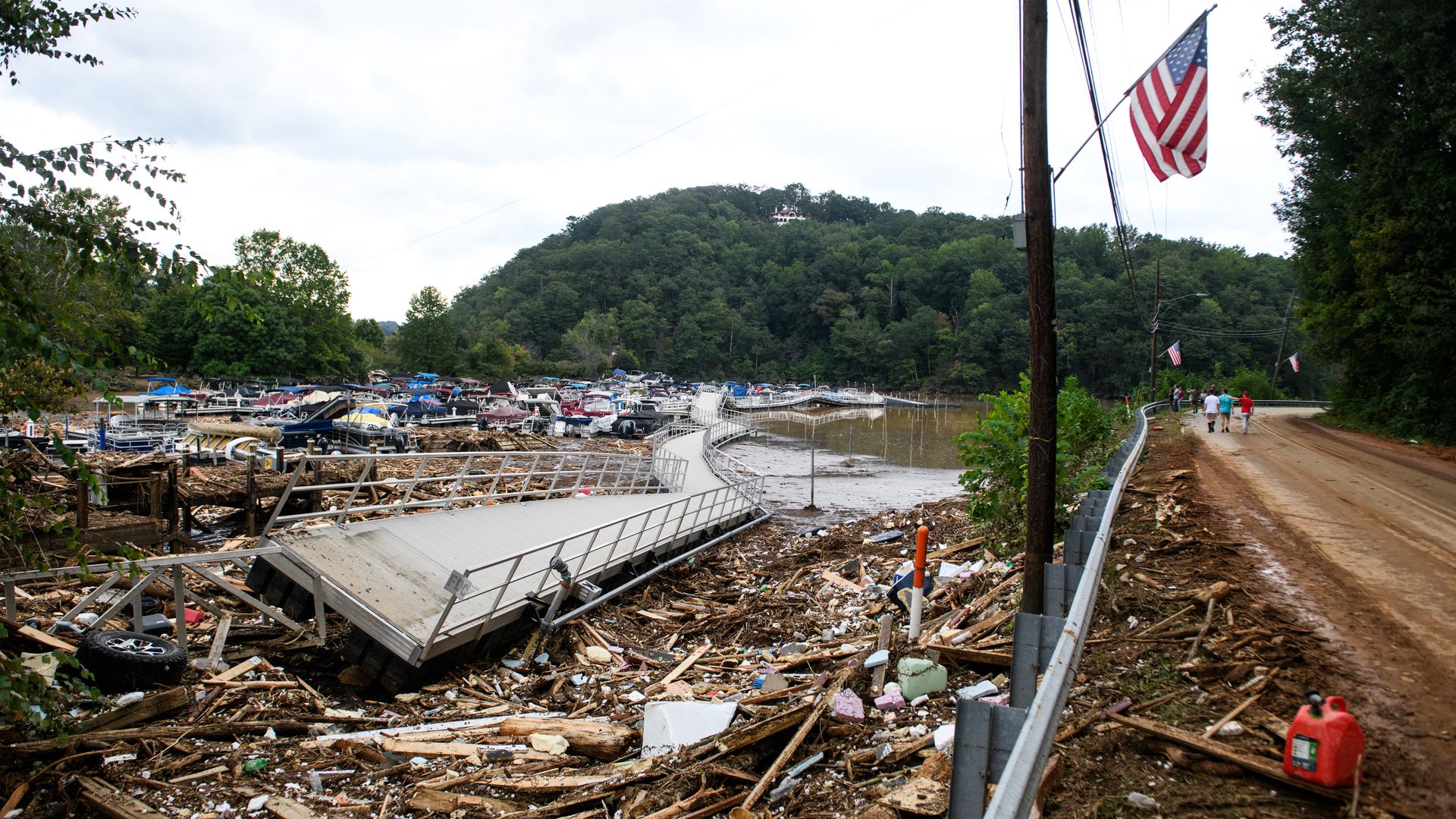
Hurricane Helene has left officials in five southeastern states grappling to respond to the widespread destruction it caused after hitting Florida as a Category 4 story last week, as the death toll continues to rise.
The big picture: Officials on Sunday confirmed 30 deaths in the flood-hit Buncombe County, western North Carolina, where Asheville saw historic water level rises — bringing the number of storm-related deaths across six states to at least 91, per AP.
- Officials also confirmed storm-related deaths in Florida, Georgia, South Carolina, Tennessee and Virginia, as search and rescue teams continued to respond to the fallout from the hurricane that struck Florida late Thursday before moving into Georgia, the Carolinas and Tennessee.
- Widespread outages still affected hundreds of thousands of people in multiple states Sunday evening, including North and South Carolina and Georgia.
State of play: Underscoring the widespread threats the former Hurricane Helene posed, the Biden-Harris administration approved emergency requests for federal assistance from Florida, Georgia, North and South Carolina and Alabama ahead of the storm's landfall.
- FEMA administrator Deanne Criswell told CBS News Sunday that the five states affected by the storm "are going to have very complicated recoveries, but we will continue to bring those resources in to help them, technical assistance as they're trying to identify the best ways to rebuild."
- She noted on CBS' "Face the Nation" there's "historic flooding" in North Carolina, particularly in the state's west.
- "I don't know that anybody could be fully prepared for the amount of flooding and landslides they are having right now," Criswell said.
- Pamlico County Emergency Management in a Saturday Facebook post described the damage from the remnants of the storm in Chimney Rock, some 41 miles southeast of Asheville, as "unimaginable."
Zoom in: Criswell joined Florida Gov. Ron DeSantis to survey damage in hurricane-hit state on Tuesday and she was surveying damage in Valdosta, Georgia, on Sunday. She'll meet with leaders in flood-affected North Carolina communities on Monday.
- President Biden told Criswell when she briefed him on the ongoing impacts in the storm-affected states that he plans to travel this week affected communities "as soon as it will not disrupt emergency response operations," per a Sunday evening White House pool report.
- Vice President Kamala Harris also intends to visit impacted communities once this is possible, according to a report from poolers traveling with the Democratic presidential nominee.
- Former President Trump's presidential campaign announced plans to visit Valdosta on Monday.
By the numbers: Over 779,000 customers were without power in South Carolina and another 586,000 others in Georgia were without electricity on Sunday night, per poweroutage.us.
- More than 481,000 in N.C., nearly 138,000 in Florida and almost 104,000 in Virginia also had no power, according to the utility tracker.
Between the lines: Hurricanes are increasingly likely to become more intense, and studies show human-caused climate change is a major driver of this.
- Hurricane Helene was part of a growing trend of storms that have undergone rapid intensification. This one was among eight other landfalling storms in the U.S. that rapidly intensified by at least 35 mph in 24 hours before landfall.
- The extreme intensification rate was due in large part to hot ocean surface temperatures in the Gulf of Mexico, along with ocean heat content values. Research shows climate change is boosting global ocean temperatures.
- Criswell noted on CBS that in the past, "when we would look at damage from hurricanes, it was primarily wind damage, with some water damage."
- Now, "we're seeing so much more water damage, and I think that is a result of the warm waters, which is a result of climate change."
Tariq Scott Bokhari: Went to help in the Lake Lure/Chimney Rock area today, and itÂ’s hard to describe - never seen anything like this. Post apocalyptic. ItÂ’s so overwhelming you donÂ’t even know how to fathom what recovery looks like, let alone where to start. Going to be a long path to recovery that all levels of stakeholders are going to be needed. https://twitter.com/FinTechInnov8r/s...50451998703951
https://www.axios.com/2024/09/30/hur...t-flood-damage
-
11-11-2024, 04:57 PM #7Guest Member
- Join Date
- Sep 2008
- Last Online
- @
- Location
- left of center
- Posts
- 30,050
Extreme weather cost $2tn globally over past decade, report finds
Violent weather cost the world $2tn over the past decade, a report has found, as diplomats descend on the Cop29 climate summit for a tense fight over finance.
The analysis of 4,000 climate-related extreme weather events, from flash floods that wash away homes in an instant to slow-burning droughts that ruin farms over years, found economic damages hit $451bn across the past two years alone.
The figures reflect the full cost of extreme weather rather than the share scientists can attribute to climate breakdown. They come as world leaders argue over how much rich countries should pay to help poor countries clean up their economies, adapt to a hotter world and deal with the damage done by increasingly violent weather.
“The data from the past decade shows definitively that climate change is not a future problem,” said John Denton, secretary-general of the International Chamber of Commerce (ICC), which commissioned the report. “Major productivity losses from extreme weather events are being felt in the here and now by the real economy.”
The report found a gradual upward trend in the cost of extreme weather events between 2014 and 2023, with a spike in 2017 when an active hurricane season battered North America. The US suffered the greatest economic losses over the 10-year period, at $935bn, followed by China at $268bn and India at $112bn. Germany, Australia, France and Brazil all made the top 10.
When measured a person, small islands such as Saint Martin and the Bahamas saw the greatest losses.
Fire, water, wind and heat have wiped more and more dollars off government balance sheets as the world has grown richer, people have settled in disaster-prone regions, and fossil fuel pollution has baked the planet.
But until recent years, scientists struggled to estimate the extent of the role that humans played by warping extreme weather events with planet-heating gas.
Climate breakdown was responsible for more than half of the 68,000 heat deaths during the scorching European summer of 2022, a study found last month, and doubled the chance of the extreme levels of rainfall that hammered central Europe this September, an early attribution study found. In some other cases, researchers found only mild effects or did not observe a climate link at all.
Ilan Noy, a disaster economist at Victoria University of Wellington, who was not involved in the ICC study, said its numbers align with previous research he had done but cautioned that the underlying data did not capture the full picture. “The main caveat is that these numbers actually miss the impact where it truly matters, in poor communities and in vulnerable countries.”
A study Noy co-wrote last year estimated the costs of extreme weather attributable to climate breakdown at $143bn a year, mostly due to loss of human life, but was limited by data gaps, particularly in Africa.
“Most of the impact that is counted is in high-income countries – that’s where asset values are much higher, and where mortality from heatwaves is counted to be much larger,” said Noy. “Clearly, the losses of homes and livelihoods in a poor community in poor countries are more devastating in the longer term than losses in wealthy countries where the state is able and willing to assist in recovery.”
The ICC urged world leaders to act faster to get money to countries that needed help to cut their pollution and to develop in ways that can withstand the shocks of violent weather.
“Financing climate action in the developing world shouldn’t be seen as an act of generosity by the leaders of the world’s richest economies,” said Denton. “Every dollar spent is, ultimately, an investment in a stronger and more resilient global economy from which we all benefit.”
-
19-11-2024, 03:05 PM #8Guest Member
- Join Date
- Sep 2008
- Last Online
- @
- Location
- left of center
- Posts
- 30,050
How do we know that the climate crisis is to blame for extreme weather?
It is a crucial question: is the climate crisis to blame for the extreme weather disasters taking lives and destroying homes around the world. But it has not been an easy one to answer. How much is due to global heating, how much is just the severe weather that has always happened?
The good news is that the scientific techniques used to untangle that question – called climate attribution – are now well established. The bad news is what they reveal: the studies show that the burning of fossil fuels has changed the climate so dramatically that heatwaves, floods and storms are now hitting communities with a severity and frequency never seen during the entire development of human civilisation.
What are attribution studies?
There are three approaches, used in combination to give the most reliable results. All compare the present with the past in order to calculate the increased frequency or severity of events. Weather data from the overheated present and the cooler past, when available, can be compared to see how many times more an extreme event happens today. Climate models can be used in a similar way to compare modern and preindustrial climates. Thirdly, climate models can also simulate the climate from, say, 1900 to the modern day, with slowly rising human-caused emissions. This enables scientists to detect trends in extreme weather, as well as the overall change in likelihood.
What have the studies found?
The most striking findings are of extreme heatwaves that would have been impossible without global heating, because they have no historical precedent and do not happen in model simulations without the added heat from human-caused climate change. That is as close to saying global heating caused the heatwave as makes no difference. At least 24 previously impossible heatwaves have already struck around the world, from Europe to North America, Africa and east Asia.
What about other events?
Many more extreme weather events have been made significantly worse, or more likely, by global heating. That means hotter heatwaves, more intense rains, stronger gale-force winds. Of the 744 attribution studies in a database produced by Carbon Brief, the most comprehensive that exists, three-quarters found that global heating had a significant impact.
Which extreme weather events are most supercharged by the climate crisis?
Heatwaves have been the most studied extreme weather events, with more than 200 analyses, and 95% were made more severe or more likely. Not a single one was made less likely.
What about floods and droughts?
Deluges of rain can be analysed relatively easily but floods are more complex, because their occurrence is also affected by human-built defences and the topography of the land. Nonetheless, of the 177 assessments of rain and flooding events, more than 60% were worsened by global heating, while 11% were made less likely, and the rest showed no influence or were inconclusive. Almost 70% of the 106 drought events were made more likely, with only one made less likely.
Can attribution analyses look at death tolls from extreme weather?
Yes. It is more complicated but a growing number of studies are estimating the influence of global heating on the impacts of extreme weather events, not just the events themselves. Of 33 such studies, 91% showed impacts made worse by global heating.
One found that one in three newborn babies who died due to heat in some countries would have survived if global heating had not pushed temperatures beyond normal bounds. Another found approximately 100,000 heat-related deaths in summer every year due to the climate crisis.
Other studies found that Hurricane Harvey would not have flooded 30%-50% of the US properties that it did in 2017 without global heating, and that four major floods in the UK would have caused only half the $18bn (£14.3bn) of wrecked buildings were it not for human-caused climate change.
The pre-existing vulnerability of communities is also a critical factor in how damaging climate impacts are. People in poorer nations with less resilient homes and fewer resources suffer far more than those in rich nations.
What about changes to snow storms and freezing snaps?
Almost 60 of these have been assessed, finding unsurprisingly that in most cases that global heating made such weather milder or less likely.
Can attribution studies be used to hold polluters to account?
Yes. Such studies are increasingly being used as evidence of responsibility for climate damage in landmark legal cases, such as Juliana v United States and Lluiya v RWE. Attribution science is also being used to inform negotiations over funding for the UN’s “loss and damage” fund, which would finance the rebuilding of communities after climate disasters.
What can be said if no attribution study has been done?
Scientists have the capacity to assess only a small fraction of all extreme weather events. Researchers at the World Weather Attribution initiative use criteria to decide which to analyse, including how many people are affected and how much damage has been caused, as well as the availability of data.
However, enough research has now been done to make very confident statements about most extreme weather events. Scientific methods can also give a real-time assessment of how much more likely a temperature was made by global heating anywhere in the world.
Extreme rainfall is also more common and more intense across most of the world, particularly in Europe, most of Asia, central and eastern North America, and parts of South America, Africa and Australia. For coastal flooding, every event is more likely than it would otherwise have been, because human-caused climate breakdown is driving sea level rise. Droughts and wildfires are also becoming more common and severe in many places.
Continuing attribution research will reveal even more about how much global heating has changed the world of extreme weather. But it is already very clear that the climate crisis is here and causing immense damage today.
-
01-12-2024, 12:35 PM #9Guest Member
- Join Date
- Sep 2008
- Last Online
- @
- Location
- left of center
- Posts
- 30,050
Reflections on the 2024 Atlantic Hurricane Season | MICHAEL E. MANN
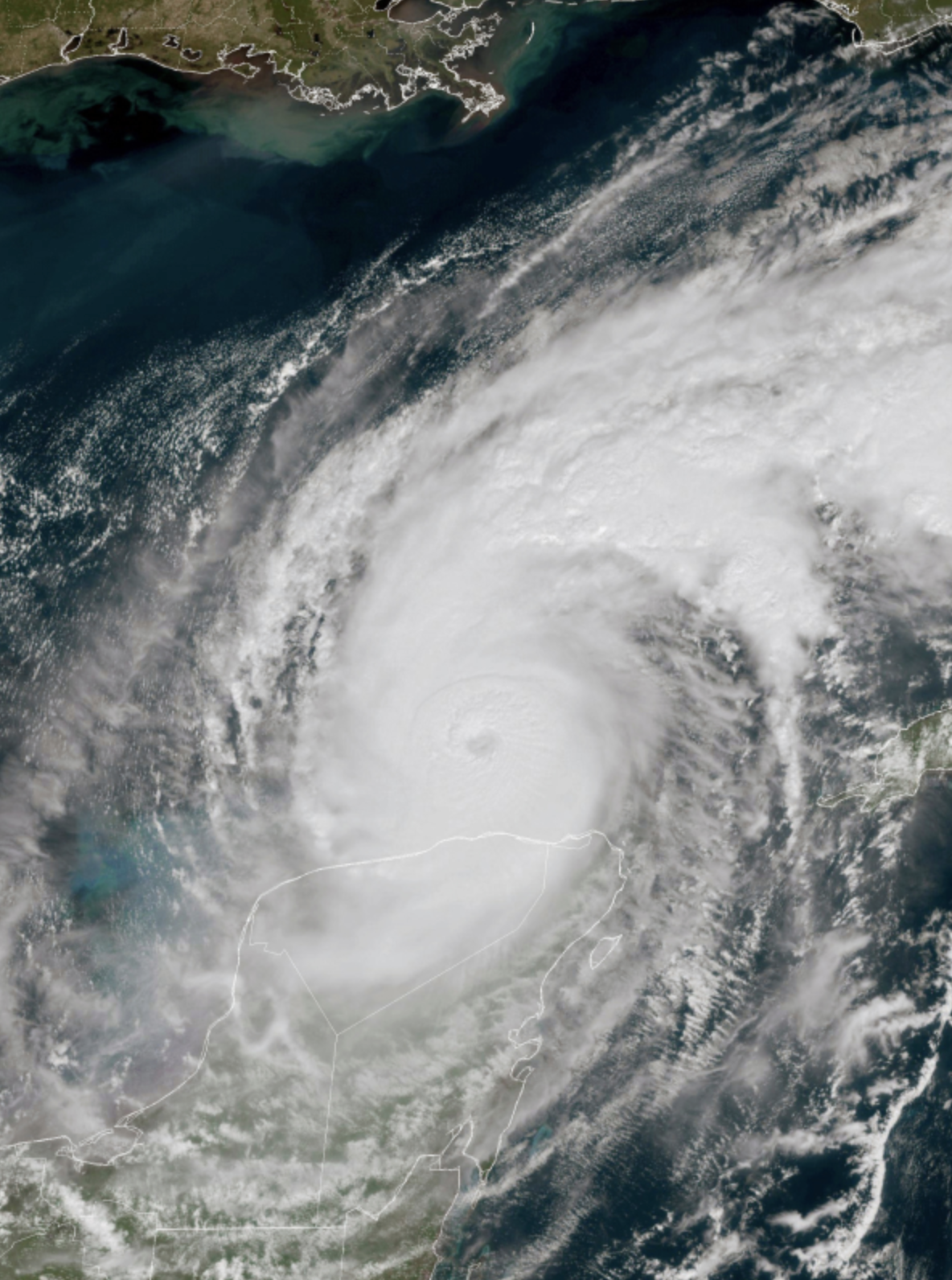
Now that the 2024 Atlantic hurricane season seems to be coming to a close, it is worth reflecting on what transpired and what we might learn from it.
By most measures, it was an active, destructive and--unfortunately--deadly storm season, with 11 tropical cyclones reaching hurricane strength, 5 of them making landfall on the U.S., two of them--Helene and Milton--as major hurricanes. One particularly notable feature was the extreme rapid intensification of several storms, including Beryl, which intensified from a tropical storm to a hurricane in under 24 hours, Helene which intensified from a weak tropical storm to a cat 4 major hurricane in 48 hours, becoming the strongest storm on record to make landfall on the Florida "Big Bend" region, and Milton, which went from cat 1 to a 185 mph monster cat 5 in under 24 hours. Most remarkable of all, however, was Oscar which the National Hurricane Center identified as a small tropical disturbance off the coast of the Dominican Republic at 8 AM EDT on October 19th, only to upgrade it to a Hurricane 5 hours later. It left a trail of destruction after making landfall in eastern Cuba, resulting in a half dozen fatalities. Unfortunately, we shouldn't be surprised--this is part of a steady trend toward rapid intensification and was predicted a number of years ago by leading hurricane scientist Kerry Emanuel of MIT as a consequence of warming oceans.
The increased intensity and destructive potential of these storms too can be attributed to human-caused warming. A recent study found that human greenhouse warming substantially boosted the intensity of the 2024 storms, concluding that the two category 5 storms--Beryl and Milton--likely would not have reached that status in the absent of human-caused warming. Indeed Milton nearly breached the threshold of 192 mph sustained winds argued by one recent study to constitute a whole new "category six" caliber of hurricanes that has emerged in an era of unprecedented ocean warmth. A separate study estimated that the deadly flooding in the southeastern U.S. from hurricane Helene was increased by 50% by human-caused warming.
While the 2024 hurricane season was unprecedented in a number of ways, with impacts that have clearly been exacerbated by climate change, there was one piece of the puzzle that didn't quite fit. Yes, it was an active season as measured by the number of tropical cyclones (i.e. the named storm count)--nominally 18 (though that number could still rise, as discussed below). That places it among the top 11 seasonal totals historically going back to 1851. But the season was not as active as one might have expected.
Our team was among several groups that predicted an extremely active season, with named storm counts in the mid 20s to low 30s. These forecasts were driven by the favorable climate factors that were at play, i.e. record tropical Atlantic warmth and a transition underway from El Niño toward La Niña conditions. Both factors favor active Atlantic hurricane seasons, as they are associated with a thermodynamically favorable, low-shear environment that is conducive to tropical cyclogenesis. Previous recent years with this combination of factors, 2005 and 2020, were associated with record numbers of named storms (28 and 30 respectively). With record warmth in the main development region ("MDR") for Atlantic tropical cyclones going into this year's season, our statistical modeling approach predicted between 27 and 39 storms, with a most likely estimate of 33 named storms.
That forecast however was contingent upon the development of a moderate La Niña during boreal autumn as models were predicting at the time. This did not come to pass, with current estimates showing neutral values of the "Nino3.4" index as of the El Niño phenomenon in late November. Our forecast in the alternative scenario of a neutral tropical Pacific state was instead for the slightly lower total of 25 – 36 storms, with a best guess of 30.5. The actual total of 18---as of the official end of the storm season--is clearly lower than the predicted range (we note here however that there is still a possibility that the final total will be 19 or even 20; during the 2005 season, for example, named storms continued on into January of the following year. Moreover, there is some subjectivity in the unofficial season total--if "potential cyclone eight" had been named by the National Hurricane Center, the total would already be 19. In some past years post-season analysis has added storms like this to the seasonal record, increasing the count total. That may well happen here). Nevertheless, the current count of 19 is roughly two standard errors below our mean forecast, which is almost certainly sufficient to declare our forecast "busted".
What might have gone wrong here? There are a couple confounding factors that are likely at work here. The hurricane season was unusually quiet during July and August when seasonal activity is typically ramping up. The season picked up considerably in September however. In fact, there were nearly as many named storms (13--or 14 if one includes "potential cyclone eight") during September-November as during the record-active years of 2005 and 2020 (16 named storms in both cases).
So there's no real discrepancy when it comes to the latter half of the season. It was basically as active as predicted. The puzzle is why July and August were so quiet despite clearly favorable seasonal large-scale climate conditions. This is where one runs into complications with intraseasonal variability. Of particular relevance is the so-called Madden-Julian oscillation or simply "MJO" to its friends. The MJO is a roughly 40-50 day oscillation in the tropical atmospheric circulation which influences the location of convection, which shifts east and west over the course of a single 40-50 day cycle. When the center of convection coincides with the tropical Atlantic, conditions are more favorable for tropical cyclogenesis. Conversely, if the center of convection shifts to e.g. the Pacific, conditions become unfavorable. This year, it happens that the unfavorable phase of the MJO coincided roughly with the peak of the storm season, inhibiting tropical cyclone formation at the very time it would typically be most prevalent. Secondarily, dry Saharan air outbreaks in July and August created unfavorable conditions for tropical cyclogenesis as well. The net effect was that unfavorable conditions related less to climate and more to just the vagaries of weather and intraseasonal variability conspired to make the 2024 storm season less active than it otherwise would have been. We should be thankful for that, given the devastating consequences of the storms that did form.
There is one other noteworthy detail here. Our group makes an alternative forecast in which tropical sea surface temperature (SST) in the main development region (MDR) is replaced with what we call "relative SST", defined as the difference between MDR SST and the average SST throughout the entire tropics, which some researchers have argued might be a better predictor of Atlantic hurricane activity. While our previous analyses have found that this alternative model yields less skillful predictions, it is notable that this year it yielded a much more accurate prediction of 19.9 +/- 4.5 total named storms that was remarkably close to the seasonal total.
So there are some interesting takeaways and a few conundrums to reflect upon as we look back at this unprecedented and unusual Atlantic hurricane season. With regard to our statistical model of Atlantic hurricane activity, it has generally yielded among the most accurate forecasts. In years where it's "missed" (i.e., the observed counts were outside the uncertainty range of the prediction), it has typically predicted too few storm counts. For example, in 2020, while we predicted the most active season of all forecasters (as many as 24 named storms), resulting from a similar combination of favorable factors that were observed heading into this season (i.e. very warm tropical Atlantic SSTs and a transition toward La Nina conditions), our prediction was too low--the actual count was a record 30 named storms. This is the first year where our prediction substantially exceeded the observed storm counts.
It's tempting to dismiss this as a one-off, i.e. the conspiring of unusual weather conditions at the height of the storm season, a bad roll of the dice. And that could be all it is. A more disturbing possibility is that the climate system is no longer behaving quite the way it used to, and some of the old rules and relationships no longer apply. Lest this sound like special pleading (and maybe it is), it is worth noting that respected colleagues of mine (climate scientists Gavin Schmidt and Zeke Hausfather) have argued precisely that in a recent New York Times op-ed entitled "We Study Climate Change. We Can’t Explain What We’re Seeing". Among other things, they argue that the progression of the latest El Niño episode simply doesn't match the pattern seen in past El Niño episodes. It is possible that climate change is altering the behavior of the phenomenon. And if that's the case, that it may also be altering the impact the phenomenon has on other attributes of the ocean-atmosphere system, including its influence on seasonal hurricane activity.
It's a disquieting possibility. And while in this case we're talking about impacts that were reduced relative to what had been predicted, there could well be far more unpleasant surprises in the greenhouse. It's unwise, in short, to tinker with a system you don't entirely understand. Particularly when our entire civilization is at stake.
-
06-07-2025, 08:07 AM #10Guest Member
- Join Date
- Sep 2008
- Last Online
- @
- Location
- left of center
- Posts
- 30,050
Texas Suffers Deadly Flash Floods on July 4
Parts of central Texas are in a state of emergency after an estimated 5-11 inches of rain prompted flash floods, forcing residents to evacuate on July 4.
Authorities in the city of Kerrville, about an hour northwest of San Antonio, confirmed at least six fatalities, according to the Kerr County Lead, and urged displaced people to gather at a local Walmart that’s being used as a reunification center. Police ordered people who live close to the Guadalupe River to evacuate to higher ground as the river swelled to its second-highest height on record.
Roads and streets are flooded, and “residents are encouraged to shelter in place and not attempt travel,” according to a statement from the Kerr County Sheriff’s Office. The National Weather Service in San Angelo also urged residents to stay off the roads.
“More than an entire summer’s worth of rain fell in some spots in just a few hours, quickly overwhelmed dry soils and created significant flash flooding,” CNN reported. “Central Texas is currently home to some of the worst drought in the United States and bone-dry soils flood very quickly.”
Flash floods are the most severe flood warning. In 2024, the National Weather Service recorded 91 flash flood emergencies, more than any other year since it started using that terminology in 2003.
The July 4th flooding in Texas is just the latest example of storms becoming more severe in the era of climate change. Strong and wetter storms are increasing in frequency. The warmer the atmosphere gets, the more water it’s able to hold, and subsequently dump over land, according to the National Resources Defense Council (NRDC). As ocean temperatures rise, glaciers melt, and sea levels rise, increasing the risk of coastal flooding. As the NRDC puts it, “While our warming world may not be the only or most direct cause of any given flood, it exacerbates many of the factors that increase flood risk.”
__________
_________
Flooding in Texas leads to multiple deaths
Hill Country flash floods leave as many as 13 dead, more than 20 girls still missing as rescue efforts continue
Officials said as many as 13 bodies have been found and 23 girls from Camp Mystic, a private Christian girls’ camp, have not been accounted for after a catastrophic flood that swept through Kerr County overnight Friday morning.
Lt. Gov. Dan Patrick said at a Friday afternoon press conference that between six and 10 bodies have been recovered. Meanwhile, during a news conference conducted at the same time as Patrick’s update, Kerr County Sheriff Larry Leitha reported that there were 13 deaths from the flooding.
Patrick said the dead include adults and children, and some were found in cars “that were washed out upstream.” He said officials aren't sure whether any of the bodies were children from Camp Mystic, and stressed that the campers are only considered missing at this point.
“We will do anything humanly possible to find your daughter,” Patrick said, adding that search and rescue teams are looking for survivors, along with 14 state helicopters, 12 drones and 400 to 500 people on the ground helping with the search. He added that if parents haven't been personally contacted by the camp, they can assume their daughters have been accounted for.
__________
Latest missing and dead.
Flash floods in Texas kill at least 49 people
At least 32 people are dead in Texas floods as the search continues for people still missing
Rescuers scoured flooded riverbanks littered with mangled trees Saturday and turned over rocks in the search for more than two dozen children from a girls’ camp and many others missing after a wall of water blasted down a river in the Texas Hill Country. The storm killed at least 32 people, including 14 children.
Some 36 hours after the floods, authorities have still not given a number of how many people in total are still missing beyond the 27 children from Camp Mystic, a Christian summer camp along the river.
Texas flooding latest: 43 dead, including 15 children, as search for some two dozen girls continues
-
28-07-2025, 02:10 PM #11Guest Member
- Join Date
- Sep 2008
- Last Online
- @
- Location
- left of center
- Posts
- 30,050
Thousands in Greece and Turkey evacuate as winds and heat fan wildfires
Czech firefighters and Italian aircraft join rescue effort in Greece, and firefighter among those killed in Turkey
Thousands of people in Greece and Turkey have been forced to evacuate homes as firefighters in the countries battled to contain wildfires fanned by strong winds and searing heat.
As temperatures in south-eastern Europe exceeded 40C for a seventh straight day, the Greek prime minister praised rescue workers for waging “a titanic battle” to bring blazes under control.
“The state mechanism has been called to engage in a titanic battle, simultaneously responding to dozens of wildfires across the country,” Kyriakos Mitsotakis said in a statement. “To those who saw their properties destroyed by the fury of fire, know that the state will stand by your side.”
Eleven regions of Greece face a “very high risk” of fire, and the government has appealed for help from EU partners to help it deal with fires burning on multiple fronts.
Emergency services said that while a conflagration that had injured two firefighters in Kryoneri, north-east of Athens, had been successfully quelled, fires around Messinia in the south-west Peloponnese and on the popular island of Kythera had not been contained.
The authorities were also battling flare-ups on the islands of Evia and Crete. In all of the stricken areas residents received messages to evacuate.
Several regions were placed under a red category 5 alert, the highest on the national scale, because of conditions exacerbated by the extreme weather that had turned terrain to tinder.
The National Observatory in Athens recorded a temperature of 45.8C (114.5F) in Messinia on Friday. On Saturday, the temperature reached 45.2C (113.4F) in Amfilochia, western Greece.
By late Sunday, as Czech firefighters and Italian water-bombers joined emergency teams in Greece, the focus turned to Kythera.
Describing the destruction as “incalculable”, the public broadcaster ERT reported: “The first images are resonant of a biblical disaster as huge areas have been reduced to cinders and ash.”
The island’s deputy mayor, Giorgos Komninos, was cited as saying: “Everything, from houses, beehives [to] olive trees has been burnt.”
Two teams of forest commandos, 67 firefighters and scores of volunteers backed by 22 fire brigade trucks, three helicopters and two planes were struggling to douse flames that had ripped through prime agricultural and forest land on the island fuelled by gale-force winds.
As flames approached, villagers were ordered to evacuate to safer areas, with 139 people, including tourists who were trapped on a beach, being rescued by the coast guard.
The meteorologist Panagiotis Yiannopoulos told ERT: “We are expecting the winds to get stronger right over Kythera and Crete, winds of six-beaufort strength from this evening until Tuesday evening, so a lot of very strong wind over many hours.”
In Turkey, where a record temperature of 50.5 C was registered in the province of Şirnak, in the south-east – surpassing a previous heat record of 49.5C in August 2023 – more than 1,700 people were forced to flee their homes after wildfires barrelled towards Bursa, the country’s fourth-largest city. Orhan Saribal, an opposition parliamentarian, described the scene as “an apocalypse”.
More than 1,100 firefighters were battling the flames, with authorities saying that at least 76 blazes had broken out within a 24-hour period. Turkey has been hit by numerous heat-induced infernos for weeks.
On Sunday, Bursa’s mayor said a firefighter had died of a heart attack on the job, bringing the death toll to 14. Ten of the victims were rescue volunteers and forestry workers killed on Wednesday in a fire in the west of the country.
Dozens of fires were also reported in Albania over the weekend, where thousands were forced to evacuate homes in the southern town of Delvina.
-
04-12-2025, 01:58 AM #12Guest Member
- Join Date
- Sep 2008
- Last Online
- @
- Location
- left of center
- Posts
- 30,050
Families on rooftops, homes buried by mud: Asia floods show water is overtaking wind as main threat
Families stranded on their rooftops. Homes buried by fast-flowing mud. Jagged brown craters scarring lush green hillsides.
The scenes are the result of a series of cyclones and storms in a heavy monsoon season that have struck Asia with torrential rains, gutting essential infrastructure and reshaping landscapes. The violent weather has killed at least 1,200 people in the past week and forced a million to flee without knowing whether their homes will still be standing when they go back.
The fallout marks a grim escalation in deadly weather across the region that has been aggravated by the blanket of carbon pollution heating the planet. A review by the Intergovernmental Panel on Climate Change (IPCC) projected that south and south-east Asia will suffer more intense rain as temperatures rise, with a “large increase” in flood frequency striking monsoon regions.
Roxy Koll, a climate scientist at the Indian Institute of Tropical Meteorology and coauthor of the latest IPCC report, said the cyclones’ behaviour had changed more than their number this season. “They are wetter and more destructive because the background climate has shifted,” he said. “Water, not wind, is now the main driver of disaster.”
Natural weather patterns including a La Niña cycle and a negative Indian Ocean dipole have helped to create conditions for the storms to form. Scientists have not determined the extent to which planet-heating pollution contributed to the death toll, which continues to rise with floodwaters, but they have long established that warmer air holds more moisture – about 7% per degree Celsius.
The extra water, together with the increase in energy from hotter oceans, leads to the formation of storms that pack far more punch.
“Across south and south-east Asia, storms this season have been carrying extraordinary amounts of moisture,” said Koll. “A warmer ocean and atmosphere are loading these systems with water, so even moderate cyclones now unleash rainfall that overwhelms rivers, destabilises slopes and triggers cascading disasters.
“Landslides and flash floods then strike the most vulnerable, the communities living along these fragile environments.”
The rains have loosened soils and levelled slopes in hilly regions that have wiped out villages and rendered roads and railways unusable. The floods have also hampered rescue efforts by disrupting electricity supplies and phone networks.
In Indonesia, where freshly cut logs have washed up in flooded parts of the country that also suffer from deforestation, the damage is thought to have been compounded by the felling of trees that could have soaked up water and stabilised the soil. The attorney general’s office is leading a task force to check if illegal activities contributed to the disaster, according to local media. Reuters also reported that the environment ministry planned to query logging, mining and palm plantation companies about their activities.
Sonia Seneviratne, a climate scientist at ETH Zurich and a co-author of the latest IPCC report, said other human factors may have amplified the extent of the floods, but that did not contradict the role of climate change in worsening rainfall.
“We have a very clear signal of increases in heavy precipitation with increasing warming, both on a global scale and in Asia,” she said. “The influence of human-induced climate change on the intensification of heavy precipitation is well established, and this is a key element in the reported floodings.”
The sliver of good news in the longer term is that the human cost of floods and storms has dropped sharply around the world as governments have set up early warning systems and got used to shepherding people out of danger before a disaster strikes. Even in middle-income countries that have made great progress in turning death tolls into displacement figures, however, experts say response systems are still patchy.
“The picture in south-east Asia shows that you still need even better early warning systems, even better shelter for people to go to in times of flooding … [and] even more nature-based solutions – the planting of trees and mangroves in those places particularly at risk of flooding to keep people safer,” said Alexander Matheou, the director of the Asia-Pacific region for the International Federation of Red Cross and Red Crescent Societies.
People also need “better social protection systems in disasters so they can immediately get cash and the food, medicine, and shelter they need when a disaster strikes”, he said.
-
26-01-2026, 02:21 PM #13Guest Member
- Join Date
- Sep 2008
- Last Online
- @
- Location
- left of center
- Posts
- 30,050
Global Water Bankruptcy
World enters “era of global water bankruptcy” UN scientists formally define post-crisis reality for billions
Amid chronic groundwater depletion, water overallocation, land and soil degradation, deforestation, and pollution, all compounded by global heating, a UN report today declared the dawn of an era of global water bankruptcy, inviting world leaders to facilitate “honest, science-based adaptation to a new reality.”
“Global Water Bankruptcy: Living Beyond Our Hydrological Means in the Post-Crisis Era,” argues that the familiar terms “water stressed” and “water crisis” fail to reflect today’s reality in many places: a post-crisis condition marked by irreversible losses of natural water capital and an inability to bounce back to historic baselines.
“This report tells an uncomfortable truth: many regions are living beyond their hydrological means, and many critical water systems are already bankrupt,” says lead author Kaveh Madani, Director of the UN University’s Institute for Water, Environment and Health (UNU-INWEH), known as 'The UN’s Think Tank on Water.'
Expressed in financial terms, the report says many societies have not only overspent their annual renewable water “income” from rivers, soils, and snowpack, they have depleted long-term “savings” in aquifers, glaciers, wetlands, and other natural reservoirs.
This has resulted in a growing list of compacted aquifers, subsided land in deltas and coastal cities, vanished lakes and wetlands, and irreversibly lost biodiversity.
The UNU report is based on a peer-reviewed paper to be published in the journal of Water Resources Management that formally defines water bankruptcy as
- persistent over-withdrawal from surface and groundwater relative to renewable inflows and safe levels of depletion; and
- the resulting irreversible or prohibitively costly loss of water-related natural capital.
By contrast:
- “Water stress” reflects high pressure that remains reversible
- “Water crisis” describes acute shocks that can be overcome
The report is issued prior to a high-level meeting in Dakar, Senegal (26–27 Jan.) to prepare the 2026 UN Water Conference, to be co-hosted by the United Arab Emirates and Senegal 2-4 Dec. in the UAE.
While not every basin and country is water-bankrupt, Madani says, “enough critical systems around the world have crossed these thresholds. These systems are interconnected through trade, migration, climate feedbacks, and geopolitical dependencies, so the global risk landscape is now fundamentally altered.”
Madani underlines the following four essential points:
- Water cannot be protected if we allow the hydrological cycle, the climate, and the underlying natural capital that produces water to be interrupted or damaged. The world has an important and still largely untapped strategic opportunity to act.
- Water is an issue that crosses traditional political boundaries. It belongs to north and south, and to left and right. For that reason, it can serve as a bridge to create trust and unity between and within nations. In the fragmented world we live in, water can become a powerful focus for cooperation and for aligning national security with international priorities.
- Investment in water is also investment in mitigating climate change, biodiversity loss, and desertification. Water should not be treated only as a downstream sector affected by other environmental crises. On the contrary, targeted investment in water can address the immediate concerns of communities and nations while also advancing the objectives of the Rio Conventions (climate, biodiversity, desertification).
- A renewed global emphasis on water could help reaccelerate stalled negotiations and potentially reenergize halted international processes. A practical and cooperative focus on water offers a way to connect urgent local needs with long-term global goals.
Hotspots
In the Middle East and North Africa region, high water stress, climate vulnerability, low agricultural productivity, energy-intensive desalination, and sand and dust storms intersect with complex political economies;
In parts of South Asia, groundwater-dependent agriculture and urbanization have produced chronic declines in water tables and local subsidence; and
In the American Southwest, the Colorado River and its reservoirs have become symbols of over-promised water.
A world in the red
Drawing on global datasets and recent scientific evidence, the report presents a stark statistical overview of trends, the overwhelming majority caused by humans:
- 50%: Large lakes worldwide that have lost water since the early 1990s (with 25% of humanity directly dependent on those lakes)
- 50%: Global domestic water now derived from groundwater
- 40%+: Irrigation water drawn from aquifers being steadily drained
- 70%: Major aquifers showing long-term decline
- 410 million hectares: Area of natural wetlands – almost equal in size to the entire European Union – erased in the past five decades
- 30%+: Global glacier mass lost in several locations since 1970, with entire low- and mid-latitude mountain ranges expected to lose functional glaciers altogether within decades
- Dozens: Major rivers that now fail to reach the sea for parts of the year
- 50+ years: How long many river basins and aquifers have been overdrawing their accounts
- 100 million hectares: Cropland damaged by salinization alone
- And the human consequences:
- 75%: Humanity in countries classified as water-insecure or critically water-insecure
- 2 billion: People living on sinking ground.
- 25 cm: Annual drop being experienced by some cities
- 4 billion: People facing severe water scarcity at least one month every year
- 170 million hectares: Irrigated cropland under high or very high water stress – equivalent to the areas of France, Spain, Germany, and Italy combined
- US$5.1 trillion: Annual value of lost wetland ecosystem services
- 3 billion: People living in areas where total water storage is declining or unstable, with 50%+ of global food produced in those same stressed regions.
- 1.8 billion: People living under drought conditions in 2022–2023
- US$307 billion: Current annual global cost of drought
- 2.2 billion: People who lack safely managed drinking water, while 3.5 billion lack safely managed sanitation
Says Madani: “Millions of farmers are trying to grow more food from shrinking, polluted, or disappearing water sources. Without rapid transitions toward water-smart agriculture, water bankruptcy will spread rapidly.”
A new diagnosis for a new era
A region can be flooded one year and still be water bankrupt, he adds, if long-term withdrawals exceed replenishment. In that sense, water bankruptcy is not about how wet or dry a place looks, but about balance, accounting, and sustainability.
Says Madani: As with global climate change or pandemics, a declaration of global water bankruptcy does not imply uniform impact everywhere, but that enough systems across regions and income levels have become insolvent and crossed irreversible thresholds to constitute a planetary-scale condition.
“Water bankruptcy is also global because its consequences travel,” Madani explains. “Agriculture accounts for the vast majority of freshwater use, and food systems are tightly interconnected through trade and prices. When water scarcity undermines farming in one region, the effects ripple through global markets, political stability, and food security elsewhere. This makes water bankruptcy not a series of isolated local crises, but a shared global risk that demands a new type of response: Bankruptcy management, not crisis management.”
A call to reset the global water agenda
The report warns that the current global water agenda – largely focused on drinking water, sanitation, and incremental efficiency improvements – is no longer fit for purpose in many places and calls for a new global water agenda that:
- Formally recognizes the state of water bankruptcy
- Recognizes water as both a constraint and an opportunity for meeting climate, biodiversity, and land commitments
- Elevates water issues in climate, biodiversity, and desertification negotiations, development finance, and peacebuilding processes
- Embeds water-bankruptcy monitoring in global frameworks, using Earth observation, AI, and integrated modelling
- Uses water as a catalyst to accelerate cooperation between the UN Member States
In practical terms, managing water bankruptcy requires governments to focus on the following priorities:
- Prevent further irreversible damage such as wetland loss, destructive groundwater depletion, and uncontrolled pollution
- Rebalance rights, claims, and expectations to match degraded carrying capacity
- Support just transitions for communities whose livelihoods must change
- Transform water-intensive sectors, including agriculture and industry, through crop shifts, irrigation reforms, and more efficient urban systems
- Build institutions for continuous adaptation, with monitoring systems linked to threshold-based management
The report underlines that water bankruptcy is not merely a hydrological problem, but a justice issue with deep social and political implications requiring attention at the highest levels of government and multilateral cooperation. The burdens fall disproportionately on smallholder farmers, Indigenous Peoples, low-income urban residents, women and youth while the benefits of overuse often accrued to more powerful actors.
“Water bankruptcy is becoming a driver of fragility, displacement, and conflict,” says UN Under-Secretary-General Tshilidzi Marwala, Rector of UNU. “Managing it fairly – ensuring that vulnerable communities are protected and that unavoidable losses are shared equitably – is now central to maintaining peace, stability, and social cohesion.”
“Bankruptcy management requires honesty, courage, and political will,” Madani adds. “We cannot rebuild vanished glaciers or reinflate acutely compacted aquifers. But we can prevent further loss of our remaining natural capital, and redesign institutions to live within new hydrological limits.”
Upcoming milestones -- the 2026 and 2028 UN Water Conferences, the end of the Water Action Decade in 2028, and the 2030 SDG deadline, for example -- provide critical opportunities to implement this shift, he says.
“Despite its warnings, the report is not a statement of hopelessness,” adds Madani. “It is a call for honesty, realism, and transformation. Declaring bankruptcy is not about giving up, it is about starting fresh. By acknowledging the reality of water bankruptcy, we can finally make the hard choices that will protect people, economies, and ecosystems. The longer we delay, the deeper the deficit grows.”
Report in brief
Media highlights
- This report declares that the world has already entered the era of Global Water Bankruptcy. The condition is not a distant threat but a present reality. Many human water systems are now in a post-crisis failure state where past baselines can no longer be restored.
- Global Water Bankruptcy is defined as a persistent post-crisis state of failure. In this state, long-term water use and pollution have exceeded renewable inflows and safe depletion limits. Key parts of the water system can no longer realistically be brought back to previous levels of supply and ecosystem function.
- Terms such as water stress and water crisis are no longer sufficient descriptions of the world’s new water realities. Many rivers, lakes, aquifers, wetlands, and glaciers have been pushed beyond tipping points and cannot bounce back to past baselines. The language of temporary crisis is no longer accurate in many regions.
- The global water cycle has moved beyond its safe planetary boundary. Together with climate, biodiversity, and land systems, freshwater has been pushed outside its safe operating space. The report concludes that the world is living beyond its hydrological means.
- Billions of people are living with chronic water insecurity. Around 2.2 billion people still lack safely managed drinking water, 3.5 billion lack safely managed sanitation, and nearly 4 billion face severe water scarcity for at least one month each year. Almost three-quarters of the world’s population live in countries classified as water insecure or critically water insecure.
- Surface waters and wetlands are shrinking on a massive scale. More than half of the world’s large lakes have lost water since the early 1990s, affecting about one-quarter of the global population that relies on them directly. Over the last five decades, humanity has lost roughly 410 million hectares of natural wetlands, almost the land area of the European Union. This includes about 177 million hectares of inland marshes and swamps, roughly the size of Libya or seven times the area of the United Kingdom. The loss of ecosystem services from these wetlands is valued at over US$5.1 trillion, similar to the combined GDP of around 135 of the world’s poorest countries.
- Groundwater depletion and land subsidence show that hidden reserves are being exhausted. Around 70 percent of the world’s major aquifers show long-term declines. Land subsidence linked to groundwater over-pumping now affects more than 6 million square kilometers, almost 5 percent of the global land area, and nearly 2 billion people. This permanently reduces storage and increases flood risk in many cities, deltas, and coastal zones.
- Water quality degradation further reduces usable water and accelerates bankruptcy. Growing loads of untreated wastewater, agricultural runoff, industrial pollution, and salinization are degrading rivers, lakes, and aquifers. Even where volumes appear sufficient on paper, the fraction of water that is safe for drinking, irrigation, and ecosystems continues to shrink.
- The cryosphere is melting, eroding a critical long-term water buffer. The world, in multiple locations, already lost more than 30 percent of its glacier mass since 1970. Some mountain ranges risk losing functional glaciers within decades, undermining water security for hundreds of millions of people who depend on rivers fed by glacier and snowmelt.
- Farmers and food systems sit at the very heart of Global Water Bankruptcy. Roughly 70 percent of global freshwater withdrawals are used for agriculture, much of it in the Global South. Groundwater provides about 50 percent of domestic water use and over 40 percent of irrigation water worldwide. Both drinking water and food production now depend heavily on aquifers that are being depleted faster than they can realistically recharge.
- Global food production is increasingly exposed to water decline and degradation. About 3 billion people and more than half of global food production are concentrated in areas where total water storage is already declining or unstable. More than 170 million hectares of irrigated cropland, about the combined land area of France, Spain, Germany, and Italy, are under high or very high water stress. Salinization has degraded roughly 82 million hectares of rainfed cropland and 24 million hectares of irrigated cropland, eroding yields in key global breadbaskets.
- Drought impacts are becoming steadily more human-made and extremely costly. The report identifies a growing pattern of anthropogenic drought, meaning water deficits caused by overuse and degradation rather than natural variability alone. These impacts already cost around US$307 billion per year, more than the annual GDP of almost three-quarters of United Nations Member States.
- Global Water Bankruptcy is also a justice, security, and political economy challenge. Without a deliberate commitment to equity, the costs of adjustment will fall disproportionately on farmers, rural communities, Indigenous Peoples, informal urban residents, women, youth, and other vulnerable groups. This imbalance increases the risk of social unrest and conflict in many regions.
- Governments need to urgently shift from crisis management to bankruptcy management. The report calls for an end to short-term emergency thinking. Instead, it urges strategies that prevent further irreversible damage, reduce and reallocate demand, transform water-intensive sectors, tackle illegal withdrawals and pollution, and ensure just transitions for people whose livelihoods must change.
- The current global water agenda is no longer fit for the Anthropocene. A narrow focus on drinking water, sanitation, and small efficiency gains will not be sufficient to resolve escalating water risks. In fact, that limited approach will increasingly compromise progress on climate action, biodiversity protection, land management, food security, and peace.
- Water can be a bridge in a fragmented world. Every country, sector, and community depends on freshwater. Investing in water bankruptcy management therefore becomes an investment in climate stability, biodiversity protection, land restoration, food security, employment, and social harmony. This shared reliance offers practical common ground for cooperation between North and South and across political divides within nations.
- World leaders are urged to use upcoming UN water milestones as decisive turning points. The report calls on governments and the UN system to use the 2026 and 2028 UN Water Conferences, the conclusion of the Water Action Decade in 2028, and the 2030 Sustainable Development Goal deadline to reset the global water agenda. It urges formal recognition of Global Water Bankruptcy, stronger monitoring and diagnostics, and a renewed effort to position water as a bridge for peace, climate action, biodiversity protection, and food security in an increasingly fragmented world.
Key policy messages
- The world is already in the state of “water bankruptcy”. In many basins and aquifers, long-term overuse and degradation mean that past hydrological and ecological baselines cannot realistically be restored. While not every basin or country is water-bankrupt, enough critical systems around the world have crossed these thresholds, and are interconnected through trade, migration, climate feedbacks, and geopolitical dependencies, that the global risk landscape is now fundamentally altered.
- The familiar language of “water stress” and “water crisis” is no longer adequate. Stress describes high pressure that is still reversible. Crisis describes acute, time-bound shocks. Water bankruptcy must be recognized as a distinct post-crisis state, where accumulated damage and overshoot have undermined the system’s capacity to recover.
- Water bankruptcy management must address insolvency and irreversibility. Unlike financial bankruptcy management, which deals only with insolvency, managing water bankruptcy is concerned with rebalancing demand and supply under conditions where returning to baseline conditions is no longer possible.
- Anthropogenic drought is central to the world's new water reality. Drought and water shortage are increasingly driven by human activities, over-allocation, groundwater depletion, land and soil degradation, deforestation, pollution, and climate change, rather than natural variability alone. Water bankruptcy is the outcome of long-term anthropogenic drought, not just bad luck with hydrological anomalies.
- Water bankruptcy is about both quantity and quality. Declining stocks, polluted rivers, and degrading aquifers, and salinized soils mean that the truly usable fraction of available water is shrinking, even where total volumes may appear stable.
- Managing water bankruptcy requires a shift from crisis management to bankruptcy management. The priority is no longer to “get back to normal”, but to prevent further irreversible damage, rebalance rights and claims within degraded carrying capacities, transform water-intensive sectors and development models, and support just transitions for those most affected.
- Governance institutions must protect both water and its underlying natural capital. The existing institutions focus on protecting water as a good or service disregarding the natural capital that makes water available in the first place. Efforts to protect a product are ineffective when the processes that produce it are disrupted. Recognizing water bankruptcy calls for developing legal and governance institutions that can effectively protect not only water but also the hydrological cycle and natural capital that make its production possible.
- Water bankruptcy is a justice and security issue. The costs of overshoot and irreversibility fall disproportionately on smallholder farmers, rural and Indigenous communities, informal urban residents, women, youth, and downstream users, while benefits have often accrued to more powerful actors. How societies manage water bankruptcy will shape social cohesion, political stability, and peace.
- Water bankruptcy management combines mitigation with adaptation. While water crisis management paradigms seek to return the system to normal conditions through mitigation efforts only, water bankruptcy management focuses on restoring what is possible and preventing further damages through mitigation combined with adaptation to new normals and constraints.
- Water can serve as a bridge in a fragmented world. Water can align national priorities with international priorities and improve cooperation between and within nations. Roughly 70% of global freshwater withdrawals are used for agriculture, much of it by farmers in the Global South. Elevating water in global policy debates can help rebuild trust between South and North but also within nations, between rural and urban, left and right constituencies.
- Water must be recognized as an upstream sector. Most national and international policy agendas treat water as a downstream impact sector where investments are focused on mitigating the imposed problems and externalities. The world must recognize water as an upstream opportunity sector where investments have long-term benefits for peace, stability, security, equity, economy, health, and the environment.
- Water is an effective medium to fulfill the global environmental agenda. Investments in addressing water bankruptcy deliver major co-benefits for the global efforts to address its environmental problems while addressing the national security concerns of the UN member states. Elevating water in the global policy agenda can renew international cooperation, increase the efficiency of environmental investments, and reaccelerate the halted progress of the three Rio Conventions to address climate change, biodiversity loss, and desertification.
- A new global water agenda is urgently needed. Existing agendas and conventional water policies, focused mainly on WASH, incremental efficiency gains and generic IWRM guidelines, are not sufficient for the world's current water reality. A fresh water agenda must be developed that takes Global Water Bankruptcy as a starting point and uses the 2026 and 2028 UN Water Conferences, the conclusion of the Water Action Decade in 2028, and the 2030 SDG 6 timeline as milestones for resetting how the world understands and governs water.
-
05-06-2026, 11:38 AM #14Guest Member
- Join Date
- Sep 2008
- Last Online
- @
- Location
- left of center
- Posts
- 30,050
‘Unpredictable and extreme’: Asia braces for El Nino
The UN has warned that the world must prepare for the imminent return of El Niño and the raised global temperatures and weather extremes it brings.
The powerful natural weather pattern has an 80% chance of forming before September and a 90% chance before November, the World Meteorological Organization (WMO) said on Tuesday.
Experts say what is particularly concerning is that El Niño is unfolding against the backdrop of human-driven climate change, meaning there is the potential for its impacts to be supercharged.
Asia is predicted to be one of the regions most exposed, with intensifying heat and drought predicted to put major stresses on agriculture, power grids and water supplies.
Here’s how conditions look in key areas across the continent:
A deadly combination for India’
The core concern is that El Nino might intensify heat conditions and weaken the oncoming monsoon, the months of heavy rain that come every year around June, which is already predicted to deliver “below average” rainfall.
Experts are warning that would be disastrous for India and the wider subcontinent, which has already been grappling with deadly heatwaves, and an energy crisis due to the crisis in the Middle East.
If El Niño causes the rains to arrive later, the heatwave that has engulfed the country in recent weeks will continue longer, crippling livelihoods and leading to potentially thousands of deaths. A shortage of rains would prove particularly devastating for farmers, who rely on the rains for their next crop planting season. The heatwave in May has already caused damage to wheat and mustard crops and it is feared El Niño could worsen drought conditions and and have a worrying effect on food security in the country.
Devender Sharma, an Indian agricultural expert and activist, told climate tracker Carbon Copy: “2026 is going to be a testing ground for India amid climate change and the present geopolitical situation.
“The ongoing extreme heat conditions are causing alarm. We are expecting El Niño, whose effect would be visible in July or August. This is a deadly combination for India, especially for agriculture in India.”
Farmers across India are already worried about an impending shortage of fertiliser for planting, due to the Middle East crisis.
El Niño could also have severe consequences for India’s cities, most notably its film and financial capital of Mumbai which relies solely on seven rain-fed lakes to provide water for its more than 22 million inhabitants. The lakes currently only have 45 days of water left, and if the monsoon rainfall is delayed in El Niño conditions, Mumbai could find itself facing a significant water crisis.
Calls to stockpile essentials in parts of China
China often suffers from flooding as well as droughts in the summer months, weather events that have worsened with the climate crisis and which put pressure on the power grid. This year the challenges will be bigger as El Niño is set to cause further havoc.
On Friday, the National Climate Centre said El Niño’s effects would peak in autumn and winter, and that it could lead to increased rainfall in southern China and higher temperatures across the country.
Rainfall in some parts is expected to be 20% higher than average this year, according to Chinese state media outlet Xinhua.
This week, the meteorological bureau of Qinghai, a high-altitude province in north-west China that sits on the Tibetan plateau, warned that while El Niño “may seem far away”, its effects on the Qinghai-Tibetan plateau would be “unpredictable and extreme”.
The bureau said it would prepare for sudden weather changes, and advised people to keep stockpiles of emergency supplies at home.
China has already issued weather warnings for severe rain and storms, as the country prepares for a season of extreme weather ahead of El Niño. Xinhua quoted the Ministry of Water Resources as saying: “The flood control situation is severe and complex.”
Certain parts of China were expected to experience extremely heavy rainfall this week, with some areas of southern and eastern China set to see more than 200mm of rain. Parts of Hubei province have been particularly badly hit.
A ‘stress test’ for south-east Asia
A potent El Niño threatens to trigger prolonged and intense heat, severe drought, wildfires and air pollution across south-east Asia, said Justin Sentian, a professor in climate change at the Universiti Malaysia Sabah.
Normally, robust winds drive warm surface waters toward the western Pacific, generating the heavy rainfall that sustains the region, Sentian said. “However, when these winds slacken or reverse, that warm pool shifts eastward, stripping countries like Malaysia, Singapore, Indonesia, Thailand and the Philippines of crucial atmospheric moisture.”
This disruption leaves the region vulnerable to surging temperatures that jeopardise public health, overwhelm electrical grids, and rapidly deplete vital water reserves, he said.
Agriculture and hydropower are among industries carrying the highest exposure, Ming Yi, a physical climate scientist and visiting professor at the National University of Singapore and a professor at Boston College, said.
Countries that depend heavily on agriculture, like Indonesia, Malaysia, Thailand, and the Philippines are particularly vulnerable, he said.
The region is already in the midst of energy and fertiliser shortages due to the Middle East crisis, and has had to turn increasingly to dirty fuels to cover the shortfall.
“The return of El Niño to south-east Asia is more than a weather event. It’s a stress test for systems already under strain,” said associate professor Jason Lee, chair of the Global Heat Health Information Network Southeast Asia Hub.
Parched soils could threaten staples, particularly rice and palm oil, and spark food shortages and inflate market prices, “dealing a heavy blow to local economies and threatening the nutritional security of lower-income households,” Sentian said.
The consequences will be felt most in remote, rural areas where water infrastructure is already deficient, Sentian said. “While cities manage with centralised utility grids, isolated communities frequently depend on shallow wells, natural rivers, and gravity-fed mountain streams.”
“As El Niño-induced evaporation accelerates, these fragile water sources are bound to vanish. Lacking treatment facilities, families are often left with no choice but to collect unsafe, stagnant water from receding riverbeds, triggering spikes in waterborne illnesses like cholera”
A super El Niño could also create favourable conditions for tropical diseases like dengue and malaria, Yi said.
The region’s vital tourism sector could also be affected , Sentian said. “Famed destinations from Bangkok to Da Nang are bracing for daytime temperatures climbing well past 40 degrees, rendering outdoor attractions, cultural sites, and beaches practically unusable during peak hours.”
The dry spell could also ignite agricultural and peatland fires in places like Sumatra and Kalimantan. The resulting toxic smoke plumes could blanket financial and transit hubs like Singapore and Kuala Lumpur, Sentian said.
Prof Benjamin Horton, the Dean of the School of Energy and Environment City University of Hong Kong, said south-east Asia is “one of the regions most exposed to El Niño impacts”.
“What makes this episode particularly concerning for myself is that it is unfolding on the back of human-driven climate change. We are no longer dealing with El Niño in isolation.”
-
Today, 05:02 AM #15Guest Member
- Join Date
- Sep 2008
- Last Online
- @
- Location
- left of center
- Posts
- 30,050
UK records its hottest June day and France its hottest day ever as heatwave sweeps Europe
Temperature of 36.1C (97F) recorded in Hampshire, while two-thirds of Europe’s population experience temperatures above 30C
The UK has broken its all-time temperature record for June and France has recorded its hottest day ever for the second day running, as a heatwave affecting more than 90 million people sweeps across swathes of Europe.
As the UK and France registered record-breaking temperatures, the World Health Organization warned that the extreme temperatures are “putting lives at risk”.
Temperatures bolstered by climate breakdown hit 36.1C (97F) in Gosport, Hampshire, according to provisional data from the UK Met Office. Earlier in the afternoon 35.8C (96F) was logged at Wiggonholt in West Sussex.
France recorded its hottest day since measurements began in 1947 as the temperature climbed slightly higher than the record set one day earlier. The national weather service, Météo-France, said the country’s national heat index, an average of the day- and night-time highs measured at 30 weather stations across France, hit a new record of 30C (86F), the latest in a series of never-before-registered highs.
The previous record of 29.4C (84.9F) was set during the heatwaves of August 2003 and July 2019.
The previous June record for the UK of 35.6C (96F) was set in Camden Square in London in 1957 and was reached again in Southampton in 1976. The highest temperature ever recorded in the UK is 40.3C (104.5F), reached on 19 July 2022 at Coningsby in Lincolnshire.
Much of western Europe continued to swelter under extreme heat. At least 94 million people, most of them in France and Spain, were expected to experience temperatures above 35C (95F), according to AFP calculations.
Across Europe, more than 350 million people – nearly two-thirds of the population – were exposed to temperatures of more than 30C (86F), the news agency added.
In Spain, the national weather agency said the daily average temperature on Monday was 28.08C (82.5F) and 28.17C (82.7F) on Tuesday – the highest ever recorded for June, while France expanded the number of departments under red alert.
Météo-France placed 72 departments – home to more than three-quarters of the population of mainland France – under red alerts for extreme heat on Thursday, up from 58 one day earlier.
Across the country, more than 50 departments have recorded temperatures of 40C (104F) or higher since the heatwave began on 17 June, according to an AFP analysis of French weather data.
As Météo-France forecast that the extreme heat would continue into the weekend across much of the country, officials rescheduled end-of-school exams and shortened visiting hours at the Eiffel Tower and the Louvre.
The city of Paris said it was launching a “level 4 heatwave plan” that included measures such as keeping most parks and gardens open all night and extending the hours of municipal swimming pools. Outreach teams were also being deployed to contact people living on the streets, it said in a statement.
Across Italy, 16 cities including Rome were under red alert for heat, and construction workers and delivery riders were told not to work between 12.30pm and 4pm. In the Netherlands, an extreme heat warning led to the cancellation of outdoor sports, scaled-down public transport and the shortening of school days, while local authorities in Switzerland offered free daytime cinema screenings in air-conditioned theatres.
Across Europe, schools, hospitals, care homes and workplaces have struggled to handle sweltering temperatures that stress organs and push people beyond what their bodies can handle. Coping measures this week have resulted in trains driving slower, hospitals cancelling appointments, schools closing early or completely, and hosepipe bans.
In the UK, poorly insulated buildings and inadequately adapted infrastructure struggled to cope with the extreme heat. At least 1,000 schools and nurseries will be partly or fully closed in England and Wales on Thursday and Friday, with some bringing in early finishing times or relaxed uniforms. Transport bosses have urged people to avoid travelling and are warning those that do to “prepare for a disrupted journey”.
Outside Buckingham Palace, the ceremonial guard changes were cancelled for the rest of the week, while organisers of the London climate action week said the soaring temperatures had forced them to cancel several events on extreme heat.
The Met Office issued a rare red extreme heat warning for 9am on Wednesday until 9pm on Thursday. Further amber warnings are in place for Friday and Saturday.
“To see temperatures like this in the UK in June is sobering,” said Stephen Belcher, the Met Office’s chief scientist. “Events like this bring home the implications of climate change, with very high temperatures and humidity bringing significant health implications from heat stress, as well as impacts to a range of sectors such as transport, energy and water supply.”
Heatwaves kill tens of thousands of people across Europe each year and the most scorching extremes have grown hotter, longer and more common as the planet has warmed. Climate breakdown is thought to have increased temperatures by 2C to 4C, according to a rapid analysis published by ClimaMeter on Monday.
Tedros Adhanom Ghebreyesus, the director general of the WHO, said Europe’s heatwave was “putting lives at risk” on Wednesday. He urged world leaders to invest more in resilient health systems and act faster on the climate emergency.
“The data [is] clear: temperatures across Europe are rising at roughly twice the global average rate, increasing the likelihood and severity of extreme heat in the future,” he said. “We cannot afford further delay.”
France, which recorded 40 deaths from drowning as people sought to escape the heat, experienced its hottest night on record on Monday, followed by its hottest day on record on Tuesday, according to averaged temperature data from Météo-France.
In Spain, one in every eight weather stations recorded temperatures above 40C (104F) on Monday. Temperatures are slightly cooler in central Europe but are creeping higher, with Germany also expected to hit 40C (104F) at the weekend.
Caroline Abrahams, the charity director at Age UK, said: “Red extreme heat weather warnings are rare so when the Met Office issues one we need to take it seriously, especially if you are an older person living with underlying health conditions like heart or lung problems that increase your risk of heat-related harm.”
She urged vulnerable people to take extra care over the next few days and called on the public at large to look out for older people around them
“There are lots of simple precautions that older people can take to stay safe, such as keeping in the shade, drinking plenty of water and confining activities like walking or shopping to early or late in the day, certainly outside the hottest hours between 11am and 3pm,” Abrahams said.
“Keeping your home as cool as possible by closing curtains and windows during the day and opening them at night will make a difference, too.”
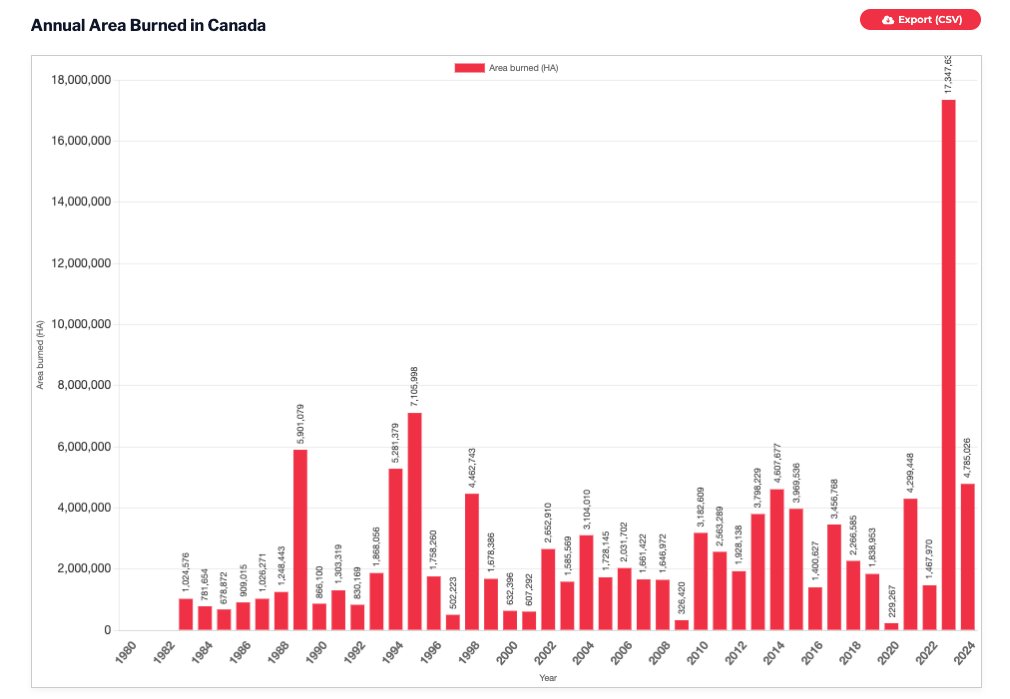

 Reply With Quote
Thread Information
Users Browsing this Thread
There are currently 4 users browsing this thread. (0 members and 4 guests)
