

He died from lung cancer on 22 December 2014 in Crawford, Colorado
Results 3,401 to 3,425 of 6949
Thread: The RIP Famous Person Thread
-
01-02-2016, 07:11 PM #3401I'm in Jail


- Join Date
- Mar 2010
- Last Online
- 10-12-2025 @ 04:51 PM
- Location
- Australia
- Posts
- 13,987
-
01-02-2016, 07:31 PM #3402.


- Join Date
- Mar 2012
- Last Online
- @
- Posts
- 22,726
You're a wee bitty late with that news, snakeeyes!! Originally Posted by snakeeyes

(13 months!)

-
01-02-2016, 09:03 PM #3403Thailand Expat


- Join Date
- Oct 2014
- Last Online
- 10-08-2020 @ 01:40 PM
- Posts
- 2,000
"You can leave your hat on..."
-
01-02-2016, 09:58 PM #3404Thailand Expat

- Join Date
- Apr 2011
- Last Online
- @
- Location
- pattaya
- Posts
- 10,262
^^

-
03-02-2016, 10:11 AM #3405Thailand Expat

- Join Date
- Aug 2013
- Last Online
- Yesterday @ 09:26 PM
- Location
- South Australia
- Posts
- 5,894
^
An honest mistake, any word on that prick Hitler? Is he still living in that bunker?
-
03-02-2016, 05:29 PM #3406Thailand Expat
- Join Date
- Sep 2009
- Last Online
- @
- Posts
- 108,245
I thought he fled to Argentina where he raised corned beef trees and shags gauchos. Originally Posted by Iceman123
-
04-02-2016, 01:07 PM #3407Thailand Expat
- Join Date
- Sep 2009
- Last Online
- @
- Posts
- 108,245
BUGS BUNNY, DAFFY DUCK
VOICE ACTOR DEAD
2.5K
2/3/2016 8:44 PM PST BY TMZ STAFF

Joe Alaskey, who voiced legendary cartoon characters like Bugs Bunny, Daffy Duck, Tweety and Sylvester the Cat has died.
Alaskey's family members announced the news of the NY native's death Wednesday night.
Alaskey voiced other Looney Tunes characters as well, including Marvin the Martian and Foghorn Leghorn.
Joe -- who was a successor of voice actor Mel Blanc at Warner Brothers -- voiced many of his famous characters from 1990-1995. Alaskey did some non-Warner Bros' work too, he voiced Grandpa Pickles on Rugrats and was most recently featured on Investigation Discovery's "Murder Comes To Town."
Joe was 63. RIP ... Doc.
Bugs Bunny, Daffy Duck Voice Actor Dead | TMZ.com
-
05-02-2016, 06:06 AM #3408Thailand Expat
- Join Date
- May 2009
- Last Online
- 08-01-2024 @ 01:10 AM
- Location
- Bangkok
- Posts
- 12,568
Earth, Wind & Fire founder Maurice White dead at 74
Great band. RIP Maurice.
-
05-02-2016, 10:10 AM #3409Thailand Expat
- Join Date
- Sep 2009
- Last Online
- @
- Posts
- 108,245
Earth, Wind & Fire soul band founder Maurice White dies
2 hours ago
From the section Entertainment & Arts
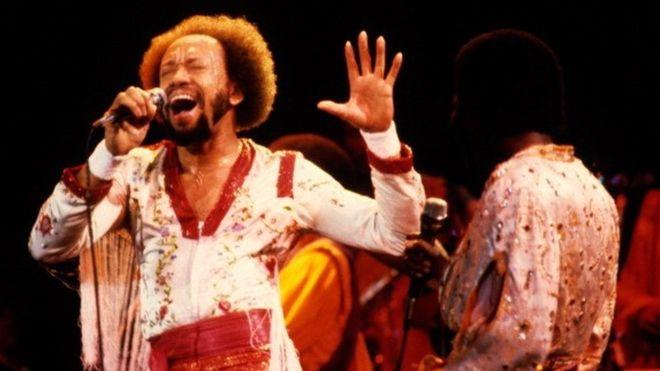
The founder of soul group Earth, Wind & Fire, Maurice White, has died in the US, his brother has said.
White, 74, died in his sleep in Los Angeles on Thursday morning. He suffered from Parkinson's Disease.
His band had a series of hits including September, Boogie Wonderland, Shining Star and After the Love has Gone.
The singer-songwriter was diagnosed with Parkinson's in 1992 but his condition was reported to have got worse in recent months.
Earth, Wind & Fire were inducted into the Rock and Roll Hall of Fame in 2000, and Maurice was individually inducted into the Songwriters Hall of Fame in 2010.
Popularly known by his nickname of Reese, he worked with various well-known recording artists such as The Emotions, Barbra Streisand, Cher and Neil Diamond.
Earth, Wind & Fire have sold more than 90 million albums worldwide.
"My brother, hero and best friend Maurice White passed away peacefully last night in his sleep," Verdine White, also a member of the band, told The Associated Press on Thursday.
"While the world has lost another great musician and legend, our family asks that our privacy is respected as we start what will be a very difficult and life changing transition in our lives. Thank you for your prayers and well wishes."
White said in an interview with the Associated Press news agency in 2000 that he wanted Earth, Wind & Fire's music to inspire people rather than just entertain them.
"That was the whole objective, to try to inspire young people to believe in themselves and to follow through on their ideas," he said.
"We've touched so many people with these songs."
A former session drummer, White formed a band called Salty Peppers in the Chicago area in the late 1960s.
He subsequently moved to Los Angeles, disposing of all of the band members except Verdine, The band was renamed Earth, Wind & Fire after the three elements in his astrological chart.
Many of the group's earlier hits were characterised by Bailey's bright falsetto voice.
The band is perhaps best known for its exuberant, horn-driven mix of jazz, funk, gospel and Big Band music played at concerts where they performed in glitzy costumes underneath multi-coloured lights. They played at many top venues including the Super Bowl and the White House.
"We live in a negative society,'" White informed Newsweek at the peak of the band's success. "Most people can't see beauty and love. I see our music as medicine."
Earth, Wind & Fire soul band founder Maurice White dies - BBC News
-
05-02-2016, 10:12 AM #3410Thailand Expat
- Join Date
- Sep 2009
- Last Online
- @
- Posts
- 108,245
Oh dear, brings back memories of some very bad barnets.

-
05-02-2016, 10:46 AM #3411Thailand Expat

- Join Date
- Dec 2009
- Last Online
- @
- Location
- Chiang Mai
- Posts
- 57,210
What a great voice he had.
Goodbye Maurice.
-
06-02-2016, 03:53 PM #3412Thailand Expat
- Join Date
- Sep 2009
- Last Online
- @
- Posts
- 108,245
US astronaut Edgar Mitchell, sixth man on moon, dies at 85
Edgar Mitchell, one of only 12 people to walk on the moon, has died at the age of 85. He was part of NASA's Apollo 14 crew, which set a record for the longest stay on the lunar surface in 1971.

Edgar Mitchell, who in 1971 became the sixth man to walk on the moon, died in West Palm Beach in the US state of Florida after a short illness, his family said Friday. His death coincides with the 45th anniversary of his Apollo 14 mission.
NASA administrator Charles Bolden paid tribute to the astronaut, describing him as "one of the pioneers in space exploration on whose shoulders we now stand."
"As a member of the Apollo 14 crew, Edgar … helped to change how we view our place in the universe," he said in a statement.
Mitchell joined the US space agency in 1966, and helped test and design the lunar modules that got Neil Armstrong and Buzz Aldrin to the moon in 1969.
Mitchell was initially selected to be part of the 1970 Apollo 13 crew with Alan Shepard, the first American in space, but the duo were bumped to the next mission to give Shepard more time to train. The delay turned out to be fortuitous for Mitchell - Apollo 13 failed to reach the moon and its astronauts were forced to abort the mission after an oxygen tank exploded on board.
Mitchell's turn came a year later, when he accompanied Shepard and Stu Roosa on Apollo 14.
"That's what I wanted because it was the bear going over the mountain to see what he could see, and what could you learn, and I've been devoted to that, to exploration, education and discovery since my earliest years, and that's what kept me going," Mitchell said in a 1997 interview.
The Apollo 14 mission, Mitchell's only space flight, blasted off from Cape Canaveral on January 31, 1971, and reached the moon on February 5. During the trip, the astronauts managed to collect around 40 kilograms (90 pounds) of lunar rock and soil samples. They also set records for the longest distance traversed on the lunar surface, the largest payload returned from the moo, and the longest time spent on the moon for their 33-hour stay.

After leaving NASA in 1972, Mitchell set up the Institute of Noetic Sciences to study paranormal activity and consciousness. He spoke publicly about his belief in faith healing and aliens, and said he'd had an "epiphany" in space that led him to focus on unexplained phenomena.
Mitchell was born in Hereford, Texas, and held a doctorate in aeronautics from the Massachusetts Institute of Technology. He is survived by his four daughters, two sons and nine grandchildren.
nm/tj (Reuters, AP, dpa, AFP)
US astronaut Edgar Mitchell, sixth man on moon, dies at 85 | News | DW.COM | 06.02.2016
-
14-02-2016, 06:13 AM #3413Thailand Expat
- Join Date
- May 2009
- Last Online
- 08-01-2024 @ 01:10 AM
- Location
- Bangkok
- Posts
- 12,568
Associate Justice Antonin Scalia was found dead of apparent natural causes Saturday on a luxury resort in West Texas, federal officials said.
Scalia, 79, was a guest at the Cibolo Creek Ranch, a resort in the Big Bend region south of Marfa.
Supreme Court Justice Antonin Scalia found dead at Texas ranch
Condolences to his family for their loss. A really terrible Supreme Court justice.This post has not been authorized by the TeakDoor censorship committee.
-
14-02-2016, 09:18 AM #3414Thailand Expat
- Join Date
- Sep 2009
- Last Online
- @
- Posts
- 108,245
Cue gridlock in the House when anyone but Cliven Bundy is put forward as a replacement.
-
17-02-2016, 01:57 AM #3415Thailand Expat
- Join Date
- Sep 2009
- Last Online
- @
- Posts
- 108,245
Former UN Secretary General, Boutros-Ghali dies at 93
February 16, 2016

Former UN secretary-general Boutros Boutros-Ghali, who led the world body from the hopeful times that emerged at the end of the Cold War to the massacres in Rwanda and Bosnia, has died at the age of 93, the United Nations announced Thursday.
The Egyptian diplomat became the first secretary-general from the African continent in 1992, but his tenure ended abruptly after five years when the United States vetoed his second term.
Boutros-Ghali, who served as the United Nation’s sixth secretary-general, died in Cairo, a UN spokesman said.
UN Security Council members observed a moment of silence in memory of Boutros-Ghali during a meeting in New York.
A former Egyptian foreign minister, the veteran diplomat headed the world body during one of its most difficult times with crises in Somalia, Rwanda, the Middle East and the former Yugoslavia.
After a series of clashes with the US administration, Washington turned against Boutros-Ghali and decided to back Ghanaian Kofi Annan for the top post.
Relations with the United States began to sour in late 1993, when a US-led operation in Somalia led to major casualties among American troops.
The operation, part of an overall UN effort to provide humanitarian aid that was being blocked by a civil conflict, led to acrimony between the US authorities and the world body.
Further problems emerged during peacekeeping operations in the former Yugoslavia, and after the genocidal massacres of 1994 in Rwanda, which the United Nations failed to halt.
There was also friction over UN sanctions against the regime of Saddam Hussein in Iraq, which had invaded and then been ejected from Kuwait a year before Boutros-Ghali took up his post.
Washington’s then ambassador to the United Nations, Madeleine Albright, argued that Boutros-Ghali had failed to enact reforms needed to make the world body more efficient.
When his candidacy to serve a second term was vetoed by Washington, Boutros-Ghali felt that he was being punished for pushing UN member states to pay their membership arrears – an issue on which the United States has long been a laggard – and for condemning Israeli actions in southern Lebanon.
After leaving the United Nations, Boutros-Ghali served as secretary-general of the Francophonie group of French-speaking nations.
Boutros-Ghali was born on November 14, 1922 into a Coptic Christian family in Cairo.
He was educated at Cairo University and in Paris, where he established a lifelong connection with France.
After a university career centered on international relations, including a spell at Columbia University in New York, he became Egypt’s foreign minister in 1977, under president Anwar al-Sadat.
He accompanied Sadat on his ground-breaking trip to Jerusalem in that year, an event which both forged a peace agreement between Egypt and Israel and led to Sadat’s assassination four years later.
AFP
Former UN Secretary General, Boutros-Ghali dies at 93 - Punch Newspapers
-
17-02-2016, 10:55 AM #3416Thailand Expat
- Join Date
- Sep 2009
- Last Online
- @
- Posts
- 108,245
George Gaynes, ‘Punky Brewster’ and ‘Police Academy’ Star, Dies at 98
FEBRUARY 16, 2016 | 06:52PM PT

George Gaynes, who portrayed an irritable foster parent on the ’80s sitcom “Punky Brewster,” the bewildered commandant in seven “Police Academy” films and a soap opera star with a crush on Dorothy Michaels, whom he doesn’t know is Dustin Hoffman’s character in drag, in the hit feature comedy “Tootsie,” died on Monday in North Bend, Wash. He was 98.
Gaynes, who was not only a character actor but a baritone singer, made hundreds of appearances both on TV comedies and dramas, as well as 35 films (counting both features and and made-for-TV movies) and many plays, musical comedies and even operas in the U.S. and Europe.
While Gaynes became immediately recognizable to TV viewers and filmgoers, he never achieved name recognition, let alone stardom.
On “Punky Brewster,” Gaynes played building manager Henry Warnimont, who finds an abandoned girl (Soleil Moon Frye) and becomes her foster parent and eventually her adoptive father. The sweet relationship between the two of them was the heart of the show.
The actor got the part after two of his most memorable big-screen performances: in 1982’s “Tootsie,” and in 1984’s first entry in the long-running “Police Academy” franchise. (He appeared in all seven of the movies.)
Gaynes recurred from 1987-91 on the critically acclaimed NBC comedy “The Days and Nights of Molly Dodd,” starring Blair Brown and Gaynes’ wife, actress Allyn Ann McLerie; he was a series regular, as Sen. Strobe Smithers, on the first season (1992-93) of Linda Bloodworth-Thomason-created CBS comedy “Hearts Afire,” starring John Ritter and Markie Post.
George Jongejans was born in Helsinki to a Russian mother and Dutch father. Actor Gregory Gaye, who played a Nazi official in “Casablanca,” was an uncle.
Young George was raised in France, England and Switzerland. World War II interrupted his burgeoning opera career. He was interned in Spain for three months; after his release, he traveled to the U.K. and enlisted in the Royal Dutch Navy.
After the war he went to New York, where he joined the New York City Opera. But he considered himself more an actor than a singer.
He changed his last name to Gaynes and guested on TV series including “The Defenders,” “Mission: Impossible,” “Bonanza,” “Mannix,” “Hogan’s Heroes,” “The Six Million Dollar Man,” “Hawaii Five-0” and “Chicago Hope.” In addition he appeared on the daytime soaps “General Hospital” and “Search for Tomorrow.” Film credits included “The Way We Were,” “Altered States” and “Wag the Dog.”
He retired in 2003 after appearing in the feature comedy “Just Married,” starring Ashton Kutcher and Brittany Murphy.
In addition to his wife, Gaynes is survived by a daughter; one granddaughter; and two great-granddaughters. His son, Matthew, died in a 1989 car crash.
George Gaynes Dead: Star of ?Police Academy,? ?Punky Brewster? Movies | Variety
-
17-02-2016, 11:18 AM #3417Thailand Expat

- Join Date
- Nov 2006
- Last Online
- @
- Posts
- 41,581
My first thought on seeing that was... The Fast Show.Former UN secretary-general Boutros Boutros-Ghali, who led the world body from the hopeful times that emerged at the end of the Cold War to the massacres in Rwanda and Bosnia, has died at the age of 93, the United Nations announced Thursday.
-
17-02-2016, 11:37 AM #3418A Cockless Wonder

- Join Date
- Jun 2007
- Last Online
- @
- Posts
- 17,291
98. Well played sir. Originally Posted by harrybarracuda

-
20-02-2016, 12:47 AM #3419Thailand Expat
- Join Date
- Sep 2009
- Last Online
- @
- Posts
- 108,245
To Kill a Mockingbird' author Harper Lee is dead at 89
By Emily Langer
The Washington Post
Published: February 19, 2016

"You never really understand a person until you consider things from his point of view," Atticus Finch tells his daughter, Scout, in one of the most memorable passages of the classic novel "To Kill a Mockingbird" — "until you climb into his skin and walk around in it."
Few people in the world could claim to really understand Harper Lee, the novel's elusive author, who died Thursday at 89 in Monroeville, Ala.
She withdrew from public life shortly after her book was published in 1960, only to reappear in old age with the controversial release of "Go Set a Watchman," a manuscript identified as a long-lost early draft of the book that decades earlier had vaulted her to literary renown and, decades later, remained at the center of the discussion of race in America.
"To Kill a Mockingbird," a coming-of-age story set in the Depression-era South where Lee grew up, received the Pulitzer Prize for fiction in 1961 and sold more than 40 million copies, becoming one of the most cherished novels in modern American literature. One oft-cited survey asked respondents to name the book that most profoundly affected their lives. Lee's novel ranked near the top, not far behind the Bible.
The novel arrived on book stands amid the growing movement for civil rights and drew much of its resonance from its hero, Atticus, a lawyer who nobly and futilely defends a black man wrongly accused of raping a white woman in their segregated town. For many, Atticus was embodied by actor Gregory Peck, who received an Academy Award for his performance in the 1962 movie based on Lee's book.
It was widely understood that Lee modeled Atticus on her father, Amasa Coleman "A.C." Lee, a lawyer who, like his daughter's fictional character, served in the state legislature and favored pocket watches. Scout, the book's narrator, was believed to have been, more or less, Lee.
In the 55 years between the publication of "To Kill a Mockingbird" and the release in July 2015 of "Go Set a Watchman," few Americans came of age without meeting Atticus, his doomed client, Tom Robinson, Scout and her brother, Jem, their peculiar friend, Dill, and Boo Radley — the mysterious neighborhood shut-in whom the children try to coax from the shadows.
Atticus, in particular, was beloved as the ideal father, even the ideal man in a society that was profoundly flawed, but, through wisdom such as his, perhaps redeemable.
The reverence surrounding Lee's book compounded the shock, edging on disbelief, when readers learned the contents of "Go Set a Watchman," a literary juggernaut pre-ordered online in numbers topped only by the "Harry Potter" series.
"Watchman" was presented as not strictly a sequel to "Mockingbird," but rather an early iteration of the book set in the 1950s. Jem is dead. Scout — properly Jean Louise Finch — is living in New York but home for a visit. Atticus, the white man for whom a courtroom's entire "colored gallery" had risen in respect in "Mockingbird," is an arthritic segregationist.
In "Watchman," Jean Louise watches her beloved father preside over a White Citizens' Council meeting where a speaker spews invective about blacks who threaten to "mongrelize" the white race.
Atticus asks his daughter: "Do you want Negroes by the carload in our schools and churches and theaters? Do you want them in our world?" And Jean Louise, who loves her father but cannot abide his ideology, tells him at one point, "I despise you and everything you stand for."
Gradually, astonishment surrounding the book gave way to interpretations that perhaps generations of readers of "To Kill a Mockingbird" had asked too much of Atticus by expecting him, beyond the scope of that book, to be a saint. The man Lee presented in "Mockingbird" had represented an innocent defendant with conviction. But that Atticus knew only the American South of the 1930s and before, when neither society's racist structure nor his moral rectitude had yet been challenged by the civil rights movement.
The older Atticus of "Watchman," like many white Southerners of his era, appeared to be reeling in the changes brought about by integration. He had gravitated to an ideology made even more abhorrent for many modern readers when he, Atticus, of all men, espoused it.
Questions swirled about the book and its meaning — and about the competency of Lee, who by then was reported to be largely deaf and blind. How could the Atticus of "Mockingbird" be reconciled with the bigot of "Watchman," or should any such reconciliation be attempted? Had Lee been manipulated into releasing an abandoned manuscript that might irrevocably alter her legacy — or, with questions of race still raw in American society, did she once again have some message to impart?
Few people held out hope for complete answers. With her near-total retreat into private life in the mid-1960s, Lee had become, along with J.D. Salinger and Thomas Pynchon, one of the great literary enigmas of the 20th century. Often she was called a recluse, a description that was intriguing but inaccurate. Lee — Nelle Harper or just Nelle to friends — simply rejected celebrity.
For years she divided her time between New York City and Monroeville,where she shared a house with her sister Alice Finch Lee, a lawyer who managed Nelle's affairs and acted as a gatekeeper, usually keeping the gate closed to would-be interviewers. Harper Lee had guarded her anonymity so vigilantly, it was said, that she could roam Manhattan without being recognized.
Curious onlookers were left with little more than conjecture about her life. Much meaning was found in her resemblance to Scout, their shared summertime diversions with a clever boy from out of town and their common adoration of their fathers. But once, Lee offered another clue.
"You know the character Boo Radley?" she privately told Oprah Winfrey, according to the talk-show host. "Well, if you know Boo, then you understand why I wouldn't be doing an interview because I am really Boo."
———
Nelle Harper Lee — the youngest of four children, the granddaughter of a Confederate soldier and the descendant of slaveholders — was born April 28, 1926, in Monroeville. The town served as a model for the fictional hamlet of Maycomb that was the locus of both "Mockingbird" and "Watchman."
"Maycomb was an old town, but it was a tired old town when I first knew it," says Scout in "Mockingbird." "In rainy weather the streets turned to red slop; grass grew on the sidewalks, the courthouse sagged in the square. . . . A day was twenty-four hours long but seemed longer. There was no hurry, for there was nowhere to go, nothing to buy and no money to buy it with."
"Watchman" would cast the town in a more complex light. After witnessing her father at the White Citizens' Council meeting, Jean Louise wanders the streets in shock, nauseated and shaking. "Go away, the old buildings said. There is no place for you here. You are not wanted. We have secrets."
If the events of "To Kill a Mockingbird" seemed so vivid as to have been real, it was, to a degree, because they were.
Lee had few toys; Jem and Scout's most prized possessions are the trinkets mysteriously left for them in the knot of a tree.
A young Truman Capote provided the inspiration for Dill, the impish boy who is sent to stay with relatives in Maycomb. Capote came to Monroeville under similar circumstances as a child, embarking with Lee on a long, at times tumultuous friendship that began with the two future writers typing stories on an Underwood typewriter, a gift from A.C. Lee.
From a young age, Capote once remarked, they shared an "apartness," she with her tomboyish ways at a time when girls were expected to be feminine and he, an effeminate, itinerant boy who felt that he had "fifty perceptions a minute to everyone else's five." Their relationship figured prominently in the 2005 film "Capote," starring Philip Seymour Hoffman in the Oscar-winning title role and Catherine Keener as Lee.
Unlike Atticus, A.C. Lee did not raise his children as a widower, although his wife, the former Frances Cunningham Finch, suffered from what was described as a nervous disorder, possibly bipolar disorder, before her death in 1951.
In "Mockingbird," a book-length account of Lee's life, biographer Charles J. Shields described A.C. Lee as a loving father, pulling Lee up on his knee much like Atticus did with Scout in "To Kill a Mockingbird."
Scout learns from Atticus why she must go to school, why she must not fight and how to compromise. Jem learns that while he may shoot all the blue jays he wants, "it's a sin to kill a mockingbird" because it does nothing but sing. Both children learn that mockingbirds come in many forms and that Boo, the specter of the shuttered Radley place, is, in fact, one of them. A neighbor of the Lee family's resembled the fictional shut-in and agitated about suing after the publication of "Mockingbird."
Lee's father specialized in tax law but took on one criminal case: the defense of two black men, father and son, who were accused of murdering a white storekeeper. They were hanged, their bodies mutilated.
In a separate case that had electrified Monroeville, a black man, apparently innocent, was convicted of raping a white woman. He was scheduled for execution, according to Shields's book — a sentence that was commuted to life in prison, where the man suffered a mental breakdown before dying of tuberculosis.
In the statehouse, A.C. Lee was a centrist Democrat and occupied himself with legislation related mainly to budget matters and morality. Outside the legislature, he was part-owner and editorialist of the Monroe Journal newspaper.
He "only gradually rose to the moral standards of Atticus," Shields wrote in the biography. A.C. Lee was "more enlightened than most" but "no saint, no prophet crying in the wilderness with regard to racial matters. . . . Like most of his generation, he believed that the current social order, segregation, was natural and created harmony between the races."
At church, A.C. Lee pressured the local Methodist minister to keep secular matters, including social justice, out of sermons. But according to Shields, he also confronted Ku Klux Klansmen on at least two occasions, including one time when they barged in on a young people's Halloween party because of a rumor that blacks had been invited.
He "is one of the few men I've known who has genuine humility, and it lends him a natural dignity," Lee told an interviewer in 1961. "He has absolutely no ego drive, and so he is one of the most beloved men in this part of the state."
Just as Scout called her father Atticus, Lee was said to have addressed her father as A.C.
———
Lee ambivalently attended Huntingdon College in Montgomery, Ala., before studying law at the University of Alabama.
At the university, she penned a column, Caustic Comment, in the student newspaper and edited the humor magazine, called Rammer Jammer. According to Shields, she wrote for the magazine a short play mocking a racist amendment proposed for the state constitution.
She dropped out because she wanted to write and moved to New York, where Capote was already drawing notice. Just as Lee had captured him in Dill, he captured her in at least two tomboyish characters from his fiction, Idabel Thompkins in the 1948 novel "Other Voices, Other Rooms" and Ann "Jumbo" Finchburg in his 1967 short story "The Thanksgiving Visitor."
To support herself, Lee worked as an airline reservations clerk. Then, for Christmas in 1956, she received a gift from Michael and Joy Brown, friends she met through Capote, whom she described as "in periodically well-to-do circumstances." It was an envelope containing a note with the promise of a large financial gift: "You have one year off from your job to write whatever you please. Merry Christmas."
In a 1961 essay in McCall's magazine, one of her few published works after "To Kill a Mockingbird," Lee wrote that the present was a "full, fair chance for a new life."
"It's a fantastic gamble," she recalled telling her friend. "It's such a great risk."
"No, honey," he replied. "It's not a risk. It's a sure thing."
Lee used her time to set out the story that became her first novel. Her protagonist's name was inspired by a learned Roman from antiquity, Titus Pomponius Atticus.
Lee's agent, Maurice Crain, and her editor at the Lippincott publishing house, Tay Hohoff, were credited with helping the young writer shape the manuscript from a series of vignettes into the fully formed "To Kill a Mockingbird." The extent of her revisions, as well as Hohoff's role as editor, received renewed interest after the release of "Watchman" and its divergent portrayal of Atticus.
Hohoff once remarked — perhaps revealingly to modern-day readers familiar with "Watchman" — that Lee "spent her days and nights in the most intense efforts to set down what she wanted to say in the way which would best say it to the reader."
Some critics, despite the immediate runaway commercial success of "Mockingbird," found the book naive and its narration flawed, with Scout moving implausibly between childhood innocence and grown-up understanding. "It's interesting that all the folks that are buying it don't know they're reading a child's book," the American author Flannery O'Connor wrote in a letter shortly after the book's publication.
But most readers over the years found the novel poignant and beautiful, a remarkable debut by a writer who had not yet turned 35.
"A hundred pounds of sermons on tolerance, or an equal measure of invective deploring the lack of it, will weigh far less in the scale of enlightenment than a mere 18 ounces of new fiction bearing the title 'To Kill a Mockingbird,' " Washington Post book editor Glendy Culligan wrote in 1960. In the New York Times, Frank H. Lyell, a literary critic, presciently wrote that her "winning book . . . could be the basis of an excellent film."
Lee declined to write the movie's screenplay, a task later given to the playwright and screenwriter Horton Foote, who received an Oscar for his script.
A.C. Lee died in 1962, having never seen the movie version of his daughter's book. When Peck accepted his Academy Award, he was carrying A.C.'s pocket watch.
After writing "Mockingbird," Lee published a handful of essays. She traveled with Capote to Kansas to help research "In Cold Blood," his acclaimed "nonfiction novel" that recounted the 1959 murder of a farm family.
At one point, a reporter hinted that Lee might publish a murder story of her own. But she produced no such book, nor any other. In time, her agent died and her editor retired. Capote died in 1984.
By then, Lee had assumed her status as a recluse, or something resembling one. According to one theory, Lee feared that no work could live up to her first. There were rumors, never satisfactorily substantiated, that Capote had contributed heavily to "Mockingbird." Another common explanation for her silence was that she simply had nothing further to say.
Then, in February 2015, came the announcement from Harper, an imprint of HarperCollins.
———
In a statement released by the publishing house, Lee explained that in the mid-1950s, she had completed a novel featuring Scout as a grown-up. Her editor, she said, liked the flashbacks to Scout's youth and persuaded Lee to recast the book focusing on that earlier period, the result being "To Kill a Mockingbird."
"I was a first-time writer," said Lee, "so I did as I was told."
Lee went on in the statement to explain that she thought the original manuscript had been lost and that it had been discovered by her "dear friend and lawyer," Tonja Carter. Later news reports presented contradictory accounts of how and when the manuscript was found. Alabama authorities investigated possible elder abuse stemming from the book deal but closed an investigation having found no wrongdoing.
Some readers commented that they would not open "Watchman," that it was too painful to see Atticus's heroic figure dismantled. A number of critics found that the book did not stand up to "To Kill a Mockingbird." Others, however, found that Lee had enriched Atticus's character by allowing Scout to see her father not as a god, but rather as an imperfect man.
Randall Kennedy, a Harvard law professor, wrote in the New York Times that the book "demands that its readers abandon the immature sentimentality ingrained by middle school lessons about the nobility of the white savior and the mesmerizing performance of Gregory Peck."
Lee's reticence did little to diminish, and perhaps increased, the fascination surrounding her, both before and after "Watchman." Besides Shields's book, she was the subject of the documentary film "Hey, Boo" (2010), by director Mary McDonagh Murphy, the memoir "The Mockingbird Next Door" (2014) by former Chicago Tribune journalist Marja Mills, and an uncounted number of book reports by schoolchildren. Some teachers and parents wondered how book reports about Lee would change post-"Watchman."
She made occasional appearances over the years to meet with students or accept awards, including the Presidential Medal of Freedom, bestowed on her by President George W. Bush. President Obama awarded her the National Medal of Arts.
Lee reportedly had a stroke in 2007. Her death was confirmed by her publisher, HarperCollins. No other details were immediately available. Alice Lee, Lee's last surviving immediate relative, died in 2014.
Beyond her novels, Lee left only a few scattered clues for those who wished to understand her or what she had set out to do. In 1964, in one of her last known major interviews, she remarked that she aspired to be the "Jane Austen of south Alabama."
"I would like . . . to do one thing, and I've never spoken much about it because it's such a personal thing. I would like to leave some record of the kind of life that existed in a very small world. I hope to do this in several novels," she said. There was "something universal in this little world," she continued, "something decent to be said for it, and something to lament in its passing."
Joe Holley contributed to this report.
'To Kill a Mockingbird' author Harper Lee is dead at 89 - U.S. - Stripes
-
20-02-2016, 02:15 AM #3420Thailand Expat
- Join Date
- Sep 2009
- Last Online
- @
- Posts
- 108,245
Scorchio! Originally Posted by AntRobertson
-
20-02-2016, 07:36 AM #3421Thailand Expat
- Join Date
- Dec 2009
- Last Online
- @
- Location
- Chiang Mai
- Posts
- 57,210
^^ I always thought Harper Lee was a man and no idea this person was still living up until this week.
Great book and movie too, To Kill a Mockingbird was.
-
20-02-2016, 11:42 AM #3422Thailand Expat
- Join Date
- Sep 2009
- Last Online
- @
- Posts
- 108,245
Two authors....
‘The Name Of The Rose’ Author Umberto Eco Dies At 84
BY REUTERS ON 02/19/16 AT 10:38 PM

Italian author Umberto Eco, who became famous for the 1980 international blockbuster “The Name of the Rose,” died Friday, Italian media reported. He was 84. La Repubblica newspaper said it had been informed by the family that Eco died late Friday at his home in northern Italy.
Eco was virtually unknown outside university circles until well into middle age, when he found himself an international celebrity overnight after he published his first novel, an unorthodox detective story set in a medieval monastery.
“He was an extraordinary example of European intellectualism, uniting a unique intelligence of the past with an inexhaustible capacity to anticipate the future,” Prime Minister Matteo Renzi was quoted as saying by the Italian news agency Ansa.
For the professor from Bologna University, then aged 48, it was a late introduction into the world of international literary fame and one that took many critics by surprise.
“The Name of the Rose,” with its highly detailed description of life in a 14th-century monastery and learned accounts of the philosophical and religious disputes of the time, at face value was hardly a novel to appeal to the average modern reader. But the book’s popularity lay in a clever plotline, the masterfully evoked atmosphere of fear and gloom brooding over the monastery, and the attractive central figure, unashamedly modeled on the famous detective Sherlock Holmes.
As the novel opens, an aging priest, anxious to record the story before he dies, looks back on events that took place in 1327 when as an 18-year-old novice he visited a sinister Italian monastery with his master, Brother William of Baskerville. During their stay, several of the monks are gruesomely murdered, and William and his young assistant are soon involved in a detective hunt to track down the villain.
The unusual juxtaposition of a gripping storyline and erudite scholasticism helped to explain why “The Name of the Rose” was translated into dozens of languages, sold more than 14 million copies and won several international literary prizes.
The book was also the subject of a lavish film production directed by Frenchman Jean-Jacques Annaud and starring Scottish actor Sean Connery as Brother William.
Eco attributed the book’s success to the similarity of experiences shared by mankind in the 14th and late 20th century. “I hope readers see the roots, that everything that existed then — from banks and the inflationary spiral to the burning of libraries — exists today,” he said in an interview with the New York Times Book Review in 1983.
But Eco also expressed irritation about the apparent reluctance of the international press to let him move on from that achievement. “I can’t spend the rest of my life talking about a book I left behind me five years ago,” he once complained.
The novel form was a new departure for Eco, who until “The Name of the Rose” was best known for his highly academic writings on semiotics, the study of signs, and more topical weekly articles in the influential Italian political magazine L’Espresso.
His second novel, “Foucault’s Pendulum,” was less successful internationally but still highly acclaimed.
His last novel, “Numero Zero” (“Number Zero”), which was set in an Italian newspaper newsroom, was published last year.
Born in the northwestern Italian city of Alessandria Jan. 5, 1932, Eco was the son of an accountant employed by a manufacturer of iron bathtubs. His father wanted him to become a lawyer, but he chose instead to study philosophy at the northern University of Turin, where he became fascinated by the medieval world. After taking his doctorate in 1954, Eco started working for the recently established national broadcasting network RAI, preparing cultural programs and gaining a lasting interest in mass communication.
?The Name Of The Rose? Author Umberto Eco Dies At 84
-
22-02-2016, 04:23 PM #3423Thailand Expat
- Join Date
- Sep 2009
- Last Online
- @
- Posts
- 108,245
Eric 'Winkle' Brown, Britain's 'greatest pilot' who survived 11 crashes, dies aged 97
Updated 22 February 2016, 20:05 AEDT
By Lucy Carter
Captain Eric "Winkle" Brown, a pilot who flew more types of planes than anyone in history and survived 11 crashes, dies in Britain at the age of 97.
He has been described as the Scotsman whose real adventures made James Bond's fictional life seem dull by comparison.
Captain Brown has the world record for flying the greatest number of different types of aircraft — 487.
He also has the world record for the most flight deck landings — 2,407 over the course of 65 years.
Aviation experts say the records set by the Navy test pilot and war hero are unlikely to ever be broken.
Captain Brown was born near Edinburgh in 1919.
He developed a passion for flying when his father took him for his first flight in a biplane as a young child.
"I would be about 10 years of age, much to my mother's absolute horror," Captain Brown told the BBC in the 2015 documentary, Britain's Greatest Pilot.
"I suppose she wanted to preserve her young son."
He worked as a diplomat in Germany in the lead-up to World War II, becoming fluent in German and witnessing some of the period's most significant events.
"I've read many stories that said Hitler ignored him (four-time US Olympic gold medallist Jesse Owens)," Mr Brown told the BBC.
"Now this is quite untrue because I actually witnessed Hitler shaking hands with Jesse Owens and congratulating him on what he had achieved."
At the outbreak of war, Captain Brown joined the Royal Navy Volunteer Reserve as a Fleet Air Arm pilot.
Known as Winkle for his small stature, Captain Brown became renowned for his hardiness and bravery.
Remarkably, he lived through 11 plane crashes.
And in 1941 he was one of only two men who survived the sinking of HMS Audacity by a German U-Boat.
"Our carrier reared up. I heard the twang of the hawses holding the aircraft breaking," he told the BBC.
"The six aircraft just broke loose, moved down the deck into these guys standing there. Oh, it was absolute chaos."
Just before this disaster, Captain Brown had been identified as a pilot with talent.
"Unknown to me, the captain of the Audacity said I had a facility for deck landing and the Admiralty should make use of it," he said.
"I got a telegram asking me to undertake a series of trials on various carriers."
However, flying was not all that Captain Brown experienced.
He witnessed the liberation of the Bergen-Belsen concentration camp, and used his fluent German to interrogate senior Nazis, including the head of the German Luftwaffe, Hermann Goering.
Antony Grage, the president of the aviation historical society of Australia, has credited Captain Brown as an exceptional pilot.
"He was extraordinary because he flew a very large number of different types of aircraft, mainly during the Second World War and immediately after the Second World War," he said.
"This was because he was a very accurate flyer. He could land an aeroplane anywhere."
Mr Grage said it is unlikely Captain Brown's records will ever be broken.
"In the days of the Second World War new aircrafts were being designed quite quickly and produced very quickly just because of the urgencies of war," he said.
"Nowadays war planes, and for that matter civil aircraft, have very long lives.
"They get updated the whole time but still a particular type."
Captain Brown successfully tested planes considered so dangerous that they were described as suicide missions by his superiors.
His contribution to flight covered everything from transonic flight, analysis of German jets and rocket aircraft, and the first carrier deck-landing of a jet aircraft.
Flying was Captain Brown's lifelong passion.
"At first when I had to retire I think it was a feeling similar to a drug addict haves when he no longer can get his drugs," he told the BBC.
"Withdrawal symptoms were fierce for about a year.
"Then I came to terms with it after a year, but it wasn't easy."
Captain Brown's wife Lynn passed away in 1998. They were married for 56 years.
He is survived by his son.
Eric 'Winkle' Brown, Britain's 'greatest pilot' who survived 11 crashes, dies aged 97 | ABC Radio Australia
-
22-02-2016, 04:25 PM #3424Philippine Expat
- Join Date
- Sep 2009
- Last Online
- @
- Location
- Philippines
- Posts
- 18,190
^Amazing life!
-
22-02-2016, 04:45 PM #3425Thailand Expat
- Join Date
- Mar 2011
- Last Online
- 25-03-2021 @ 08:47 AM
- Posts
- 36,419
^ And he rewrites a bit of history, there, with the Jesse Owens bit...

 Reply With Quote
Thread Information
Users Browsing this Thread
There are currently 4 users browsing this thread. (0 members and 4 guests)
