

^^^^Swiss winter...yes please
LA 405 ...Hell no!
Results 2,176 to 2,200 of 2908
Thread: Amazing picture thread
-
04-03-2019, 11:24 PM #2176fcuked off



- Join Date
- Jan 2008
- Last Online
- @
- Location
- 39.2014 N, 85.9214 W
- Posts
- 7,554
-
06-03-2019, 08:54 AM #2177Thailand Expat

- Join Date
- May 2006
- Last Online
- 13-09-2019 @ 04:18 PM
- Location
- Samui
- Posts
- 44,704
A Watery Grave

-
06-03-2019, 07:24 PM #2178Thailand Expat

- Join Date
- Jul 2016
- Last Online
- @
- Posts
- 12,009

Crash dive of a Kingfisher. The photographer took this awesome pic of a diving kingfisher after six years and some 720,000 shots.
-
06-03-2019, 07:41 PM #2179Thailand Expat
- Join Date
- Jul 2016
- Last Online
- @
- Posts
- 12,009

Peacock Spider, looks like something Thai women would happily pin to their hair.
-
06-03-2019, 08:08 PM #2180.

- Join Date
- Mar 2012
- Last Online
- @
- Posts
- 22,726
^ That spider looks like an adorable cuddly toy.
-
07-03-2019, 06:26 AM #2181Thailand Expat

- Join Date
- Nov 2005
- Last Online
- @
- Posts
- 17,370
...I doubt its prey would think that... Originally Posted by Neverna

-
07-03-2019, 09:55 AM #2182I am not a cat


- Join Date
- Jun 2008
- Last Online
- @
- Posts
- 18,900
Not sure on this one:
This was taken at Batu a couple of years ago:
-
07-03-2019, 01:17 PM #2183Thailand Expat
- Join Date
- Jul 2016
- Last Online
- @
- Posts
- 12,009
I wouldn't know, unless they did a face job for some festival. I thought it looked a bit spiced up, even for Hindus.
-
08-03-2019, 09:08 AM #2184Thailand Expat
- Join Date
- Jul 2016
- Last Online
- @
- Posts
- 12,009
Not quite a pic, but loads of them of a tree burning from the inside after being struck by lightning.
-
09-03-2019, 06:25 AM #2185fcuked off
- Join Date
- Jan 2008
- Last Online
- @
- Location
- 39.2014 N, 85.9214 W
- Posts
- 7,554
I was born in the wrong place...



-
10-03-2019, 10:33 AM #2186Thailand Expat
- Join Date
- Jul 2016
- Last Online
- @
- Posts
- 12,009
This one blew me away, didn't think it was physically possible, but it is and also a common sight away from home.
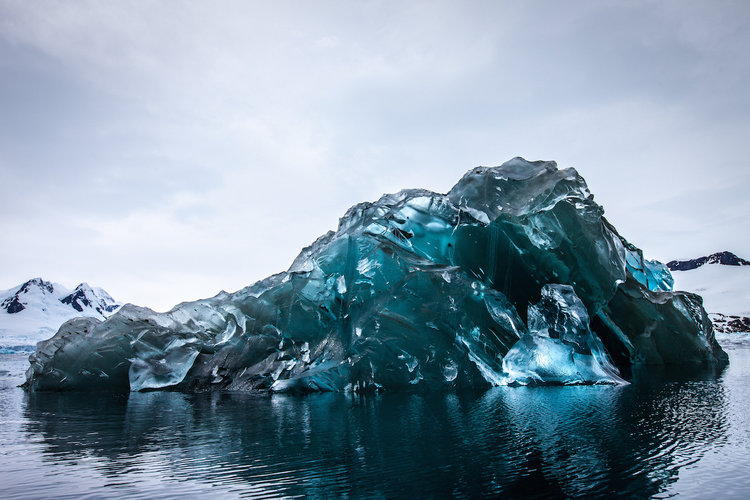
An iceberg tipped over.
But how can it tip over with 90% below deck? According to those that make it their business to know, icebergs flip because the visible ice and snow melts from exposure to the sun, which changes the shape of the iceberg and creates a shift in equilibrium, and it's not even rare to see flipped icebergs revealing the dense blue ice that's been submerged for any number of years.
"Years of compression gradually make the ice denser over time, forcing out the tiny air pockets between crystals. When glacier ice becomes extremely dense, the ice absorbs a small amount of red light, leaving a bluish tint in the reflected light, which is what we see." - NSIDC
-
10-03-2019, 10:47 AM #2187Thailand Expat
- Join Date
- Jul 2016
- Last Online
- @
- Posts
- 12,009
How dogs drink water:
-
10-03-2019, 10:52 AM #2188Thailand Expat
- Join Date
- Jul 2016
- Last Online
- @
- Posts
- 12,009
Ethiopian Welo (Fire) Opal, in jewellery
-
10-03-2019, 11:54 AM #2189Thailand Expat
- Join Date
- May 2006
- Last Online
- 13-09-2019 @ 04:18 PM
- Location
- Samui
- Posts
- 44,704
Hell yeah!

-
10-03-2019, 11:54 AM #2190Thailand Expat
- Join Date
- Jul 2016
- Last Online
- @
- Posts
- 12,009

Alaska's Cleveland Volcano erupting, from 250 miles above Earth
-
10-03-2019, 11:55 AM #2191Thailand Expat
- Join Date
- Jul 2016
- Last Online
- @
- Posts
- 12,009

-
10-03-2019, 11:56 AM #2192Thailand Expat
- Join Date
- Jul 2016
- Last Online
- @
- Posts
- 12,009

1,500 year old Angel Oak tree, South Carolina.
-
10-03-2019, 02:16 PM #2193Thailand Expat
- Join Date
- Jul 2016
- Last Online
- @
- Posts
- 12,009
This is what the future looks like, for the next few years, by which time it may become obsolete!

Graphene aerogel, super-strong, ultra-lightweight material that's led to scores of technological innovations in recent years.
It consists of bonded carbon atoms formed into sheets that measure just one atom thick. The material's strength to weight ratio makes it ideal for all sorts of applications ranging from desalination filters that produce clean drinking water to batteries that charge up in seconds, and even next-gen LED bulbs. Graphene is even being used to make solar cells produce electricity in the rain, leading us to believe the most amazing graphene-based gadgets have yet to come.
There's a major global push for more efficient ways to turn saltwater into clean drinking water. Enter this atom-thick graphene filter, which Lockheed Martin found could reduce the amount of energy needed for the desalination process. The filtering material, dubbed Perforene, was originally patented for cleaning up oil spills, before the company realised it could also serve other purposes. Because the filter is only one atom thick, saltwater flows through it without excess pressure -- and since the holes in the filter are just 100 nanometers in diameter, they're just large enough for water molecules to squeeze through, but too small to allow salt particles to pass. This results in a desalination filter that cuts energy usage by 20 percent; more environmentally friendly and better suited for use in regions where electricity is as scarce as clean water.
Today's rechargeable batteries tend to lose charge capacity over time. However, researcher Han Lin at Australia's Swinburne University created a battery with a graphene supercapacitor that can be used time and time again with zero loss in performance - and charges up in mere seconds. Lin used a 3D printer to build sheets of graphene for his energy storage device, which could one day replace the lithium-based batteries in smartphones, tablets and even electric cars. Graphene gives this new battery a major edge, beating traditional batteries in charging time, lifespan and also environmental impact.
Scientists from Yunnan Normal University and the Ocean University of China used graphene to develop a novel solar panel that is able to generate electricity even in the rain. A layer of graphene over the top of the solar cells generates energy as it reacts with naturally occurring salts in rainwater. The solar cells have an efficiency rate of around 6.5 percent, which isn't much, but with improved efficiency, rain power could become a real thing in places where the weather is less than perfect for traditional solar cells.
The University of Manchester touts itself as the "Home of Graphene," because it was the first place to create graphene sheets back in 2004. Fast-forward to 2015 and a research team at the university created a dimmable, filament-shaped LED coated in graphene that uses 10 percent less energy than existing LED bulbs. The newer, better, longer-lasting LED went on sale in the United Kingdom shortly after, selling at a lower price than many competing products, since graphene is not just easy but also cheap to produce. The graphene bulb also made history as the first commercially available product containing the now-famous carbon allotrope.

Scientists are constantly striving to develop materials that are even lighter, and in 2013, a team of Chinese researchers created a sponge-like material using graphene that earned the title of world's lightest material. Fusing freeze-dried carbon with graphene oxide, the Zhejiang University team produced what they dubbed Graphene Aerogel, a spongy solid material that weighs just 0.16 milligrams per cubic centimeter. The carbon-based sponge is incredibly flexible and is also capable of absorbing oil by impressive quantities. The team reports that the sponge can soak up 900 times its own weight, which means it could be used in the future to quickly and efficiently clean up oil spills. Best of all, due to the sponge's flexibility, both the oil and the sponge could be recycled, making it a sustainable solution to a practical problem.
Paper 10x stronger than steel!
Paper is notoriously fragile, especially in sheet form. It tears easily and even just a few drops of water can render it useless for its intended purposes. Five years ago, a team of researchers at the University of Technology in Sydney developed a graphene-based paper than is 10 times stronger than steel. The durable nano paper, composed of processed and pressed graphite is flexible, 100 percent recyclable, conductive and durable and thin enough to be used in countless industries.
Researchers are developing new applications for this 'miracle' product as you read, while other researchers are working to develop even lighter, stronger and more resilient forms of graphene. In just a few years, current graphene products may well become obsolete to far superior materials.
-
10-03-2019, 02:18 PM #2194Thailand Expat
- Join Date
- Jul 2016
- Last Online
- @
- Posts
- 12,009

A mechanical calculator, undressed.
-
10-03-2019, 02:20 PM #2195Thailand Expat
- Join Date
- Jul 2016
- Last Online
- @
- Posts
- 12,009

La La, a pet Penguin from Japan, that walks to the local market by himself everyday wearing a backpack to collect fish, some for him and the rest for his adopted family.
-
10-03-2019, 02:37 PM #2196Thailand Expat

- Join Date
- Jan 2010
- Last Online
- @
- Posts
- 33,058
Great pics Jabs, can't green you for your efforts. There is some amazing places out there, lets hope they are still there in a generation or two.
-
10-03-2019, 05:08 PM #2197Thailand Expat
- Join Date
- Nov 2005
- Last Online
- @
- Posts
- 17,370
...doubt the penguin will be around... Originally Posted by NamPikToot
-
13-03-2019, 04:43 PM #2198Thailand Expat
- Join Date
- May 2006
- Last Online
- 13-09-2019 @ 04:18 PM
- Location
- Samui
- Posts
- 44,704
Berlin - 1890 and 2018

-
13-03-2019, 04:48 PM #2199Thailand Expat
- Join Date
- Nov 2005
- Last Online
- @
- Posts
- 17,370
...^1945 might be more interesting...
-
13-03-2019, 05:06 PM #2200fcuked off
- Join Date
- Jan 2008
- Last Online
- @
- Location
- 39.2014 N, 85.9214 W
- Posts
- 7,554
Checkpoint Charlie...



 Reply With Quote
Thread Information
Users Browsing this Thread
There are currently 1 users browsing this thread. (0 members and 1 guests)
