

The killing code: strange symbols in a WA settler’s diaries lay bare frontier atrocities | Frontier wars | The Guardian
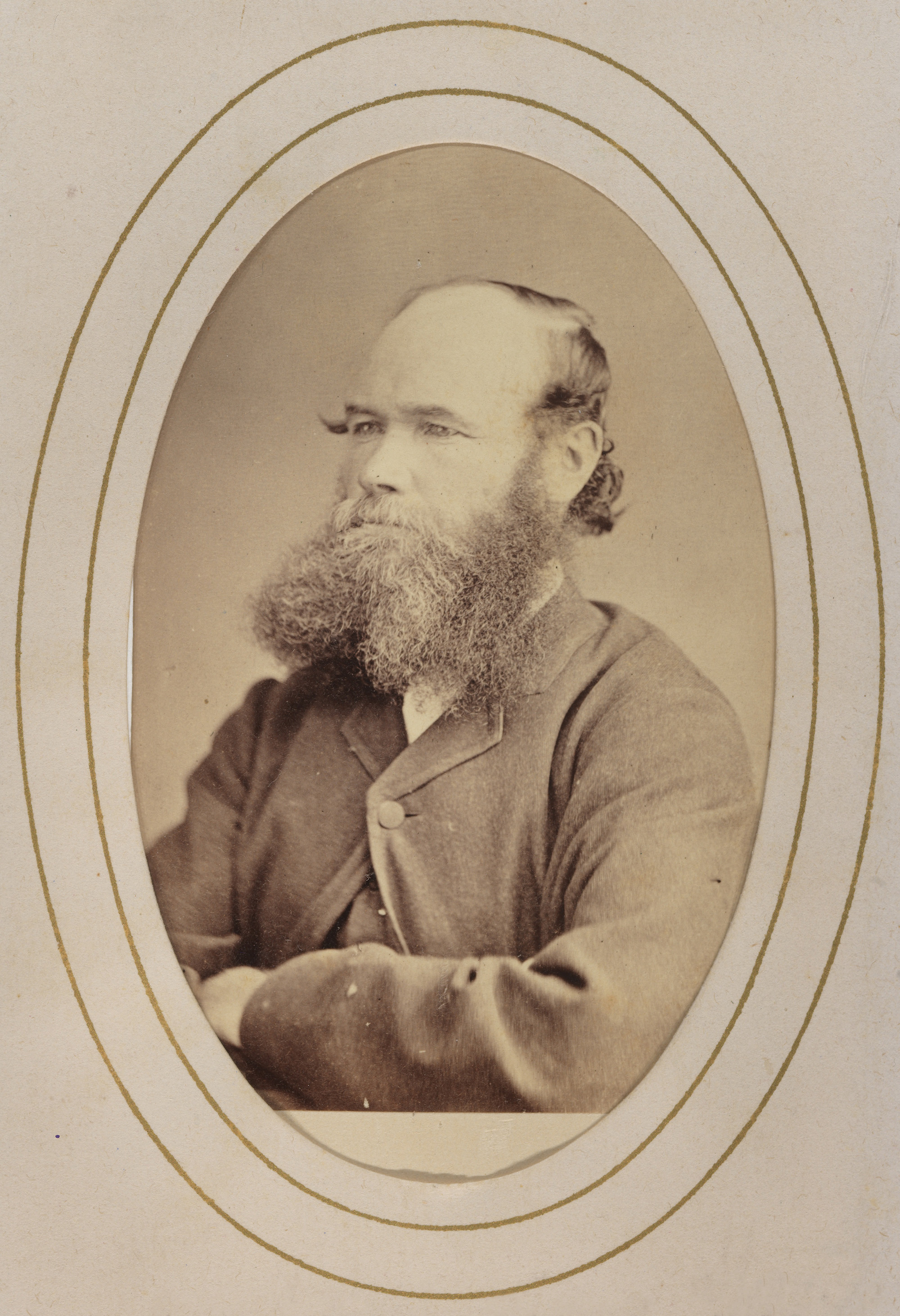
It’s early morning in the Battye library in Perth, Western Australia, and we’re scrolling through microfilm pages of the diary of a prominent and powerful colonist called Major Logue.
Logue kept the diary for 50 years, until his death in 1900. He wrote in it almost every day. Entries are written in looping script, sometimes neat and measured, other times messy and cramped. Pages are peppered with sketches of horses and faces, designs for a house, mud maps, lists of crops and stock. It’s all fairly mundane. Most entries simply recount the work done on the farm by Logue and his men: fences mended, potatoes planted, cattle lost and found.
Major LogueThere is some sort of code hidden in the diary, Guardian Australia has been told. But we’re not sure what to look for. The microfilm machine we’re using to view it is an analogue artefact. It’s hooked up to a computer so we can adjust light and contrast and take screenshots. It’s already crashed several times.
To view each page we wind the film gently from one side of the light box to the other. The machine takes a while to pull each one into focus. Even so, some of the writing is impossible to read. The ink on the page has faded with age and the photographs are grainy. The diary was copied to film in the 1950s and has lain undisturbed on the public catalogue ever since.
But then, suddenly, there it is. A line of strange, angular symbols slips on to the screen. As the years spin by – 1851, 1852, 1853 – the code, a series of right-angled shapes, some with dots, appears more frequently.
It stands out. If Logue used it to hide something, he failed. It’s easier to make out than his handwriting.
There’s one person who knows for sure what it says, and we’re going to Geraldton, about 400km north of Perth, to meet her.
She has spent the past several years removing this code – and what she knows it says – from Logue’s diaries to prepare them for publication.
The strange symbols represent a horrific story buried in the banality of early colonial farm life. It is the story of murder and massacre, of a family divided, of shame and fear and the shattering of colonial silence.
****
Major Logue was an early settler of Western Australia.
Born in Ireland, the young Major – his given name, not a military title – arrived in the colony as a child and acquired pastoral property near Geraldton in 1850. Landed and respectable, he served in the state’s Legislative Council from 1870 to 1874 as the first MP for Geraldton.
That’s the official version.
Logue was also a killer of Aboriginal people. But he hid his exploits in this diary that has remained secret – until now.
He wrote about who he killed, where, when and how, using the code.
On 16 March 1852 Logue wrote that some cattle went missing, so he “ SHOTTHREE OF THEM FOR IT. ”
Logue was not alone in this endeavour. On 24 March he wrote that the “natives at Mr Burgess’ had been stealing sheep AND THAT THE WHITE FELLOWS HAD SHOT SEVERAL OF THEM FOR IT.”
On 4 April he was among a group of armed men who set out to find “natives who had taken the cattle”.
4 April 1852
Started after breakfast and accompanied by Carsons we pushed in search of the natives who had taken the cattle saw smoke about 2 miles from Walkaway reached within a mile of it… proceeded from a native encampment tied up our horses in a thicket as the [ground] was very rough and crawled on our hands and knees within 200 yards when the natives saw us and scattered
FIRED BOTH BARRELS OF MY GUN AND WOUNDED ONE FELLOW IN THE RUMP. THOMSON AND DICKY SHOT ONE DEAD
There are 11 coded diary entries between 1851 and 1853 that describe shooting and killing people; witnessing others in his employ doing the shooting; going on a “campaign” to kill natives; and later riding over the “battlefield” and seeing the bodies of those he had killed lying dead or “hastily buried”.
By his own account he was part of groups who shot and killed at least 19 Yamatji people around what is now called Ellendale, Walkaway and the Greenough River.
On 23 June, 1852, Logue wrote that he had been part of a party who killed three Yamatji people.
23 June 1852
View original
Toggle code
Wednesday started after breakfast and [Karney] and I [went round] on our side of the [tracks] Menzies and Norries took the other after a couple of hours tracking we met at an appointed place and were all equally puzzled by the number of tracks [travelling] in every direction. Tom [Karney] returned home and we went on toward the flats to see whether we could find where the cattle had finally gone at [noon/nine] being on a hill we saw a fire at a distance and supposing it to be an encampment of natives we kept ourselves out of sight of it and rode round to try and get close and [obtain] some information from the natives concerning the cattle. Saw some natives
AND RODE AT THEM RECTOR SHIED AND PUT HIS FOOT IN A HOLE AND FELL CRUSHING MY LEFT HAND AND KNEE ANDKNOCKING THE CAP OFF MY PISTOL CAUGHT RECTOR AND GAVE CHASE TO A NIGGER APPLIED PILL MENZES AND NARRIER DID FOR 2 MORE
Lost my helmet trying to stop some of the natives to enquire about the cattle. Returned toward Glengary Called at the sheep station and heard that the natives had stolen some [fillies] got to Glengary at dusk Kenneth was at home Gregory had been there and was expected next morning on his way to Perth heard that Thomson had been [kicking] up a [indecipherable] about my having taken a horse and same had heard that the [indecipherable] had been found on the [Arwin]
Two days later he described a “battlefield”.
25 June 1852
View original
Toggle code
Friday After breakfast we [started] 7 in number well mounted and armed to look for the enemy at 9 AM [perceived] some natives on a hill
GALLOPED UP TO THEM AND MADE A TOLERABLE HAUL SEIZED ALL THEIR ARMS AND BURNT THEM
[Went] on some distance and [perceived] another party
OUT OF WHICH WE GOT TWO MORE
Rode round some distance and then started for [Quegiaruna] but after going some time we missed Ben and [Norries] so we [steered] for [Eyerama] to wait for them some time after we got there they came in and told us that they had met with a large [party] of natives and had been
ENGAGED WITH THEM AND AFTER FIRINGOFF ALL THEIR AMMUNITION AND BEEN
Oblidged to [run] away and come home [Saw] a lot of [blacks] and determined to go and look for these [insolent vagabonds] Started about 3 o’clock and returned to the place Ben had seen them but could not find them
WE FOUND EVERY THING ON THE BATTLEFEILD JUST AS WE HAD LEFT ITEXEPT THAT 2 OF THE BODIES HAD BEEN BURIED OUT OF A BUSH AND LAIDCLOSE TOGETHER AND THE DEAD DOG REMOVED
After searching about for [same] I returned to [Eyerama] and the remainder returned to Glengary a note from Cousins came by a native
The original large leather-bound ledgers have been in the private collection of a descendant, who declined to speak on the record. But they were loaned for copying to the State Library of Western Australia in 1955 and have been available for public reading in the stacks of the Battye library ever since.
Some of Logue’s other descendants, and those of other colonist families in the Geraldton region, have spoken to Guardian Australia. They want to break the silence surrounding their ancestors’ involvement in frontier violence. They have begun meeting with the Yamatji descendants of the survivors.
Australia’s archives contain many colonial diaries. They are how we are able to understand just how widespread frontier murders and massacres were; how commonplace it was among colonists to shoot and kill Aboriginal men, women and children on sight, for no reason and without consequences.
What makes Logue’s diaries unique is that he wrote about these exploits using code at a time when such killings were frowned upon by colonial society. And, because he kept those diaries for 50 years from his arrival in the Geraldton region until his death, we can see how he materially benefited from those killings.
mple’ code
A Geraldton-based historian and author, Nan Broad, has spent the past six years transcribing and decoding Logue’s diaries. Broad came across them in the late 1990s while researching her PhD on stock routes and communication in the north of WA. She knew the Logues, having grown up in one of the prominent colonial families in the area – where “everyone knows everyone”.
She’s preparing to publish a version of the diaries this year.
“I knew it was very, very unique to have 50 years straight of a diary,” she says, adding that as a historian: “I knew the value of the things.”
7 July 1852
View original
Toggle code
Wednesday Tom, Liffy and Bryant started at day break to gather the cattle found and got in 82 before breakfast after breakfast Bryant went to look for the others Thomson and [family] went home … told by Thomson that the [indecipherable] was at the Greenough looking for the cattle again
AND THAT HE AND PARTY HAD SHOT 3 NATIVES THE OTHER DAY AND THAT EGOIS AMONG THE NUMBER
When she first saw the diaries about 30 years ago, they were in boxes under a bed. Their owner gave her access. When she began editing them for publication, the Geraldton library helped her to make copies so she could return the originals to their owner. This took a few days a week over the course of about a year.
But Broad says the publisher and the diaries’ owner have decided to leave out all the sections in which Logue wrote about frontier killings.
“To protect the person who holds the diaries we felt it was … expedient, perhaps, to not have that in writing,” she says. “Everyone knows what Major Logue did. Everyone knows what all the other settlers did.”
It is quite clear to Broad that he was writing about killing people – using a “pathetically simple” code.
“He did the code, which is interesting, because he obviously felt guilt, I would suggest – it’s only my interpretation of it. He felt guilt about it, and he knew the diaries were only a day-to-day thing on the farm, and I don’t think he ever thought they would go any further.
“It was all just run of the mill. That’s what we did. We went and dug holes for the fence there, and then we went over and we took those fellows out, and then we went back and milked the cow, or whatever we did.
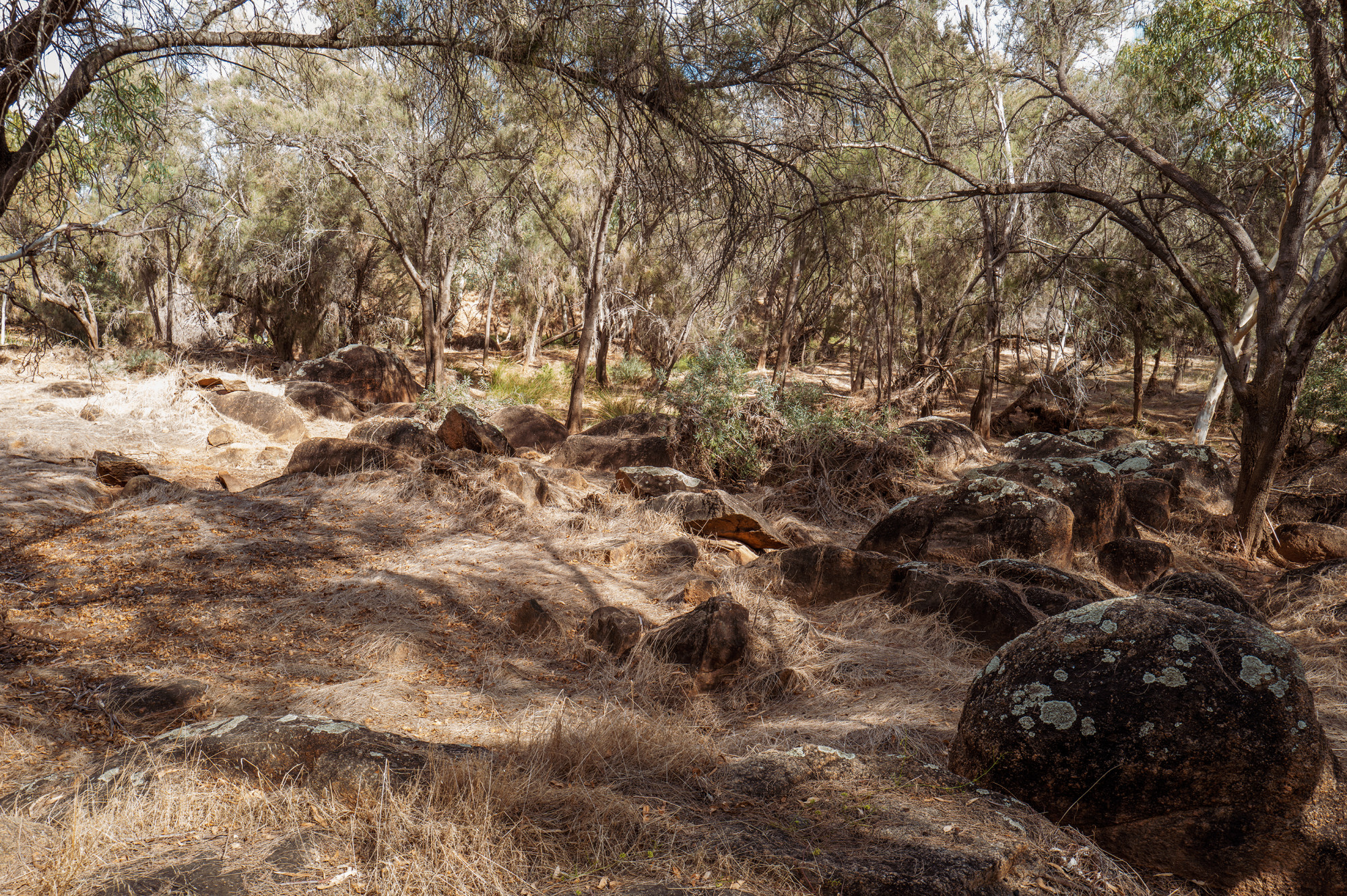
Rocks and she-oaks near Ellendale Pool, a grassy oasis on the Greenough River“It was just part of the day, and he didn’t go into the fact they’d been spearing this, or doing that, or doing something. There was no talk through the diary about that, just ‘we did it’. It was just facts each time he did that.”
‘Full of shame’
Logue used a modified form of masonic code known as “pigpen”.
Guardian Australia combed through his diary page by page from 1850 to 1900 and hired a professional transcriber to detangle relevant passages of his handwriting. The diary entries in which he used code are reproduced here.
Results 1 to 2 of 2
-
04-08-2025, 06:02 PM #1Thailand Expat



- Join Date
- Aug 2011
- Last Online
- @
- Location
- Fuente del Berro
- Posts
- 27,925
On the darkside the Oz aboriginals meet the English gentry
 Originally Posted by harrybarracuda

-
06-08-2025, 08:41 AM #2Thailand Expat

- Join Date
- Jan 2006
- Last Online
- @
- Posts
- 79,086

 Reply With Quote
Thread Information
Users Browsing this Thread
There are currently 1 users browsing this thread. (0 members and 1 guests)
