

An article from the NY Times.
Pedro Juan Gutiérrez: 'The modernization of Cuba is irreversible'
By ALBINSON LINARES December 28, 2016
"Cuba must face the new times without hatred or resentment because that brings bad consequences," says Gutierrez when referring to the political future of the island after the Castro. Credit Albinson Linares
HAVANA - The pier stretched out in the golden light of twilight; In the distance two solitary sailboats ripped the skin of the ocean, where it was already night. "This only lasts a minute. Let me see it again, "said Cuban writer Pedro Juan Gutiérrez from his home in Centro Habana. Seconds later it began to darken and he exclaimed: "Only for that sunset is worth living in Havana."
In his home in Centro Habana, a populous neighborhood of narrow streets and old neoclassical buildings, Gutiérrez has written all his work, which is a mirror of the miseries that populate the Cuban reality. In this urban circuit of almost four square kilometers the characters of Gutierrez live and die, reproduce, lie down with everyone and cross their vital limits again and again. Is the setting for books like Dirty Havana Trilogy , The King of Havana , Dog meat and Fabian and chaos , among others.
The works of Gutiérrez have been awarded with important prizes such as Alfonso García-Ramos de Novela in Spain, and the Southern Narrative of the World in Italy. The writer has been translated into more than 22 languages and criticism has easily located him as a tropical narrator of dirty realism, Bukowski's Cuban brother and Henry Miller's cousin islander.
However, do not confuse yourself. His narrative is part of the brilliant tradition of humanism and denunciation of the Cuban letters that have criticized the communist system for its dehumanization and persecution of dissent, in addition to forging a careful style and content in which each phrase immerses us in the contradictions of the island. Gutierrez never mentions the Castro in his novels, but makes them inescapable protagonists when describing the horrors of the misery that they created.
"Sometimes I think it's hell, but it's also a place that can be peaceful and very human," he says, and explains that in these months he has only dedicated himself to poetry. Since June, the verses of Hunter and other poems steal the attention usually devoted to the gruesome stories.
While Fidel Castro's ashes traveled around the island of Cuba in November, the author recalled that he was nine years old when the revolutionary leader entered the capital. He was far away in Matanzas, north of the island, but he quickly realized that the presence of the "bearded" was going to be important for all Cubans.
"My generation was marked by the revolution, by that utopian and idealistic project that broke with all of the above. There was a break with the way of seeing sex, family, society and culture, even with all the previous legacy, "says the 66-year-old Cuban author. "It was a great adventure, a huge laboratory in which, simultaneously, good projects started and also many negative things happened."
Will Castro's death affect the Cuban political process in the short term?
Since 2006 he was retired because of his illness so it was not as strong a presence as the past. That allowed Raúl (Castro) to initiate a series of reforms such as opening small businesses and improving immigration laws to enter and leave the country without problems, among other changes. Interestingly, Raul already said that he is coming out of power in 2018 and that is something new in the country's politics, which remained frozen for decades.
What changes do you think the new generations of Cubans are looking for?
The modernization of Cuba is irreversible because it is what young people want. There is nothing left of utopia, idealism, revolution, or politics, even though there is an official discourse that exalts that. Young people are interested in speaking English, French and setting up a business to earn money.
Do the people of your generation see that attitude as a positive change or are you surprised by that break with the communist legacy?
They want to go to try their luck in another country, to create companies and most do not want to study university degrees, but to have practical trades. I do not know if that will be positive or negative, but it is something tremendous that has been manifesting in the last years and it is evident that it works because it favors the changes.
How do you think it will be the transition between the current political model and the emergence of new reforms?
What was left behind is the past, and one can not live on it. I believe that Cuba must face the new times without hatred or resentment because that brings bad consequences in the individual and social life. We must begin this new era without so many outstanding accounts.
What can you tell people your age who are afraid of the changes brought about by young people?
Sometimes people hear me and are amazed because I am a bit radical, but the only way to cope with this process is to be positive and move forward. Already the revolution lasted several decades and had some good and many bad things, that has to be assumed because it was a social process. Then nothing happens, time is infinite.
And how will their characters who have always lived on the margins of the Cuban system take it?
They are like the average Cuban who suffers laughing and sometimes does not realize their precarious living conditions. Despite how extreme our economic situation has been, we always have fun. We have a spirituality, a mestizaje that defines everything and that is the Caribbean. If you are fucked in life and above you will be crushing eggs, all full of envy for how well you live in Europe or the United States, well you can not. This is what has touched you, so let's enjoy it, you can always take a bottle of rum, play dominoes, have a little sex and make fun of your life.
Pedro Juan Gutiérrez: ?La modernización de Cuba es irreversible? ? Español
Results 76 to 86 of 86
Thread: Cuba
-
02-01-2017, 02:38 PM #76Thailand Expat



- Join Date
- Apr 2016
- Last Online
- @
- Location
- Alliance HQ
- Posts
- 4,524
-
13-01-2017, 02:38 PM #77Thailand Expat
- Join Date
- Apr 2016
- Last Online
- @
- Location
- Alliance HQ
- Posts
- 4,524
Obama ends the "wet / dry" policy.
Associated Press in WashingtonObama ends 'wet foot, dry foot' policy for Cuban immigrants
Cubans will no longer be allowed to stay and become legal residents if they enter US illegally, as Obama administration negotiates with Cuba to send people back
Thursday 12 January 2017
https://www.theguardian.com/world/20...-foot-dry-foot
-
14-01-2017, 08:49 PM #78Thailand Expat
- Join Date
- Apr 2016
- Last Online
- @
- Location
- Alliance HQ
- Posts
- 4,524
Floridians have long known about this, but not the general US public. Now they know.
Obama banned the "Wet / Dry" policy started by....Bill Clinton.
Cubans come for welfare, get it, and return to Cuba. Life is grand.
U.S. welfare flows to Cuba - Sun SentinelU.S. welfare flows to Cuba
“They’re taking benefits from the American taxpayer to subsidize their life in another country.”
By Sally Kestin, Megan O'Matz and John Maines with Tracey Eaton in Cuba
Part 2:
Cubans retire to Florida
Part 3:
Political protection
Read our previous investigations into special treatment for Cuban immigrants
Cuban immigrants are cashing in on U.S. welfare and returning to the island, making a mockery of the decades-old premise that they are refugees fleeing persecution at home.
Some stay for months at a time — and the U.S. government keeps paying.
Cubans’ unique access to food stamps, disability money and other welfare is meant to help them build new lives in America. Yet these days, it’s helping some finance their lives on the communist island.
America’s open-ended generosity has grown into an entitlement that exceeds $680 million a year and is exploited with ease. No agency tracks the scope of the abuse, but a Sun Sentinel investigation found evidence suggesting it is widespread.
Cuban arrivals in Florida
Unlike most immigrants to the U.S., Cubans are presumed to be refugees and can access special assistance. Since 2003, more than 329,000 Cuban immigrants arrived in Florida and were eligible for this aid, which includes cash, medical care and job training. They now make up nine out of 10 foreigners getting refugee services in Florida.
Source: Florida Department of Children and Families' Refugee Services Program
Fed-up Floridians are reporting their neighbors and relatives for accepting government aid while shuttling back and forth to the island, selling goods in Cuba, and leaving their benefit cards in the U.S. for others to use while they are away.
Some don’t come back at all. The U.S. has continued to deposit welfare checks for as long as two years after the recipients moved back to Cuba for good, federal officials confirmed.
Regulations prohibit welfare recipients from collecting or using U.S. benefits in another country. But on the streets of Hialeah, the first stop for many new arrivals, shopkeepers like Miguel Veloso hear about it all the time.
Veloso, a barber who has been in the U.S. three years, said recent immigrants on welfare talk of spending considerable time in Cuba — six months there, two months here. “You come and go before benefits expire,” he said.
State Rep. Manny Diaz Jr. of Hialeah says it’s a “slap in the face” to Americans for Cubans to collect aid as refugees then return to the island.
State Rep. Manny Diaz Jr. of Hialeah hears it too, from constituents in his heavily Cuban-American district, who tell of flaunting their aid money on visits to the island. The money, he said, “is definitely not to be used … to go have a great old time back in the country that was supposed to be oppressing you.”
The sense of entitlement is so ingrained that Cubans routinely complained to their local congressman about the challenge of accessing U.S. aid — from Cuba.
“A family member would come into our office and say another family member isn’t receiving his benefits,” said Javier Correoso, aide to former Miami Rep. David Rivera. “We’d say, ‘Where is he?’ They’d say, ‘He’s in Cuba and isn’t coming back for six months.’”
The money “is definitely not to be used … to go have a great old time back in the country that was supposed to be oppressing you.”
— State Rep. Manny Diaz Jr. of Hialeah
Share
“They’re taking benefits from the American taxpayer to subsidize their life in another country.’”
One woman told Miami immigration attorney Grisel Ybarra that her grandmother and two great aunts came to Florida, got approved for benefits, opened bank accounts and returned to Cuba. Month after month, the woman cashed their government checks — about $2,400 each time — sending half to the women in Cuba and keeping the rest.
When a welfare agency questioned the elderly ladies’ whereabouts this summer, the woman turned to Ybarra, a Cuban American. She told Ybarra her grandmother refused to come back, saying: “With the money you sent me, I bought a home and am really happy in Cuba.”
Cubans on the island, Ybarra said, have a name for U.S. aid.
They call it “la ayuda.” The help.
Special status abused
Increasing openness and travel between the two countries have made the welfare entitlement harder to justify and easier to abuse. But few charges have been brought, and Congress and the Obama Administration have failed to address the problem even as the United States moves toward détente with Cuba.
Cubans fuel increase in Florida costs
The U.S. opens its borders and wallets to Cubans like no other immigrant group. The number of Cubans coming to the U.S. is increasing, along with the expense of supporting them. The cost of food stamps, welfare and short-term cash assistance for Cuban immigrants in Florida has increased 23 percent from 2011 through 2014, compared to 5 percent for refugees from all other nations.
Adding it up
Florida’s costs are only part of the picture. To calculate the total cost of public assistance for Cuban immigrants, the Sun Sentinel included estimates for federal refugee assistance and welfare for seniors and the disabled. The $682 million total is conservative.*
Cubans are allowed into the U.S. even if they arrive without permission and are quickly granted permanent residency under the 1966 Cuban Adjustment Act. They’re assumed to be refugees without having to prove persecution.
They’re immediately eligible for welfare, food stamps, Medicaid and Supplemental Security Income or SSI, cash assistance for impoverished seniors and disabled younger people.
Most other immigrants are barred from collecting aid for their first five years. Those here illegally are not eligible at all.
The Sun Sentinel analyzed state and federal data to determine the annual cost of taxpayer support for Cuban immigrants: at least $680 million. In Florida alone, costs for welfare, food stamps and refugee cash have increased 23 percent from 2011 through 2014.
“They come to the U.S. to work and make a living for their family,” said Jose Alvarez, a Cuba native and city commissioner in Kissimmee. “I don’t believe that they come thinking the government will support them.”
But some take advantage of the easy money — and then go back and forth to Cuba.
A public housing tenant in Hialeah, who was receiving food stamps and SSI payments for a disabled son, frequently traveled to Cuba to sell food there, records show. She admitted to a city housing investigator in 2012 that she “makes $700 in two months just in the sales to Cuba.”
Another man receiving food stamps admitted to state officials “that he was living in Cuba much of 2015.”
A recent arrival with a chronic illness got Medicaid coverage and turned to attorney David Batchelder of Miami to help him get SSI as well. But the man was “going back and forth to Cuba” so much that Batchelder eventually dropped the case. “It was just another benefit he was applying for.”
Concerns about Cubans exploiting the aid are especially troubling to exiles who came to this country decades ago and built new lives and careers here.
Dr. Noel Fernandez recalls the assistance his family received from friends and the U.S. government when they immigrated 20 years ago, help that enabled him to find work as a landscaper, learn English and complete his medical studies. Now medical director of Citrus Health Network in Hialeah, Fernandez sees Cuban immigrants collecting benefits and going back, including three elderly patients who recently left the U.S. for good.
“They got Medicaid, they got everything, and they returned to Cuba,” he said. “I see people that said they were refugees [from] Cuba and they return the next year.”
State officials have received complaints about Cubans collecting aid while repeatedly going to Cuba or working as mules ferrying cash and goods, a common way of financing travel to the island.
Another way of paying for the trips: cheating. Like other welfare recipients, some Cubans work under the table or put assets in others’ names to appear poor enough to meet the programs’ income limits, according to records and interviews. Some married couples qualify for more money as single people by concealing marriages performed in Cuba, where the U.S. can’t access records.
The United States accepts refugees from around the world if they can prove persecution at home. Cubans don’t need such proof – they are the only nationality with open-ended access to the U.S. and government benefits.
[b]Source: Florida Department of Children and Familiies
“Stop the fraud please!” one person urged in a complaint to the state. Another pleaded with authorities to check airport departure records for a woman suspected of hiding income. “It would show how many times she has traveled to Cuba.”
Florida officials typically dismissed the complaints for lack of information, because names didn’t match their records or because the allegations didn’t involve violations of eligibility rules. Travel abroad is not expressly prohibited, but benefits are supposed to be used for basic necessities within the U.S.
“Our congressional folks should be looking at this,” said Miami-Dade County Commissioner Esteban Bovo Jr., a Cuban American. “There could be millions and millions of dollars in fraud going on here.”
Money to Cuba
Accessing benefits from Cuba typically requires a U.S. bank account and a willing relative or friend stateside. Food stamps and welfare are issued monthly through a debit-type card, and SSI payments are deposited into a bank account or onto a MasterCard.
A joint account holder with a PIN number can withdraw the money and wire it to Cuba. Another option: entrust the money to a friend traveling to Cuba.
Roberto Pizano of Tampa, a political prisoner in Cuba for 18 years, said he worked two jobs when he arrived in the U.S. in 1979 and never accepted government help. He now sees immigrants “abusing the system.”
“I know people who come to the U.S., apply for SSI and never worked in the USA,” he said. They “move back to Cuba and are living off of the hard-earned taxpayer dollars.”
He said family friend Gilberto Reyno got disability money from the U.S. and renovated a house in Cuba. The Sun Sentinel found Reyno living in that house in Camaguey, Cuba. He said he was no longer receiving disability, but Pizano and another person familiar with the situation said the payments continue to be deposited into a U.S. bank account. The Social Security Administration would not comment, citing privacy concerns, but is investigating.
Roberto Pizano of Tampa, a political prisoner in Cuba for 18 years, said Cubans are signing up for U.S. benefits and moving back to Cuba, “living off of the hard-earned taxpayer dollars.“ Photo by Taimy Alvarez
Federal investigators have found the same scenario in other cases.
A 2012 complaint alleged a 75-year-old woman had moved to Camaguey two years earlier and a relative was withdrawing her SSI money from a bank account and sending it to her. Social Security stopped payments, but not before nearly $16,000 had been deposited into her account.
Another recipient went to Cuba on vacation and stayed, leaving his debit card with a relative. Social Security continued his SSI payments for another six months — $4,000 total — before an anonymous caller reported he had gone back to Cuba.
One woman reportedly moved to Cuba in 2010 and died three years later, while still receiving SSI and food stamps, according to a 2014 tip to Florida welfare fraud investigators. A state official couldn’t find her at her Hialeah home, cut off the food stamps and alerted the federal government.
Former congressman Rivera tried to curb abuses with a bill that would have revoked the legal status of Cubans who returned to the island before they became citizens.
“Public assistance is meant to help Cuban refugees settle in the U.S.,” Mauricio Claver-Carone of Cuba Democracy Advocates testified in a 2012 hearing on the bill. “However, many non-refugee Cubans currently use these benefits, which can average more than $1,000 per month, to immediately travel back to the island, where the average income is $20 per month, and comfortably reside there for months at a time on the taxpayer's dime.”
Rivera recently told the Sun Sentinel that he interviewed welfare workers, Cubans in Miami and passengers waiting for charter flights to Havana. He said he found overwhelming evidence of benefits money going back, especially after the U.S. eased travel restrictions in 2009.
The back and forth undermines the rationale that Cubans are refugees fleeing an oppressive government, Rivera said. And when they return for visits, they boast of the money that’s available in the U.S., he said. “They all say, ‘It’s great. I got free housing. I got free food. I get my medicine.’ ”
Five Cubans interviewed by the Sun Sentinel in Havana said they were aware of the assistance and knew of Cubans who had gone to America and quickly began sending money back. Two said they believed it was U.S. government aid.
“I don’t think it’s correct, but everyone does it for the well-being of their family,” said one woman, Susana, who declined to give her last name.
Outside welfare offices in Hialeah, the Sun Sentinel found Cuban immigrants who had arrived as recently as three days earlier, applying for benefits. They said family and friends told them about the aid before they left Cuba.
“Back in the ’60s, when you came in, they told you the factory that was hiring,” said Nidia Diaz of Miami, a former bail bondswoman who was born in Cuba. “Now, they tell you the closest Department of Children and Families [office] so you can go and apply.”
Crooks collect in Cuba
Miami bail bondswoman Barbara Pozo said many of her Cuban clients talk openly about living in Cuba and collecting monthly disability checks, courtesy of U.S. taxpayers.
“They just come here to pick up the money,” Pozo said. “They pretend they’re disabled. They just pretend they’re crazy.”
SSI payments, for those who cannot work due to mental or physical disabilities, go up to $733 a month for an individual. Most other new immigrants are ineligible until they become U.S. citizens.
Cubans collect, others don’t:
A guide to immigrant welfare ›
Some Cubans try to build a case for SSI by claiming trauma from their life under an oppressive government or the 90-mile crossing to Florida.
Diaz, the former bondswoman, said she has heard Cuban clients talk about qualifying: “‘Tell them that you have emotional problems. How did you get these problems? Well, trying to get here from Cuba.’”
Antonio Comin collected disability while organizing missions to smuggle Cubans to Florida, including one launched from a house in the Keys, federal prosecutors said. Comin claimed he rented the home to celebrate his birthday — after receiving his government check.
Casimiro Martinez was receiving a monthly check for a mental disability — but his mind was sound enough to launder more than $1 million stolen from Medicare. Martinez was arrested at Miami International Airport after returning from a trip to Cuba.
Outside welfare offices in Hialeah, the Sun Sentinel found Cuban immigrants who had arrived as recently as three days earlier, applying for benefits.
Government disability programs are vulnerable to fraud, particularly SSI, with applicants faking or exaggerating symptoms. Some view SSI as “money waiting to be taken,” said John Webb, a federal prosecutor in Tennessee who has handled fraud cases.
While benefits are supposed to be suspended for recipients who leave the United States for more than 30 days, the government relies on people to self-report those absences, and federal audits have found widespread violations.
The government could significantly reduce abuses by matching international travel records to SSI payments, auditors have recommended since 2003. The Social Security Administration and Department of Homeland Security are still trying to work out a data sharing agreement — 12 years later.
Jose Caragol, a Hialeah city councilman and Havana native, said aid for Cubans “was meant to assist those who were persecuted and want a new life. The bleeding has to stop.”
-
08-08-2017, 09:23 AM #79Thailand Expat
- Join Date
- Apr 2016
- Last Online
- @
- Location
- Alliance HQ
- Posts
- 4,524
Under Fidel Castro Cubans were not allowed to travel for 51 years. When Raul came to power he finally allowed Cubans to travel.
One thing about Fidel, almost everyone either "loves" him or "hates" him. There are not a lot of people in between. The more you learn about Fidel and how Cuba actually was and is, the more I don't like him.
He motivated Latins to become literate: clap-clap-clap.
This article is from 2012, but I specifically recall a poster here who like Fidel saying that Cubans were allowed to travel and that it was a myth they were not allowed to do so.
So posters: what's your take on Fidel.
Cubans will be free to travel abroad for first time in 51 years as expensive exit visa is abolished
New law eliminates the need for citizens to have an exit visa
Travel restrictions have been imposed since 1961
Read more: Cubans will be free to travel abroad for first time in 51 years as expensive exit visa is abolished | Daily Mail Online
Follow us: @MailOnline on Twitter | DailyMail on Facebook
-
08-08-2017, 11:29 AM #80Thailand Expat


- Join Date
- Aug 2014
- Last Online
- 26-09-2021 @ 10:28 PM
- Posts
- 10,149
Maybe I am wrong, have the US citizens been allowed to travel to Cuba, haven't they? For 51 years? Originally Posted by Cold Pizza
-
08-08-2017, 03:41 PM #81Thailand Expat
- Join Date
- Apr 2016
- Last Online
- @
- Location
- Alliance HQ
- Posts
- 4,524
Apples and Oranges, Klondyke. Originally Posted by Klondyke

-
08-08-2017, 04:38 PM #82Thailand Expat
- Join Date
- Aug 2014
- Last Online
- 26-09-2021 @ 10:28 PM
- Posts
- 10,149
Yes. So, both Apples and Oranges haven't been allowed. How comforting feeling for the Apples (or Oranges?) from the country of unlimited Freedom. Originally Posted by Cold Pizza
(and now the same to NK?)
(to Afgh, Iraq, Iran, Syria, Lybia, travelling allowed?)
(Surely not to Russia, incl. Crimea...)
-
08-08-2017, 07:18 PM #83Thailand Expat
- Join Date
- Apr 2016
- Last Online
- @
- Location
- Alliance HQ
- Posts
- 4,524
More apples and oranges.
The topic is Cuba.
-
29-09-2017, 09:20 PM #84I'm in Jail
- Join Date
- Sep 2017
- Last Online
- 20-10-2018 @ 09:17 AM
- Location
- Ft. Lauderdale, FL
- Posts
- 1,121
Things ain't so rosy for American diplomats in Cuba. Since travel was officially allowed, Americans have not been streaming in as tourists and with the recent attacks on US diplomats I don't expect more to go to Cuba. IMO, it's still a communist sh*thole.
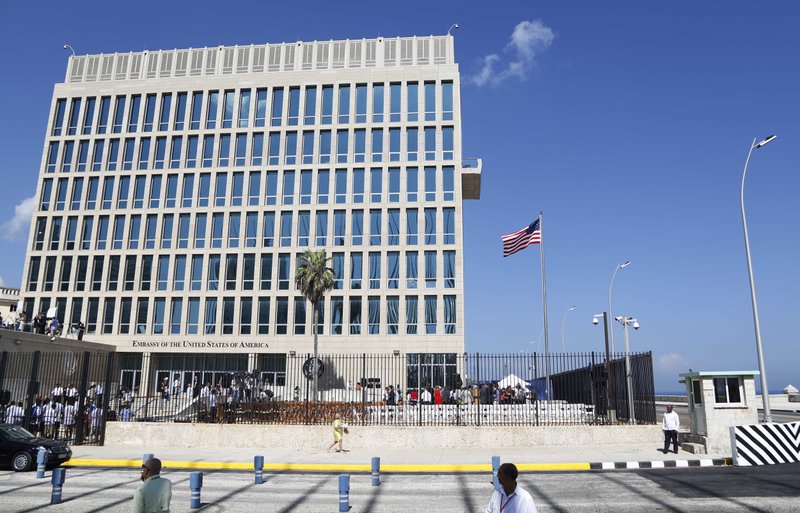
AP sources: US cuts embassy staff, urges no travel to Cuba
By JOSH LEDERMAN and MATTHEW LEE
WASHINGTON (AP) — The United States is warning Americans against visiting Cuba and ordering more than half of U.S. personnel to leave the island, senior officials said Friday, in a dramatic response to what they described as “specific attacks” on diplomats.
The decision deals a blow to already delicate ties between the U.S. and Cuba, longtime enemies who only recently began putting their hostility behind them. The embassy in Havana will lose roughly 60 percent of its U.S. staff, and will stop processing visas in Cuba indefinitely, the American officials said.
In a new travel warning to be issued Friday, the U.S. will say some of the attacks have occurred in Cuban hotels, and that while American tourists aren’t known to have been hurt, they could be exposed if they travel to Cuba. Tourism is a critical component of Cuba’s economy that has grown in recent years as the U.S. relaxed restrictions.
For now, the United States is not ordering any Cuban diplomats to leave Washington, another move that the administration had considered, officials said. Several U.S. lawmakers have called on the administration to expel all Cuban diplomats. In May, Washington asked two to leave, but emphasized it was to protest Havana’s failure to protect diplomats on its soil, not an accusation of blame.
Almost a year after diplomats began describing unexplained health problems, U.S investigators still don’t know what or who is behind the attacks, which have harmed at least 21 diplomats and their families, some with injuries as serious as traumatic brain injury and permanent hearing loss. Although the State Department has called them “incidents” and generally avoided deeming them attacks, officials said Friday the U.S. now has determined there were “specific attacks” on American personnel in Cuba.
Secretary of State Rex Tillerson made the decision to draw down the embassy overnight while traveling to China, officials said, after considering other options that included a full embassy shutdown. President Donald Trump reviewed the options with Tillerson in a meeting earlier in the week. The officials demanded anonymity because the moves have yet to be announced.
The United States notified Cuba of the moves early Friday via its embassy in Washington. Cuba’s embassy had no immediate comment.
Cubans seeking visas to enter the U.S. may be able to apply through embassies in nearby countries, officials said. The U.S. will also stop sending official delegations to Cuba, though diplomatic discussions will continue in Washington.
The moves deliver a significant setback to the delicate reconciliation between the U.S. and Cuba, two countries that endured a half-century estrangement despite their locations only 90 miles apart. In 2015, President Barack Obama and Cuban President Raul Castro restored diplomatic ties. Embassies re-opened, and travel and commerce restrictions were eased. Trump has reversed some changes, but has broadly left the rapprochement in place.
The Trump administration has pointedly not blamed Cuba for perpetrating the attacks. Officials involved in the deliberations said the administration had weighed the best way to minimize potential risk for Americans in Havana without unnecessarily harming relations between the countries. Rather than describe it as punitive, the administration will emphasize Cuba’s responsibility to keep diplomats on its soil safe.
To investigators’ dismay, the symptoms in the attacks vary widely from person to person. In addition to hearing loss and concussions, some experienced nausea, headaches and ear-ringing, and the AP has reported some now suffer from problems with concentration and common word recall.
Though officials initially suspected some futuristic “sonic attack,” the picture has grown muddier. The FBI and other agencies that searched homes and hotels where incidents occurred found no devices. And clues about the circumstances of the incidents seem to make any explanation scientifically implausible.
Some U.S. diplomats reported hearing various loud noises or feeling vibrations when the incidents occurred, but others heard and felt nothing yet reported symptoms later. In some cases, the effects were narrowly confined, with victims able to walk “in” and “out” of blaring noises audible in only certain rooms or parts of rooms, the AP has reported.
Though the incidents stopped for a time, they recurred as recently as late August. The U.S. has said the tally of Americans affected could grow.
Already, staffing at the embassy in Havana was at lower-than-usual levels due to recent hurricanes that have whipped through Cuba. In early September, the State Department issued an “authorized departure,” allowing embassy employees and relatives who wanted to leave voluntarily to depart ahead of Hurricane Irma.
Though Cuba implored the United States not to react hastily, it appeared that last-minute lobbying by Castro’s diplomats was unsuccessful. The days leading up to the decision involved a frantic bout of diplomacy that brought about the highest-level diplomatic contacts between the countries since the start of Trump’s administration in January.
Last week, the Cuban official who has been the public face of the diplomatic opening with the U.S., Josefina Vidal, came to the State Department for a meeting with American officials in which the U.S. pressed its concerns. Foreign Minister Bruno Rodriguez used his speech to the U.N. General Assembly to insist Cuba had no idea what was harming American diplomats, while discouraging Trump from letting the matter become “politicized.”
As concerns grew about a possible embassy shut-down, Cuba requested an urgent meeting Tuesday between Rodriguez and Tillerson in which the Cuban again insisted his government had nothing to do with the incidents. Rodriguez added that his government also would never let another country hostile to the U.S. use Cuban territory to attack Americans.
Citing its own investigation, Cuba’s embassy said after the meeting: “There is no evidence so far of the cause or the origin of the health disorders reported by the U.S. diplomats.”
https://apnews.com/3602399b00044443883aa2bdef0f1a84
-
27-11-2017, 09:03 AM #85I'm in Jail
- Join Date
- Sep 2017
- Last Online
- 20-10-2018 @ 09:17 AM
- Location
- Ft. Lauderdale, FL
- Posts
- 1,121
This post and link is relevant. Don't make accusations of "bumping" unnecessarily.
Raul Castro will resign in February of 2018, in about 2 months.
There may be interesting transitions in Cuba coming. This is an interesting article:
Cuba and Raul Castro face critical transition | Miami Herald
-
27-11-2017, 12:34 PM #86Thailand Expat
- Join Date
- Aug 2014
- Last Online
- 26-09-2021 @ 10:28 PM
- Posts
- 10,149
^ Service unavailable.
Or did you mean this:
Cubans mark the anniversary of Fidel Castro's death
Raul Castro votes Sunday during Communist island's election
HAVANA - Cubans living in the Communist island are marking the anniversary of Fidel Castro's death with somber ceremonies Saturday. There were documentaries on state TV and parades in Havana and Santiago.
Granma featured a series of articles written by him and admirers' opinions. Castro led his bearded rebels to victorious revolution in 1959, embraced Soviet-style communism and defied the power of 10 U.S. presidents during his half-century of rule in Cuba. His regime shaped a South Florida community that fervently despises him.
Castro’s reign over the island nation 90 miles from Florida was marked by the U.S.-backed Bay of Pigs invasion in 1961 and the Cuban Missile Crisis a year later that brought the world to the brink of nuclear war. Castro, who outlasted a crippling U.S. trade embargo as well as dozens, possibly hundreds, of assassination plots, died 10 years after a life-threatening illness led him to turn over power to his brother.
Castro overcame imprisonment at the hands of dictator Fulgencio Batista, exile in Mexico and a disastrous start to his rebellion before triumphantly riding into Havana in January 1959 to become, at age 32, the youngest leader in Latin America. For decades he was a source of inspiration and support to revolutionaries from Latin America to Africa, even as Cubans who fled to exile loathed him with equal measure.
Obama said that in the coming days, Cubans "will recall the past and also look to the future. As they do, the Cuban people must know that they have a friend and partner" in America.
President-elect Donald Trump called Castro "a brutal dictator who oppressed his own people for nearly six decades." He said he hoped the death would clear the way "toward a future in which the wonderful Cuban people finally live in the freedom they so richly deserve."
He said his administration will do all it can to help Cubans "begin their journey toward prosperity and liberty."
https://www.local10.com/news/cuba/cu...castro-s-death

 Reply With Quote
Thread Information
Users Browsing this Thread
There are currently 1 users browsing this thread. (0 members and 1 guests)
