

Nilton Santos - obituary
Nilton Santos was twice a World Cup winner with Brazil and hailed the greatest left back in the history of the game
Nilton Santos in around 1960 Photo: Popperfoto
Nilton Santos, the former Brazilian footballer, who has died aged 88, was perhaps the finest left fullback in the game’s history; he popularised the concept of the attack-minded defender, won the World Cup with the national side in 1958 and 1962, and in 1998 was selected by Fifa for its “XI of the Century”.
Tall and solidly built, but stylish on the ball, in the late 1940s Santos became probably the first fullback of note to regard offence as an integral part of his play, in an era when even defensive midfielders rarely crossed the halfway line.
Although never a prolific scorer of goals, he was an excellent dribbler of the ball, foraging down the flanks at every opportunity, adding both momentum and extra balance to the team. His heirs in the Brazil shirt have included Francisco Marinho and Roberto Carlos.
World Cup side in 1962, standing, from left to right) Djalmar Santos, Zito, Gilmar, Zozimo, Nilton Santos, Mauro, (crouching, from left to right) Garrincha, Didi, Vava, Amarildo, Zagallo(Picture Alliance/Photoshot)
He made his international debut in 1949 in the side that won the Copa Americana; but though then selected for the squad for the following year’s World Cup, held in Brazil, he did not play in any of the matches. This was something of a blessing in disguise for him, for after Brazil lost to Uruguay in what was effectively the final of the tournament (organised throughout on a league system) there was a clear-out of players; and by the time of the 1954 competition, held in Switzerland, only Carlos Bauer remained from four years before.
In 1954 Brazil were driven by their victory in the Pan-American Cup two years previously, during which they had begun to evolve a new tactical system: 4-2-4 rather than the 3-5-2 which then predominated. It was a fluid style that played to the attacking strengths of the fullbacks Nilton Santos and his counterpart Djalma Santos, encouraging them to advance along the wings. It was a strategy similar to that being adopted by the most skilful team of the time, the Hungary of Puskas and Hidegkuti, and the meeting of the two sides in the competition’s quarter-finals was eagerly anticipated.
The outcome was, however, a disgraceful orgy of foul play dubbed “The Battle of Berne” which concluded with three men being sent off and the players continuing their disagreements afterwards with broken bottles and football boots in the darkness of the Brazil dressing room. Santos’s part was among the least distinguished, for it was his two-footed assault on Joszef Bozsik, the Hungarian playmaker, which brought the game to boiling point. Bozsik, who was also a Deputy in Hungary’s parliament, retaliated with punches, and amid a flurry of blows both were dismissed by the English referee, Arthur Ellis. When Santos refused to walk, the police were summoned. Hungary eventually won the game 4-2.
Santos redeemed himself four years later in Sweden when Brazil won their first World Cup. Although he struck a fine goal against Austria in the opening pool match, his greatest influence was perhaps his astute psychological management of his team-mates. He was credited with knowing all the secrets of the game (his nickname was “The Encyclopaedia of Football”), and it was his strength of personality that prevailed over the doubts of the coach, Vicente Feola, who was persuaded to include in the side both the 17-year-old Pele and Santos’s club-mate Garrincha from the last group match onwards. Both would play a key part in Brazil’s eventual 5-2 victory over Sweden in the Final.
Four years later Santos, by then 37, was picked for the World Cup to be held in Chile. His advancing years had meant that he had only just made the squad for the previous tournament (as well as losing the captaincy), and his selection in 1962 proved still more controversial with press and public alike. He afterwards said that even he had not wanted to go. The coach, Aymore Moreira (brother of Santos’s club manager at Botafogo), valued his experience, however, and this would prove vital to the team when they lost their chief inspiration, Pele, to injury in their second game.
Many years later Santos revealed that he had responded to this blow by goading his best friend, the incomparable winger Garrincha, before each subsequent match, telling him that certain defenders had been boasting that they would stop him scoring. Garrincha began to play out of his skin, and was largely responsible for Brazil retaining their hold on the trophy.
Santos also helped to settle down the lively but inexperienced and volatile Amarildo, who was brought in as Pele’s deputy. As a younger man, Santos himself had been no stranger to anger on the pitch; aside from his exhibition of fisticuffs in Berne, legend had it that on occasion he carried a pistol on to the pitch inside his shorts. It was an expression of commitment to the cause that made him a particular favourite with Brazilian supporters.
Nilton dos Reis Santos was born in Rio de Janeiro on May 16 1925. He started his career in professional football relatively late, joining Botafogo at the age of 23. So grateful was he for the chance to make his mark that, though naturally left-footed, he did not complain when the club’s coach, Zeze Moreira (later manager of the national team in the 1954 World Cup), at first insisted on playing him on the right. Santos soon made the left back position his own, however, and remained with Botafogo until he retired 16 years later, having played 743 games for the side, then a league record.
In his first season with the team, 1948, he helped them to their first state championship in 13 years, and subsequently won it in 1957, 1961 and 1962. He also won what was then effectively the national title — the play-off between the leading Rio and Sao Paulo teams — in 1962 and 1964. His proud boast when he retired, aged 39, was that he had appeared in 34 finals — domestic and international — and won them all.
Santos, who had been capped 84 times by his country and scored three times for them, then worked at the Maracana stadium and later as a soccer coach, although without notable success. In old age he lived in Rio.
Nilton Santos, born May 16 1925, died November 27 2013
Results 1,701 to 1,725 of 6948
Thread: The RIP Famous Person Thread
-
30-11-2013, 08:48 PM #1701R.I.P



- Join Date
- Nov 2009
- Last Online
- 25-09-2014 @ 02:50 PM
- Location
- Mountain view
- Posts
- 40,025
-
30-11-2013, 08:57 PM #1702R.I.P
- Join Date
- Nov 2009
- Last Online
- 25-09-2014 @ 02:50 PM
- Location
- Mountain view
- Posts
- 40,025
William Pollack - Obituary
William Pollack was an immunologist who helped develop a vaccine against rhesus disease

William Pollack
William Pollack, who has died aged 87, played a key role in the development of a vaccine that has virtually eradicated a disease that used to cause thousands of infant deaths every year.
In the early 1960s, having emigrated from Britain to the United States, Pollack was working as a medical researcher in New Jersey when, with two scientists at Columbia University in New York, Vincent Freda and John Gorman, he set about devising a treatment for a blood disorder commonly called rhesus disease.
This condition, in which antibodies in a pregnant woman’s blood destroy her baby’s blood cells, results from blood incompatibility between mother and foetus, but affects only children who follow a woman’s first pregnancy. While not harming the mother, the condition can cause the baby to become anaemic and, in severe cases, to suffer brain damage or even be stillborn. Administered within 72 hours after a woman gives birth, the vaccine removes from the mother’s bloodstream the substance that would sensitise her system to the next foetus’s blood and thus stimulate an immunological attack.
Pollack’s particular contribution was to devise the process whereby the blood components needed to make the vaccine are isolated and recombined in a liquid solution. In 1980 he and his colleagues received the Alfred Lasker Award (popularly known as the “American Nobel”) for excellence in biomedical research.
The citation described Pollack as “a bold and knowledgeable immunologist”.
While Pollack and his partners were at work in America, in Britain Ronald Finn, conducting medical research in Liverpool, was applying a similar microscopic technique for detecting foetal cells in the mother’s blood, and suggested injecting at-risk mothers with an antibody against foetal red blood cells. When Finn visited Pollack’s laboratory in Raritan, New Jersey, Pollack presented him with several vials of antibody to assist him in his research.
The son of a builder and carpenter, William Pollack was born in North Kensington, London, on February 26 1926, and educated at Wornington Road school which, at the outbreak of war, was evacuated to Nailsea near Bristol. After service in the Royal Navy as a sick berth attendant he graduated with a Science degree from Imperial College, London, in 1948. Having taken a Master’s degree in Chemistry there two years later, he joined the laboratory staff at St George’s Hospital, Hyde Park Corner.
Emigrating to Canada in 1954, he worked as a researcher at the Royal Columbian Hospital in Vancouver, and in 1963 moved to the United States as a researcher with Ortho Pharmaceutical, a subsidiary of Johnson & Johnson best known for developing spermicidal jellies, contraceptives and intrauterine devices. While working on his idea for a vaccine against Rhesus disease, he earned a PhD in Zoology from Rutgers University in New Brunswick.
The vaccine, now usually known by its brand name, RhoGAM, was developed with experiments on rabbits before being tested on volunteer male prisoners at the Sing Sing Correctional Facility in Ossining, New York, and later on 600 Rhesus-negative women in clinical trials. Pollack reported a 99 per cent success rate, and the drug was first marketed in 1969.
But he warned that the vaccine was only a treatment for rhesus blood disease, not a cure. To be effective, the vaccine has to be administered to women at risk each time they become pregnant.
In 1971 the World Health Organisation recommended that rhesus testing and treatment with the vaccine should become standard medical care for pregnant women. In a follow-up report in 1998, the WHO said that the incidence of Rh blood disease, once estimated at 200,000 cases a year worldwide, had become rare.
After 25 years at Ortho Pharmaceutical, Pollack left to work at Purdue-Frederick in Connecticut before starting his own company, Quotient Pharmaceuticals Manufacturing, in Anaheim, California.
William Pollack’s wife, Alison, whom he married in 1954, died in 2006. Their two sons survive him.
William Pollack, born February 26 1926, died November 3 2013
-
30-11-2013, 09:02 PM #1703R.I.P
- Join Date
- Nov 2009
- Last Online
- 25-09-2014 @ 02:50 PM
- Location
- Mountain view
- Posts
- 40,025
Chico Hamilton - obituary
Chico Hamilton was a drummer who brought the flute and cello to the jazz scene, dividing critics

Chico Hamilton
Chico Hamilton, who has died aged 92, was a jazz drummer, bandleader and composer of film music whose long career was marked by a distinctive style and independent approach; the unconventional quintet which he led in the later 1950s brought him wide exposure and was the cause of much critical controversy.
Foreststorn “Chico” Hamilton was born in Los Angeles on September 21 1921 and took up playing the drums at Jefferson High School .
Hamilton began playing professionally on leaving school, and toured with Lionel Hampton’s band at the age of 19 before being drafted into the US Army. After the war he worked briefly with the bands of Charlie Barnet and Count Basie before becoming a member of Lena Horne’s accompanying trio. With this group he toured Europe annually between 1948 and 1955 (with the exception of 1952). He also composed and recorded the soundtrack music to the Gerald McBoing-Boing cartoon films.
The 1952 break in touring proved fortunate, as it left Hamilton free to take part in the first recordings by the Gerry Mulligan Quartet, an experimental group consisting of baritone saxophone, trumpet, bass and drums. The absence of the customary piano gave the band a light, airy sound which caught the public ear .
16 Feb 2009 He returned to Lena Horne the following year and stayed until 1954, when he and Horne’s pianist-conductor, Fred Katz (composer of the music for the original little Shop of Horrors as well as the jazz pieces and much of the original score for Sweet Smell of Success), left to form their own band under Hamilton’s leadership. Katz had originally trained as a cellist, and the plan was for him to play piano in the new quintet and perform a solo set each night on cello. Soon, however, the piano was dropped and the cello became part of the band.
The new Chico Hamilton Quintet made its debut at the Strollers, a club on the boardwalk at Long Beach — not the ideal spot. “Man, you wouldn’t believe it. There was nothing but sailors and sawdust on the floor!” Hamilton recalled. “Can you imagine us going in there with cello, flute, guitar, bass and drums?”
Nevertheless, they began to attract their own audience: “Within a month they remodelled this place and it looked great. The joint was packed every night.”
The quintet’s first album, released in late 1955, was an instant success, its light “chamber-jazz” sound catching the mood of the time. The critics, however, were divided, with many condemning the sound as effete. In 1957 the band played a pivotal role in the plot of The Sweet Smell Of Success, a drama about showbusiness corruption in which one of the main characters is supposedly the quintet’s guitarist. The quintet also appears in Jazz On A Summer’s Day, Bert Stern’s celebrated documentary made at the 1958 Newport Jazz Festival.
Hamilton retained the original quintet format until 1962. Looking back, he thought that he may have hung on to the winning chamber-jazz format a little too long: “It’s easy to be caught in that web. Your agent’s happy because he can sell you, your record company’s happy... you become popular, and so on.” Later editions of the band dispensed with the cello and adopted a more robust style.
In 1965 Hamilton composed and conducted the music for Roman Polanski’s film Repulsion. The following year he moved to New York, where he established his own production company and began seriously to pursue a parallel career in film and television music and advertising jingles.
Hamilton continued to lead bands of varying styles and instrumentation into the 21st century, later editions going under the name Euphoria.
Among the leaders of small jazz groups, perhaps only Art Blakey surpassed Hamilton’s record for discovering and nurturing young talent.
In March 2011, just before his 90th birthday, Hamilton reassembled Euphoria to record the album Revelation, in which he sought to encapsulate the various phases of his long career.
Chico Hamilton is survived by his daughter; his wife predeceased him.
Chico Hamilton, born September 21 1921, died November 25 2013
-
01-12-2013, 10:11 AM #1704Excitable Boy

- Join Date
- Oct 2009
- Last Online
- @
- Location
- Depends on your point of view...
- Posts
- 6,682
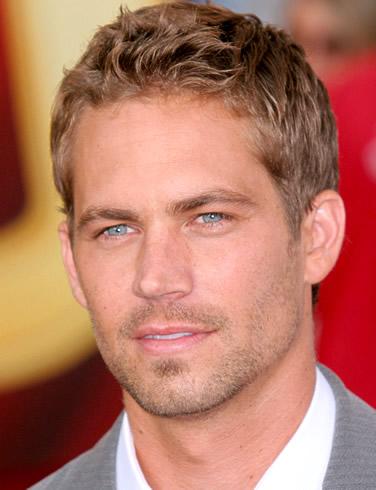
Paul Walker dies in a car crash at 40.
Paul Walker dead at 40: report - NY Daily News
"The Fast and the Furious" movie star Paul Walker, 40, has reportedly died in a car accident Saturday afternoon in southern California, reports TMZ.
The accident occurred in Santa Clarita — outside of Los Angeles — when Walker's Porsche apparently lost control and crashed into a tree, TMZ reported. The car burst into flames and exploded, TMZ reported.There he goes. One of God's own prototypes. A high-powered mutant of some kind never even considered for mass production. Too weird to live, and too rare to die.
HST
-
01-12-2013, 10:36 AM #1705Thailand Expat

- Join Date
- Sep 2009
- Last Online
- @
- Posts
- 108,213
^ Oh the irony!
-
01-12-2013, 10:42 PM #1706Suspended from News & Speakers Corner
- Join Date
- Jul 2013
- Last Online
- 16-05-2022 @ 02:00 AM
- Posts
- 2,043
Harry beat me to it. He also had a bit role when he was young on Highway to Heaven which was Micheal Landons popular series and he died of cancer. The timing of this tragedy during a toy drive charity event is even more upsetting and it seems he was quite benevolent too and not your average Hollywood me, me, me star. Too young to die, seems he had a lot of work left to do..
-
02-12-2013, 09:52 PM #1707Thailand Expat
- Join Date
- Sep 2009
- Last Online
- @
- Posts
- 108,213
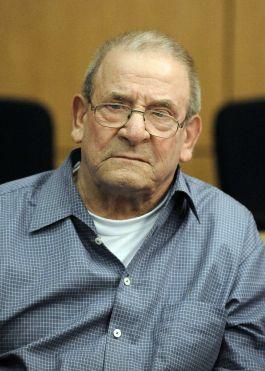
BERLIN – German justice officials say Heinrich Boere, who murdered Dutch civilians as part of a Nazi Waffen SS hit squad during World War II but avoided justice for six decades, has died in a prison hospital. He was 92.
North Rhine-Westphalia Justice Ministry spokesman Detlef Feige said Monday that Boere died Sunday of natural causes in the facility in Froendenberg where he was being treated for dementia.
Boere was on the Simon Wiesenthal Center's list of most-wanted Nazi war criminals until his arrest in Germany and conviction in 2010 on three counts of murder. He was serving a sentence of life in prison.
At trial, Boere admitted killing three civilians as a member of a hit squad of largely Dutch SS responsible for killing countrymen who were considered anti-Nazi.
-
03-12-2013, 03:06 AM #1708R.I.P
- Join Date
- Nov 2009
- Last Online
- 25-09-2014 @ 02:50 PM
- Location
- Mountain view
- Posts
- 40,025
Tony Cutler - obituary
Tony Cutler was a sapper officer who survived a brutal beach landing in Sicily to win an MC

Tony Cutler
Tony Cutler, who has died aged 95, was a sapper officer who took part in the invasion of Sicily and was awarded an MC.
During the early hours of July 10 1943, in one of the largest amphibious operations of the Second World War, the Allies invaded Sicily. Strong winds blew many of the troop-carrying gliders off course and inexperienced pilots were forced to ditch short of their target. Seaborne units were hampered by heavy seas and hidden sandbars.
Cutler, serving with 245 Field Company Royal Engineers (245 FC), part of 5th Division, came ashore in a landing craft at Cassibile, south of Syracuse, four miles from the planned location. “I had a terrible landing,” he said afterwards. “The maps didn’t work. We might have been on the moon for all we knew.”
They were soon under heavy and continuous fire from enemy positions covering the beaches. The Italians were concealed in the scrub and they had a machine gun mounted on top of a watchtower.
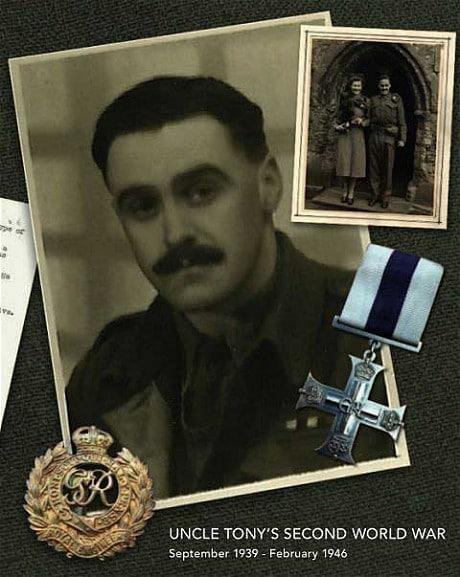
Tony Cutler with a photo of his wartime marriage, and medals
Cutler organised a mixed force of sappers and infantry and led an attack on the enemy position. His force was outnumbered two to one but he captured the position and took many prisoners. His courage and leadership were recognised by the award of an Immediate MC.
Anthony Thraves Cutler was born at Chorlton-Cum-Hardy, Manchester, on December 27 1917 and educated at St George’s School, Harpenden, Hertfordshire, and Imperial College, London. The day after war was declared, when he tried to sign up to join the RAF, his suitability for flying duties was tested by the recruiting officer.
The man sat him in a swivel chair and span him round very fast before suddenly stopping it and telling him to stand up and walk in a straight line. “I couldn’t even get up out of the chair,” Cutler noted afterwards.
He subsequently joined the Royal Engineers as a sapper and, after seven weeks training at Chatham, took part in the short campaign in Norway. A spell on bomb disposal in London followed and, after being commissioned, he was posted to Northern Ireland with 245 FC.
In January 1942 he embarked for Burma, via India, to join the Fourteenth Army. After six months he transferred to Paiforce in Tehran, but within a few weeks he was posted to the Nile Delta where he trained for the invasion of Sicily.
On September 3 1943 he landed with his unit on the mainland of Italy. “We were expecting horrific casualties. We thought the Germans would be waiting for us and it was going to be a bloodbath – but they had gone. The Italians were delighted to see us and laid on a wonderful party.” At Anzio, by contrast, he and his men lived in slit trenches. “There was nothing but mines and booby traps,” he said later, “We lost men, every day.”
After slogging northwards to Perugia he was sent to Palestine on internal security duties and then moved to Germany in time for the forced crossing of the Rhine in March 1945.
On the advance to Berlin his brigade was split into small units. Each was sent along different roads to check for pockets of resistance still holding out in remote, outlying buildings. Running short of fuel one day, they followed a track for a few miles in the hope of finding replenishments.
They came across Belsen concentration camp. As soon as it was realised what a dreadful place it was, to Cutler’s great relief, other units took over. He was demobilised in 1946 and worked as an architect for the Ministry of Agriculture & Fisheries before buying a farm in Gloucestershire. He farmed there until 2008.
Tony Cutler married, in 1940, Pamela Taylor. She predeceased him and he is survived by their son and daughter.
Tony Cutler, born December 27 1917, died November 17 2013
-
03-12-2013, 03:13 AM #1709R.I.P
- Join Date
- Nov 2009
- Last Online
- 25-09-2014 @ 02:50 PM
- Location
- Mountain view
- Posts
- 40,025
Candace Pert - obituary
Candace Pert was a scientist who helped discover the body's natural painkillers but fought a battle against discrimination
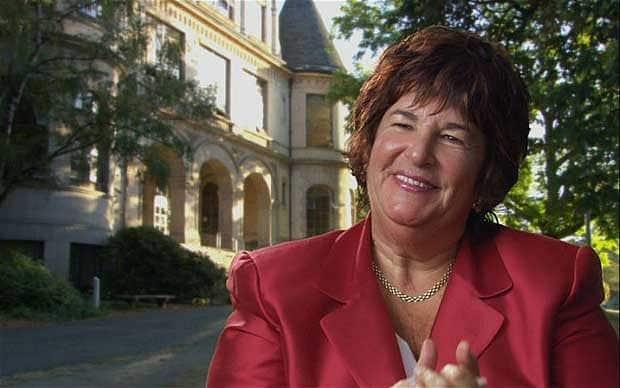
Candace Pert, who has died aged 67, was a key figure in the discovery of the so-called opiate receptor, laying the basis for the subsequent discovery of endorphins, the body’s natural form of morphine; despite her achievements, she claimed that many scientists regarded her with suspicion, and that the prizes for her work had gone to others - notably men.
Receptors are proteins in the body to which only specific molecules carrying chemical signals, such as neurotransmitters, can attach themselves, much like a key fits in a lock. In 1972, when Candace Pert began graduate research into chemical neurotransmitters under the eminent neuroscientist Sol Snyder, finding the opiate receptor that controls pleasure and reduces pain had been a goal of scientists for many years.
Shortly before she arrived in Snyder’s lab at Johns Hopkins University, Candace Pert had broken her back in a riding accident and her experience of lying in hospital attached to a morphine drip led her to wonder how the drug exerted its effect on the brain. By her account, Snyder left her to do most of the humdrum research. However she claimed that after some time he ordered her to abandon her work in favour of the more promising goal of finding the receptor for insulin.
Refusing to be deterred, Candace Pert carried on her research in secret after her colleagues had gone home.
One Friday evening in 1973 she crept into the lab and injected morphine labelled with a radioactive tracer into brain tissue. When she returned the following Monday, her results showed that she had identified the first opiate receptor in the brain. Snyder was delighted.
The discovery of the receptor raised an interesting question. “God presumably did not put an opiate receptor in our brains so that we could ultimately discover how to get high with opium,” Candace Pert herself observed. She and others reasoned that the body must produce a natural chemical similar to morphine, but her search for it proved fruitless.
In 1975 two British researchers, Hans Kosterlitz and John Hughes, identified the first of a family of chemicals they named endorphins — naturally occurring chemicals that can relieve pain and create a feeling of euphoria. Three years later the two men shared the 1978 Lasker Award for the discovery of the operation of the opiate receptor, not with Candace Pert, but with Snyder. Although it is a common feature of scientific research that junior researchers have to wait before they are considered eligible for such awards, Candace Pert was furious at missing out on a prize that she felt was, in large part, rightfully hers. Refusing to resign herself to a few more years of obscurity, she she wrote angry letters to all and sundry and courted journalists complaining about how the macho establishment of “men in white coats” had closed ranks against an uppity woman.
The Lasker award is often seen as a precursor to the better-known Nobel and some felt that her campaign derailed Snyder’s hopes for the bigger prize. In The Molecules of Emotion: Why You Feel the Way You Feel (1997), Candace Pert recalled having a dream in which she had thrown a bucket of water over her scientific mentor, whereupon “the witchy Sol shrivelled up, shrieking, 'I’m shrinking, I’m shrinking,’ just like in the Wizard of Oz, until he disappeared”. On waking up she decided to write him a letter of forgiveness, but he never replied.
In fact Snyder later acknowledged that Candace Pert should probably have shared the Lasker Award and went on to describe her as one of the most creative and innovative graduate students with whom he had worked.
But by her own account, her campaign of protest turned Candace Pert into “the scarlet woman of neuroscience” — something of a pariah within her own field, which was true, though the reasons went much wider than a mere academic clash of personalities.
Later, at the National Institute for Mental Health in Bethesda, Maryland, and at Georgetown University, she and colleagues went on to identify endorphin receptors throughout the body and to show that a variety of proteins known as peptides (including endorphins) are key “information substances” which can affect our mind, our emotions, our immune system, our digestion and other bodily functions, helping to found a field of science known as psychoneuroimmunology.
Her research helped to break down the Cartesian concept of the mind and body belonging to two totally different spheres by demonstrating a dense and complex system of interconnectivity. But Candace Pert was not content to confine her conclusions to what could be justified by scientific research.
Instead, alongside her strictly scientific work, she cultivated the New Age and “holistic” therapy movements, promoting the concept of “bodymind” — a seamless fusion of mind and body into a unified life-force. Statements such as “The body is the unconscious mind” and “God is a neuropeptide” were not designed to endear her to the conventional scientific establishment.
Candace Dorinda Beebe was born in New York City on June 26 1946. She enrolled in Hofstra University to study Biology, but dropped out in 1966 after her marriage to Agu Pert, a graduate student. The couple moved to Philadelphia, where Candace took a job as a cocktail waitress to help her husband pay his way through a doctorate at Bryn Mawr College. One of her customers was an assistant dean at Bryn Mawr, who persuaded her to finish her degree at the college. After graduation in 1970 she joined Johns Hopkins University as a graduate research student.
After taking her PhD in 1974 Candace Pert moved to the National Institutes of Health, where she rose to become head of the brain chemistry department at the NIH’s National Institute of Mental Health. In 1986, the year before she left, she and her second husband, Michael Ruff, identified Peptide-T, a substance which they felt had potential as a therapy for people infected with HIV. In 1987 she founded a company to study peptides in more detail, which closed in 1990 after financial backing fell through.
From 1990 to 2006 Candace Pert was a professor in the department of physiology at Georgetown University School of Medicine in Washington, DC. In 2007 she and her husband founded another company, Rapid Pharmaceuticals, to develop new peptide-based drugs.
Candace Pert is survived by her husband and by two sons and a daughter from her first marriage.
Candace Pert, born June 26 1946, died September 12 2013
-
04-12-2013, 07:26 PM #1710Thailand Expat
- Join Date
- Sep 2009
- Last Online
- @
- Posts
- 108,213

MARSEILLE: Jean-Claude Beton, the man who turned the fizzy drink Orangina and its famous bulbous bottle into a global brand, has died at 88.
His death, on Monday, was announced by the mayor of Marseille, Jean-Claude Gaudin, who hailed Beton as a "genius inventor who was in the avant garde of advertising and marketing, an entrepreneur who helped put Marseille on the world map".
Beton was born into a prosperous family of shopkeepers in French-ruled Algeria on January 14, 1925.
It was his father who produced the first bottle of Orangina on the basis of a recipe concocted by a chemist in Valencia, Spain.
The original ingredients were concentrated orange juice, fizzy sugared water and a teaspoon of essential oils.
The family knew they were on to a winner but plans to develop production on a mass scale had to be put on hold as a result of the Spanish civil war and World War II.
After studying agricultural engineering, Beton dusted off the recipe in 1951, created the distinctive bottle and added a small amount of pulp to the formula.
Graphic artist Bernard Villemot, meanwhile, produced the distinctive original label of a parasol and a bistro table with a bottle of Orangina on it, set against an azur sky.
The new bottle and its distinctive advertising jingles, all based on the notion that you had to shake it before serving to mix up the pulp, quickly gained a large market in north Africa.
With Algerian independence looming, production was moved to Marseille in 1961. Decades of growth were to follow before the Orangina brand was finally swallowed up by drinks giant Pernod Ricard in 1984.
Beton was seen as a paternalistic boss, notably granting his workers a reduced 39-hour week before it became standard in France in 1982.
After selling the brand he had created, he indulged his passion for wine, acquiring Chateau Ormeau in the Lalande-de-Pomerol area of Bordeaux.
Orangina, meanwhile, went through several hands, including Cadbury Schweppes, and was then taken over by Japan's Suntory in 2009.
The Orangina Schweppes group now has an annual turnover of 1.2 billion euros ($1.6 billion) and employs 2,500 people worldwide, including 600 in France.
- AFP/al
-
04-12-2013, 09:10 PM #1711Thailand Expat
- Join Date
- Sep 2009
- Last Online
- @
- Posts
- 108,213
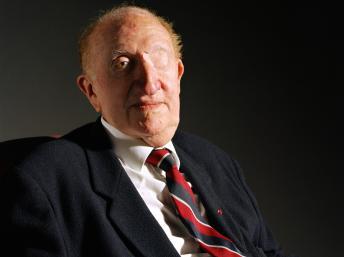
Algerian war torture general Paul Aussaresses dies, aged 95
AFP/Joel Robine
By RFI
French General Paul Aussaresses, who caused a storm with his admission that torture was widely used during the Algerian War of Independence, has died at the age of 95.
Aussaresses died in a convalescent home and will be buried at his home in La Vancelle, in Alsace, on 10 December, according to his widow, Elvire, whom he married in 2002 following the death of his first wife.
After a long military career, which started in the wartime French resistance, Aussaresses caused a storm with the 2001 publication of a book that said that torture had been "tolerated, if not recommended" during France's unsuccessful war to prevent Algerian independence.
In 1957 General Jacques Massu had charged him with pacifying Algiers and he found himself at the head of what he was to describe as a "death squad", which carried out nocturnal arrests, torture and murders.
He later went to the US to teach the "techniques of the Battle of Algiers" to the Green Beret parachutists for use in the Vietnam War and then to Brazil, where he passed on his skills to police serving the country's military rulers as well as Chile's secret police, Dina.
A court fined Aussaresses 7,500 euros for defending war crimes, following his revelations in Services spéciaux: Algérie 1955-1957 and he was stripped of his Légion d'honneur and forced into retirement.
A prosecution brought by NGOs for torture was dismissed because of an amnesty for actions committed during the Algerian war.
Former Algerian independence fighter Louisette Ighilahriz commented that Aussaresses had been "honest" but "should have expressed his regrets" after the announcement of his death.
Speaking to a journalist in 2000, he seemed to have no regrets.
Asked if practising torture troubled him he replied, "I have to say no. I got used to all that."
Paul Aussaresses - a life in dates
7 November 1918: Born in Saint-Paul-Cap-de-Joux, southern France;
1941: Officer training at St Cyr near Paris and Aix-en-Provence;
1942: Joins French secret service;
1944: Parachuted into occupied France;
1946: Joins elite parachutist regiment;
1947: Named commander of para regiment, sent to Indochina (Vietnam) to fight against independence;
1955: Sent to Algeria to fight against Algerian independence, sets up intelligence unit, his batallion kills 134 and loses two when National Liberation Front (FLN) attacks Philippeville;
1956: In UK to help prepare Suez attack against Egyptian government of Gamal Abdul Nasser but fails to take part in operation due to spinal injury, returns to Algeria;
1957: Transferred to general staff in Algeria on orders of General Jacques Massu, oversees inflitration of FLN, assassinations, torture, covert operations;
1962: Trains US's Green Berets in anti-guerrilla techniques at Fort Bragg, Texas, for use in Vietnam;
1966: Promoted to colonel, joins French section of Nato high command;
1973: French military attaché in military-ruled Brazil;
2001: Declares French troops used torture in Algeria in a book, Services spéciaux : Algérie 1955-1957, president Jacques Chirac calls on him to return his Légion d'honneur and forces him to retire from the army;
2002: Fined 7,500 euros for complicity in defending war crimes;
2008: Claims France paid commission to Nazi war criminal Klaus Barbie during an arms sale to Bolivia and assassinated Cameroonian politician Félix Moumié in a new book, Je n'ai pas tout dit. Ultimes révélations au service de la France;
4 December 2013: Dies in a convalescent home in eastern France.
-
06-12-2013, 04:48 AM #1712Thailand Expat
- Join Date
- Aug 2009
- Last Online
- 09-12-2022 @ 12:25 PM
- Posts
- 3,888
Mandela dead
-
06-12-2013, 04:56 AM #1713Thailand Expat
- Join Date
- May 2008
- Last Online
- @
- Posts
- 14,694
He was a good man
-
06-12-2013, 04:57 AM #1714Thailand Expat
- Join Date
- Sep 2009
- Last Online
- @
- Posts
- 108,213
95 years old and thankfully that twat Zuma can stop milking him as can his parasitic family.
Sadly that slag Alex Crawford is going to suck the life out of the story as per usual.
RIP Nelson, one of the last heroes of the 20th century.
-
06-12-2013, 05:29 AM #1715The cold, wet one
- Join Date
- Aug 2007
- Last Online
- 31-03-2015 @ 03:06 PM
- Location
- In my happy place
- Posts
- 12,195
To a very large degree I agree. Bad was done when he was leader of the ANC, but I think, in the end, the scales showed overall good in the case of Mr Mandela. I'm genuinely saddened he's gone. In the case of Winnie, there was no good to outweigh the bad. If there is a hell... Originally Posted by harrybarracuda
-
06-12-2013, 06:20 AM #1716Suspended from News & Speakers Corner
- Join Date
- Jul 2013
- Last Online
- 16-05-2022 @ 02:00 AM
- Posts
- 2,043
A true black politician Peace prize Award winner... Unlike another prize winner we all know of that never earned it Originally Posted by harrybarracuda


Last edited by FloridaBorn; 06-12-2013 at 09:43 AM.
-
06-12-2013, 06:23 AM #1717R.I.P
- Join Date
- Nov 2009
- Last Online
- 25-09-2014 @ 02:50 PM
- Location
- Mountain view
- Posts
- 40,025
South Africa's Nelson Mandela dies in Johannesburg

The announcement of Mandela's death was made by President Jacob Zuma
Mandela dies
South Africa's first black president and anti-apartheid icon Nelson Mandela has died, South Africa's president says.
Mr Mandela, 95, led South Africa's transition from white-minority rule in the 1990s, after 27 years in prison.
He had been receiving intense home-based medical care for a lung infection after three months in hospital.
In a statement on South African national TV, Mr Zuma said Mr Mandela had "departed" and was at peace.

1918 Born in the Eastern Cape
1943 Joined African National Congress
1956 Charged with high treason, but charges dropped after a four-year trial
1962 Arrested, convicted of incitement and leaving country without a passport, sentenced to five years in prison
1964 Charged with sabotage, sentenced to life
1990 Freed from prison
1993 Wins Nobel Peace Prize
1994 Elected first black president
1999 Steps down as leader
2001 Diagnosed with prostate cancer
2004 Retires from public life
2005 Announces his son has died of an HIV/Aids-related illness
"Our nation has lost its greatest son," Mr Zuma said.
He said Mr Mandela would receive a full state funeral, and flags would be flown at half-mast.
BBC correspondents say Mr Mandela's body will be moved to a mortuary in Pretoria, and the funeral is likely to take place next Saturday.
The Nobel Peace Prize laureate was one of the world's most revered statesmen after preaching reconciliation despite being imprisoned for 27 years.
He had rarely been seen in public since officially retiring in 2004. He made his last public appearance in 2010, at the football World Cup in South Africa.
'Bid him farewell'
"What made Nelson Mandela great was precisely what made him human. We saw in him what we seek in ourselves," Mr Zuma said.
"Fellow South Africans, Nelson Mandela brought us together and it is together that we will bid him farewell."
US President Barack Obama said Mr Mandela achieved more than could be expected of any man.
"We have lost one of the most influential, courageous, and profoundly good human beings that any of us will share time with on this earth. He no longer belongs to us - he belongs to the ages," Mr Obama said.
Mr Obama, the first black president of the United States, said he was one of the millions who drew inspiration from Mr Mandela's life.
Analysis
 Pumza Fihlani BBC News, Johannesburg
The greatest father there ever was: this is how South Africans will remember the man who brought an end to apartheid and delivered the nation from the brink of civil war.
Social networking sites are abuzz with messages of condolences and messages of gratitude to the late statesman. He had been in and out of hospital in recent years and had become increasingly frail but many South Africans had continued to express their unreadiness to lose him.
As he did in life, his passing has brought unity amongst South Africans as black and white speak of their love for him. Many here will be drawing on that same spirit for strength, that "Madiba magic" over the next few days and weeks as the nation left with the great burden of honouring Mr Madela's legacy, mourns his passing but also celebrates his life.
UK Prime Minister David Cameron paid tribute to Mr Mandela, saying "a great light has gone out in the world".
Since he was released from hospital, the South African presidency repeatedly described Mr Mandela's condition as critical but stable.
Born in 1918, Nelson Mandela joined the African National Congress (ANC) in 1943, as a law student.
He and other ANC leaders campaigned against apartheid. Initially he campaigned peacefully but in the 1960s the ANC began to advocate violence, and Mr Mandela was made the commander of its armed wing.
He was arrested for sabotage and sentenced to life imprisonment in 1964, serving most of his sentence on Robben Island.
It was forbidden to quote him or publish his photo, but he and other ANC leaders were able to smuggle out messages of guidance to the anti-apartheid movement.
He was released in 1990 as South Africa began to move away from strict racial segregation - a process completed by the first multi-racial elections in 1994.
Mr Mandela, who had been awarded the Nobel Prize in 1993 jointly with white President FW de Klerk, was elected South Africa's first black president. He served a single term, stepping down in 1999.
After leaving office, he became South Africa's highest-profile ambassador, campaigning against HIV/Aids and helping to secure his country's right to host the 2010 football World Cup
-
06-12-2013, 07:49 AM #1718I'm in Jail
- Join Date
- Jan 2011
- Last Online
- 05-09-2019 @ 03:51 PM
- Location
- Planet Earth
- Posts
- 1,950
R.IP Nelson Mandela
A good man with a good heart and good intentions despite all the negative things people have written about you.
-
06-12-2013, 08:39 AM #1719Thailand Expat


- Join Date
- Apr 2011
- Last Online
- @
- Posts
- 2,226
Pity more African leaders are not as good, can't think of another fit to tie his shoelaces. Just a shame he could not have done better when he was in power, still he was only one man in a crazy messed up country.
-
06-12-2013, 09:52 AM #1720Thailand Expat

- Join Date
- Mar 2006
- Last Online
- @
- Location
- Pleasantville
- Posts
- 10,107
True enough, no doubt he was a good man but trying to alleviate the plight of poor in SA was always going to be a thankless task.
Despite the fact the Boers were the biggest cvnts in history they keep an equilibrium in SA, that Mandela never Managed to achieve.There can’t be good living where there is not good drinking
-
06-12-2013, 11:08 AM #1721god
- Join Date
- Nov 2006
- Last Online
- @
- Location
- Bangladesh
- Posts
- 28,207
Without Mandela in his role, what would have happened?
RIP.
-
06-12-2013, 04:44 PM #1722Thailand Expat

- Join Date
- Aug 2013
- Last Online
- Yesterday @ 07:42 PM
- Location
- South Australia
- Posts
- 5,894
One of the greatest men who ever lived.
-
07-12-2013, 04:31 AM #1723R.I.P
- Join Date
- Nov 2009
- Last Online
- 25-09-2014 @ 02:50 PM
- Location
- Mountain view
- Posts
- 40,025
Stan Tracey: Jazz pianist dies at the age of 86

Stan Tracey took up the piano at the end of World War Two
Celebrated British jazz pianist Stan Tracey has died aged 86, his family have confirmed.
Tracey, who had a career spanning 70 years, was widely acknowledged as one of the greats in his field.
The Londoner was resident pianist at Ronnie Scott's jazz club from 1959-66 and made numerous recordings.
He also received a host of awards during his career, including the first Ivor Novello award for jazz in 2012. Tracey was awarded an OBE in 1986.
He became a CBE in the 2008 New Year Honours list.
The musician was also awarded a lifetime achievement award at the BBC Jazz Awards in 2002 and made appearances on Later... With Jools Holland.
Jazz artist Jamie Cullum said on Twitter: "He played like a demon right up until his last days on earth as an Eightysomething."
'Towering figure'
Alyn Shipton, presenter of BBC Radio 3's Jazz Record Requests, called Tracey "a towering figure in British jazz".
"He showed back in the 1960s that British themes could make a great basis for improvised jazz with his Under Milk Wood Suite, inspired by Dylan Thomas," he continued.
"His very latest work, the Flying Pig was inspired by the humour of British soldiers in the trenches in World War One, and it's a remarkable composing career, to have such acclaimed works from either end of a 50 year span.
"He'll be sorely missed," he added.
Tracey started to play the piano at the end of World War Two, shortly before being enlisted in the Royal Air Force. He had previously played in a gypsy accordion band.
Working in London after the war, he met Ronnie Scott and was encouraged into taking up jazz music as a full-time career. He joined the Ted Heath dance orchestra before taking up residency at Ronnie Scott's.
The jazz club paid tribute to its former house pianist via Twitter, saying: "Another legend passes. RIP Stan Tracey."
Jazz singer Clare Teal also paid her respects, calling Tracey "an incredible pianist and a great inspiration to all musicians".
Everything But The Girl's Ben Watt - whose father was Scottish jazz musician Tommy Watt - tweeted: "Sad news. My dad impressed his music on me. Adored this, even as a kid. Resilient & melancholy."
Tracey was also a prolific composer during his lengthy career. His first major work was Under Milk Wood, inspired by Welsh writer Dylan Thomas's radio play, while he penned music for big bands, eight-pieces, sextets and quartets.
In 1993, his album Portraits Plus was nominated for the Mercury Prize but lost out to Suede for their self-titled debut album.
Anniversary landmarks in his career were marked with concerts at the Queen Elizabeth Hall on London's South Bank, while his 80th birthday was celebrated at the Barbican.
Earlier this year, artists including Dame Cleo Laine and renowned drummer Ginger Baker came together to celebrate Tracey's 70 years in the music business.
Several television documentaries were made about him, including an edition of the BBC's Omnibus in 1977, and Channel 4's 2003 programme The Godfather of British Jazz
-
08-12-2013, 12:57 PM #1724Thailand Expat
- Join Date
- Sep 2009
- Last Online
- @
- Posts
- 108,213

Lee A. Hayes of East Hampton, who bombed enemy forces from the cockpit of a B-25 during World War II as a member of the legendary all-black Tuskegee Airmen, died Wednesday at the home he built more than 60 years ago. He was 91.
His son, Craig Hayes, also of East Hampton, said his father died of natural causes and fought on two fronts: at home as a member of an all-black regiment formed because of his own country's incendiary period of racial segregation, and abroad as a nemesis to the formidable Axis powers of Germany, Italy and Japan.
But he harbored no bitterness and sought no revenge for the indignities he endured during and since the nation's Jim Crow era, Craig Hayes said.
"He was a great man," he said, adding that his father displayed the patience and integrity of Nelson Mandela, the former South African president and apartheid resister who died Thursday, but "on a smaller scale."
Hayes was a native of Mannboro, Va., who moved to the East End with his family in 1930, when he was 8, after his father found work on a dairy farm.
He attended public schools and, in 1943, became an apprentice and then was certified as a bombardier and joined the startup program for black aviation cadets at Tuskegee Army Air Field in Alabama. After the war and the military successes of the 996-member unit, Hayes became certified as a bomber pilot and entered civilian life, which had its own racial obstacles.
"After the war, we all put in applications with the airlines but none of us got called," he told Newsday in a 2011 interview. "I thought I had an advantage because I could really fly, that the airlines or some outfit would give me a job because I was good at it. I was all over looking for work, but nobody would hire me."
After Hayes felt he was discriminated against while trying to buy a home, he took $300 in cash to buy a plot of land in East Hampton and built the home where he settled with his bride, Marion Jones of Harlem, and lived there for decades. They raised a son and a daughter before his wife died in 1985.
Hayes worked many jobs, ranging from a janitor at Brookhaven National Laboratory in Upton to selling life insurance.
Craig Hayes said his father was pleased with Hollywood's portrayals of the Tuskegee Airmen in recent years, calling them pretty accurate.
Besides his son, Hayes is survived by a daughter, Karlys Johnson of East Hampton; a granddaughter, Crystal Hayes of Inwood; a grandson, Barry Johnson of Springs; and three great-grandchildren, Connor, Yori and Nuelle Johnson of East Hampton.
A funeral service will be held Monday at 10 a.m. at Calvary Baptist Church in East Hampton followed by burial in Calverton National Cemetery.
-
10-12-2013, 03:25 PM #1725Thailand Expat
- Join Date
- Sep 2009
- Last Online
- @
- Posts
- 108,213

LOS ANGELES — LOS ANGELES _ Eleanor Parker, a versatile leading lady of the 1940s, '50s and '60s who earned three Oscar nominations _ none of which were for her best-known role as the baroness in "The Sound of Music" _ died Monday in Palm Springs of complications of pneumonia. She was 91.
Her death was confirmed by her son, actor Paul Clemens.
Parker brought a coolness, reserve and elegance to her portrayal of the baroness who is determined to marry the handsome captain played by Christopher Plummer, only to lose him to his children's governess, Maria, portrayed by Julie Andrews.
"Eleanor Parker was and is one of the most beautiful ladies I have ever known," said Plummer in a statement Monday. "I hardly believe the sad news for I was sure she was enchanted and would live forever."
The fame accompanying Parker's supporting but pivotal role in the enduring 1965 musical about the Von Trapp family was "something she came to make peace with" after many years, her son said Monday.
"It was a lovely role, and she was terrific in it," Clemens said, "but it was hardly her greatest role. It was only in the last 10 years of her life that she became glad she had done the film. People of all ages know it."
Her death came just four days after NBC aired its live version of "The Sound of Music," with Carrie Underwood as Maria, Stephen Moyer as Captain Von Trapp and Broadway musical comedy star Laura Benanti as the baroness.
The striking redhead appeared in more than three dozen movies, acting opposite many of Hollywood's most sought-after leading men, including Clark Gable, William Holden and Glenn Ford.
Born in Cedarville, Ohio, on June 26, 1922, she caught the acting bug as a youngster. At 15, she joined the Rice Summer Theatre on Martha's Vineyard in Massachusetts, where she was offered a screen test by a 20th Century Fox talent scout.
Believing she would profit from professional stage experience, she turned down the test and continued her studies at the Pasadena Playhouse in California, where she was quickly offered another chance at Hollywood exposure, this time by a Warner Bros. scout. She did not agree to a test until she had finished her first year at the playhouse. She made her film debut in 1942 in a forgettable B movie, "Busses Roar."
Parker quickly proved to be more than just a pretty face. She was a character actress in a movie star's body _ a nuanced, sensitive dramatic performer whether as a young woman on a ship bound for the afterlife in the 1944 drama "Between Two Worlds" or as John Garfield's resilient love interest in the 1945 classic "The Pride of the Marines." She was so adaptable that she became known as "the star with 100 faces."
"I'm primarily a character actress," she once said. "I've portrayed so many diverse individuals on screen that my own personality never emerged."
She earned her first best actress Oscar nomination for the 1950 melodrama "Caged," in which she played a naive woman who is turned into a hardened criminal in prison.
The next year, she received an Academy Award nomination for another difficult role in William Wyler's "Detective Story," starring as the wife of a police detective (Kirk Douglas) who harbors a dark secret that could destroy their marriage.
Parker earned her final Oscar nomination as a polio-stricken opera singer who makes a comeback in the glossy 1955 feature "Interrupted Melody."
"That was her personal favorite," her son said. "She loved opera and learned to sing all the arias," although her singing was later dubbed in by soprano Eileen Farrell.
That same year, she appeared opposite Frank Sinatra in "The Man With the Golden Arm" and co-starred with Robert Taylor in the Western comedy "Many Rivers to Cross."
She continued to act in such films as 1959's "A Hole in the Head" and 1960's "Home From the Hill," but other than "The Sound of Music," her subsequent films were generally disappointments.
Her last feature was the poorly reviewed 1979 Farrah Fawcett film "Sunburn."
She had a long career in television, including roles on shows including the 1969-70 NBC drama "Bracken's World," "The Love Boat," "Fantasy Island" and "Murder, She Wrote."
Parker, who lived in Palm Springs for more than 30 years, made one last TV movie, 1991's "Dead on the Money," before retiring.
ABC will air the original 1965 "The Sound of Music" on Dec. 22.
Besides son Paul, she is survived by son Richard; daughters Sharon and Susan; stepdaughter Laurey; and several grandchildren and great-grandchildren.
Read more here: LOS ANGELES: Eleanor Parker, actress who played baroness in 'Sound of Music,' dies at 91 | News Obituaries | McClatchy DC


 Reply With Quote
Thread Information
Users Browsing this Thread
There are currently 2 users browsing this thread. (0 members and 2 guests)
