

^ Affirmed was a champion racehorse that won the Triple Crown...Maybe that counts...
Results 3,001 to 3,025 of 6948
Thread: The RIP Famous Person Thread
-
01-07-2015, 04:51 AM #3001Thailand Expat


- Join Date
- Mar 2011
- Last Online
- 25-03-2021 @ 08:47 AM
- Posts
- 36,419
-
01-07-2015, 07:04 PM #3002Thailand Expat
- Join Date
- Jul 2011
- Last Online
- 29-04-2020 @ 04:54 PM
- Location
- Chiang Mai
- Posts
- 5,596
If they don't, it's about time. Originally Posted by Gazza

-
01-07-2015, 08:32 PM #3003Thailand Expat

- Join Date
- Sep 2009
- Last Online
- @
- Posts
- 108,200
How about "Yessirree", or perhaps the Yorkshire version, "Aye lad". Originally Posted by wjblaney
-
01-07-2015, 11:10 PM #3004Thailand Expat
- Join Date
- Sep 2009
- Last Online
- @
- Posts
- 108,200
Rest in peace old boy, you earned it.
Sir Nicholas Winton dead: 'Britain's Oscar Schindler' who saved Jewish children from Holocaust dies aged 106

Nicholas Winton, the British stockbroker who spirited hundreds of Jewish children to safety from Nazi-occupied Czechoslovakia before the outbreak of World War II, has died. He was 106.
He died on Wednesday, Stephen Watson, his son-in-law, said, according to the Associated Press.
Winton was dubbed the “British Schindler” for saving 669 children from Adolf Hitler’s concentration camps by arranging for their safe passage from Prague to London and securing shelter with British families. As German industrialist Oskar Schindler had done during the war, Winton kept a list of those he saved from probable death and was hailed as a hero decades later when he was reunited with some of the survivors. In 2002, he was knighted for his services to humanity.
After organizing one plane evacuation before the Nazi invasion of Czechoslovakia in March 1939, Winton planned the children’s trip across Germany and the Netherlands by train and their ship voyage across the English Channel. With the help of Prague-based volunteers Trevor Chadwick and Doreen Warriner, seven “Kindertransport” trains made it to Liverpool Street Station, where Winton and their local foster families greeted the youngsters in person.
President’s Praise
“You gave these children the greatest possible gift, the chance to live and be free,” Czech President Milos Zeman wrote in a May 2014 letter to Winton. “But you did not think of yourself as a hero because you were conducted by a desire to help those who could not defend themselves, those who were vulnerable. Your life is an example of humanity selflessness, personal courage and modesty.”
An eighth train -- scheduled to carry about 250 children -- was prevented from making its departure on Sept. 1, 1939, as German-controlled borders closed after the Nazi invasion of Poland. Those children are thought to have perished during the Holocaust, along with many parents of youngsters who made it safely to the U.K. on earlier trains.
“We had 250 families waiting at Liverpool Street that day in vain,” Winton said in the 2002 documentary film, “The Power of Good,” directed by Matej Minac. “If the train had been a day earlier, it would have come through. Not a single one of those children was heard of again, which is an awful feeling.”
About 10,000 Jewish children from Germany and Austria were saved and given shelter in the U.K. before and during the war. The fund-raising efforts to support those young arrivals didn’t include the children from Czechoslovakia, making Winton’s efforts especially remarkable, according to the documentary.
Televised Reunion
After the war, Winton remained silent about his efforts to save Jewish children from the Nazis until 1988, when his wife discovered a scrapbook with the list of names he had recorded. As an unwitting member of the audience on the British Broadcasting Corp. television show “That’s Life!” in the same year, an emotional Winton was reunited with a group of the people he had saved before the war.
Among those known as “Winton’s children” were U.K. film director Karel Reisz, Canadian journalist Joe Schlesinger, Alfred Dubs and author Vera Gissing, who co-wrote the book “Nicholas Winton and the Rescued Generation.”
“It’s a wonderful thing to meet somebody who saved my life,” Dubs said in a 2003 interview with David Frost. “It was quite an emotional thing meeting him for the first time because, you know, suddenly I was introduced to the person who had actually been responsible for getting me to safety.”
Name Change
Winton was born as Nicholas Wertheim on May 19, 1909, in West Hampstead, England, to Rudolf and Barbara Wertheim. His parents, of German-Jewish ancestry, baptized him in the Anglican Church as part of an effort to assimilate into the U.K., according to the U.S. Holocaust Memorial Museum website. He, with his mother and two siblings, changed his surname to Winton in October 1938, as World War II was looming.
He attended Stowe School in Buckinghamshire, where he excelled at fencing, before moving to London at age 18 to work for Midland Bank in London, Behrens Bank in Hamburg and Wasserman Bank in Berlin. Winton then moved to Paris for a job at Banque Nationale de Credit before returning to London to work as a stockbroker at the stock exchange.
At the request of his friend Martin Blake, who worked with Jewish refugees, Winton canceled a ski trip to Switzerland before Christmas 1938 and traveled to Prague instead to see the plight of those who had fled the German occupation of the Sudetenland. The experience prompted him to set up an office in Prague to take applications from parents trying to evacuate their children from Czechoslovakia.
London Fundraising
After three weeks in Prague, Winton returned to London to raise money to fund the children’s transport and the 50 pounds-per-child guarantee demanded by the U.K. authorities. He worked by day at the stock exchange and spent his evenings on the rescue effort, organizing exit permits for Germany and entry permits for the U.K.
After service in the Royal Air Force during the war, Winton worked for the International Refugee Organization, part of the United Nations, supervising the disposal of items looted by the Nazis, according to a May 2014 article in the Telegraph.
Winton married Grete Gjelstrup, a Danish woman, in 1948. They had three children. The third child, Robin, had a mental disability and died when he was 7, according “The Rescue of the Prague Refugees 1938-39,” William Chadwick’s 2010 book.
In later years, Winton devoted himself to charity work and helped establish Abbeyfield homes for elderly people with special needs.
“If it is not impossible, there must be a way of doing it,” he said in a lecture to the Oxford University Chabad Society, a Jewish student group. “Don’t be content to think what other people say, that you can’t do it.”
His survivors include a daughter, Barbara, and two grandchildren, according to AP.
LinkLast edited by harrybarracuda; 02-07-2015 at 10:00 AM.
-
02-07-2015, 12:50 AM #3005Thailand Expat



- Join Date
- Oct 2010
- Last Online
- 24-04-2023 @ 02:34 PM
- Posts
- 5,547
Yes, in peace, one piece, I hope. Originally Posted by harrybarracuda
-
02-07-2015, 07:45 AM #3006Thailand Expat
- Join Date
- Jul 2011
- Last Online
- 29-04-2020 @ 04:54 PM
- Location
- Chiang Mai
- Posts
- 5,596
Article doesn't mention why he earned a knighthood, though. Found this out on CNN: Originally Posted by harrybarracuda
Yes, RIP, old boy.Winton was knighted by Queen Elizabeth II in 2003 for services to humanity.
Last year, the Czech Republic honored him with the Order of the White Lion, its highest honor.
-
02-07-2015, 09:59 AM #3007Thailand Expat
- Join Date
- Sep 2009
- Last Online
- @
- Posts
- 108,200
Damn my spill chucker didn't pack that up. Originally Posted by can123

-
02-07-2015, 04:52 PM #3008Thailand Expat
- Join Date
- Sep 2009
- Last Online
- @
- Posts
- 108,200
Val Doonican dead: Singer and TV entertainer dies aged 88
10:47, 2 JULY 2015
BY JAMES LEYFIELD
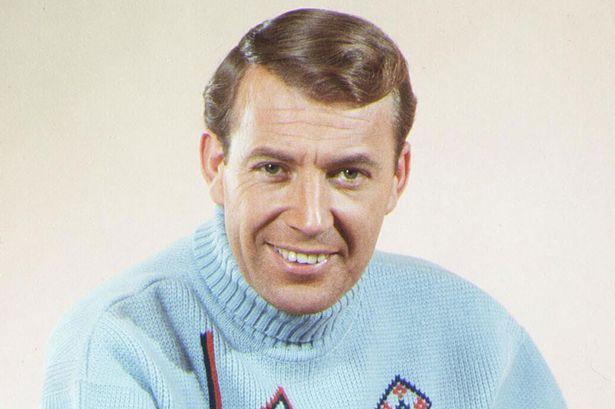
Val Doonican has died aged 88.
The singer and TV entertainer, who once knocked Sgt Peppers off the top of the charts, was known for his novelty songs and his fetching jumpers.
He reguarly performed on his own BBC show, aptly named The Val Doonican Show, and invited guest artists on to perform.
Val achieved notable success in the 60s when five of his albums went into the top 10 of the UK albums chart.
-
02-07-2015, 06:31 PM #3009Member
- Join Date
- Oct 2013
- Last Online
- 12-09-2023 @ 10:55 PM
- Posts
- 854
Val Doonican Dies Aged 88
Val Doonican, Irish singer, dies at 88
13 minutes ago
From the section Entertainment & Arts
Val Doonican was known for his trademark rocking chair and colourful cardigans
Irish singer and TV entertainer Val Doonican has died aged 88.
His family said he died "peacefully" at a nursing home in Buckinghamshire. He had not been ill, but his daughter said his "batteries had just run out".
The performer was a regular fixture on TV with The Val Doonican show which ran on the BBC from 1965 to 1986, featuring his own performances and guest artists.
He was also rarely out of the UK charts in the 1960s and '70s with songs like Walk Tall and Elusive Butterfly.
In the album chart, he had five successive top 10 records and even knocked The Beatles' Sgt Pepper's Lonely Hearts Club Band off the top spot in 1967 with Val Doonican Rocks, But Gently.
In a statement, his family said: "He was a wonderful husband, father and grandfather and will be greatly missed by family, friends and his many fans."
Doonican scored five successive top 10 albums
The entertainer fronted some 25 Christmas specials
Born in Waterford, Ireland, Doonican's career took off after he was booked to appear on Sunday Night at the Palladium in 1963.
It led him to be offered his own BBC show - for which he became known for his trademark rocking chair, colourful jumpers and cardigans - and kick-started his recording career.
He filmed some 25 Christmas specials, which Doonican told The Express in 2013 he "couldn't bear to watch".
"They became something of a national institution, attracting audiences of up to 19 million. It felt embarrassing seeing myself. We'd sit as a family enjoying ourselves but as soon as my show started, I'd nip off to another room," he said.
Doonican with his wife, Lynn, with whom he had been married for 54 years
His other hits included The Special Years, What Would I Be and If The Whole World Stopped Loving. He also sang the theme song for the film Ring of Bright Water.
Irish entertainer Roy Walker paid tribute to Doonican saying: "You were a joy to work with. A real 'star'. Love you man."
Irish comic Adrian Walsh also tweeted: "Spent four years as opening act for Val Doonican. He was one of the greats on and of [sic] stage. Thank you for your friendship."
Doonican stopped performing in 2009 after more than 60 years in showbusiness.
He is survived by his wife Lynn, daughters Sarah and Fiona and grandchildren Bethany and Scott.
Share this story About sharing
Val Doonican, Irish singer, dies at 88 - BBC News
-
02-07-2015, 07:36 PM #3010Philippine Expat
- Join Date
- Sep 2009
- Last Online
- @
- Location
- Philippines
- Posts
- 18,190
^No disrespect, but I personally would not want to be remembered for having worn "fetching jumpers". Just me...............
-
02-07-2015, 07:47 PM #3011Thailand Expat
- Join Date
- Oct 2010
- Last Online
- 24-04-2023 @ 02:34 PM
- Posts
- 5,547
We didn't have colour TV in the UK and the patterned jumpers were just a device to give him a readily identifiable image. The man could sing and his voice was a little bit like Jim Reeves ( and another good singer that you would never have heard of - Michael Holliday ). Originally Posted by Davis Knowlton
-
02-07-2015, 08:27 PM #3012Member
- Join Date
- Oct 2013
- Last Online
- 12-09-2023 @ 10:55 PM
- Posts
- 854
Never gave that much thought and I doubt if anybody else would have since he disappeared into oblivion for years............ Originally Posted by Davis Knowlton
-
07-07-2015, 08:01 PM #3013Thailand Expat
- Join Date
- Sep 2009
- Last Online
- @
- Posts
- 108,200
Ex-SAS paratrooper who was first British soldier to set foot in occupied France on D-Day has died aged 95

The first British soldier to land in occupied France during the D-Day operation has died, aged 95.
SAS paratrooper Lieutenant Norman Poole was one of a six-man team who landed on the Cherbourg peninsula in Normandy on the night of June 5-6, 1944, in an operation codenamed Titanic IV.
The soldier, who leapt from a plane with a carrier pigeon strapped to his chest, landed with 200 dummy parachutists and were tasked with the job of distracting German troops with amplifiers playing fake combat noises.
His pigeon was the only one that got home with a vital message for military chiefs - but he never told anyone what that message was and has now gone to his grave with the secret.
By the end of June 6 over 155,000 Allied troops had established bases along the Normandy coast and paved the way to eventual victory over Hitler's Germany.
Lt Poole and his team were separated from the other troops and they spent six weeks behind enemy lines before being captured by German troops.
The group were eventually liberated by the Americans and Norman was awarded the Military Cross for his bravery.
But Lt Poole, who after the war became a banker for Natwest, was reluctant to talk about his place in the historic invasion, even with his family.
He lived in Portishead, Somerset, with his wife Elisabeth and retired in 1980. Norman died in June - four years after Elisabeth.
The couple had two daughters, Elisabeth and Alison, and four grandchildren and five great grandchildren.
Daughter Alison Dale, a former dental nurse of Studley, Warwickshire, said: 'On the day of the Normandy landings, he had a pigeon strapped to him - and his was the only pigeon that got home with a message for the SAS.
'But right until the day he died, he never told anyone what the message was.'
Ms Dale said her father was head-hunted for the newly-formed SAS from the Parachute Regiment after he enlisted with the Hampshire Regiment at the start of the war.
She said: 'My father was terribly private about all of this, as he had such a grotty time.
'He did open up a little bit more as we got older. But when we were growing up, if we had ever told anyone anything, he couldn't take it. He had to be private.'
Despite receiving many requests to appear on television shows and interviews over the years, Norman never accepted - with the exception of one programme for Canadian TV.
Alison said her father was 'very brave' but added: 'He always said the really brave ones are the ones who died.'
SAS paratrooper Norman Poole has died aged 95 | Daily Mail Online
-
07-07-2015, 09:47 PM #3014En route

- Join Date
- Jan 2006
- Last Online
- 12-05-2025 @ 09:06 PM
- Location
- Reality.
- Posts
- 32,988
Heros those guys. When men were men. Originally Posted by harrybarracuda
-
08-07-2015, 06:21 PM #3015Thailand Expat
- Join Date
- Sep 2009
- Last Online
- @
- Posts
- 108,200
One of the last showmen of Hollywood Jerry Weintraub dies aged 77
By Western Daily Press | Posted: July 08, 2015
One of the last of the classic Hollywood showmen, Jerry Weintraub built his show business empire on a contacts list and chutzpah.
The Brooklyn-born son of a New York Bronx jeweller, Weintraub rose from the post room of a talent agency to become a top concert promoter before shifting into a decades-long career as a top Hollywood producer.
Along the way, Mr Weintraub worked with the most famous of stars – Elvis Presley, Frank Sinatra, George Clooney, Brad Pitt – and was a close friend of former president George HW Bush. He relished his insider status, just as they savoured the stories that eagerly poured out of him.
Mr Weintraub, the dynamic producer and manager who pushed the career of John Denver and produced such hit movies as Nashville, Karate Kid and Ocean's Eleven, died of a heart attack yesterday in Santa Barbara, California. He was 77.
"Jerry was an American original who earned his success by the sheer force of his instinct, drive, and larger-than-life personality," said Mr Bush, a long-time friend. "He had a passion for life, and throughout the ups and downs of his prolific career, it was clear just how much he loved show business."
Mr Weintraub failed in one of his most ambitious gambits. His attempt to found his own studio, Weintraub Entertainment Group, ended in bankruptcy after only three years. But his long career was marked by savvy innovation and old-school class.
A self-made man, he fashioned himself in the mould of old Hollywood showman such as Mike Todd, Cecil B DeMille and PT Barnum. He titled his 2011 memoir When I Stop Talking, You'll Know I'm Dead.
George Clooney, star of the Oceans movies, said: "In the coming days there will be tributes about our friend Jerry Weintraub. We'll laugh at his great stories and applaud his accomplishments. And in the years to come, the stories and accomplishments will get better with age, just as Jerry would have wanted it. But not today. Today our friend died."
One of Mr Weintraub's most recent successes was the 2013 Liberace drama Behind the Candelabra. After the studios passed, he took it to HBO, where it won 11 Emmys.
Growing up, Mr Weintraub said his father, a successful gem salesman, taught him "only two things are important at the end of the week: how much you owe the bank and how much you have in it".
Hired to work in the post room of the William Morris Agency, he then landed a job with Lew Wasserman's MCA, where he worked as advance man for the agency's stars.
His career as a promoter took a giant step in 1970 when after a lengthy courtship he persuaded Elvis Presley's manager, Colonel Tom Parker, to let him promote his concerts. Mr Weintraub and partner Tom Hulett introduced such improvements as a modern sound system for Elvis.
Around the same time, Mr Weintraub saw John Denver at a small Greenwich Village nightclub and was overwhelmed by the mountaineer's easy manner. He took him on as a client. After enormous success followed, Mr Denver bought Mr Weintraub a Rolls-Royce as a thank-you gift. Mr Weintraub said: "I couldn't help thinking that it wasn't too long ago that neither of us had bus fare."
Weintraub produced a dozen John Denver musical specials on television – winning an Emmy for one of them – and the hit 1977 movie Oh, God!. It starred George Burns as God and Mr Denver as the young grocer whom God approaches..
He also set up successful tours for Frank Sinatra and produced the television special Sinatra – the Main Event. Among other musicians Mr Weintraub worked with were Bob Dylan, Neil Diamond and the Beach Boys. After his first marriage – which resulted in a son, Michael – Mr Weintraub married singer Jane Morgan in 1965. They had three adopted children: Julie, Jamie and Jordy. The pair separated but never divorced.
Mr Weintraub's emphasis shifted to movies with 1975's Nashville, Robert Altman's acclaimed comedy-drama of American life. It landed five Oscar nominations, including best picture.
He went on to produce such notable films as Barry Levinson's Diner, All Night Long, The Karate Kid, and William Friedkin's controversial, gay-themed Cruising. He became chief of United Artists in 1985 but was ousted after just five months.
In 1987, he attempted to establish his own studio, WEG, but it went belly up in 1990 after a string of flops including My Stepmother Is an Alien. After the WEG bankruptcy, he continued producing, putting out such films as Vegas Vacation and Ocean's Eleven and its starry sequels. He remade The Karate Kid in 2010.
Starting in the 1980s, Mr Weintraub became known as one of the Republican Party's most loyal supporters in Hollywood.
He had been close to Mr Bush years before he became president, and in 1991, he hosted a star-studded party for the president at his Malibu home and played golf with Bush and former president Ronald Reagan.
-
08-07-2015, 06:59 PM #3016Thailand Expat
- Join Date
- Jul 2011
- Last Online
- 29-04-2020 @ 04:54 PM
- Location
- Chiang Mai
- Posts
- 5,596
Who could say RIP better than Clooney?
-
10-07-2015, 07:34 AM #3017Thailand Expat
- Join Date
- Jul 2011
- Last Online
- 29-04-2020 @ 04:54 PM
- Location
- Chiang Mai
- Posts
- 5,596
Oakland Raiders confirm death of legendary QB Ken Stabler
*there was a first report, a retraction, then this confirmation from more than one source...Oakland Raiders confirm death of legendary QB Ken Stabler - San Jose Mercury News

** FILE ** Receiver Fred Biletnikoff, left, and quarterback Ken Stabler celebrate after the Oakland Raiders defeated the Minnesota Vikings in Super Bowl XI in Pasadena, Calif. Jan. 9, 1977. The Oakland Raiders will face the Tampa Bay Buccaneers in in Super Bowl XXXVII in San Diego Sunday, Jan. 26, 2003.(AP Photo/File)
OAKLAND -- The Oakland Raiders confirmed late Thursday afternoon that Pro Bowl quarterback Ken "The Snake" Stabler, who led the team to a Super Bowl championship in 1977, had died Wednesday at age 69.
"The Raiders are deeply saddened by the passing of the great Ken Stabler," owner Mark Davis said in the statement. "He was a cherished member of the Raider family and personified what it means to be a Raider. He wore the Silver and Black with Pride and Poise and will continue to live in the hearts of Raider fans everywhere. Our sincerest thoughts and prayers go out to Kenny's family."
Former Coach John Madden added: "I've often said, If I had one drive to win a game to this day, and I had a quarterback to pick, I would pick Kenny. Snake was a lot cooler that I was. He was a perfect quarterback and a perfect Raider."
A family statement said that Stabler had died Wednesday as a result of complications with colon cancer.
"He passed peacefully surrounded by the people he loved most, including his three daughters and longtime partner," the statement said." Stabler had been diagnosed with stage 4 colon cancer in February.
At Stabler's request, his brain and spinal cord were donated to Boston University's Chronic Traumatic Encephalopathy Center to support research for degenerative brain disease in athletes, the family said.
"He was a kind, generous and unselfish man, never turning down an autograph request or an opportunity to help someone in need," the statement read. "A great quarterback, he was an even greater father to his three girls and grandfather to his two 'grand snakes.' "“The Master said, At fifty, I knew what were the biddings of Heaven. At sixty, I heard them with docile ear. At seventy, I could follow the dictates of my own heart; for what I desired no longer overstepped the boundaries of right.”
-
10-07-2015, 09:17 AM #3018Thailand Expat

- Join Date
- May 2006
- Last Online
- 13-09-2019 @ 04:18 PM
- Location
- Samui
- Posts
- 44,704
RIP KENNY STABLER, who certainly helped make the ’70s more fun:

-
10-07-2015, 10:56 AM #3019Thailand Expat
- Join Date
- Feb 2006
- Last Online
- @
- Posts
- 15,836
'The Snake', many great stories about him, The Tooz and others during the days when training camp was in Santa Rosa.....
-
10-07-2015, 12:35 PM #3020Thailand Expat
- Join Date
- Sep 2009
- Last Online
- @
- Posts
- 108,200
Saudi Arabia's Prince Saud al Faisal, who was the world's longest-serving foreign minister with 40 years in the post, died Thursday, the ministry spokesman said. He was 75.

His death was announced by the government-owned media. No cause was given, but the prince had undergone multiple surgeries in recent years for his back and other ailments. He cited health reasons when he retired in April.
The tall, stately prince — one of the sons of the late King Faisal — was a fixture of Mideast diplomacy, representing the oil-rich Gulf powerhouse as it wielded its influence in crisis after crisis shaking the region, including Lebanon's civil war in the 1970s and 1980s, the 1990 Iraqi invasion of neighboring Kuwait and the subsequent Gulf War.
His tenure also spanned Al Qaeda's Sept. 11, 2001, attacks in the United States, the 2003 U.S.-led invasion of Iraq, the Arab Spring uprisings, Syria's civil war and the spread of Islamic State extremists.
Mamoun Fandy, author of "Saudi Arabia and the Politics of Dissent," said Saud's death marks the end of an era as the elder royals shift power to younger princes.
"The history of Saudi foreign policy is al Faisal, both him and his father," he said. "It's how the world knew Saudi Arabia, through al Faisal."
Saud was born in Taif, Saudi Arabia, on Jan. 2, 1940. He was the second son of the prince who became Saudi Arabia's third king, Faisal, who ruled from 1964 until he was assassinated in 1975.
After earning a bachelor's degree in economics from Princeton University in 1964, Saud began his government career in the Ministry of Petroleum. He was deputy petroleum minister before being named foreign minister, a post his father also had held, in 1975.
The young prince, fluent in English and French, brought an air of sophistication and charisma, whether in crisp suits or in the traditional Saudi white robe and gold-trimmed black cloak. Soft-spoken, he often showed a sense of humor not frequently seen among the publicly stolid royal family.
He played a key role in patching ties with the United States after 9/11 attacks, in which 15 of the 19 hijackers were Saudi nationals. He insisted in public speeches that Islam and Muslims are not the enemy, saying in a 2004 address at the European Policy Center in Brussels: "You just cannot dismiss a 1,400-year-old culture and civilization by stigmatizing it as merely a hatchery for terrorism."
After the 2003 U.S.-led invasion of Iraq ousted Saddam Hussein, Saudi Arabia often bristled over the consequences — the rise of Shiite power in Baghdad and the growing influence there of Shiite-led Iran, the kingdom's top rival. Saud "had to explain to the world how they hated Saddam Hussein, but objected handing over Iraq to Iran," Fandy said.
His survivors include three sons and three daughters.
Saud al Faisal dies at 75; Saudi prince was a force in Mideast diplomacy - LA Times
-
10-07-2015, 09:21 PM #3021Thailand Expat
- Join Date
- Sep 2009
- Last Online
- @
- Posts
- 108,200
Omar Sharif, international heartthrob of ‘Lawrence of Arabia’ and ‘Doctor Zhivago,’ dies at 83
By Adam Bernstein July 10 at 10:05 AM

Omar Sharif, the Egyptian-born movie actor of virile good looks who became an international heartthrob in “Lawrence of Arabia” and “Doctor Zhivago,” and who made off-screen conquests as a bridge champion and consummate playboy, died July 10 at a hospital in Cairo. He was 83.
A son, Tarek Sharif, announced in May 2015 that his father had been diagnosed with Alzheimer’s disease. Omar Sharif’s agent, Steve Kenis, confirmed the death and said the cause was a heart attack.
Born into an affluent family with Lebanese and Syrian roots, Mr. Sharif developed an affinity for acting at an English-style private school in Cairo modeled on Eton. With his macho build and soulful appeal — liquid brown eyes, cleft chin, brilliant, gap-toothed smile and (later) a rakish mustache — Mr. Sharif quickly found a place for himself in the thriving Egyptian film industry.
He caused a sensation in one of his first movies, “The Blazing Sun” (1954), in which he kissed 23-year-old Faten Hamama, a popular Egyptian actress whose reputation for unsullied beauty earned her comparisons to Shirley Temple. They wed they next year — after he converted from Greek Catholicism to her Islamic faith — and they prospered for years as one of the most glamorous couples of Arab cinema.
Mr. Sharif’s career ascended to even higher levels when British director David Lean cast him as tribal chief Sherif Ali in “Lawrence of Arabia” (1962), an epic about the British adventurer T.E. Lawrence and his efforts to unite Arab tribesmen against the Ottoman Empire during World War I.
Actor Omar Sharif in “Doctor Zhivago.” (Anonymous/AP)
The film made a star of the previously obscure Peter O’Toole in the title role, became a commercial juggernaut and won seven Academy Awards, including best picture and best director.
“Lawrence of Arabia” also provided Mr. Sharif, making his Western screen debut, with a spectacular entrance. Cloaked in black, on camelback, he materializes in the shimmering desert heat, as if in a mirage. When Lawrence’s Bedouin guide breaches a desert code by drinking from Sherif Ali’s oasis, the tribal chief cuts him down in a blast of rifle fire.
“He was nothing,” Sherif Ali later explains to Lawrence. “The well is everything.”
Mr. Sharif, who learned to ride a camel for the part, received an Oscar nomination for best supporting actor. Critics found him an intriguing blend intensity and charm.
The actor spoke derisively about many of his subsequent movies -- “rubbish,” he later called them. But he retained a strong affection for “Lawrence of Arabia” because of the bonds he formed with O’Toole, a companion in drinking and carousing, and Lean, whom he admired for the audacity of his vision.
“I also never thought anyone would go to see the film -- three hours and 40 minutes of desert, and no girls!” he later told the London Independent.
Mr. Sharif collaborated again with Lean as the title character in “Doctor Zhivago” (1965), based on Boris Pasternak’s novel about an idealistic physician-poet amid war and revolution in early 20th century Russia. The movie was a box-office smash, but many reviewers felt that the film’s emphasis on Zhivago’s doomed affair with Lara (Julie Christie), no matter how attractive the protagonists or lushly romantic the theme song, was little more than a banal love story.
Mr. Sharif, who spoke English, French, Spanish, Italian, Arabic and Greek, continued to play strong, masculine roles across the ethnic spectrum. He was an Armenian king in “The Fall of the Roman Empire” (1964), the title conqueror of “Genghis Khan” (1965) and a Yugoslav patriot in “The Yellow Rolls-Royce” (1965).
In “The Night of the Generals” (1967), a Nazi-era thriller that reunited him with O’Toole, Mr. Sharif was a German military intelligence officer hunting down a serial killer of prostitutes. The same year, he played a medieval prince to Sophia Loren’s peasant girl in the panned comedy “More Than a Miracle.”
Mr. Sharif’s movie roles became increasingly wobbly and beyond his admittedly modest range.
While starring as an Austrian archduke in “Mayerling” (1968), a historical romantic tragedy co-starring Catherine Deneuve, he told an interviewer: “If a director wants Omar Sharif to play a part, he gets Omar Sharif, not the reincarnation of some nutty prince. I play Rudolph like I play all my parts. . . . All I care about is getting to the studio on time and remembering my lines.”
He was painfully miscast as the Argentine-born revolutionary in “Che!” (1969) and as Nicky Arnstein, the Jewish gangster boyfriend of showgirl Fanny Brice (Barbra Streisand) in “Funny Girl” (1968). News of his romance with Streisand onscreen — and off -- caused a backlash against Mr. Sharif in Egypt amid the Arab-Israeli War. There was a media campaign to revoke his citizenship.
“You think Cairo was upset?” Streisand later was said to have quipped. “You should’ve seen the letter I got from my Aunt Rose.”
Mr. Sharif was ungallant about most of his affairs, which by many accounts included dalliances with actresses including Ingrid Bergman, Tuesday Weld, Barbara Bouchet, Diane McBain and Anouk Aimée (his co-star in the 1969 bomb “The Appointment”).
“One month here. One month there,” Mr. Sharif later said. “When you’re working in films, you find a lady and you flirt with her instead of being bored.”
He also played bridge to pass time on the movie set. Once ranking among the 50 best players in the world, he formed the Omar Sharif Bridge Circus to perform exhibition matches before such spectators as the shah of Iran. Mr. Sharif shared a byline on a syndicated bridge column for decades, first with Charles Goren and later Tannah Hirsch.
Asked why he spent so much time at bridge when he could have been making movies, he once replied: “The real question is why I spend so much time making movies when I could be playing bridge.”
Early interest in theater
Omar Sharif, a name he adopted for the movies, was born Michel Demitri Shalhoub on April 10, 1932, in the seaport of Alexandria. He grew up in Cairo, where his parents were part of a social circle that included King Farouk, a cardplaying companion of his mother’s.
She sent Mr. Sharif at 10 to private school, mostly because he was chubby, he told the London Guardian. “My mother, who didn’t speak any English at all, said: ‘I know, the only thing is to put him in an English boarding school. The food will be so horrible that he’ll lose his weight.’ ”
The school also had a theater, which piqued his interest in dramatics. After graduation, he played billiards and professional soccer and spent a brief, miserable spell working for his father’s precious-wood business. He chanced into an audition for a film under the direction of a friend and starring Hamama.
With his boost in stature after making “Lawrence of Arabia,” Mr. Sharif asked for a separation from Hamama and eventually a divorce because he lacked the willpower to remain faithful as a major star in the Swinging ’60s. “It was Sodom and Gomorrah,” he explained.
Besides Tarek Sharif, his son with Hamama, survivors include a son from a New Year’s Eve indiscretion with a reporter in Rome in the late 1960s. He was not close to that child, telling the
publication Guernica in 2012, “Sperm for me is not fatherhood.”
Mr. Sharif’s movie career went into decline starting in the 1970s with a range of forgettable fare he took to pay off his gambling debts. They included “Juggernaut,” “The Tamarind Seed” and “Oh! Heavenly Dog,” the last starring Chevy Chase and Benji. Bypass surgery in the early 1990s forced him to quit his 100-cigarette-a day smoking habit.
Mr. Sharif had brief burst of acclaim in “Monsieur Ibrahim” (2003), an art-house film about a Muslim shopkeeper (Mr. Sharif) in Paris who befriends a Jewish teenage boy in 1960s Paris. He won a best actor César, the French equivalent of the Oscar.
Off-screen, he often was described as mercurial and found himself at the center of altercations and ugly disputes.
He was fined in 2003 for head-butting a French police officer at a casino. Two years later, he brawled with a Beverly Hills parking attendant. He pleaded no contest to misdemeanor battery and was sent to anger-management counselling. In 2011, he was caught on camera slapping a woman at a film festival in Qatar.
In later years, his waning health and cash flow forced him to relinquish certain pleasures. He stopped living in the luxury hotels of Europe. He also gave up bridge, gambling, breeding racehorses and squiring beautiful women.
“It’s very bad to underperform, as it were, like in bridge,” he told the Guardian in 2004. “The reason I quit is because I wasn’t as good as I used to be. And now it’s the same thing with girls, so why the aggravation?”
-
11-07-2015, 09:23 AM #3022Thailand Expat
- Join Date
- May 2006
- Last Online
- 13-09-2019 @ 04:18 PM
- Location
- Samui
- Posts
- 44,704
RIP, OMAR SHARIF: LAWRENCE OF ARABIA STAR DIES AGED 83:
Egypt-born Sharif won two Golden Globe awards and an Oscar nomination for his role as Sherif Ali in David Lean’s 1962 epic Lawrence of Arabia.
He won a further Golden Globe three years later for Doctor Zhivago.
Earlier this year, his agent confirmed he had been diagnosed with Alzheimer’s disease.
His agent Steve Kenis said: “He suffered a heart attack this afternoon in a hospital in Cairo.”
While he was under contract in the 1960s to Hollywood impresario Sam Spiegel, Sharif starred in some of the biggest films of the era; the aforementioned Lawrence, Dr. Zhivago, and alongside Barbara Streisand in Funny Girl. His career tapered off in the 1970s, and concurrently, his love of the gaming tables increased, which did not serve him well:
‘I don’t think I could live without a deck of cards in my hands,’ he declared, when asked on BBC radio’s Desert Island Discs in 1978 what luxury he would need most as a castaway. But the cards and the casinos were bankrupting him.
After losing £750,000 in one night at roulette, he was forced to sell his house in Paris, and announced: ‘I don’t own anything at all apart from a few clothes. I’m all alone and completely broke. Everything could have been so different if only I had found the right woman.’
His gambling addiction, he admitted, was madness, but he could not stop. He blamed boredom, and the loneliness of living out of a suitcase. His agent became used to Sharif’s desperate calls, demanding work so that he could pay urgent debts.
Often, the actor even had to reverse the call charges. But however many shoddy movies he made, he was always ‘one film behind my debts’.
He hated the roles. Though he could act in six languages — English, French, Spanish, Italian, Arabic and Greek — he had an accent in all of them, and so was always cast as ‘a foreigner’: a Sultan, a Spanish priest, a Mexican cowboy, or Genghis Khan.
However, Sharif’s cinematic immortality is assured thanks to Spiegel and David Lean. Lean gave Sharif arguably the best entrance for a virtually unknown actor in the history of cinema in Lawrence:
Lawrence of Arabia (2/8) Movie CLIP - Ali's Well (1962) HD
Thanks to Lawrence’s blockbuster success, Spiegel convinced Sharif that the Oscar was his, but it wasn’t to be:
Spiegel was intent on making Peter O’Toole the focus of Lawrence of Arabia’s American promotion, and consequently he refused to fly Omar Sharif to the U.S. But O’Toole balked when he heard the plan. “He said, ‘Bollocks,’ and he meant it,” Sharif recalled. “‘Omar is going and we’re going together.’” It was fortunate that the Egyptian actor was included, since he was a great asset to the campaign, winning over reporters everywhere, whereas O’Toole behaved disgracefully, leading Spiegel to remark, “You make a star, you make a monster.” When the blond leading man wasn’t giving interviews while drunk, he was demanding outrageous sums for appearing on television.
Lawrence of Arabia received 10 Oscar nominations. A few hours before the ceremony, Sharif went to Spiegel’s suite in the Beverly Hills Hotel. “The only sure thing, that year, was that I was going to get the Academy Award,” Sharif said. “David told me, ‘Now, Omar, when they call your name, I want you to walk slowly up the aisle, like you did in the film—don’t rush, don’t run.’ … Sam said, ‘Baby, walk slowly.’” The actor was so prepared that as soon as Rita Moreno started reading the nominees, he got off his chair. “I was walking slowly, as David had told me. Then she said Ed Begley.”
Ouch. However, as with Peter O’Toole, the film made Sharif a much in-demand actor during the 1960s. And would lead to a star turn of his own. After O’Toole refused the role, Lean gave Sharif the chance to star in Doctor Zhivago. Zhivago was pummeled by New York critics during its initial release in 1965, likely because of its anti-Soviet theme, but much beloved by the general public. Its success staved off the collapse of MGM until the end of the 1960s.
It’s the one big film from the ‘60s I’ve never seen on the big screen and would love to. It’s a stunning film on Blu-Ray, and long overdue for a reassessment as one of the last great old-style epics from Hollywood before it too succumbed to a sort of Soviet-style cultural revolution in the late ‘60s and early 1970s.A Deplorable Bitter Clinger
-
15-07-2015, 10:02 PM #3023Thailand Expat

- Join Date
- Sep 2009
- Last Online
- 15-10-2020 @ 05:33 PM
- Location
- South coast UK
- Posts
- 3,017
Tragic death of another rock stars child.
15 year old Arthur Cave twin son of Nick Cave, fell from the cliffs at the bottom of my street last night around 6pm. Ovingdean, South Coast, UK. Walkers along the beach undercliff walk rendered first aid but he later died in hospital. Very sad death of a very pleasant young lad.
-
18-07-2015, 11:36 AM #3024Thailand Expat

- Join Date
- Aug 2013
- Last Online
- 01-07-2016 @ 05:52 AM
- Location
- Land of Laughs
- Posts
- 5,757
Jules Bianchi dies from F1 crash injuries
French Formula 1 driver Jules Bianchi has died nine months after suffering severe head injuries in a crash at the 2014 Japanese Grand Prix.
The 25-year-old had been in a coma since crashing his Marussia car into a recovery vehicle in wet conditions in Suzuka last October.
His family said: "Jules fought right to the very end, as he always did, but today his battle came to an end."
Marussia, now known as Manor, said the team was "devastated".
Bianchi died in hospital near his parents' home in Nice in the south of France.
His family said: "We thank Jules's colleagues, friends, fans and everyone who has demonstrated their affection for him over these past months, which gave us great strength and helped us deal with such difficult times.
"Listening to and reading the many messages made us realise just how much Jules had touched the hearts and minds of so many people all over the world."
Bianchi made his F1 debut with Marussia in 2013 and was also a member of the Ferrari young driver academy after previously working as a test driver for the team.
'Bianchi had bright future in F1'
The Manor team tweeted : "We are devastated to lose Jules after such a hard-fought battle. It was a privilege to have him race for our team."
The accident happened when Bianchi's car slid off the track and into a crane picking up German driver Adrian Sutil, who had crashed at the same spot one lap earlier.
A working group of the sport's governing body, the FIA, investigated the accident and found that as Bianchi went off the track into the run-off area, he "applied both throttle and brake together, using both feet" over-riding the fail-safe mechanism. His front wheels had also locked.
It also said that Bianchi "did not slow sufficiently to avoid losing control".
Bianchi is the first F1 driver to die from injuries sustained in a Grand Prix since Brazilian triple world champion Ayrton Senna was killed at Italy's Imola circuit in 1994.
The world of motorsport has been paying tribute to Bianchi.
"No words can describe what his family & the sport have lost. All I can say it was a pleasure knowing & racing you," tweeted British driver Max Chilton .
"Rest in peace dear Jules! We lost a great fighter today. All my thoughts are with you and your family," tweeted endurance racer Andre Lotterer.
BBC Sport - F1 driver Jules Bianchi dies from crash injuries
-
26-07-2015, 07:26 PM #3025Thailand Expat
- Join Date
- Sep 2009
- Last Online
- @
- Posts
- 108,200
I go away for a week.....
Alex Rocco, Mobster Moe Greene in 'The Godfather,' Dies at 79
by Mike Barnes 7/19/2015 10:02am PDT

The Emmy-winning character actor, who excelled at playing sleazy characters, also starred in 'The Stunt Man' and on 'The Simpsons,' 'The Facts of Life' and 'Magic City.'
Alex Rocco, the veteran tough-guy character actor with the gravelly voice best known for playing mobster and Las Vegas casino owner Moe Greene in The Godfather, has died. He was 79.
Rocco died Saturday afternoon of cancer at his home in Studio City, his son, Sean, said.
Rocco, who studied acting with the late Leonard Nimoy, a fellow Boston-area transplant, also was the voice of Roger Meyers Jr., the cigar-smoking chairman of the studio behind “Itchy and Scratchy” on The Simpsons, and he played Arthur Evans, the father of Jeffrey Dean Morgan’s character, on the stylish Starz series Magic City.
“For those of us lucky enough to get to know Rocco, we were blessed,” Morgan said in a statement. “He gave the best advice, told the best and dirtiest jokes and was the first to give you a hug and kiss when it was needed. To know Roc was to love Roc. He will be missed greatly. There is a little less magic in the world today. Rest in peace, ‘Pops.’ Love and miss you madly."
Rocco starred as a white Detroit detective who is reluctantly paired with a black detective (Hari Rhodes) in Arthur Marks’ Detroit 9000 (1973) and voiced an ant in A Bug’s Life (1998). “That was my greatest prize ever in life, because I did about eight lines as an ant, and I think I made over a million dollars,” he said in a 2012 interview.
Rocco won an Emmy Award in 1990 for best supporting actor in a comedy for playing sneaky Hollywood talent agent Al Floss on the short-lived CBS series The Famous Teddy Z, starring Jon Cryer.
He also had regular roles on The Facts of Life (as Charlie Polniaczek, the father of Nancy McKeon’s character, Jo), The George Carlin Show (Simpsons producer Sam Simon was the showrunner on that series), Three for the Road, Sibs and The Division.
In the 2012 interview, Rocco said that landing the role of Jewish mobster Moe in The Godfather (1972) was "without a doubt, my biggest ticket anywhere. I mean that literally."
"When I got the part, I went in to Francis Ford Coppola, and in those days, the word was, ‘Read [Mazio Puzo’s] book,’ which I already did, and then the actor would suggest to him which part they would like. Well, I went for … I dunno, one of the Italian parts. Maybe the Richard Bright part [Al Neri]. But Coppola goes, ‘I got my Jew!’ And I went, ‘Oh no, Mr. Coppola, I’m Italian. I wouldn’t know how to play a Jew.’ And he goes, ‘Oh, shut up.’ [Laughs.] He says, ‘The Italians do this,’ and he punches his fingers up. ‘And the Jews do this,’ and his hand’s extended, the palm flat. Greatest piece of direction I ever got. I’ve been playing Jews ever since."
"And people on the golf course will say, ‘Hey, Alex, would you call my dad and leave a line from The Godfather?’ I say, ‘OK. “I buy you out, you don’t buy me out!” “He was bangin’ cocktail waitresses two at a time …” “Don’t you know who I am?” ’ [Laughs.] But I enjoy doing it. It’s fun. I’ve been leaving Moe Greene messages for 40 years.”
Born Alexander Federico Petricone Jr. in Cambridge, Mass., Rocco grew up in the tough Winter Hill section of Boston as "a kind of wannabe gangster," he once said. In the early 1960s, he flipped a coin to see where he would move (either Miami or Los Angeles), and it came up L.A.
Rocco tended bar at the Raincheck Room, a hangout in West Hollywood for actors, and made his movie debut in Motorpsycho! (1965), directed by Russ Meyer. He later talked himself into a role as a henchman on Batman in the 1967 episodes in which the Dynamic Duo meet up with The Green Hornet and Kato (the chief villain was Roger C. Carmel).
Years later, he voiced mobster Carmine Falcone in the animated Batman: Year One (2011).
Rocco had no trouble being typecast as bad guys, he said in a 2011 interview.
“Playing gangsters is great,” he said. “They usually dress you sharp. And you have a license to pretty much bully anybody. I mean, I wouldn’t dare do that at home. My wife will give me a back hander.”
Rocco worked frequently with Alan Arkin, being paired with him on such films as Freebie and the Bean (1974), Hearts of the West (1975), Rafferty and the Gold Dust Twins (1975) and Fire Sale (1977).
His film résumé also includes The St. Valentine's Day Massacre (1967), The Friends of Eddie Coyle (1973), Joan Rivers’ Rabbit Test (1978), The Stunt Man (1980), Herbie Goes Bananas (1980), The Pope Must Diet (1991), Get Shorty (1995), That Thing You Do! (1996), as Jennifer Lopez's father in The Wedding Planner (2001), Smokin’ Aces (2006) and Sidney Lumet's Find Me Guilty (2006).
He recently showed up on Episodes (as Matt LeBlanc’s father) and Maron (as another agent).
"Alex was a wonderful actor to work with. We had a lot of fun and a lot of laughs,” LeBlanc said in a statement.
In addition to his son Sean, survivors include his wife Shannon; another son Lucien; daughters Kelli and Jennifer; grandchildren Anthony, Kiran, Sarame and Ravi; and sister Vivian.
Magic City creator Mitch Glazer in a statement called Rocco "a throwback, stand-up guy, the kind of man I had only seen in the movies.
“I will miss the Sunday late-afternoon phone calls after his beloved Patriots had stomped my beleaguered Dolphins. ‘Hey buddy. Let’s roll it over. Double or nothing on the next one.’ I spoke with Alex just last week. Before we hung up, he insisted we make our bet for the first Fins-Pats game of the coming season. And Rocco, trust me, I will pay up.”

 Reply With Quote
Thread Information
Users Browsing this Thread
There are currently 3 users browsing this thread. (0 members and 3 guests)
