

Phuket Dengue Fever Outbreak Kills Phuket Expat
PHUKET: An expat resident of Phuket has become the first victim of mosquito-borne dengue fever so far this year, Phuket Public Health officials report.
The man, a Norwegian who spent half his time there and half on Phuket with his Thai family, died in April.
Deaths on Phuket from dengue are rare but the Director of the Phuket Provincial Health Office, Dr Sak Tenchaikul, is warning of an increasing number of cases so far this year.
The total number of dengue cases on Phuket already tallies 153, well up on 2011. Cases usually peak on Phuket around June each year.
Dr Sak said that dengue appeared to be more prevalent this year not just on Phuket but also in neighboring provinces, especially Ranong and Phang Nga, and across the border in Malaysia.
He said people needed to avoid allowing allowing small pools of water to collect, which was where mosquitoes bred. Fish should be added to ponds.
Local authorities usually spray regularly against mosquitoes.
The dangers increase for people who have had dengue once. There were more cases of dengue on Phuket in June 2010 (155 victims) than for the entire first six months of 2011.
Experts advise Phuket doctors to treat most cases of fever as though they are cases of dengue. The chances of death increase when people ignore the warning signs - fever and pain - and delay visiting a doctor.
People who buy pain-killers and try to treat themselves increase the dangers of becoming more at risk.
Results 76 to 100 of 123
-
25-05-2012, 05:20 PM #76

R.I.P.



- Join Date
- Jun 2005
- Last Online
- @
- Location
- Pattaya Jomtien
- Posts
- 58,763
Phuket Dengue Fever Outbreak Kills Phuket Expat
-
25-05-2012, 05:51 PM #77Thailand Expat


- Join Date
- Sep 2009
- Last Online
- @
- Posts
- 108,142
It's seems even mother nature has had enough of the shithole.
Got a few mates down there playing rugby this weekend, hope they don't get stricken with it.
-
25-05-2012, 07:34 PM #78Member

- Join Date
- Mar 2010
- Last Online
- 02-06-2026 @ 07:24 PM
- Posts
- 452
Didn't know they had a cure for it.
Reading this article, you'd think they do.
I had it about 4 years ago. Was a rough few weeks but I wasn't anywhere close to death. Just got a drip twice to make me feel a little better.
-
26-05-2012, 06:18 AM #79Thailand Expat

- Join Date
- Aug 2007
- Last Online
- 28-02-2020 @ 11:00 AM
- Location
- sunshine coast
- Posts
- 7,714
indeed i got smacked by the dengue earlier this year was,nt much fun, then had a relapse a couple of months later, just the sweats and headaches, no rash this time though..not nice , poor bugger
-
26-05-2012, 10:26 AM #80I'm in Jail
- Join Date
- Sep 2007
- Last Online
- 28-03-2013 @ 09:01 AM
- Posts
- 1,410
Aedes mosquito species have adapted well to human habitation, often breeding around dwellings in small amounts of stagnant water found in old tires or other small containers discarded by humans. Humans are their preferred hosts.
Female Aedes mosquitoes are daytime feeders. They inflict an innocuous bite, usually on the back of the neck and the ankles, and are easily disturbed during a blood meal, causing them to move on to finish a meal on another individual, making them efficient vectors. Not uncommonly, entire families develop infection within a 24- to 36-hour period, presumably from the bites of a single infected mosquito.
Dengue fever is usually a self-limited illness. Supportive care with analgesics, judicious fluid replacement, and bed rest is usually sufficient. Successful management of severe dengue requires intravascular volume replacement, with careful attention to fluid management and proactive treatment of hemorrhage. Admission to an intensive care unit is indicated for patients with dengue shock syndrome (see Treatment).
Dengue viral infections frequently are not apparent. In most cases, especially in children younger than 15 years, the patient is asymptomatic or has a mild undifferentiated febrile illness lasting 5-7 days. Classic dengue fever primarily occurs in nonimmune, nonindigenous adults and children and is typically self-limiting. Recovery is usually complete by 7-10 days. Dengue hemorrhagic fever and dengue shock syndrome usually occur around the third to seventh day of illness during a second dengue infection in persons with preexisting actively or passively (maternally) acquired immunity to a heterologous dengue virus serotype.
Dengue fever
Dengue presents in a nonspecific manner similarly to that of many other viral and bacterial illnesses. Fever typically begins on the third day of illness and persists 5-7 days, abating with the cessation of viremia. Fever may reach 41C°. Occasionally, and more frequently in children, the fever abates for a day and recurs, a pattern that is termed a saddleback fever; however, this pattern is more commonly seen in dengue hemorrhagic fever.
Leukopenia, lymphopenia near the end of the febrile phase, and thrombocytopenia are common findings in dengue fever and are believed to be caused by direct destructive actions of the virus on bone marrow precursor cells. The resulting active viral replication and cellular destruction in the bone marrow are believed to cause the bone pain. Approximately one third of patients with dengue fever may have mild hemorrhagic symptoms, including petechiae, gingival bleeding, and a positive tourniquet test (>20 petechiae in an area of 2.5 X 2.5 cm). Dengue fever is rarely fatal.
Dengue hemorrhagic fever
Dengue hemorrhagic fever occurs less frequently than dengue fever but has a more dramatic clinical presentation. In most of Asia, where it first was described, dengue hemorrhagic fever is primarily a disease of children. However, in the Americas, and more recently reported in Taiwan, dengue hemorrhagic fever has an equal distribution in all ages.
Dengue hemorrhagic fever typically begins with the initial manifestations of dengue fever. The acute febrile illness (temperatures ≤40°C), like that of dengue fever, lasts approximately 2-7 days. However, in persons with dengue hemorrhagic fever, the fever reappears, giving a biphasic or saddleback fever curve.
The critical feature of dengue hemorrhagic fever is plasma leakage. Plasma leakage is caused by increased capillary permeability and may manifest as hemoconcentration, as well as pleural effusion and ascites. Bleeding is caused by capillary fragility and thrombocytopenia and may manifest in various forms, ranging from petechial skin hemorrhages to life-threatening gastrointestinal bleeding.
As the term implies, dengue shock syndrome is essentially dengue hemorrhagic fever with progression into circulatory failure, with ensuing hypotension, narrow pulse pressure (< 20 mm Hg), and, ultimately, shock and death if left untreated. Death may occur 8-24 hours after onset of signs of circulatory failure. The most common clinical findings in impending shock include hypothermia, abdominal pain, vomiting, and restlessness.
Medscape: Medscape AccessLast edited by guyinthailand; 26-05-2012 at 10:40 AM.
-
26-05-2012, 11:17 AM #81Ocean Transient

- Join Date
- Apr 2010
- Last Online
- 23-07-2024 @ 03:25 AM
- Location
- Untied from dock. Heading South Down West Coast of Canada.
- Posts
- 3,631
Come on Harry, no gooner can claim to have "a few mates" Originally Posted by harrybarracuda
-
26-05-2012, 11:21 AM #82Ocean Transient
- Join Date
- Apr 2010
- Last Online
- 23-07-2024 @ 03:25 AM
- Location
- Untied from dock. Heading South Down West Coast of Canada.
- Posts
- 3,631
The temp here has soared to 30c. Unfortunately with it soaring comes the bloody biting bugs. No deadly disease but you are attacked by millions of the bloody things, come on winter.
-
26-05-2012, 11:42 AM #83I am not a cat

- Join Date
- Jun 2008
- Last Online
- @
- Posts
- 18,900
Cure? No. Originally Posted by fiddler

Pretty sucessful patient managment options that significantly reduce the fatality rate? Yes.
-
26-05-2012, 01:38 PM #84Thailand Expat
- Join Date
- Sep 2009
- Last Online
- @
- Posts
- 108,142
Of course we do. I'll be travelling to Champions League games with them this season. Originally Posted by Sailing into trouble
And you?

-
26-05-2012, 04:46 PM #85Ocean Transient
- Join Date
- Apr 2010
- Last Online
- 23-07-2024 @ 03:25 AM
- Location
- Untied from dock. Heading South Down West Coast of Canada.
- Posts
- 3,631
ฉนททรืเ ดพนท เพำฟะำพ ?ฟืแ้ำหะำพ ณ ไรสส ิำ สนนารืเ กนไื นื ํนี ดพนท นืำ ฟืเสำ ฟืก หะฟรืรืเ ทั ืำแา ดพนท ฟืนะ้ำพ
Coming from greater Manchester I will be looking down on you from a great height and
straining my neck from another angle Now if Marinese stays it could be another story.
-
06-06-2012, 11:29 AM #86Out there...

- Join Date
- Jul 2009
- Last Online
- @
- Location
- BKK
- Posts
- 40,029
Dengue vaccine finally in sight, after 70 years
Dengue vaccine finally in sight, after 70 years - Health - Infectious diseases - msnbc.com
Dengue vaccine finally in sight, after 70 years

Jorge Adorno / REUTERS A patient lies on a bed in a ward reserved for people suffering from dengue fever in a hospital at Barrio Obrero district in Asuncion April 14, 2011. The mosquito-borne disease is a threat to nearly half of the world's population. Of the estimated 220 million people infected each year, two million -- mostly children in Latin America and Asia -- develop a severe form called dengue hemorrhagic fever. REUTERS/Jorge Adorno
By Ben Hirschler
updated 6/5/2012 8:29:35 PM ET
LONDON - One of the grimmest legacies of the war in the Pacific is still being fought 70 years on, but a victory over dengue, the intensely painful "breakbone fever" which that conflict helped spread around the world, may be in sight.
The U.S. Army, which like its Japanese enemy lost thousands of men to the mosquito-borne disease in the 1940s, has piled resources into defeating the tropical killer. But it may be about to see the battle to develop the first vaccine won not in the United States but by French drug company Sanofi.
The Paris-based firm hopes for positive results in September from a key trial among children in Thailand that would set it on course to market a shot in 2015 which would prevent an estimated 100 million cases of dengue infection each year. Of 20,000 annual deaths, many are of children.
For Sanofi, which has invested 350 million euros ($440 million) in a new French factory to make the three-dose vaccine, it could mean a billion euros in yearly sales as half the world is exposed to the disease, notably in fast-expanding tropical cities from Rio and Mexico to Manila and Mumbai.
But like British rival GlaxoSmithKline, whose new malaria shot has shown promise against another mosquito-carried scourge, Sanofi is also preparing for pressure to make its drug accessible to billions too poor to pay the likely market price.
It has been long wait. Identified in local outbreaks in the Americas, Africa and Asia since the 18th century - and noted as a serious military hindrance by U.S. generals in their 1898 war against Spain in Cuba and the Philippines - dengue was spread to global pandemic proportions in part due to the massive movements of armies through the Pacific theatre in World War Two.
That conflict, in which some 90,000 American troops were put in hospital by dengue, prompted the first efforts to develop a vaccine, as U.S. and Japanese scientists isolated the virus spread by the bite of the Aedes aegypti mosquito. But the disease, which can cause intense joint and muscle pain, has gone on sapping the health of troops, from Vietnam to Somalia and Haiti, and made lives miserable for millions of civilians.
In the past 50 years there has been a thirty-fold jump in cases. The World Health Organisation officially puts infections at 50 to 100 million a year, though many experts think this assessment from the 1990s badly under-estimates the disease. Most patients survive but it is estimated to kill about 20,000 every year, many of these children less able to fight it off.
The U.S. Army's quest for a vaccine had most recently been pursued in partnership with GlaxoSmithKline. But Sanofi now seems closest to offering a viable treatment. And, unlike GSK's malaria injection designed for African babies, it promises to be the commercial blockbuster the French firm needs to refresh a portfolio weakened by expiring patents.
Its estimate of over 1 billion euros in annual sales - Sanofi's 2011 turnover was 33.4 billion euros - assumes that it is added to routine immunization schedules in Latin America and Asia and is also adopted by travelers from farther afield and by military medics in the United States and Europe.
Meeting that sales potential, while getting the vaccine to hundreds of millions who need it across the tropics, will require a careful balancing act on pricing and supply of a product that has yet to be given a commercial brand name.
Orin Levine, executive director of the International Vaccine Access Center (IVAC) at the Johns Hopkins Bloomberg School of Public Health, says the new vaccine is a potential breakthrough but warned its roll-out may not be straightforward.
First up, the vaccine needs to be given in three installments over the course of a year in order to counter the threat from four different types of dengue virus, none of which confers immunity for the others.
"There are going to be some challenges," says Levine. "There's really good economic potential from this vaccine but I think it may take a ramp-up of three to five years."
In an ideal world, healthcare experts would like a single-dose or, at most, a two-dose vaccine for mass immunization.
A simpler regimen would also be better for travelers, although Pascal Barollier of Sanofi Pasteur, Sanofi's vaccine arm, says many users will be people making regular trips to see families in Latin America or Asia with time to plan ahead. The military, too, often has lead time for troop movements.
In any case, Sanofi is putting its money where its mouth is by spending 350 million euros on a new dengue vaccine factory near Lyon, which is already in test production.
It is a substantial gamble, since Sanofi will only learn whether the vaccine really works when it analyses data from a first study of its efficacy on 4,000 Thai children.
Results from that clinical study, in what is known as the Phase IIb of the international standard three-stage process of assessment, are expected in the third quarter - most likely September. They will also be presented for scientific scrutiny at the annual meeting of the American Society of Tropical Medicine and Hygiene in Atlanta in November.
If the data is good, Sanofi will file for market approval in countries where dengue is endemic like Australia, Malaysia, Singapore, Thailand and Mexico in 2013, suggesting a regulatory green light in 2014 and commercial launch in early 2015.
Submissions in other countries and for the travelers market would follow in 2014 and 2015.
Early tests have shown a balanced immune response against all four dengue types and Duane Gubler of the Duke-N.U.S. Graduate Medical School, who has researched dengue for four decades, is optimistic.
"Everything they've done so far looks very good," he says. "I think it will be a much better vaccine than malaria."
He expects Sanofi's vaccine will show an efficacy rate of at least 75 to 80 percent, well above the 50 percent or so seen with GSK's malaria shot, which faces the added technical problem of fighting a complex parasite rather than a virus."Slavery is the daughter of darkness; an ignorant people is the blind instrument of its own destruction; ambition and intrigue take advantage of the credulity and inexperience of men who have no political, economic or civil knowledge. They mistake pure illusion for reality, license for freedom, treason for patriotism, vengeance for justice."-Simón Bolívar
-
06-06-2012, 12:37 PM #87Thailand Expat
- Join Date
- Sep 2009
- Last Online
- @
- Posts
- 108,142
I'm sure there are no harmful side effects in their rush to get it to market. A couple of extra heads surely can't hurt.
-
15-06-2012, 01:43 AM #88Out there...
- Join Date
- Jul 2009
- Last Online
- @
- Location
- BKK
- Posts
- 40,029
BusinessGhana - Ghana, Business Advice, Jobs, News, Business Directory, Real Estate, Finance, Forms, Auto
Dengue vaccine results from Thailand trial expected by September
News Date: 14th June 2012
The efficacy of the first dengue fever vaccine is expected to be known by September when results of tests on thousands of Thai children will be revealed, the pharmaceutical firm Sanofi Pasteur said Thursday.
Sanofi Pasteur has been collaborating with Thailand's Ministry of Health and Mahidol University in conducting dengue vaccine research and trials for the past two decades, with positive results anticipated by the third quarter of this year, Sanofi Pasteur's programme leader Jean Lang said.
Should the field tests prove successful, the company hopes to make the vaccine available by 2015.
Some 3.6 billion of the world's 7 billion population are at risk of being infected by dengue, a virus that is borne by the Aedes mosquito. Although rarely fatal among adults, dengue can claim the lives of young children.
Some scientists predict that dengue may become a health threat to Europe in the near future as a result of climate change, said Pratap Singhasivanon, professor of tropical medicine at Thailand's Mahidol University.
Source: GNA
-
15-06-2012, 02:03 AM #89ความสุขในอีสาน

- Join Date
- Jan 2009
- Last Online
- @
- Location
- Frinton on sea and Ban Pak
- Posts
- 13,437
Some good news for sure if it comes off .
I for one will be up for a shot of that
-
15-06-2012, 06:46 AM #90Thailand Expat
- Join Date
- Aug 2007
- Last Online
- 28-02-2020 @ 11:00 AM
- Location
- sunshine coast
- Posts
- 7,714
me too mate, after my little doin the dengue earlier this year i,ll have a go
-
16-06-2012, 03:05 PM #91Thailand Expat

- Join Date
- Aug 2007
- Last Online
- @
- Posts
- 1,405
Thailand marks ASEAN Dengue Day
BANGKOK, June 15 (Xinhua) -- Thai Public Health Minister Witthaya Buranasiri on Friday launched a campaign marking ASEAN Dengue Day in the capital, Thai News Agency reported.
The campaign marking ASEAN Dengue Day on June 15 was held in central Ayutthaya province's Bang Sai district. It was aimed at educating the public about preventive measures against dengue fever and measures to eliminate the Aedes Aegypti mosquitoes which are the carriers of the disease.
Witthaya said that dengue fever, transmitted to humans by mosquitoes carrying the dengue virus, was one of the main health problems in the South East Asian region and raised concerns among the health ministers and officials in the region.
About 200,000 people in the region reportedly suffer from dengue fever every year, the minister said.
In the first six months of this year, the total number of dengue patients, particularly in Thailand, Cambodia, Lao PDR, Malaysia, the Philippines, Singapore and Vietnam, reached nearly 70,000 while the fever killed 57 people.
To battle the dengue virus in Thailand, Witthaya instructed provincial health official across the country to speed up measures to eliminate the virus-bearing mosquitoes and to ask health networks, health volunteers and the public to comply with the anti- dengue measures.
Considering that the growing incidence of dengue affected many people in the region, health ministers from ASEAN countries endorsed ASEAN Dengue Day as an annual advocacy campaign day for dengue prevention and control at regional and national levels.
dap-news.com
-
16-06-2012, 03:37 PM #92Ocean Transient
- Join Date
- Apr 2010
- Last Online
- 23-07-2024 @ 03:25 AM
- Location
- Untied from dock. Heading South Down West Coast of Canada.
- Posts
- 3,631
We have crap loads of mozzis here I mean crap loads! But we are still clear and nasty disease on the west coast. Black fly cause bush fever (madness) but nothing like this. Lets hope that the product works and is available to everyone soon.
-
17-06-2012, 01:36 AM #93I'm in Jail
- Join Date
- Feb 2011
- Last Online
- 22-10-2013 @ 04:29 PM
- Posts
- 2,799
Hope it works. All the best for scientists who made it this far. Hope springs eternal.
Originally Posted by StrontiumDog
-
06-10-2012, 05:13 PM #94Out there...
- Join Date
- Jul 2009
- Last Online
- @
- Location
- BKK
- Posts
- 40,029
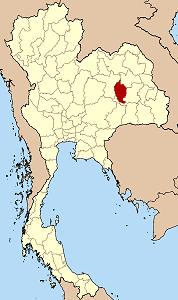
Dengue Fever Outbreak Kills Isaan Teen Girl
http://www.pattayadailynews.com/en/2012/10/06/dengue-fever-outbreak-kills-isan-teen-girl/Dengue Fever Outbreak Kills Isan Teen Girl
Published : October 06, 2012 :: 15 16
16
With the rainy season ending, health officials in Northeast provinces are still concerned about Dengue Fever, which last month killed an 18-year-old female in Mahasrakham province. A health official reported 200 cases of Dengue Fever in September in their province.
MAHASARAKHAM – October 5, 2012 [PDN]; a health official from Mahasarakham announced that 200 patients were treated for Dengue Fever in the Isaan province, including an 18-year-old female who died.
As the rainy season is ending and winter begins, it was announced that a total of 700 patients in the province had been infected by Dengue Fever, said Dr. Parinya Rattanaparinya, the head of the Office of Provincial Public Health in Mahasarakham province.
The doctor warned people to beware of this disease, which is particularly dangerous to children, because the current outbreak of Dengue Fever has the most severe strain of the disease.
The number of patients has made the doctor afraid that Dengue Fever will spread out more, so he has coordinated with the municipality and the local branch of the Ministry of Public Health to spray insecticides to get rid of common house mosquitoes in areas near schools and other high-risk areas.
From January 1, 2012 until the present, there have been 713 patients with Dengue Fever, which works out to a ratio of 74 infected people for every 100,000 in the local population, the doctor said.
The infected patient who died in Amphur Muang was an 18-year-old female, whose level of platelets in her blood dropped drastically, which caused her body to go in shock until she died on September 29.
The district with the highest rate of infection was Muang Mahasarakham, followed in descending order by Payakphumpisai, and Kanthornwichai. The three subgroups of people mostly infected by the disease were between the ages of 5-9, ages10-14, and ages 15-24.
Since there is no “cure” or treatment for Dengue Fever, the best method is prevention. The doctor advised parents with children to take precautions to prevent youngsters from being bitten by infected mosquitoes.
The doctor recommended that parents get rid of water sources where the mosquitos breed, such as containers left outdoors, or shallow ponds and drainage areas. They should either drain the water or put Abate sand in the water.
Early symptoms of Dengue Fever can resemble a high flu, which may include a reddish face, tiredness, loss of appetite, and vomiting. If such symptoms last longer than two days, parents should take their sick children to see the doctor urgently.
-
06-10-2012, 05:18 PM #95Banned
- Join Date
- Jul 2012
- Last Online
- 09-05-2021 @ 03:25 AM
- Posts
- 33,640
A bit worrying considering its quite far from the border and smack in the middle of Isaan
-
06-10-2012, 08:04 PM #96Twitter #BKKTS

- Join Date
- Sep 2009
- Last Online
- 27-08-2023 @ 10:33 AM
- Posts
- 9,222
Anyone have a handy graph of Dengue province by province for 2012 vs previous years?
-
06-10-2012, 08:10 PM #97Banned
- Join Date
- Jul 2012
- Last Online
- 09-05-2021 @ 03:25 AM
- Posts
- 33,640
Yeah, I have one in my jeans pocket.
I will just go and fetch it
-
06-10-2012, 08:12 PM #98Twitter #BKKTS
- Join Date
- Sep 2009
- Last Online
- 27-08-2023 @ 10:33 AM
- Posts
- 9,222
Good boy Spot. Go fetch.
-
06-10-2012, 10:05 PM #99R.I.P

- Join Date
- Nov 2009
- Last Online
- 25-09-2014 @ 02:50 PM
- Location
- Mountain view
- Posts
- 40,025
Where you have open doors, windows and stagnant water nearby, the problem will never be erased.
I'm unsure if the government have issued an Dengue Fever education pamphlet but if not then they should.
We had a blocked drainage channel opposite the house a few years back where a few thousand mossies had gathered to breed. The neighbours weren't particularly bothered but a couple of cans of insecticide spray purchased from the corner shop put paid to them.
Very sad to hear that children are suffering
-
07-10-2012, 12:07 AM #100Thailand Expat

- Join Date
- Feb 2011
- Last Online
- Today @ 12:48 PM
- Location
- In the EU
- Posts
- 13,760
Pretty difficult to erase them in Isaan...where ponds are a standard requirement. Originally Posted by Mr Lick
Our village gets fumigated twice a year ... usually only 2 or 3 cases per year...not sure for the province (Sakon Nakhon) as a whole though.

 Reply With Quote
 [/SIGPIC]
Thread Information
Users Browsing this Thread
There are currently 1 users browsing this thread. (0 members and 1 guests)
