

Windows 8:
Windows Server 2012Today in Toronto, Canada, at Microsoft’s annual Worldwide Partner Conference, Windows Chief Marketing Officer and Chief Financial Officer Tami Reller spoke to thousands of partners from around the world. She shared some exciting new details regarding Windows that I wanted to pass along.
For the first time, we provided details on Windows 8 availability. Tami confirmed that Windows 8 is on track to Release to Manufacturing (RTM) the first week of August. For enterprise customers with Software Assurance benefits, they will have full access to Windows 8 bits as early as August. Additionally, she noted that RTM is when we’ll be turning on the commerce platform so that developers can start earning money for their apps – we'll have more to share on the Windows Store for developers blog soon. Of course, right now with the Windows 8 Release Preview, all apps are still free for people to try.
Tami went on to say that Windows 8 will reach general availability by the end of October! This means that new Windows 8 and Windows RT PCs will be available to buy and upgrades will be available starting in October. She also mentioned that that Windows 8 will be available in 109 languages across 231 markets worldwide.
Finally, Tami announced a new milestone with Windows 7. There is no question that Windows 7 is the bestselling operating system in history – and the number of licenses sold keeps growing. In her remarks, Tami announced that more than 630 million Windows 7 licenses have been sold to date – and that more than half of enterprise desktops today are running Windows 7.
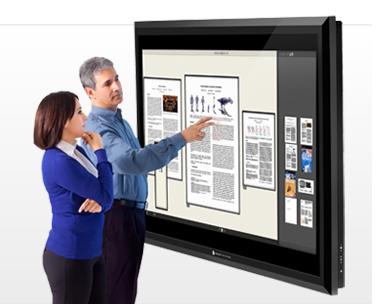
They've also bought a company that specialises in large, multitouch monitors.Today Microsoft is kicking off an exciting week at our Worldwide Partner Conference in Toronto. Windows Server 2012 will be a focus of attention at the event, of course, and it is nearing final release. In fact, at the conference we are announcing that Windows Server 2012 will be released to manufacturing in the first week of August. The code will be complete and we will begin delivering it to our hardware partners. Then, the product will be generally available to customers worldwide through multiple channels in September.
Microsoft buys multitouch display maker Perceptive Pixel
Summary: Microsoft buys multi-touch large-display vendor, emphasizing collaboration in office work as one of the main potential uses of the technology.
By Mary Jo Foley for All About Microsoft | July 9, 2012 -- Updated 14:39 GMT (07:39 PDT)
Microsoft announced on July 9 plans to buy Perceptive Pixel, a six-year-old maker of high-performance multi-touch workstations and "wall solutions."
Terms of the deal were not disclosed.
According to the Perceptive Pixel site, its patented technology is used in broadcast, government, defense, energy, higher education, engineering and product design. Multi-touch expert and researcher Jeff Han is chief technology and co-founder of Perceptive Pixel.
"Our innovative, multi-touch platform enables professionals to become more productive, make better and faster decisions, improve results, and collaborate and present their ideas more effectively."
Perceptive Pixel unveiled earlier this year its first-ever simultaneous pen and touch solution.
Microsoft CEO Steve Ballmer announced the purchase during the first keynote of Microsoft's worldwide partner conference in Toronto.
Officials from Perceptive Pixel demonstrated a Windows 8-based demons tration of OneNote, Microsoft's electronic note-taking app, on a large screen on stage at the show. They also showed off an ad-hoc collaboration called Storyboard on the large multitouch screen. Ballmer emphasized Skype and Lync also would be good applications to show off on the new hardware.
Currently, Perceptive Pixel's hardware tends to sell for $180,000. But Microsoft plans to work on making it more affordable, Ballmer said.
Microsoft is not a stranger to large-size displays. The company has been working on table-sized multitouch tables -- formerly known as Surface, but now known as PixelSense. The latest version of those table/kiosk-size devices are made by Samsung.
Results 1 to 25 of 81
Thread: Microsoft Release announcements.
-
10-07-2012, 02:18 AM #1Thailand Expat



- Join Date
- Sep 2009
- Last Online
- @
- Posts
- 108,187
Microsoft Release announcements.
-
10-07-2012, 06:29 AM #2Thailand Expat



- Join Date
- Dec 2010
- Last Online
- 03-05-2013 @ 07:59 PM
- Location
- *classified*
- Posts
- 1,800

OMFG!
-
10-07-2012, 11:17 AM #3Thailand Expat
- Join Date
- Sep 2009
- Last Online
- @
- Posts
- 108,187
What's wrong, did you notice this? Originally Posted by Cthulhu

Windows 8 and Windows RT PCs will be available to buy and upgrades will be available starting in October.
-
10-07-2012, 11:39 AM #4Thailand Expat
- Join Date
- Dec 2010
- Last Online
- 03-05-2013 @ 07:59 PM
- Location
- *classified*
- Posts
- 1,800
Oh, it's just so friggin' funny to see you've become a total Microsoft shill..
Priceless.
-
10-07-2012, 11:53 AM #5Thailand Expat
- Join Date
- Sep 2009
- Last Online
- @
- Posts
- 108,187
I'll make no bones about it, I fucking love them, they'll keep me working until I decide to retire.

-
10-07-2012, 12:35 PM #6Thailand Expat
- Join Date
- Dec 2010
- Last Online
- 03-05-2013 @ 07:59 PM
- Location
- *classified*
- Posts
- 1,800
...yeah, yeah, let's see what happens over the next 12-18 months.....
-
10-07-2012, 12:56 PM #7Thailand Expat
- Join Date
- Sep 2009
- Last Online
- @
- Posts
- 108,187
You're not a Tottenham supporter are you?
-
10-07-2012, 12:59 PM #8Thailand Expat
- Join Date
- Dec 2010
- Last Online
- 03-05-2013 @ 07:59 PM
- Location
- *classified*
- Posts
- 1,800
I'm not into footie or other loser sports, unlike you.
-
10-07-2012, 02:01 PM #9Thailand Expat
- Join Date
- Sep 2009
- Last Online
- @
- Posts
- 108,187
Oh I forgot, you don't have proper sports in your country, do you?
It's just that Tottenham fans say that every year.
-
10-07-2012, 02:24 PM #10Thailand Expat
- Join Date
- Dec 2010
- Last Online
- 03-05-2013 @ 07:59 PM
- Location
- *classified*
- Posts
- 1,800
My country?
I don't even know what Tottenham is.
-
10-07-2012, 03:34 PM #11Thailand Expat
- Join Date
- Sep 2009
- Last Online
- @
- Posts
- 108,187
I'd describe it, but I think I'd get rained in reds and banned for use of despicable language.

-
10-07-2012, 07:47 PM #12Thailand Expat
- Join Date
- Sep 2009
- Last Online
- @
- Posts
- 108,187
Ha now he's having to backtrack big time!

By | Paul Kunert 10th July 2012 12:29 Ballmer plays down sales impact of Surface
'Just a design point ... may sell a few million'
Microsoft CEO Steve Ballmer has downplayed the impact of Redmond's "iPad-killer" – aka the Surface tablet – as he wrapped a comforting arm around PC OEMS that may feel a little unnerved by the move.
The covers were lifted off the shiny slate weeks ago, but it was dismissed by several hardware vendors, including long-time partner Acer, which said Microsoft should concentrate its efforts on software development.
Ballmer told a 16,000-strong audience at the Worldwide Partner Conference in Toronto that Microsoft needs "leading edge hardware that really shows off Windows 8".
Clearly Microsoft didn't trust the OEM giants to get the most out of the next gen OS and wants to get more hands-on to loosen Apple's stranglehold on the fondleslab sector.
But Ballmer, Microsoft's very own bald eagle, branded Surface as "just a design point". "It will have a distinct place in what's a broad Windows ecosystem. And the importance of the thousands of partners that we have design and produce Windows computers will not diminish," said Balmer.
He talked of the "mutual goal" with the global PC makers to build Windows PCs, phones, tablets and servers. This is made all the more pressing when Microsoft considers the encroachment of Google and Apple operating systems, he said.
On Surface, Ballmer said: "We may sell a few million, I don't know how many, of the 375 million, but we need partners to have that diversity of devices".
Maybe Ballmer has learned the lessons of the recent past when he over-hyped the expected adoption of Windows 8. ®
-
10-07-2012, 08:55 PM #13Member

- Join Date
- Mar 2012
- Last Online
- 09-04-2013 @ 09:12 PM
- Location
- Rimthangrotfai
- Posts
- 140
Anyone remember what Google is doing with the Android phones?
Exactly this, bringing their own device to show off the new versions and to give OEM's a bit of a push to adopt the new versions. Been successful so far.
-
11-07-2012, 07:14 AM #14Thailand Expat

- Join Date
- Jul 2010
- Last Online
- 24-07-2024 @ 09:54 PM
- Location
- Where troubles melt like lemon drops
- Posts
- 26,242
Nice. Originally Posted by harrybarracuda
-
11-07-2012, 08:45 AM #15I'm in Jail


- Join Date
- Mar 2006
- Last Online
- 12-06-2021 @ 11:13 PM
- Posts
- 39,826
he is the company tech guy, if you get my drift Originally Posted by Cthulhu
job is to test gadgets and update the AV when the big boys fuckup their PC,
the IT equivalent of a maid,
-
11-07-2012, 09:18 AM #16Thailand Expat
- Join Date
- Dec 2010
- Last Online
- 03-05-2013 @ 07:59 PM
- Location
- *classified*
- Posts
- 1,800
Pretty much spot on, there - for once. Originally Posted by Butterfly
-
11-07-2012, 11:59 AM #17Thailand Expat
- Join Date
- Sep 2009
- Last Online
- @
- Posts
- 108,187
He's just jealous because I get all my shit free.

-
11-07-2012, 12:11 PM #18Thailand Expat
- Join Date
- Dec 2010
- Last Online
- 03-05-2013 @ 07:59 PM
- Location
- *classified*
- Posts
- 1,800
You have to - you're not being paid enough. Originally Posted by harrybarracuda
It wouldn't be worth the "price" to pay for it:
Originally Posted by Butterfly

-
11-07-2012, 12:16 PM #19I'm in Jail
- Join Date
- Mar 2006
- Last Online
- 12-06-2021 @ 11:13 PM
- Posts
- 39,826
^^ do they make you bend over to pick the cables they unplug by mistake ?
-
11-07-2012, 12:30 PM #20Thailand Expat
- Join Date
- Sep 2009
- Last Online
- @
- Posts
- 108,187
Daffy, Buttplug PM'd me - he's too embarrassed to ask himself, but he wants to know where you bought that outfit.

-
13-07-2012, 10:50 PM #21I don't know

- Join Date
- Dec 2005
- Last Online
- @
- Location
- on pacific ocean, south america
- Posts
- 21,406
Question from a neo-phyte.
I have a great Acer (well to me anyway) that is 6 years old. It's still fast enough with google chrome and I do torrents and surfing on it.
But for the last week I've been shopping around at the computer stores, writing down brands and model numbers and researching.
My 6 year old laptop is fine, but I'm looking.
Should I wait for Windows 8 to come out?
Or, not?
Thanks in advance.............
-
14-07-2012, 12:50 AM #22Thailand Expat
- Join Date
- Sep 2009
- Last Online
- @
- Posts
- 108,187
If you are looking at buying a new PC, then I would wait.
There will be a rake of new Windows 8 certified products coming out for Xmas. If nothing else, it will push down the price of existing gear.
-
14-07-2012, 02:04 AM #23Thailand Expat
- Join Date
- Dec 2010
- Last Online
- 03-05-2013 @ 07:59 PM
- Location
- *classified*
- Posts
- 1,800
Agreed on Harry's suggestions about waiting,mostly for potentially lower prices.
I'm not holding out much hope for Win8, though. I wouldn't worry about that.
-
14-07-2012, 11:23 AM #24Thailand Expat
- Join Date
- Sep 2009
- Last Online
- @
- Posts
- 108,187
I reckon the Surface will be well received, certainly in my company.
-
14-07-2012, 11:49 AM #25Thailand Expat
- Join Date
- Dec 2010
- Last Online
- 03-05-2013 @ 07:59 PM
- Location
- *classified*
- Posts
- 1,800
a) if it ever ships
b) if it's not overpriced
c) if it actually works.
Remember - not only has no one been allowed to actually use it during the 'launch', but was quite a bit crash prone on stage.


 Reply With Quote
Thread Information
Users Browsing this Thread
There are currently 1 users browsing this thread. (0 members and 1 guests)
