

Demonstrations in Burma
By Shah Paung
September 17, 2007
More than 600 monks in the central and upper areas of Burma have taken part in peaceful demonstrations in preparation for refusing alms from the families of military personnel on Tuesday, September 18.
Buddhist monks make their daily rounds in Rangoon [Photo: AP]
A senior monk at Ledi Monastery in Chauk Township in Magwe Division told The Irrawaddy on Monday that about 300 monks had demonstrated peacefully in Chauk from 5:30 a.m. to around 7 a.m. that morning. The monks had marched around the city market and on to Sasana Beikman, the city’s religious hall. The monks recited “paritta sutta” (a prayer for protection from evil or harm) during the demonstration.
However, the monks in Chauk have not enforced “patam nikkujjana kamma” (refusing alms) from the military regime and its supporters as they have not yet received an official letter from the “The Alliance of All Burmese Buddhist Monks”, a senior monk said.
Meanwhile, a resident of Tharrawaddy in Pegu Division said that monks at Kyaikto Monastery in Tharrawaddy had begun refusing alms from military families since they had received a letter of authorization from “The Alliance of All Burmese Buddhist Monks”.
Rangoon residents have said that the city has been quiet, while citizens of Pegu, about 80 km north of Rangoon, claimed that security has been beefed up in the town ahead of a large demonstration expected on Tuesday.
In Sagaing Division, two army trucks carrying around 300 armed soldiers had set up a roadblock at Thayet Bin Seik, a junction for all the monasteries in Sagaing, according to an anonymous activist who spoke to The Irrawaddy on Monday. Owners of passenger buses are apparently worried that either the military or the monks might commandeer their buses if tensions rise.
September 17 was the deadline for the Burmese military government to issue an apology to the monkhood after the authorities had violently cracked down on monks in Pakokku, Magwe Division during a peaceful demonstration on September 5, according to a recent statement by the “The Alliance of All Burmese Buddhist Monks”.
In its first statement the organization urged monks to refuse alms from military families and military supporters if the apology was not forthcoming. A second statement released on Saturday called for monks to begin refusing alms on Monday and called for demonstrations on Tuesday.
A senior monk at Bawdi Mandine Monastery told The Irrawaddy on Monday afternoon that the Burmese military government had yet to issue an apology to the monasteries in Pakokku. Several young monks and novices from Maha Visutarama Monastery, also known as “Ah Le Tiak”, had returned to their homes, their families worried that they would get caught up in the demonstrations.
“If about 40 and 50 young monks go home that will not affect the demonstration at Ah Le Tiak as there are more than 700 young monks and novices there,” the senior monk said, adding that his own monastery housed only 100 novices and young monks, but that they had not been allowed to go home as they would miss their lessons.
According to a senior monk at Kay Mar Thi Wun Monastery in Kyaukpadaung, a town in Mandalay Division, a peaceful demonstration was also held by more than 300 monks in Kyaukpadaung on Monday morning at 6 a.m.
The group of monks had marched to Zaydi Gyi Pagoda and had been reciting “metta sutta” (the Buddha’s words on kindness), dedicated to those who are suffering and who face daily challenges making a living.
Further details regarding the conclusion of the demonstrations or any military crackdowns have not yet been verified as the phone line was cut during the interview between The Irrawaddy and the senior monk.
By Monday evening, there had not been any reports of a crackdown on demonstrations by the military government.
The state-run newspaper on Monday reported that families of the Burmese military government defense services had donated rice, cooking oil, salt, medicine and cash to 15 monasteries and a nunnery in Sanchaung Township, Rangoon on Sunday. Other similar donation ceremonies were also held in Rangoon’s Thakayta and Dawbon Townships, the newspaper said.
irrawaddy.org
Results 1 to 25 of 42
Thread: Demonstrations in Burma
-
17-09-2007, 11:13 PM #1Thailand Expat



- Join Date
- Aug 2007
- Last Online
- @
- Posts
- 1,405
Demonstrations in Burma
-
18-09-2007, 02:49 AM #2Thailand Expat
- Join Date
- Oct 2006
- Last Online
- 08-12-2011 @ 06:20 PM
- Location
- West Coast Canada
- Posts
- 2,908
Sounds like just about every citizen in Burma has completely had it with this despicable regime; refusing alms may work as the junta is notoriously superstitious.
-
18-09-2007, 05:35 PM #3Thailand Expat
- Join Date
- Aug 2007
- Last Online
- @
- Posts
- 1,405
Myanmar monks defy junta, protest
Tue, 18 Sep 2007
Hundreds of monks on Tuesday marched peacefully through Myanmar's main city Yangon, defying the military regime and chanting Buddhist prayers in protest.
More than 300 monks tried to march to the famous Shwedagon Pagoda, but authorities sealed off Myanmar's most important landmark as well as the city's two other main pagodas, forcing them to march through downtown Yangon.
It was one of the biggest protests here since anti-government demonstrations broke out on 19 August in anger at an enormous hike in fuel prices.
Myanmar's junta runs the country with an iron fist and does not tolerate even the slightest show of public dissent, and authorities have arrested more than 150 people over a series of protests since late August.
But more than 200 riot police remained in trucks on nearby streets on Tuesday while dozens of plainclothes officers on motorcycles followed the marching monks. Authorities had yet to arrest anyone.
Some 150 people joined the march, smiling and clapping hands. The crowd did not carry any banners or shout political slogans.
Monks are important cultural standard-bearers in this devoutly Buddhist nation formerly known as Burma.
The junta is cautious about quelling dissent among monks since a violent crackdown against them earlier in the month triggered outrage, prompting young monks to briefly kidnap government officials at a monastery.
Monks have demanded an apology from the government after soldiers beat them with bamboo sticks in early September.
"This time, authorities are very careful. They did not want to harm monks because they knew such acts could backfire against them," said Win Min, a Thailand-based analyst.
"Monks are likely to continue their protests until the government apologises."
Apart from Yangon, some 100 monks held a peaceful protest in Kyaukpadaung, Mandalay, Myanmar's second largest city, home to 300 000 Buddhist monks, according to the country's exile opposition media.
Also in Aunglan, Magwe, north of Yangon, some 90 monks marched for two hours.
About 300 monks in the central city of Pakokku took to the streets on 5 September but the demonstration was put down by soldiers and state-backed militia who beat the crowd.
A day later, monks held a group of 20 government officials hostage for several hours and then vandalised a store and a home belonging to militia leaders.
Myanmar's state media has labelled the protest leaders as "devils" and accused them of trying to corrupt young monks.
Buddhist monks were credited with helping to rally popular support for a 1988 pro-democracy uprising that was crushed by the military when soldiers opened fire on protesters, killing hundreds if not thousands of people.
AFP
iafrica.com
-
18-09-2007, 10:56 PM #4Thailand Expat
- Join Date
- Aug 2007
- Last Online
- @
- Posts
- 1,405
Hundreds of Buddhist Monks Protest Burmese Military
By Luis Ramirez
Bangkok
18 September 2007

A group of about 1000 monks march against the Burmese military government in Rangoon, Burma, 18 Sep 2007
Hundreds of Buddhist monks have taken to the streets of Burma's main city, Rangoon - the latest in a wave of demonstrations against the military government during the past month. VOA's Luis Ramirez reports from our Southeast Asia bureau in Bangkok.
The monks defied orders by Burma's military rulers to refrain from demonstrating. Witnesses say hundreds of them, cloaked in cinnamon-colored robes, marched quietly through the streets of Rangoon as security forces - including plainclothes police - looked on.
Analysts say the monks' defiance of the authorities is a dangerous sign for the ruling generals in a devoutly Buddhist country where monks are society's most respected figures. Aung Naing Oo, a Burmese political analyst exiled in Thailand says the monks are perhaps the biggest political challenge facing the junta.
"The military should be really, really worried because something like this can trigger wider political protest," he said.
Burmese Buddhist monks protest against the military government in Rangoon, Burma, 18 Sep 2007
Demonstrations have been going on since last month when the government imposed steep hikes in the cost of fuel. The hikes triggered anger among the poor in a country where the per-capita income is less than $200 a year.
Activists say the monks are demanding an apology from the government after members of security forces and their supporters beat demonstrators - who included several monks - at a protest over the price increases in the central Burmese town of Pakokku two weeks ago.
Reports from Burma say the monks have threatened to cut off contact with members of the military junta and refuse to receive alms from them. Aung Naing Oo says such gestures from the country's religious leaders would be deeply embarrassing and possibly destabilizing for the military.
"If the monks stop administering religious rites to the military and the military's families, there will be tremendous effects," he said. "The wives will complain, the ordinary soldiers will complain, so the military has to pay really close attention to what the monks are doing right now."
Observers say Burma's military rulers will have to weigh carefully whether to use force to stop the monks from demonstrating, a decision that could backfire and trigger even more protests.
In the past, monks have had key roles in opposition efforts. In 1988, they helped rally support for pro-democracy demonstrations that swept the country. Those protests ended with a government crackdown that killed about 3,000 people.
voanews.com
-
19-09-2007, 02:45 PM #5Thailand Expat
- Join Date
- Aug 2007
- Last Online
- @
- Posts
- 1,405
Mungpi
Mizzima News (Specializing News of Burma)
September 19, 2007 -
The Burmese military junta will hold its routine quarterly meetings despite the on going protests in the country. It will meet in September 24, sources said.
The junta has instructed all its commanders to reach the new jungle capital Naypyitaw on Friday, September 21, for the meeting, giving rise to speculation of its intentions, said Win Min, a Burmese analyst based in Thailand.
"Strange that they are holding the meet when there is a possible risk of monks' continuing their protests," said Win Min.
Hundreds of monks today staged demonstrations in Rangoon and other parts of Burma following the junta's failure to concede to their demand for an apology for its high handedness on monks in Pakhokku during a brief demonstration on September 5.
Authorities in Sittwe today fired teargas to disperse about 2,000 monks and civilian protesters.
Meanwhile, Vice Snr Gen Maung Aye, who is also heading Burma's Trade Council, has been replaced by General Soe Win, who is also serving as the Prime Minister, by Burma's military supremo Snr. Gen. Than Shwe on September 13, 2007, a source, who has access to the military said.
Than Shwe seems to be unhappy with Maung Aye for his failure to check economic deterioration, which led people to protest.
Taking advantage of the demonstrations he has replaced Maung Aye with Soe Win as the head of Trade Council, the source said.
However, the information could not be independently confirmed.
mizzima.com
-
19-09-2007, 04:24 PM #6Thailand Expat
- Join Date
- Aug 2007
- Last Online
- @
- Posts
- 1,405
'Tear gas used' on Burma monks
Tuesday, 18 September 2007, 13:18 GMT 14:18 UK

Unlike in Sittwe, the protest in Rangoon remained peaceful
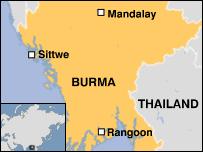
Military officials in Burma have used tear gas to disperse hundreds of monks holding a rally in the north-west city of Sittwe, reports from the area say.
Some of them were beaten and several were arrested, eyewitnesses say.
Large numbers of monks have also held protests in at least five other towns and cities across the country, including the former capital Rangoon.
They are demanding a government apology for the violent break-up of a recent rally against a sudden fuel price rise.
A new group that draws on militant youth elements in the clergy, the Alliance of All Burmese Buddhist Monks, appears to be co-ordinating the monks' protests.
It has asked its followers across the country to refuse alms and offerings from anyone connected to the military.
The monks' actions are deeply embarrassing to Burma's military rulers but present them with a difficult dilemma, according to the BBC's South East Asia correspondent Jonathan Head.
Monks are highly respected figures in Burmese society, and treating protesting monks in the same way they might treat dissidents and ordinary citizens risks provoking huge public anger, he adds.
Deadline passes
The monks had given the government a deadline of Monday night to apologise for its actions during an earlier rally in the city of Pakokku, when soldiers and state-backed militia reportedly beat up several monks.


Persistent protests worry leaders
The deadline passed with no apology, so a series of protests were planned on Tuesday in Rangoon and other locations.
The rally in Rangoon was largely peaceful, although there were reports of military officials preventing monks from gaining access to the city's famed Shwedagon Pagoda.
But reports from the city of Sittwe indicate that the authorities there fired tear gas to break up a protest of about 1,000 monks and civilian demonstrators.
Three or four monks were arrested, and members of the crowd were hit and slapped, a witness told Reuters news agency.
Fuel price hike
The monks' demonstrations are the latest in a series of recent protests in Burma, originally sparked by the military junta's decision to double the price of petrol and diesel on 15 August.
The move was not announced ahead of time and the reasons behind it remain unclear, but it has hit people hard.
Demonstrations have continued despite the arrest of many of Burma's most prominent activists.
The protests are likely to put added heat on the government, which is already under intense international pressure to implement democratic change.
Monks have been at the forefront of protests against the government in the past. A spokesman for the Alliance of All Burmese Buddhist Monks told the BBC that the monks had learnt from their experiences in 1988 and 1990 when their protests were easily put down by the military. This time, he said, their leaders would remain underground
bbc.co.uk
-
19-09-2007, 04:34 PM #7Thailand Expat
- Join Date
- Aug 2007
- Last Online
- @
- Posts
- 1,405
Myanmar junta admits use of tear gas against monks
09-19-2007, 07h26
YANGON (AFP)
Myanmar's junta on Wednesday admitted using tear gas and firing warning shots in the air to break up about 1,000 Buddhist monks protesting against the regime
snip
turkishpress.com
-
19-09-2007, 04:37 PM #8Thailand Expat
- Join Date
- Aug 2007
- Last Online
- @
- Posts
- 1,405
Myanmar junta admits used tear gas, warning shots
Aung Hla Tun, Reuters
Published: Wednesday, September 19, 2007
YANGON (Reuters) - Myanmar's military junta said on Wednesday it had used tear gas and fired warning shots to disperse a crowd of 1,000 Buddhist monks and civilians protesting in the northwestern coastal city of Sittwe.
The admission on state-owned MRTV and in official newspapers was a thinly veiled warning to the former Burma's 53 million people after a month of protests against decades of military rule and soaring fuel and food prices.
"Some protesters, including six monks holding sticks and swords, hit the officials with their weapons," said the New Light of Myanmar, one of the regime's main mouthpieces.
"The protesters became very violent. So in order to control situation, the officials threw a teargas bomb into the group and opened fire in the air to threaten them," it added.
The increasing involvement of monks, key players in a 1988 mass uprising, is a sign the dissent that broke out last month over shock fuel price rises is intensifying.
snip
canada.com
-
19-09-2007, 05:23 PM #9Thailand Expat
- Join Date
- Aug 2007
- Last Online
- @
- Posts
- 1,405
Buddhist Monks Protest in Myanmar
2 hours ago
YANGON, Myanmar (AP) — Hundreds of Buddhist monks protested Wednesday outside the locked gates of Myanmar's most revered temple, challenging the country's military rulers in the most sustained wave of demonstrations in a decade.
About 500 monks found the gates locked at the Shwedagon pagoda, a golden temple atop a hill dominating Yangon, the Southeast Asian country's biggest city.
They then marched through the streets, followed by a few hundred onlookers and scores of plainclothes security officials.
The Yangon march and rallies in other cities Wednesday were to protest hardship brought on by the government's economic policies, especially a sudden, major hike in fuel prices last month that first sparked the persistent demonstrations — first by pro-democracy activists and now primarily by monks.
In the central city of Mandalay, more than 1,000 monks marched, while about 100 others in dark saffron robes staged a peaceful march in the western Yangon suburb of Ahlone.
More than 100 Buddhist monks from some monasteries in South Okkalapa township in Yangon's northern suburbs also marched early Wednesday, later returning to their monasteries without incident.
"The monks are telling the public not to take part in the protests. They told onlookers that this is the monks' affair and that they would handle it themselves," a witness contacted by phone in Ahlone told The Associated Press. The person asked not to be identified for fear of reprisals.
There were no reports of intervention by the junta, which acknowledged in state media reports Wednesday that authorities used tear gas and fired warning shots in the air to break up protests Tuesday in Sittwe, the capital of Rakhine state in western Myanmar.
The state-run newspaper, the New Light of Myanmar, claimed Wednesday that bogus monks, "instigators" and foreign radio station reports helped the crowds swell on Tuesday. It said senior Buddhist leaders urged the monks to disperse, but the crowd retaliated by throwing stones and sticks.
The report said the authorities made no arrests and there were no injuries.
The marches on Tuesday marked the 19th anniversary of the 1988 crackdown in Myanmar in which the current junta took over after crushing a failed pro-democracy rebellion that sought an end to military rule, imposed since 1962.
The junta held general elections in 1990, but refused to honor the results when pro-democracy leader Aung San Suu Kyi's National League for Democracy party won. Suu Kyi has been detained under house arrest for more than 11 years.
Monks in Myanmar, which is also known as Burma, have historically been at the forefront of protests — first against British colonialism and later military dictatorship. They also played a prominent part in the failed 1988 pro-democracy rebellion.
The authorities know that restraining monks poses a dilemma. Monks are highly respected in predominantly Buddhist Myanmar, and abusing them in anyway could cause public outrage.
In addition to the protests, monks have threatened to cut off contact with the military and their families, and to refuse alms from them — a humiliating gesture that would embarrass the junta.
Peaceful protests by monks began on Aug. 30 in Sittwe. A second one on Sep. 5 in the northern town of Pakokku was cut short when troops fired warning shots. Junta supporters also manhandled some marchers.
In response, young monks angry at their mistreatment briefly took officials hostage, torched their vehicles and later smashed a shop and a house belonging to junta supporters.
Monks had given authorities until Monday to apologize for their mistreatment in Pakokku, a center of Buddhist learning, but it went unanswered.
ap.google.com
-
20-09-2007, 03:09 PM #10Thailand Expat
- Join Date
- Aug 2007
- Last Online
- @
- Posts
- 1,405
Burmese monks in pagoda protest
Thursday, 20 September 2007

Earlier this week, the gates to the pagoda were locked
Hundreds of Buddhist monks have marched around Burma's most revered temple, in a third consecutive day of protests against the military government.
The monks were allowed into the Shwedagon Pagoda, which dominates the former capital, Rangoon, for the first time since their protests began.
On Wednesday, hundreds of monks marched through Sittwe, Mandalay and Rangoon.
They want a government apology for the violent break-up of a recent rally, triggered by protests over price rises.
There have been persistent protests across Burma since shock fuel price rises last month, which have led to a sharp rise in the price of consumer goods.
Police presence
In Rangoon on Thursday, dozens of plainclothes police officers followed the monks with video cameras as they marched towards the temple, witnesses said.
The pagoda was also surrounded by dozens of plainclothes security officials and riot police trucks were on standby.
Once inside, the Buddhist monks held prayers, the Reuters news agency reported.
The monks are calling for the release of four of their fellow monks arrested during protests on Tuesday, which were violently dispersed by the security forces. Correspondents say the monks' protests will be worrying for the government. They are highly respected figures in Burmese society, and were key players in mass protests staged in 1988, which were violently put down by the military regime.
news.bbc.co.uk
-
21-09-2007, 02:41 PM #11Thailand Expat
- Join Date
- Aug 2007
- Last Online
- @
- Posts
- 1,405
Myanmar Protests Enter 4th Day
The Associated Press
Buddhist monks march in the rain along Waizayantar road in the western Yangon suburb of Ahlone Wednesday, Sept. 19, 2007. Buddhist monks staged peaceful protest marches for a second day, challenging authorities who used tear gas and fired warnings shots to break up some protests a day earlier. (AP photo)
YANGON, Myanmar - About 200 Buddhist monks staged a brief demonstration in Myanmar on Friday, the fourth day of protests in the country, witnesses said. A day earlier, nearly 1,000 monks and thousands of citizens marched, the largest challenge in a decade to the iron-fisted junta that rules the nation.
Braving driving rain, the monks converged at Mei Lamu pagoda on the outskirts of Yangon. After chanting sermons and praying for 15 minutes, the monks dispersed, witnesses said.
It was the fourth straight day the monks have marched in Yangon. Their activities have given new life to a protest movement that began a month ago after the government raised fuel prices, sparking demonstrations against policies that are causing economic hardship.
Authorities normally quick to crack down hard on dissent left the marchers alone, apparently wary of stirring up further problems.
snip
philly.com
-
21-09-2007, 06:18 PM #12Thailand Expat
- Join Date
- Aug 2007
- Last Online
- @
- Posts
- 1,405
Burma monks issue defiant message
Friday, 21 September 2007, 10:40 GMT 11:40 UK
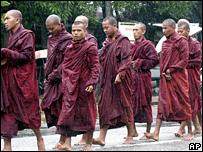
Monks have been holding a series of anti-government protests
Leaders of protests by Buddhist monks in Burma say they intend to continue their peaceful demonstrations until the military government collapses.
The statement by the Alliance of All Burmese Buddhist Monks came as 1,500 monks took to the streets of Rangoon in their biggest protest yet.
This is the fourth straight day of marches by monks in protest at recent government attempts to silence critics.
Diplomats at the United Nations have expressed concern at the crisis.
In a strongly-worded statement, seen by the BBC, the Alliance of All Burmese Buddhist Monks described the military government as "the enemy of the people".
It said the monks would keep up their protests until they had "wiped the military dictatorship from the land of Burma".
The group has asked people across the country to pray in their doorways at 2000 hours on Sunday for 15 minutes.
This is the first time the monks have explicitly challenged the government in this way, the BBC's Jonathan Head in neighbouring Thailand says.
Although the statement falls short of calling for an all-out popular insurrection, it must be what the generals now fear, our correspondent adds.
Fresh momentum
For a fourth day, hundreds of monks took to the streets in the former capital Rangoon.
Braving heavy monsoon rains, they chanted prayers and sermons as they converged on the Shwedagon Pagoda, Burma's most revered temple and focal point of the recent protests.
Profile: Shwedagon Pagoda
Their numbers swelled to more than 1,500 and they were clapped by onlookers as the march moved on through the city.
Hundreds have been taking part in protests around the country since Tuesday, seeking a government apology for the violent break-up of an earlier demonstration.
They have also been withholding religious duties from anyone connected to the military.
The decision by monks to take to the streets has given fresh momentum to protests that began in mid-August over the government's sudden decision to double the price of fuel.
Initial protests were led by activists, dozens of whom have now been arrested.
The movement has turned into the largest public show of opposition to the Burmese authorities since the uprising of 1988.
If their past behaviour is any guide, it cannot be long before the military uses force to stop such opposition, our correspondent says.
'Appalled'
The situation in Burma was discussed at the United Nations on Thursday, with UN special envoy Ibrahim Gambari calling for urgent efforts to address the growing unrest.
Developments in Burma had "raised serious concerns in the international community and once again underscore the urgency to step up our efforts to find solutions to the challenges facing the country", Mr Gambari told the Security Council in a closed briefing, the UN said.
US and British officials also spoke on the issue after the briefing. US ambassador Zalmay Khalilzad said the situation was a threat to regional stability and urged Burmese leaders to allow Mr Gambari into the country as soon as possible. "We certainly are appalled by the steps the regime has taken to silence peaceful protest and to clamp down on dissent," British ambassador John Sawyers was quoted as saying.
bbc.co.uk
-
22-09-2007, 05:27 PM #13Thailand Expat
- Join Date
- Aug 2007
- Last Online
- @
- Posts
- 1,405
Burma anti-junta protests spread
Saturday, 22 September 2007, 09:34 GMT 10:34 UK

The protests spread to seven cities and townships on Saturday
Thousands of monks have taken to the streets of Burma in a sixth day of anti-military government protests.
Two thousand monks went on the march in Mandalay, while at least 1,000 rallied in Rangoon. Protests were also taking place in five townships across Burma.
It comes a day after the leaders of the demonstrations vowed to continue until the military government collapsed.
They want the Burmese people to pray in their doorways for 15 minutes at 2000 on Sunday, Monday and Tuesday.
In Rangoon, the monks converged on Burma's most revered temple, the Shwedagon Pagoda, before continuing their march watched by plain clothes security officials.
In Mandalay, a monastic centre of Buddhist learning, they marched peacefully through the Payagyi district.
There were also demonstrations on Saturday in the townships of Chauk, Shwebo, Mongwa, Taung Dwin Gyi and Ye Nan Chaung.
There were no reports of any violence.
'Enemy of the people'
BBC South Asia correspondent Jonathan Head says many of the devotees held their begging bowls upside down as a symbol of anti-government protest.
The problem for Burma's rulers is that they are reluctant to confront the publicly revered monks for fear of enraging the people, our correspondent says, but the longer they allow the demonstrations to go on, the weaker they look.
Profile: Shwedagon Pagoda
The protests began last month when the government doubled fuel prices.
But they have taken on new momentum this week since the religious order became more widely involved.
On Friday, the Alliance of All Burmese Buddhist Monks branded Burma's military rulers "the enemy of the people".
The organisation pledged to continue their peaceful demonstrations until they had "wiped the military dictatorship from the land".
Some 1,500 monks took to the streets of Rangoon on Friday in protest at recent government attempts to silence critics.
Diplomats at the United Nations have expressed concern at the crisis.
UK Foreign Secretary David Miliband has pledged to raise the situation in the former British colony at the UN General Assembly in New York next week.
The monks' protests began on Monday but gathered pace on Tuesday, after the expiration of a deadline issued by them demanding a government apology for earlier violence. They have also been withholding religious duties from anyone connected with the military. The movement has turned into the largest public show of opposition to the Burmese authorities since the uprising of 1988.
news.bbc.co.uk
-
22-09-2007, 05:30 PM #14Thailand Expat
- Join Date
- Aug 2007
- Last Online
- @
- Posts
- 1,405
Yawdserk salutes Burma's monks
last modified 2007-09-21 05:25
Col Yawdserk, leader of the anti-junta Shan State Army (SSA) South, has voiced his support for the monks who had since 18 September declared the patta-nukkujjana kamma (the act of overturning the bowl) to Burma's military rulers.
"They haven't asked for anything that is unwarranted," said the 50-year old fighter this morning in response to S.H.A.N.'s question.
Col Yawdserk
The monks have called for full apology from the ruling State Peace and Development Council for the manhandling of their colleagues in Pakokku two weeks earlier, as well as reduction of fuel prices, release of all political prisoners and dialogue with the "democratic forces".
"This is the culmination of the regime's decades of misrule and belittlement of the people," he added:
- "The National Convention was nothing but a place where people wasted their time away listening to their lengthy sermons
- Corruption today is worse off than it was during Gen Khin Nyunt's heydays
- There is development only for the military but nothing for the people
- Burma's problems can be resolved politically and peacefully, but they keep resorting to military means
- So long have they kept the people in the dark, refusing their right of participation in resolving Burma's problems"
The military situation, on the other hand, is quieter as the Burma Army has ceased its long range patrols in conflict zones, according to him.
The current unrest began when, out of the blue, as many Burma watchers say, the country's military rulers announced a 100-500% fuel price hike on 15 August.
shanland.org
-
22-09-2007, 05:39 PM #15watterinjaGuest
The winds of change are blowing across Burma...
-
22-09-2007, 05:53 PM #16Thailand Expat
- Join Date
- Aug 2007
- Last Online
- @
- Posts
- 1,405
Overturning the bowl
Overturning the bowl is a symbolic phrase signifying the refusal to accept offerings from a particular person.
The origin story for this transaction is a variation on the origin story for Sg 8. The followers of Mettiya and Bhummajaka incite Vaddha the Licchavi to accuse Ven. Dabba Mallaputta of having raped his wife. (They show no imagination, and instruct him to phrase his accusation in the same terms they taught Mettiya Bhikkhuni in the story to Sg 8: "The quarter without dread, without harm, without danger, is (now) the quarter with dread, with harm, with danger. Where there is calm, there is a windstorm. The water, as it were, is ablaze. My wife has been raped by Master Dabba Mallaputta.") The Buddha convenes a meeting of the Community, at which Ven. Dabba — who attained arahantship at the age of seven — states truthfully that, "Ever since I was born, I am not aware of having engaged in sexual intercourse even in a dream, much less when awake." The Buddha then instructs the Community to overturn its bowl to Vaddha, so that none of the bhikkhus are to associate with him. (This, according to the Commentary, means that none of the bhikkhus are to accept offerings from his household.) Ven. Ananda, on his alms round the following day, stops off at Vaddha's house to inform him that the Community has overturned its bowl to him. On hearing this news, Vaddha falls down in a faint. When he recovers, he goes with his relatives to confess his wrong-doing to the Buddha. The Buddha accepts his confession and tells the Community to turn its bowl upright for Vaddha, so that the bhikkhus may associate with him as before.
accesstoinsight.org
-
22-09-2007, 06:37 PM #17Member
- Join Date
- Aug 2007
- Last Online
- 26-10-2007 @ 03:15 AM
- Posts
- 242
^^i hope it's a good change.
-
23-09-2007, 09:05 AM #18Member

- Join Date
- Apr 2007
- Last Online
- 02-05-2022 @ 05:41 AM
- Posts
- 315
Sounds as though he has a great understanding of the monks Originally Posted by Mid
-
23-09-2007, 09:22 AM #19Thailand Expat

- Join Date
- Mar 2007
- Last Online
- 21-10-2023 @ 08:08 AM
- Location
- Way, Way South of the border now - thank God!
- Posts
- 33,190
^ I don't think so.
For some reason this regime is more embedded in power than the old Soviet Union and it will take more than just some monks walking to end their hold on power. The Generals are completely over the top, even moving their capital to better be able to lord over the country.
-
23-09-2007, 11:08 AM #20Thailand Expat
- Join Date
- Aug 2007
- Last Online
- @
- Posts
- 1,405
Dissident reveals his hand in Burma protests
By Anuj Chopra in Ragoon and Colin Freeman
Last Updated: 1:00am BST 23/09/2007
A pro-democracy leader who tops the "wanted" list of Burma's military rulers has revealed to The Sunday Telegraph how his movement has helped orchestrate the escalating street protests against the country's dictatorship.
In pictures: Burma's secret capital
Buddhist monks take part in protests on the streets of Rangoon
In a rare interview granted while on the run from the secret police, a veteran of the "1988 generation" – the student group whose last rebellion was brutally crushed – said his members had been secretly liaising with the Buddhist monks who have taken to the streets in recent days.
While the monks have so far been the public face of the protest – the biggest and boldest in more than a decade – the campaigner's comments are the first public confirmation that the two groups are working to form a joint challenge to the regime.
During a secret meeting in Burma's former capital, Rangoon, the activist, speaking under the pseudonym of "Mr Saw", told of his hopes that, this time, the country's generals might lose their nerve rather than respond with force.
Up to 3,000 people died in the suppression of the 1988 uprising, but such is the dire state of Burma's economy now that many of its 53 million people feel they have little left to lose.
"Our cadres have for weeks been coaxing the Buddhist clergy to join the protest movement," said Mr Saw.
"People might be encouraged to shed their fears if the monks take to the streets. The senior clergy close to the regime were reluctant to take part, but the younger monks are showing a keen interest."
However, Mr Saw, who spent four years in jail after the 1988 rebellion, said many ordinary Burmese were afraid to join the kind of mass protests necessary to topple the junta.
"In 1988, people put their faith in the students," he said. "There was much bloodshed, people sacrificed lives, but nothing happened.
"This time, people are watching cautiously. There's a lot of risk involved – people who participate will be locked up in a dark prison for a good part of their lives.
There's fear: they're thinking, 'Will our sacrifices go to waste this time as well?'"
Democracy activists began the protests a month ago, but they petered out until they enlisted the monks last week.
Because of the respect the monks enjoy in the religiously devout nation, the ruling generals are wary of suppressing them with the kind of brutality used against others.
Their latest demonstration went past the house of Aung San Suu Kyi, Burma's Nobel Peace Prize-winning opposition activist, who has been under house arrest since 2003.
She came out of her house and wept as they filed past. Although she made no speech, the fact that the police permitted the monks to make the gesture of solidarity in the first place was unusual.
Mr Saw said that although anyone caught providing shelter for activists faced jail, they continued to enjoy support. "People have been scared to come onto the streets," he said.
"But many Burmese have been contributing in their own surreptitious ways.
You knock on a door late at night, and whisper, 'Let me in, brother'. People willingly help us, even though they're well aware of the dire consequences."
He outlined the dire conditions in which his countrymen now lived. "The junta spends 40 per cent of its budget on its 450,000-strong army. Only a sliver of the budget goes to health care and education.
"There was a time when Burma was known as Asia's rice bowl, yet today nearly a third of Burmese are malnourished or physically underdeveloped."
He remains acutely aware, though, of the fate that awaits him should the secret police catch up.
Recalling his arrest in 1988, he said: "I was held in tiny seven-by-10ft cells, where I saw my fellow inmates beaten to death in front of me."
telegraph.co.uk
-
24-09-2007, 02:22 AM #21
R.I.P.

- Join Date
- Jun 2005
- Last Online
- @
- Location
- Pattaya Jomtien
- Posts
- 58,763
Rangoon Monks' protest swells
Monks' protest swells
Rangoon - Up to 15,000 Buddhist monks and laymen marched through the streets of Rangoon Sunday in the sixth day of escalating peaceful protests against the Burmese military regime.
The dictatorship has thus far refrained from cracking down on the saffron-robed rebellion.
More than 3,000 monks, joined for the first time by 300 nuns, from various townships marched to the Shwedagon Pagoda, and then continued to Sule Pagoda and wove their way north, drawing more followers as they proceeded.
There is speculation that the protesters are bound for the Rangoon compound of Aung San Suu Kyi, whom they visited on Saturday. The Nobel peace laureate appeared in public for the first time in years.
Eyewitnesses said Suu Kyi, who has been under house arrest since May, 2003, repeatedly told the monks "sandu," or "well done," and shed tears of joy when they departed.
On Sunday the monks carried banners reading "Untruth will be overcome by truth," and "Injustice will be overcome by justice," giving their protest more of a political tone than previous marches.
They were joined by more than 10,000 laymen, making Sunday's protest march the largest anti-government gathering in more than a decade.
Some of the laymen followers shouted political slogans such as "Free Aung San Suu Kyi." Others stressed economic issues."Lower commodity prices, that is our cause," was one popular chant.
Burma's military rulers last month unleashed pent-up frustration with the deteriorating economy when they more than doubled fuel prices on August 15.
Peaceful demonstrations against the fuel hikes started in Rangoon on August 19, but were quickly suppressed by authorities who arrested more than 100 protest leaders.
The protest movement was picked up by Burma's revered monkhood earlier this month, and has now spread nationwide, and the monks are getting more daring in their tactics.
The monks' protest movement appears to have caught the military junta off guard, and seasoned Burma-watchers are unsure where the rebellion is heading.
"It's hard to know," said Professor Robert Taylor, author of The State in Burma. "But I don't see the regime is tottering," said Taylor, who is currently in Rangoon.
The junta has kept a tight lid on discontent for the past 19 years, cracking down on all shows of student-led protests and dissent from opposition politicians such as Suu Kyi's supporters.
Thus far, none of Burma's Buddhist leaders have come out openly in favour or against the protests.
It is estimated that anywhere between 5,000 to 50,000 of Burma's 400,000-strong monkhood has joined the non-violent movement to protest the country's deteriorating economic conditions.
The monks' movement has put the regime in an awkward position. If the rulers do not crack down on the protests, the demonstrations are likely to spread, but if they attack the monks, they would enrage the people.
Buddhist monks have a long history of political activism in Burma, a predominantly Buddhist country.
The monkhood played a prominent role in the struggle for independence from Great Britain, which came in 1948, and joined students in the anti-military demonstrations that rocked Burma in 1988 and ended in bloodshed.
Like the recent protests, the 1988 mass demonstrations were sparked by rising discontent with the military's mismanagement of the economy and refusal to introduce some semblance of democracy.
On September 8, 1988, the army cracked down on the pro-democracy movement, leaving an estimated 3,000 dead.
The generals at the time vowed to never allow a repeat of 1988, a vow they have carried out through the suppression of any show of unrest in the country.
Although the military allowed a general election in 1990, it ignored the outcome when 80 per cent of the votes went to the National League for Democracy, Suu Kyi's party. Its reaction made the junta a pariah in the West. (dpa)
-
24-09-2007, 04:02 PM #22
R.I.P.
- Join Date
- Jun 2005
- Last Online
- @
- Location
- Pattaya Jomtien
- Posts
- 58,763
Yangon Monks refuse to return to temples
Monks refuse to return to temples
Yangon - More than 30,000 Buddhist monks, nuns and laymen marched through the streets on Yangon Monday in a swelling display of barefoot rebellion against the country's military regime.
For the seventh consecutive day thousands of monks marched first to the Shwedagon Pagoda, in the heart of Yangon, by noon before spreading out to other holy spots in the former capital.
Up to 5,000 of the monks passed by the headquarters of the opposition National League for Democracy (NLD), which is headed by Nobel peace laureate Aung San Suu Kyi. NLD officers cheered the monks as they passed.
The road to Suu Kyi's house, where she has been kept under arrest since May, 2003, was heavily barricaded to prevent the monks from visiting her as they did on Saturday, eyewitnesses said.
A sea of monks and their followers had surrounded the Sule Pagoda, in the heart of downtown Yangon, by Monday afternoon, and another 15,000 protesters gathered around the Kyimyindine Pagoda, in the northern part of the city.
It was the seventh straight day of Burma's maroon-robed rebellion which has thus far been without violence. But on Monday, there were signs that a clash was looming.
Laymen who joined the monks carrying placards with political slogans were roughed up by pro-government thugs and had their posters taken away, eyewitnesses said.
The monks marched in the streets Monday despite an order by the military-controlled Buddhist clergy, the Sangha Nayaka Committee, to city temples to send all visiting monks back to their provinces.
Many of the participating monks are from temples outside of Yangon, visiting the former capital for religious studies during Buddhist lent.
Monday's protest was bigger than Sunday's, when more than 10,000 laymen joined approximately 3,000 marching monks and 300 nuns, many of whom shouted political slogans for the first time, calling on the ruling regime to free opposition leader Suu Kyi.
A confrontation between the military and monks seems inevitable, Western diplomats said.
"We expect some kind of a resolution in the next few days," said one Western diplomat. "Either the protests go up or go down, but it can't go on like this."
Burma's military, which has ruled the country since 1962, has killed protesting monks before, most recently in the 1988 anti-government demonstrations.
But this is the first time Myanmar's 400,000-strong Buddhist monkhood has taken a lead in the protest movement, pitting rifles against robes in a looming confrontation that could easily spark an uprising if mishandled.
The ruling State Peace and Development Council (SPDC) has a long history of mismanagement. It was their decision on August 15 to more than double local fuel prices overnight, without a system of gradual hikes and no prior warnings to the public, that has led them to the current predicament.
Peaceful demonstrations against the fuel hikes started in Yangon on August 19, but were quickly suppressed by authorities who arrested more than 100 protest leaders.
The protest movement was then picked up by Burma's monkhood earlier this month, and has now spread nationwide.
Myanmar's junta has kept a tight lid on discontent for the past 19 years, cracking down on all shows of student-led protests and dissent from opposition politicians such as Suu Kyi's supporters.
The monks' movement has put Burma's regime in an awkward position. If the rulers do not crack down on the protests, the demonstrations are likely to spread, but if they attack the monks, they would enrage the people.
Buddhist monks have a history of political activism in Myanmar, a predominantly Buddhist country.
The monkhood played a prominent role in Burma's struggle for independence from Great Britain, which came in 1948, and joined students in the anti-military demonstrations that rocked Burma in 1988 and ended in bloodshed.
Like the recent protests, the 1988 mass demonstrations were sparked by rising discontent with the military's mismanagement of the economy and refusal to introduce some semblance of democracy.
In September 1988, the army cracked down on the pro-democracy movement, leaving an estimated 3,000 dead. (dpa)
-
24-09-2007, 06:30 PM #23R.I.P.

- Join Date
- Dec 2006
- Last Online
- @
- Location
- ALL GLORY TO THE HYPNOTOAD
- Posts
- 17,114
Burma Protests: the Situation on September 24
Rangoon; 4 p.m.—Buddhist monks have led at least 100,000 protesters through the streets of Rangoon on Monday. The demonstration began at noon at Shwedagon Pagoda and covered at least 8 km (5 miles) in its first few hours, passing by the old campus of Rangoon University, a hotbed of protest in times past. Students, artists and members of parliament who were elected in 1990 were seen joining in Monday's march, witnesses said.
Pakokku, Magway Division; 1 p.m.—About 2,500 monks and more than 100,000 civilians marched
on Monday in Pakokku Township in Magway Division in central Burma at about 1 p.m., chanting the “Metta Sutta” (the Buddha’s words on loving kindness), according to monks who were involved in the demonstration. The protest was organized by the monks living in four monasteries in Pakokku.
Kawthaung, Thai-Burma border; 2:30 p.m.—About 37 monks marched on Monday from 1: 45 p.m. to 2:30 p.m. in Kawthaung Township, on the border with Thailand’s Ranong province. The monks chanted the “Paritta Sutta” (a prayer for protection from evil or harm), according to a local resident. A monk at the front of the demonstration held a Buddhist flag and another monk turned his alms bowl upside-down, said a local resident.
Sittwe, Arakan State, 2 p.m.—About 20,000 monks led an estimated 100,000 civilians from all over Sittwe Township in Arakan state in a peaceful demonstration around the city at about 2:00 p.m. on Monday, according to witnesses who were involved in the protest. The monks chanted the metta sutta (the Buddha’s words on loving kindness) and witnesses said that all classes of people—such as farmers, workers and students—also joined the march. The demonstrators were demanding a reduction in the price of fuel and basic commodities. “There have been no disturbances so far,” the witnesses said.
Shwebo, Sagaing Division, 1 p.m.—About 80 monks in Shwebo Township in Sagaing Division participated in a peaceful demonstration at about 1 p.m., chanting the metta sutta (the Buddha’s words on loving kindness), according to an eyewitness. Members of the public offered water and food to the monks during the march.
Bamaw, Kachin State, 8 a.m.—About 270 monks in Bamaw Township in Kachin State staged a peaceful demonstration on Monday from about 6 a.m. to 8 a.m. and recited the metta sutta (the Buddha’s words on loving kindness), according to a monk who was involved in the protest. The monks at the front of the march held Buddhist flags and three alms bowls were turned upside-down, said the monk. Authorities closely followed the protest and security has been beefed up since Sunday, he said.
Rangoon; 2 p.m.— Several state schools in Rangoon’s downtown have been closed down. Currently, the demonstrators are heading to Sule Pagoda. The crowd has swollen to about 30,000 people, including about 20 celebrities.
Pegu; 1 p.m.—More than 400 monks took part in a peaceful demonstration in Pegu city while hundreds of others monks waited on the other side of the city to join in, residents said. About 3,000 laypeople joined the demonstration.
Monywa, Sagaing Division; 11:30 a.m. —More than 350 monks led a peaceful demonstration in Monywa Township in Sagaing Division at 11:30 a.m., according to witnesses. Monks were reciting the "Metta Sutta" (the Buddha’s words on loving kindness) as they marched around the town. Hundreds of monks were also waiting on Pyidaungsu Road in Monywa town to join the march.
Bahan, Rangoon; noon —More than 1,000 monks, accompanied by some 10,000 protesters, staged a peaceful demonstration starting from Shwedagon Pagoda, according to a witness. Several people got out of their cars to join in, the witness said. The monks and protesters marched to the headquarters of the National League for Democracy, Burma’s leading opposition party. The monks stopped at the NLD office for a few minutes and recited the “Paritta Sutta” (a prayer for protection from evil or harm). Leaving the NLD headquarters, several members of parliament who were elected in 1990, joined the march. Many well-known writers and poets also took part in the demonstration. There are rumors that a famous Burmese actor, Kyaw Thu, was arrested by the Burmese authorities near Sule Pagoda in downtown Rangoon.
Nattalin Township; Pegu Division; 5 a.m.—About 50 monks took part in a peaceful demonstration in Nattalin town at 5 a.m. for one hour, according to a local resident. The monks marched around the town and recited the "Metta Sutta" (the Buddha’s words on loving kindness). The local authorities are currently trying to find out who was behind the demonstration, the witness said.
Mandalay, 8 a.m.—About 10,000 monks from several monasteries in Mandalay, including Masoeyein and Mya Taung, conducted peaceful protests, according to a witnesses. Two of the leading monks in the demonstration turned their alms bowls upside-down as a symbol of the boycott against the military, and monks from each of the monasteries carried Buddhist flags. The monks marched in rows of three reciting the "Metta Sutta" (the Buddha’s words on loving kindness). Hundreds of residents participated in the monks’ demonstration, some of them wearing traditional pinni jackets. They plan to march around the city.
Rangoon; 11 a.m.—Trucks carrying soldiers are patrolling the city. Medical doctors and nurses were reportedly gathering at Shwedagon in case of a confrontation. Government offices and many private businesses were reported closed today over fears of a confrontation between the government and protestors. Monks marching in Rangoon are expected to draw a large number of civilian supporters.
Tamwe Township, Rangoon; 9 a.m.—About 400 monks began a demonstration march in Rangoon’s Tamwe Township at 9 a.m., according to a monk in Rangoon. The monks gathered in front of the Tamwe’s Yuzana Plaza in preparation to march to Shwedagon Pagoda where they were going to be offered lunch by a group of artists and writers. Other groups of monks were also planning to gather at Shwedagon. From Shwedagon, the monks plan to continue their march through the city.
The Irrawaddy News Magazine Online EditionThe Above Post May Contain Strong Language, Flashing Lights, or Violent Scenes.
-
24-09-2007, 06:34 PM #24R.I.P.
- Join Date
- Dec 2006
- Last Online
- @
- Location
- ALL GLORY TO THE HYPNOTOAD
- Posts
- 17,114
For comparison here's the main news on an official Burnmese government website;
Secretary-1 attends dinner hosted in honour of victorious Myanmar Women's Football Team
Government striving for improvement of Myanmar sport standards as a national duty with the aim of showing Myanmar's high dignity and sport standards through victories in international sport events
Welcome to Golden Land - The ultimate guide to Myanmar
-
25-09-2007, 06:02 PM #25Thailand Expat
- Join Date
- Jun 2005
- Last Online
- @
- Location
- Baan Nok Ubon / outback Australia
- Posts
- 11,205
Burma bloggers outsmart censors
Font Size ecreaseIncrease
Print Page:Print
From correspondents in Bangkok | September 25, 2007
SAVVY young bloggers in Burma are breaking through the military junta's tight internet controls to post photos and videos of swelling anti-government protests, experts said today.
The Government blocks almost every website that carries news or information about the South-East Asian country, and even bars access to web-based email.
But an army of young techies in Rangoon works around the clock to circumvent the censors, posting pictures and videos on blogs almost as soon as the protests happen.
Many of these images have been picked up by mainstream news organisations because bloggers have managed to capture images that no one else can get.
When Burma's detained democracy icon Aung San Suu Kyi stepped outside her home in Rangoon to greet marching monks and supporters on Saturday, the only pictures of the landmark moment were posted on blogs.
Mizzima News, an India-based news group run by exiled dissidents, picked up one of the photos of Aung San Suu Kyi and said more than 50,000 people accessed their website that day.
“People were saying they wanted to see more pictures of Aung San Suu Kyi,” said Sein Win, Mizzima's managing editor.
The bloggers are mainly young university students in Rangoon who have made it their mission to post messages and pictures since the anti-junta rallies broke out there on August 19, he said.
“We have many volunteers in Rangoon. They are mostly university students and they keep sending us messages, pictures and video clips about the demonstrations.”
Messages on blogs have applauded Buddhist monks, who have led the protest movement. The movement has grown into the biggest challenge to the junta since a 1988 uprising that was crushed by the military, killing at least 3000.
“Many people were thanking monks for their courage and were rallying support behind monks,” Sein Win said from Thailand's northern city of Chiang Mai.
“The censorship is very tough, but many people want the world to know what is happening in Burma.”
The California-based Mandalay Gazette also said young people in Rangoon were supplying pictures on the protests.
“It's encouraging to see messages of support coming as far as from Russia, and some messages said monks were correcting the junta's 'wrongdoing',” said a US editor, who declined to be named.
A Thai-based Burmese reporter from the Democratic Voice of Burma, a Norway-based broadcaster, said it had received video clips and photos from “many volunteers” in Rangoon since the protests began last month.
“The quality of pictures from Rangoon is very good. Many young people were helping us and the junta cannot control our freedom of information,” said the reporter, who operates anonymously for safety reasons.
The Paris-based Reporters Without Borders has called Burma a “paradise for censors” and listed the military-ruled nation as one of the world's most restrictive for press freedoms.
Since the protests, the regime has cut off the mobile phones of prominent pro-democracy supporters and of some journalists representing foreign media.
State media today accused the foreign press of stirring unrest.
No foreign journalist has obtained a visa to enter Burma, under military rule since 1962, since the start of the anti-junta rallies, rights groups said.News is what someone, somewhere is trying to suppress - everything else is just advertising.

 Reply With Quote
Thread Information
Users Browsing this Thread
There are currently 1 users browsing this thread. (0 members and 1 guests)
