

One of my varied interests, purely as a hobby, is archaeology. I like to poke around in areas that I visit and see what I can find. While visiting Udon a couple years back I made a side trip to Ban Chiang. (The old name is Ban Chiang Hain.) This is one of the most important sites in Asia. It is also a World Heritage site.
To get there take route 22 East from Udon, as I recall the town/site itself is not well marked. Take route 2225 to the vilage. In the large wat is where the dig is, in a separate building. The map below should help you out.
This site has been extensively researched by Thai archaeologists and the University of Pennsylvania. It was originally a joint program with the U of Penn and the Thai Department of Fine Arts and also provided basis for training Thai students in archeology. The story of its initial discovery is pretty remarkable. It seems an archeologist from Penn was in the area looking for signs of pre-history. In a visit to the local temple to talk with elders – he was looking to see if verbal history/stories of early civilization were evident, he made a remarkable find. So the story goes!
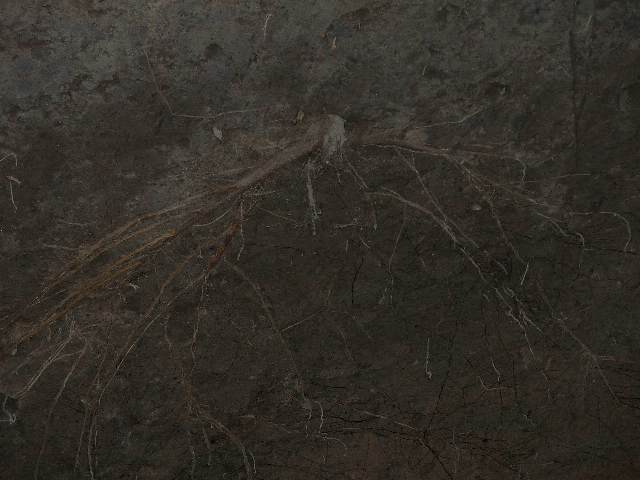
In walking around under a large tree (it still stands outside the excavation) he kept stumbling on what he thought were roots of the tree. Upon further examination he discerned they were round protrusions in the ground. They made almost perfect circles. With a couple of rough brushes with his boot it became apparent that these items were man-made.
The first pottery from up to 5500 to 6500 years ago had been found!
What separates this site from the many in Thailand? It is the first evidence of organized farming in the civilized world. (There is another site in China that makes the same claim and evidently is roughly the same age – the professionals can figure it out at some point as to who is first.) This is truly an amazing find if it turns out that it is the very first site where agriculture was practiced on a somewhat large scale.
There is also evidence of the first known tool making in Asia.
Rice was grown, harvested, stored and used in a continuous fashion for a number of years. Other nomadic tribes had grown rice but since they were nomadic it is not considered part of the establishment of agriculture. Ban Chiang then is the first case of crops being grown for a purpose on a continuing basis.
(There are over 100 sites in Thailand that show excellent examples of Bronze Age and Iron Age artifacts. If you would like more information a great book is Early Cultures of Mainland Southeast Asia by Charles Higham. Lots of photos and illustrations, an excellent resource for amateurs.)
Although there is not much to see at the actual dig there are interesting things to observe. It is obvious, although not necessarily so in the photos, that there are specific delineations and demarcations in the ground that mark different periods in time. One of the more interesting things to me was that I was looking at dirt, rocks, and twigs deposited some 5000 or more years ago. Talk about making one feel small and insignificant.

When people died it was the custom to bury their most prized possessions with them. Pots which were used for storage and cooking, jewelry (necklaces and bracelets) and their tools. In the case of these folks the most prized tool was their rollers, the implement used to embed their designs onto the pottery.
In the photos above you can see the remains of two individuals and the pieces and parts that were found in the immediate area of the body. The number of necklaces that adorn the corpse was an indication of their standing within the community. This village was there for centuries and as such the burial grounds were layered with remains. Once generation being buried on top of another.
I took several pictures of the pits but due to lighting they are somewhat lacking, but will post them anyway.
Most people relate Ban Chiang to its wonderful pottery. Basically a rose on cream painting style that to this day is admired by anyone who sees it. Ban Chiang pottery is in high demand on the world’s art market (black market that is, since it cannot be removed from Thailand). Some pieces have made their way into some of the best museums in the world. Some remain in private hands here in Thailand even though the government would like to gather it all back.
There is a small museum that is located some distance from the wat and the actual dig. The locals will point you in the right direction. As I recall its out on the edge of town. This is one of the finest museums I've visited in Asia. Superbly organized and maintained, you can tell its a work of love by someone. I just hope its standards are maintained for years.
I broke the rules, my bad, but just had to have a few pix of some of the beauty on display there, just for memories' sake.
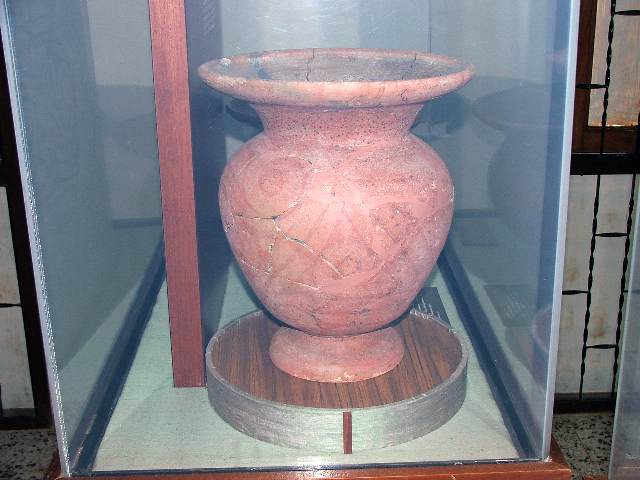
This is a shot of one of the early period pots. As you can see they didn't survive intact in most cases. In fact it was part of the burial ritual to break them so that no other being could put them to use in the afterlife. Very few were recovered in their original state. Only a few that held cherished belongings of the deceased. Those were quickly on their way to major collectors.
Another early example. These photos were taken through the glass cases so there is some obvious reflections. Hell I wasn't even supposed to shoot in the first place.
Another pot from a middle period I believe, only 3000 years old.
This photo shows a the variety of pots and ceramics found. There are also bracelets and necklaces shown and I think one of the rollers. Each individual had their own roller, a cylindrical piece of bone or stone that was used to define their art.
As you can see from these shots the art from 5000+ years ago is truly remarkable.
So, there you have it, a day-trip back to 4000 - 5500 BC. Well worth the effort if your in the Udon area. The museum is very small, basically the size of a decent residential house, but alone, that is worth the day's trip. I hope you check it out.
E. G.
Results 1 to 25 of 27
-
11-04-2008, 10:07 AM #1Thailand Expat



- Join Date
- Dec 2006
- Last Online
- 01-07-2017 @ 03:32 PM
- Location
- Udon Thani
- Posts
- 2,109
A trip to Prehistory - Ban Chiang
"If you can't stand the answer --
Don't ask the question!"
-
11-04-2008, 10:33 AM #2Thailand Expat
- Join Date
- May 2007
- Last Online
- @
- Location
- Ratsima
- Posts
- 3,717
Great stuff. Thanks.
-
11-04-2008, 10:43 AM #3I'm in Jail
- Join Date
- Apr 2007
- Last Online
- 22-11-2011 @ 08:27 AM
- Location
- Christian Country
- Posts
- 15,017
Fantastic, EG. I don't understand the "rollers". Were designs imprinted on them or? Wish I knew of the place before I left Thailand. The museum and exhibits look well maintained. As you said, a labour of love and a bit of help from the World Heritage foundation.
-
11-04-2008, 10:50 AM #4R.I.P.

- Join Date
- Dec 2006
- Last Online
- @
- Location
- ALL GLORY TO THE HYPNOTOAD
- Posts
- 17,114
Isn't there a bit of a furore in the US at the moment over Ban Chiang artifacts? According to Thai law all Ban Chiang artifacts overseas are stolen and the Thai Government started demanding them back from US Museums earlier this year. Back home I collected antiquities and I was offered Ban Chiang artifacts several times by some dealers, all illegal of course.
Edit, two recent news articles about this;
Thai antiquities in U.S. may be stolen | MUSEUM SECURITY NETWORK
Thai antiquities in U.S. may be stolen
5-year investigation has implications for many museums
Jori Finkel, New York Times
Sunday, February 24, 2008
It just might rank as one of the biggest accidental discoveries in
archaeology. In the summer of 1966, a Harvard student named Steve Young was
living in a village in the northeast reaches of Thailand, going door to door
canvassing political opinion for his senior thesis, when he tripped over the
root of a kapok tree. As he hit the ground, he found himself face to face
with some buried pots, their rims exposed by recent monsoons. Intrigued by
the look and feel of the unglazed shards, he knew enough to bring them back
to government officials in Bangkok.
What he had stumbled upon is now viewed as one of the most important
prehistoric settlements in the world. Initially dated as early as 4000 B.C.
- a date since revised amid much controversy to 2000 B.C. or even later -
the so-called Ban Chiang culture is the earliest known Bronze Age site in
Southeast Asia, documenting the early arrival of culture, agriculture and
technology to the region.
Now Ban Chiang is in the news again as a result of a five-year undercover
investigation by three federal agencies. Their examination centers on two
Los Angeles antiquities dealers, Cari and Jonathan Markell, and a
wholesaler, Bob Olson, who, federal agents say, donated Ban Chiang artifacts
to museums at inflated values in a tax fraud scam. Last month, four
California museums - the Los Angeles County Museum of Art, the Bowers Museum
of Art in Santa Ana, the Pacific Asia Museum in Pasadena and the Mingei
International Museum in San Diego - were raided as part of the inquiry.
The investigation could also have broad implications for other museums
across the country. In the affidavits filed to obtain search warrants, the
agents laid the groundwork for a legal argument that virtually all Ban
Chiang material in the United States is stolen property.
In essence, the paperwork states, antiquities that left Thailand after 1961,
when the country enacted its antiquities law, could be considered stolen
under American law. And since Ban Chiang material was not excavated until
well after that date, practically all Ban Chiang material in the United
States could qualify.
Among the many American museums with Ban Chiang artifacts are the
Metropolitan Museum of Art in New York; the Freer and Sackler Galleries in
Washington; the Museum of Fine Arts, Boston; the Cleveland Museum of Art;
the Minneapolis Institute of Arts; and the Asian Art Museum in San
Francisco. And that roster includes only institutions that have published
highlights of their collections online.
"I believe that virtually every big American art museum that collects Asian
art has some Ban Chiang material," said Forrest McGill, chief curator at the
Asian Art Museum. His museum owns 77 Ban Chiang objects, from painted
earthenware bowls to bronze bracelets and stone ax heads. After learning of
the federal investigation, he said, he reviewed these acquisitions - almost
all made before he arrived at the museum in 1997 - for links to the
Markells. He found none.
"We are nervous about everything - been nervous, getting nervous," McGill
said. "It's not as easy as you would think to be up to date and conversant
with different countries' laws and to know which foreign laws the U.S. is
committed to enforcing and which not."
The Freer and Sackler have 56 works, mostly ceramic vessels. The Met has 33
pieces in its holdings, among them vessels, bronze bracelets, bells and
ladles. The Museum of Fine Arts, Boston, has 17, including gray stoneware
pots and beakers and assorted clay rollers. The Cleveland Museum has eight
artifacts, mainly jars. The Minneapolis Institute owns two ceramic jars and
three glass ear ornaments. None of the acquisition records posted online
mention the Markells or Olson. And for sheer volume of material, none of
these museums approaches the Bowers, which has roughly 1,000 artifacts.
But the very specter of "looted goods" can prove a public relations
nightmare for museums, which helps to explain why few curators contacted at
those museums were willing to be interviewed about Ban Chiang artifacts.
Beyond public relations problems are the potential legal difficulties. In
the most extreme example, Marion True, a former antiquities curator at the
J. Paul Getty Museum in Los Angeles, was indicted in Italy on charges of
conspiring to acquire stolen objects for her museum. More generally, U.S.
case law on cultural patrimony is fast evolving, reflecting a growing
awareness that collecting certain objects can encourage looting of
archaeological sites. American museums have thus seen foreign laws that were
long overlooked at home suddenly taken seriously.
In the affidavits supporting the search warrants in the federal
investigation, for example, agents invoke a 1961 Thai law, the Act on
Ancient Monuments, Antiques, Objects of Art and National Museums, stating
that "buried, concealed, or abandoned" objects are "state property" and
cannot legally be removed from Thailand without an official license.
They quote a Thai government official as saying that as far as he knew,
Thailand's Department of Fine Arts "had never given a license to anyone to
take antiquities out of Thailand for private sale."
Then, because a foreign country's law is not necessarily recognized in the
United States, the affidavits cite two federal laws that could give the Thai
statute some teeth, the National Stolen Property Act of 1948 and the
Archaeological Resources Protection Act of 1979.
Of course it's ultimately up to the courts, not federal agents, to determine
what constitutes a violation of American law. And no indictments have been
filed.But Patty Gerstenblith, a DePaul University law professor, said the
affidavits signaled a serious federal interest in Ban Chiang as well as tax
fraud.
"I can't say it's going to be a slam dunk for the government if this reaches
court, but I will say the information in those affidavits is impressive,"
she said. "It was, after all, a five-year investigation. We can as outside
observers draw the conclusion that there is a fairly substantial likelihood
that this Ban Chiang material could be considered stolen property under U.S.
law."
The first major excavations of Ban Chiang began in 1974, led by the
University of Pennsylvania in partnership with a Thai group. Joyce White, a
scientist who now oversees the Ban Chiang project at the university's museum
and is assisting the federal government with the current investigation, was
a graduate student at the time.
She remembers seeing crates of excavated material arriving at the university
on loan from the Thai government. "There were what archaeologists call small
finds - bronze bracelets, clay rollers and so on," she said. "And then there
were bags and bags and bags of broken pottery." (Some research material
remains at the museum on long-term loan.)
By the 1980s, Ban Chiang material was flooding the international market.
"I'm told that some 40,000 pots have come out of Ban Chiang, excavated from
the site," said Young, the former Harvard student, in a telephone interview
in which he confirmed the details of his discovery, down to the bruises from
his fall. The son of a former American ambassador to Thailand, he said he
never collected the work himself out of concern for his family's reputation
and now owns only one pot, a gift from a Thai princess.
Other collectors did amass the material, however, especially in the 1980s
and '90s. The objects were abundant and, by comparison with other
antiquities, cheap - typically under $1,000. It was mainly during this time
that leading American museums secured donations and, to a lesser extent,
made acquisitions to help fill gaps in their Southeast Asian collections.
Museums have in the past argued that they were safeguarding objects already
on the open market. But many archaeologists find the collecting of such
artifacts distressing because it removes objects from their original,
information-rich context. "It destroys the archaeological record," White
said. "It's shameful really, a destruction of knowledge."
Increasingly sensitized to those concerns, many museum curators now say they
wouldn't touch the stuff even if offered by their most prestigious donors.
"We would turn it down," said Robert Jacobsen, chairman of the Asian art
department at the Minneapolis Institute of Arts, "and not just because of
the investigation in California, but because times have changed. There's a
moral basis here."
Asked whether his museum would consider repatriation, Jacobsen said: "When
we acquired or were given these works, and I think I speak for all museums
here, we did not think of them as illegal. But if it comes to pass that
legislation declares this material illegal, we would simply return it."
McGill in San Francisco also said he would take any claims "very seriously,"
while noting that the Thai government has never contacted him for the
museum's Ban Chiang artifacts, despite a history of collaboration. "We did a
big exhibition borrowed from Thailand two years ago," he noted, "and the
director of the National Museum in Bangkok was at our museum several times."
Still, he said, he is watching closely to see how the federal investigation
unfolds.
So are legal experts in cultural patrimony. Gerstenblith said the inquiry
could lead to criminal trials or civil forfeiture proceedings. In the
meantime, she is urging all museums, "for ethical if not legal" reasons, to
review their Ban Chiang objects. "When they accepted those donations, what
kind of documentation did they ask for? Where did the pieces come from?"
Stephen K. Urice, a professor at the University of Miami School of Law, said
the legal issues are far from cut and dried.
He pointed out that the National Stolen Property Act of 1948 applies only to
property valued above $5,000 and that federal courts had not yet upheld the
application of the Archaeological Resources Protection Act to foreign
antiquities. He also cited a precedent established by a 2003 federal
appellate court decision against the antiquities dealer Frederick Schultz,
which puts a burden on the foreign government to show that it enforces its
own property statute.
Imagine "you have this vast body of archaeological material over which
another government has waved its wand and said it's ours," Urice said, "but
they have not done anything more than that to protect it. Under those
circumstances, there is an open question as to whether the U.S. would treat
it as stolen."
As for the next steps in the federal investigation, Urice is not placing any
bets.
"The whole thing could be dropped altogether because of insufficient
evidence or because they are feeling weak about their legal theories," he
said, "or this could move forward into an important, precedent-setting
case."
Ban Chiang smugglers busted
The Fine Arts Department has sought an investigation to establish if stolen artefacts uncovered following a crackdown in the United States belonged to the ancient Ban Chiang period.
Published on January 28, 2008
Bangkok's Independent Newspaper
US authorities raided four museums in southern California last week, breaking an illegal network smuggling the items into the US.
The department wants the artefacts returned to the King-dom if they were found to be from Ban Chiang, the oldest known civilisation in the King-dom, which dates back to 1,000 BC.
Fine Arts Department director Kriangkrai Sampatchalit wanted clear proof about the artefacts. "We would ask Unesco's International Council of Museums to check whether they are genuine objects. If they are real we would provide historical evidence to prove they belong to Thailand," he said by phone yesterday.
Dozens of US federal agents descended on the Los Angeles County Museum of Art, Pasa-dena's Pacific Asia Museum, Bowers Museum in Santa Ana and Mingei International Museum in San Diego.
The raids marked the first public move in a five-year undercover probe of the alleged smuggling network, The Los Angeles Time reported on Friday.
The detailed warrants gave agents broad authority to search the museums' galleries, offices, storage areas and computer archives.
They were looking for objects and records related to the primary targets of the investigation: an alleged art smuggler, Robert Olson, and the owner of a Los Angeles Asian art gallery, Jonathan Markell.
Markell's Silk Roads Gallery on La Brea Avenue was also raided.
No arrests were made, but legal experts say the surprise search warrants suggest prosecutors are collecting the final elements to seek criminal indictments against Markell and Olson, the paper said.
Many objects come from the ancient civilisation of Ban Chiang, which occupied northeastern Thailand from 1000 BC to 200 AD.
"The original location where the Ban Chiang culture was discovered was named a World Heritage Site in 1992 and is considered the most important pre-historic settlement yet discovered in Southeast Asia," the search warrants said.
The warrants allege that the Ban Chiang objects are probably looted because they were first excavated by archaeologists in 1967, six years after Thailand banned the export of antiquities.
The Thai government never gave permission for the contested antiquities to leave the country.
Moreover, importing such objects into the US after 1979 was a violation of the US National Stolen Property Act and the Archaeological Resource Protection Act, the warrants state.
Other objects named in the warrants came from Burma, from which the US has banned imports since 2003, and China, which has strict export laws governing its antiquities.
The investigation began in 2003, when the undercover agent with the National Park Service posed as a buyer and began purchasing allegedly looted art from Olson, according to the warrants. Olson, the warrants say, specialises in Native American and Thai antiquities.
Olson allegedly told the agent he had been importing objects from Ban Chiang since the 1980s and had never received a permit from the Thai government. He said he got objects "as they were being dug up" and knew it was illegal to ship them out of the country, the warrants say.
The smuggled antiquities were affixed with "Made in Thailand" labels, and sometimes painted over to make them look to US customs officials like modern replicas, Olson allegedly told the agent.
Mayuree Sukyingcharoenwong
Los Angeles Times
The NationLast edited by DrB0b; 11-04-2008 at 10:59 AM.
The Above Post May Contain Strong Language, Flashing Lights, or Violent Scenes.
-
11-04-2008, 10:57 AM #5Thailand Expat

- Join Date
- Feb 2008
- Last Online
- 11-11-2018 @ 05:44 PM
- Location
- Klong Samwa
- Posts
- 15,308
I've heard it said that bronze was being made there before China.
-
11-04-2008, 11:11 AM #6RIP

- Join Date
- Jul 2005
- Last Online
- @
- Location
- Nonthaburi
- Posts
- 4,382
Thanks EG: from DB's article and your piccies it seems you could see more examples of their pottery in the US than at the actual site...a sad commentary on the state of the world...
as always, thanks for the effort to post all of this...
-
11-04-2008, 12:11 PM #7Thailand Expat
- Join Date
- Dec 2006
- Last Online
- 01-07-2017 @ 03:32 PM
- Location
- Udon Thani
- Posts
- 2,109
Jet google 'ban chiang roller' you'll find them on E bay... lol Originally Posted by Jet Gorgon

They were basically used to implant parallel designs on the pottery which was then painted. See the first pic above and you can easily see the imprints.
E. G.
-
11-04-2008, 12:18 PM #8Thailand Expat

- Join Date
- Apr 2006
- Last Online
- 29-02-2012 @ 08:44 PM
- Posts
- 3,539
I've visited this place 12 years ago, very interesting unknown aspect of the thi history.
-
11-04-2008, 12:28 PM #9Thailand Expat
- Join Date
- Dec 2006
- Last Online
- 01-07-2017 @ 03:32 PM
- Location
- Udon Thani
- Posts
- 2,109
In regard to Ban Chiang artifacts:
I am not positive but do think this is the only excavation of any scale in the immediate area. I'm not a professional but have checked a couple of books and don't find any others specifically in Ban Chiang.
I photographed about 60 % of the pit and would estimate that the total volume excavated to be approximately 80 t0 100 cubic meters. Now considering that it was not all solidly packed with relics I'm not so sure that "thousands" or "0000s" of relics have been illegally taken out of the country.
It is my personal opinion that a great percentage of these are fakes. TIT you know!
A lot of museums may be on the brink of serious damage to their reputation if it all comes out that a large portion of "Ban Chiang" pottery is faked.
Ban Chiang is considered a major civilization and did spread beyond that specific site. It probably encompassed several hundred square miles. There are other sites in the region but none classified as Ban Chiang. I would imagine that pottery and tools were pretty similar across the region.
As Ban Chiang was/is the recognized center it would seem that any pottery similar to that discovered would be labeled as Ban Chiang for monetary purposes. Who would by pottery from Somchai's backyard dig???????
You can actually buy very nice re-creations across the street from the museum. The pottery/soil mixture is unique to the area apparently. Not knowing much about pottery I can't say whether its true or not.
And yes bronze was used extensively there, somewhere in the book mentioned above ,they talk about the 'mines' etc. and the methods of making the 'tools'.
Not sure about the writer's assertion in the article above about the dates being revised, I have not seen anything on that. The book did mention that the dating process was done by carbon dating and the relevant time period was 4 - 6 thousand years BC.
E. G.
-
11-04-2008, 12:33 PM #10Thailand Expat
- Join Date
- Feb 2008
- Last Online
- 11-11-2018 @ 05:44 PM
- Location
- Klong Samwa
- Posts
- 15,308
the strange thing is that bronze gave rise to city states in China, but At Ban Chiang you only see villages.
Why?
-
11-04-2008, 12:40 PM #11I'm in Jail
- Join Date
- Apr 2007
- Last Online
- 22-11-2011 @ 08:27 AM
- Location
- Christian Country
- Posts
- 15,017
I have seen these designs before. The top seems real, but the bottom ceramic jobbies look like fakes (too perfect and no weathering). Must be many more to find there. Hope it's not looted. Originally Posted by El Gibbon
-
11-04-2008, 12:56 PM #12Thailand Expat
- Join Date
- Feb 2006
- Last Online
- @
- Posts
- 40,667
I wonder if even the Chinese were that advanced in pottery making 5000 years ago?
-
11-04-2008, 12:58 PM #13R.I.P.
- Join Date
- Dec 2006
- Last Online
- @
- Location
- ALL GLORY TO THE HYPNOTOAD
- Posts
- 17,114
Sadly Ban Chiang has been severely looted, thousands of artifacts have been stolen, that's one reason there are so few large pieces in the museum. So much has been taken that for long while the prices for artifacts on the international antiquities market were ridiculously low, a small item in bad condition sold for as little as 30USD while the big ones in good condition were in the 3,000USD range, compare this to the price for similar genuine artifacts from ancient Greece or China (to take just two examples). Most of the looting was done in the early days, shortly after the discovery of the site, and the Thai government now says that looting has stopped. The Education Department has tried to teach the villagers that international tourism will bring them more money than looting. Most of the site is still unexcavated and it may be that the looting, although large-scale, won't have much of an impact on what we can learn from the site. Originally Posted by Jet Gorgon
-
11-04-2008, 04:59 PM #14Thailand Expat
- Join Date
- Dec 2006
- Last Online
- 01-07-2017 @ 03:32 PM
- Location
- Udon Thani
- Posts
- 2,109
The bottom shot does seem to show more intact pieces, however that is due to the lighting inside the case and the resultant glare masking the imperfections. These were also re-assembled and are the best examples of that type of work. IF you go you will be able to see where the pieces were fit into the puzzle. Originally Posted by Jet Gorgon
Actually a remarkable exercise in rehabilitation considering that it was mostly done by Thai and U Penn students. That was real on-the-job-training.
E. G.
-
11-04-2008, 05:03 PM #15Thailand Expat
- Join Date
- Dec 2006
- Last Online
- 01-07-2017 @ 03:32 PM
- Location
- Udon Thani
- Posts
- 2,109
As I mentioned in a previous post, Ban Chiang was the center of a large population base. Not sure if it would be classified as a city state but it did encompass a rather large area. The reason for its demise isn't certain but one "possible" explanation is drought. Originally Posted by good2bhappy
The area could and did support rice farming but ceased to do so. It seems at least plausible that the weather had an effect.
E. G.
-
11-04-2008, 05:08 PM #16Thailand Expat
- Join Date
- Dec 2006
- Last Online
- 01-07-2017 @ 03:32 PM
- Location
- Udon Thani
- Posts
- 2,109
I'm not sure where I got this information so don't hold me to it. But learned/was told that the actual site may encompass hundreds and hundreds of meters of the surrounding surface area.
The temple grounds, surrounding streets and houses would cover most of the area. It is impractical to do much more excavation until the research is exhausted on the data a bits and pieces that were recovered. IT AIN"T GOIN ANYWHERE.
The surface area of the current excavation is only about 35 or 40 sq. meters, and they aren't even sure if its the "center" of the site.
E. G.
-
12-04-2008, 12:20 AM #17I'm in Jail
- Join Date
- Apr 2007
- Last Online
- 22-11-2011 @ 08:27 AM
- Location
- Christian Country
- Posts
- 15,017
Thanks for all the info. I love "discovery" stuff. I'm still trying to remember where I have seen similar designs. Perhaps they were picked up by craftsmen, as I'm sure I got a small vase with the whorl designs for my Sis. Obviously a knock off, but blast if I can remember where. Maybe Chiang Mai.
Last edited by Jet Gorgon; 12-04-2008 at 05:46 AM.
-
12-04-2008, 05:07 AM #18Thailand Expat

- Join Date
- Dec 2006
- Last Online
- 21-07-2019 @ 04:40 PM
- Location
- Yorkshire
- Posts
- 4,064
Very interesting thread EG.
-
12-04-2008, 11:21 AM #19I'm in Jail
- Join Date
- Oct 2007
- Last Online
- 26-06-2015 @ 01:33 AM
- Location
- โรงแรมม่านรูด
- Posts
- 4,285
Very good and interesting post EG. How is life in Samut Prakarn, hope you all are well and keeping Taiboon’s pockets filled with baht.
-
13-04-2008, 03:46 PM #20Thailand Expat
- Join Date
- Jun 2006
- Last Online
- @
- Location
- Melbourne
- Posts
- 5,695
Great educational thread, EG. Have some green.
-
15-04-2008, 12:51 AM #21Member
- Join Date
- Mar 2008
- Last Online
- 24-10-2012 @ 07:52 PM
- Posts
- 150
Interesting thanks,will visit
-
20-04-2008, 05:41 PM #22Thailand Expat

- Join Date
- Jun 2005
- Last Online
- 08-09-2014 @ 10:43 AM
- Location
- Simian Islands
- Posts
- 34,807
If it's anything like Ayutthaya, it's the Fine Arts Dept who are the main culprits in removing precious objects from the site. Originally Posted by DrB0b
-
20-04-2008, 11:53 PM #23សុខសប្បាយ

- Join Date
- Oct 2007
- Last Online
- 11-12-2009 @ 11:23 PM
- Location
- 75 clicks above the Do Lung bridge
- Posts
- 6,659
The first pottery can be traced back to either the Grooved Ware Peoples and some of it is estimated to be 30,000 years old (if you believe Masons) or the Jomon examples from Japan which are estimated to be 10,000 years old. Originally Posted by El Gibbon
The Thais would love to believe that but the first organised farming took place in what is now Israel and the West Bank. Originally Posted by El Gibbon
Mortals you defy the Gods, I sentence you to travel among unknown stars, until you find the Kingdom of Hades, your bodies will stay as lifeless as stone.
-
21-04-2008, 10:27 AM #24Thailand Expat
- Join Date
- Jun 2005
- Last Online
- 08-09-2014 @ 10:43 AM
- Location
- Simian Islands
- Posts
- 34,807
I read that there is a site in Africa which is older. Originally Posted by EmperorTud
-
21-04-2008, 10:48 AM #25Thailand Expat
- Join Date
- Dec 2006
- Last Online
- 01-07-2017 @ 03:32 PM
- Location
- Udon Thani
- Posts
- 2,109
Originally Posted by EmperorTud
Picky, picky
My references were not Thai but the University of Penn. which has a renowned archeology department.
That's what I get for not using direct quotes from the research. Too old and memory is quitting on me. However, it doesn't detract from the pleasure of being there and seeing it.
It is interesting that the last Ice Age period is regularly accepted as the beginning of 'our' civilization by many of us. Yet, there is specific evidence of prehistory peoples from many years (eons?) prior. Underworld is a fine example of some of the research going on. BTW one of the sites not accessible to them during the writing of the book was verified with the Tsunami of -04, when remains of an old temple/buildings were sited on the South East coast of India as the waters receded prior to the wave.
E. G.






 Reply With Quote
Thread Information
Users Browsing this Thread
There are currently 1 users browsing this thread. (0 members and 1 guests)
