

Any product from Fukushima is going to be contaminated by radioactivity.
The "safe" level of contamination is an estimate determined by scientists. It does not mean that testing is done according to strict guidelines. Take the case of ground level tests for radiation at the Daiichi plant, where clean top soil was used to replace contaminated soil. then tests taken to "prove" that radiation levels were within acceptable limits.
There are no contamination free products in Fukushima or its environs.
I also think that greedy Thai businessmen will buy the peaches cheap as they'd otherwise be dumped.
The Japs don't want them, they know the peaches are contaminated, and they know that their government is lying to them.
Results 1,676 to 1,700 of 1738
Thread: Japan Earthquake: Fukushima
-
12-08-2012, 02:11 PM #1676god


- Join Date
- Nov 2006
- Last Online
- @
- Location
- Bangladesh
- Posts
- 28,207
“Is it not written in your Law, ‘I said, you are gods’? John 10:34.
-
14-09-2012, 12:39 PM #1677god
- Join Date
- Nov 2006
- Last Online
- @
- Location
- Bangladesh
- Posts
- 28,207
Japan to abandon Nuclear Power by 2030.
Eighteen months after an earthquake and tsunami caused the Fukushima reactor to break down and spew radioactive contamination reaching most of SE Asia and Ameirca, a decision has been made to cease nuclear energy production in Japan.
Japan to abandon nuclear power by 2030
Last updated 16:56 14/09/2012
Asia Britain considers earlier withdraw from Afghanistan Murder inquiry over factory fire deaths Sister-in-law of Pol Pot 'unfit for trial' Baby heals as plans made to farewell grandmother More than 270 killed in Pakistan factory fires China sends patrol ships to disputed isles Company offered free sex with car washes Indian cartoonist jailed for corruption drawings Bus veers off road, kills 27 China no-shows down to injury
Japan is expected to propose abandoning nuclear power by the 2030s, a major shift from policy goals set before last year's Fukushima disaster that aimed to increase the share of atomic energy to more than half of electricity supply.
But Prime Minister Yoshihiko Noda's unpopular government, which could face an election this year, also looks set to call in the meantime for the restart of reactors idled after the 2011 disaster if they are deemed safe by a new atomic regulator.
Japan's growing anti-nuclear movement, which wants an immediate end to atomic power, is certain to oppose any such proposal to secure electricity supplies.
A shift from nuclear means Japan should seal its position as the world's biggest importer of liquefied natural gas (LNG) and third-largest purchaser of oil to feed its power stations.
The government estimated last week it will need to spend about 3.1 trillion yen more on fuel imports a year if it abandons nuclear power immediately.
Japan's hunger for energy has helped sustain an investment boom in gas projects from Australia to new export terminals in the United States, where a shale gas revolution is in full swing. LNG prices also soared earlier this year as Japan scoured the world for supplies.
Japanese ministers were due to meet on Friday afternoon (local time) and media said a decision was expected then with the cabinet likely to sign off on the new energy policy as early as next week.
A new policy would comes 18 months after a March 2011 earthquake and tsunami devastated Tokyo Electric Power Co's Fukushima Daiichi plant, triggering meltdowns, spewing radiation and forcing some 160,000 people to flee.
The new strategy, which would strictly apply a rule limiting the operation of reactors to 40 years, will also call for a push to reduce energy consumption by raising efficiency but leaves unclear the fate of Japan's troubled programme to reprocess nuclear waste, according to a source familiar with a draft.
Read more;Japan's Nuclear Disaster: Report 'Blamed Japanese... | Stuff.co.nz
-
16-09-2012, 02:44 AM #1678god
- Join Date
- Nov 2006
- Last Online
- @
- Location
- Bangladesh
- Posts
- 28,207
In this latest announcement on nuclear policy, the incumbent Democrat government, led by unpopular PM Yoshida Noda, of Japan have announced the phasing out of nuclear power by 2040.
This appears to be an attempt to appease both the anti-nuclear lobby and the powerful business group, Keidanren, which warns of energy shortfalls and loss of profits if nuclear energy is phased out.
Japan Sets Policy to Phase Out Nuclear Power Plants by 2040
Published: September 14, 2012
Protesters unhappy with Japan’s nuclear energy policy chanted slogans outside Prime Minister Yoshihiko Noda’s official residence in Tokyo on Friday.
TOKYO — Japan said Friday that it would seek to phase out nuclear power by 2040 — a historic shift for a country that has long staked its future on such energy, but one that falls far short of the decisive steps the government had promised in the wake of the world’s second-largest nuclear plant disaster last year.
While important for setting a tone, the announced strategy is subject to vast change, not only because of the long lead time, but also because the unpopular prime minister, Yoshihiko Noda, and his governing Democratic Party are likely to lose the next national election, which could be called within the next several months.unreachable,” according to its chairman, Hiromasa Yonekura.
With the long-term energy plan set, the political battle is set to refocus on the struggle by the government to build consensus for reopening the vast majority of the country’s reactors, which were idled after the nuclear catastrophe, amid public opposition to restarts until better safety regulations were in place.
The government has sought repeatedly to regain the public’s trust, most recently by scrapping its former nuclear regulatory agency and creating a new one. But that plan has already come under fire, with criticism focusing on Shunichi Tanaka, the head of a committee that would set nuclear policy and retain oversight over the new agency and its leadership. Mr. Tanaka is considered suspect by those who favor tighter regulation because he helped lead a former government commission tasked with building a strong nuclear industry — raising fears that the new regulator will be as lax as the old.
In announcing the energy plan, Motohisa Furukawa, the minister of state for national policy, said there was no change to the government’s quest to restart those reactors. And although the long-term plan stipulates that no new reactors will be built, it leaves open the possibility that seven reactors at varying stages of construction could be activated. That decision would be left up to the new nuclear committee headed by Mr. Tanaka.
And although the government said reactors would be closed after life spans of 40 years, it also said that exemptions could be granted, suggesting that the 2040 deadline was flexible. (By comparison, Germany, which in 2010 relied on reactors for 26 percent of its electricity, was rattled enough by the Fukushima disaster to announce a move away from nuclear power by 2022.)
At an unusually lively news conference, seemingly exasperated reporters pressed for whether any firm decisions had been made. One reporter for a Japanese newspaper suggested that if reactors under construction are allowed to come on line and get exemptions for operating more than 40 years, “then we could still have reactors running in the 2070s.” Mr. Furukawa did not dispute that possibility.
If idled reactors were permanently closed this year, power companies would be hit with losses totaling $55.9 billion, making at least four of the utilities insolvent, according to the government’s Agency for Natural Resources and Energy. Because the industry is tightly regulated, allowing almost no competition, the country relies on those power companies and can ill afford to have them go bankrupt.
The 2040 time frame would allow most of the existing reactors to live out their 40-year life span, heading off costly losses for their operators. Japanese utilities have already been saddled with the huge costs of buying oil and natural gas to meet the nuclear shortfall since the reactors were taken offline, a burden that would be alleviated once their reactors are restarted.
With only two reactors operating, Japan struggled through a sweltering summer after parts of the country were asked to conserve electricity use by as much as 15 percent, the second year such requests were made. Power companies fired up old gas- and oil-powered stations and scrambled to secure imported fossil fuels.
Despite fears of widespread blackouts, however, none materialized, strengthening nuclear critics’ argument that Japan could do without nuclear energy.
But the Keidanren business federation and others have insisted that the higher energy costs are crippling the country’s economy. Tokyo Electric, Japan’s largest utility and the operator of the Fukushima Daiichi plant, has increased rates for both homes (an average of more than 8 percent) and businesses (an average of about 15 percent).
Businesss leaders warn that such costs will prompt more companies to move their operations overseas. And costly fuel imports already contributed last year to Japan’s first annual trade deficit in more than 30 years and made the nation more dependent on oil and natural gas from the volatile Middle East and Russia.
Whatever its choices, Japan is set to significantly increase its investment in clean energy sources, in part to avoid enlarging its carbon footprint.
The balancing act that the government is attempting with its new energy policy made little impression on the antinuclear protesters who now gather every Friday night in Tokyo.
Many had expected the government to at least phase out the reactors by 2030, a date that had initially been discussed, and some were angry that the time frame was at least a decade longer.
“They’re ignoring the terror that many of us feel toward nuclear power,” said Kumi Tomiyasu, an employee at a Tokyo-based printing company who attended a rally in front of the prime minister’s office on Friday. “By sticking with nuclear for so long, the government has put the interests of power companies and big business above those of the Japanese people.”
http://www.nytimes.com/2012/09/15/wo...oc.semityn.www
-
30-12-2012, 06:44 PM #1679Thailand Expat



- Join Date
- Aug 2007
- Last Online
- @
- Posts
- 1,405
US sailors sue Japanese utility over radiation
Dec 29, 2012
SAN DIEGO (AP) — Eight U.S. sailors are suing the Tokyo utility that operates the Fukushima nuclear power plant, charging that the company lied about the high level of radiation in the area where they were carrying out a humanitarian mission after the tsunami that triggered the reactor crisis.
The lawsuit was filed in U.S. District Court in San Diego last week against Tokyo Electric Power Co., which is owned by the Japanese government. Plaintiffs include the infant daughter of two of the sailors who was born seven months after the March 2011 disaster.
The sailors served on the San Diego-based aircraft carrier USS Ronald Reagan, which was carrying out “Operation Tomadachi” ferrying food and water to citizens in the city of Sendai in the wake of the earthquake and tsunami.
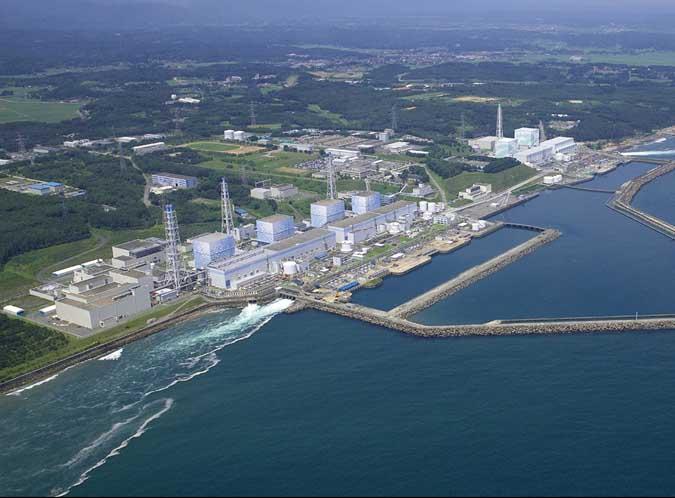
The Fukushima power plant seen before the devastating tsunami struck. Pic: AP.
The sailors claim the Japanese government repeatedly said there was no danger to the carrier crew “all the while lying through their teeth about the reactor meltdowns” so rescuers would “rush into an unsafe area.”
The U.S. Navy, the suit said, relied on information from the Japanese government, which only belatedly admitted that radiation had leaked into the atmosphere from the damaged power plant.
An email seeking response from the utility’s corporate office in Tokyo was not immediately returned.
The 37-page suit, which cites numerous reports about the Fukushima crisis and response, said that after discovering the truth of how much radiation they were exposed to, the sailors have undergone extensive medical testing and will be required to undergo periodic examination in the future.
They say they are at risk for developing cancer and a shorter life expectancy, and are undergoing considerable mental anguish as a result.
The sailors are suing for more than $100 million in damages.
asiancorrespondent.com
-
30-12-2012, 07:12 PM #1680Thailand Expat

- Join Date
- Nov 2006
- Last Online
- @
- Posts
- 22,839
So the American army dont carry their own geiger counters when entering a potential radioactive zone.
They should be suing their own government.
-
30-12-2012, 07:37 PM #1681Pronce. PH said so AGAIN!

- Join Date
- Jul 2009
- Last Online
- @
- Location
- Behind a slipping mask of sanity in Phuket.
- Posts
- 9,081
It's Navy Originally Posted by taxexile
Isn't a potentially shorter life expectancy kind of one of the occupational hazards of being in the military? Originally Posted by Mid
-
01-01-2013, 11:33 AM #1682Thailand Expat
- Join Date
- Aug 2007
- Last Online
- @
- Posts
- 1,405
Increased obesity rates among Fukushima kids
Graham Land
Dec 29, 2012
Nearly two years after an earthquake and tsunami resulted in the second worst nuclear accident in history, Fukushima is still grabbing headlines around the world. Meanwhile, local residents are still suffering from the aftermath.
A nationwide health survey of Japan’s school children has revealed that Fukushima prefecture has the highest rates of obesity for kids aged 5-9 and the second highest for those aged 10 and 11. A local official for Fukushima’s board of education ascribes this downturn in health to the disruption in the lives of the children resulting from the disaster. Children housed in shelters have suffered more stress and had less opportunities to play outside, meaning they haven’t gotten enough exercise. Half of the primary schools in the prefecture also limited outdoor play due to concerns about radiation.
From The Daily Yomiuri:In comparison with figures from the 2010 academic year, the prefecture’s rate of 6-year-old obese boys increased to 11.4 percent, the highest observed, from 6.2 percent, or ninth place just two years ago. The age group containing 8-year-old girls in the prefecture also showed the highest obesity rates, standing at 14.61 percent–nearly double the 8.1 percent recorded in 2010, or 17th in the rankings.Obese children are defined as weighing 20 percent more than “standard” weights according to age and height. Five-year-olds in Fukushima had more than double the rates of the national average, according to the Asahi Shimbun. The paper also states that the obesity rates of 14 and 17-year-olds in Fukushima are the highest in Japan.

Fukushima Clean-Up,
pic: Hajime Nakano (Flickr CC)
In a related story, Fukushima victims have banded together to state their grievances with the Japanese government in the form of a non-binding human rights declaration. Many residents feel that they have been treated unfairly and denied information. Many also continue to feel unsafe.
From the declaration, as quoted in the Asahi Shimbun:We want Fukushima to return to the way it was, where we can eat tasty rice, vegetables, fruit, fish and meat without the slightest fear.Meanwhile, on the other side of the Pacific, California residents have been spotting “Fukushima debris”. There have been around 1,400 sightings reported to the National Oceanic and Atmospheric Administration, but only 17 pieces of debris have actually been traced by the NOAA. News reports of a football and a crate containing a motorcycle (both found in Canada) have fueled a bit of tsunami debris fever in the Golden State, alongside some fears of contamination.
Read more on that story in Russia Today.
asiancorrespondent.com
-
06-03-2013, 05:19 PM #1683Thailand Expat
- Join Date
- Aug 2007
- Last Online
- @
- Posts
- 1,405
Japan’s ‘Long War’ to Shut Down Fukushima
KIYOSHI TAKENAKA and JAMES TOPHAM
Writing and additional reporting by Linda Sieg and Aaron Sheldrick; additional reporting by Maki Shiraki
March 6, 2013
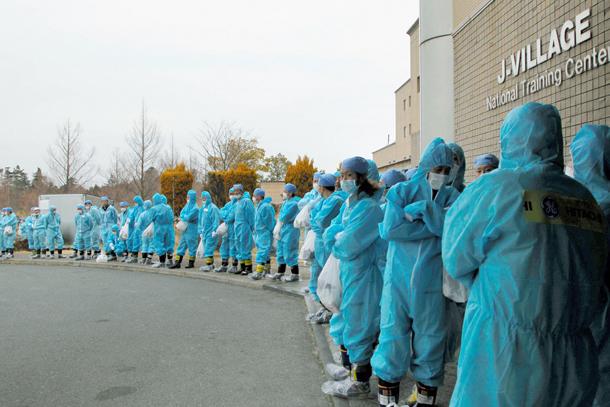
Workers wait for transportation to the tsunami-crippled Fukushima Daiichi nuclear power plant at J-Village near the plant in Fukushima Prefecture. (Photo: Reuters)
TOKYO — Just months after Quince was deployed to inspect Japan’s tsunami-devastated Fukushima Daiichi nuclear plant, the $6 million robot got trapped in its dark and winding pathways.
Seventeen months later, the high-tech soldier is still missing in action—a symbol of a daunting decommissioning project that will take decades, require huge injections of human and financial capital and rely on yet-to-be developed technologies.
“It’s like going to war with bamboo sticks,” said Takuya Hattori, president of the Japan Atomic Industrial Forum and a 36-year veteran of Fukushima plant operator Tokyo Electric Power Co, known as Tepco.
The war began after a massive 9.0 magnitude earthquake struck northeast Japan on March 11, 2011, triggering a huge tsunami. Walls of water 13 meters (43 feet) high smashed into the Fukushima plant north of Tokyo, knocking out its main power supply, destroying backup generators and disabling the cooling system. Three reactors melted down as a series of hydrogen explosions rocked the plant.
In the ensuing weeks, hundreds of Japanese workers and soldiers battled to contain the crisis. Their arsenal of weapons was often improvised, low-tech and underpowered. Helicopters dumped buckets of water over the plant to cool it. Electricians laid a cable to connect the plant to a power source miles away in what may have been the world’s longest extension cord.
The world’s worst nuclear disaster since Chernobyl a quarter century earlier called into question Japan’s vaunted reputation for bureaucratic competence and leading edge technology.
The reactors were declared to be in a stable state called cold-shut down in December 2011. But now Japan faces an unprecedented clean-up that experts say could cost at least $100 billion for decommissioning the reactors and another $400 billion for compensating victims and decontaminating areas outside the plant.
Tepco said in November the costs of compensation to residents and decontamination of their neighborhoods might double to 10 trillion yen ($107 billion) from a previous estimate. That did not include a forecast for decommissioning.
Two years after the disaster, cleanup of communities around the plant is haphazard. Much of the work has been handed to Japanese construction companies with little relevant experience. Townships around the plant say the cleanup is behind schedule, while contaminated dirt, leaves and rubble removed by cleaning crews pile up all over Fukushima with no government decision in sight over its final storage space.
The Japan Center for Economic Research, a Tokyo-based think tank, has estimated that decontamination costs alone in the Fukushima residential area could balloon to as much as $600 billion.
Shutting down the 40-year-old Fukushima plant itself poses unique challenges. A Tepco-government roadmap envisages starting to extract spent fuel from the most badly damaged of the station’s seven storage pools, which contain 11,417 new and used fuel assemblies, only later this year. Melted fuel debris is to be removed from the reactors from 2021 and the entire project wrapped up within 30 to 40 years.
Officials say the project is mostly on schedule and Prime Minister Shinzo Abe’s government wants to speed up the timetable. Experts, however, say it may already be too ambitious.
“It’s a pipe dream,” Michio Ishikawa said of the four-decade target shortly before he retired last year as chief adviser at the Japan Nuclear Technology Institute, adding it could take decades more.
Reuters reporters visited the plant three times since February 2012 and interviewed dozens of experts, officials, engineers, workers and industry executives to compile the first comprehensive report on the decommissioning project.
Many of those interviewed expressed serious concerns about a lack of vital technology, a potential labour shortage and the vast amount of funds Japan’s heavily indebted government will need to spend.
At the leafy campus of Chiba Institute of Technology’s Future Robotics Technology Center east of Tokyo—nerve center for Fukushima robotics projects—students and engineers are working flat out to create machines to go where none has gone before.
Some nap on make-shift beds surrounded by robot parts at the Center’s airy loft-like building while others slurp noodles as they stare at computer screens or fiddle with smartphones.
A slim 20-something research scientist uses a simple joystick to make an advanced version of the lost Quince robot climb stairs, turn around in a narrow landing, and descend.
Quince was first deployed in June 2011 and was carrying out a survey of one of the reactors when the operators lost contact with the machine later that October. Attempts to retrieve the robot have failed, though developers conjecture one day they will find Quince and it could give them valuable information about the effects of prolonged radiation on electronics.
The new version, called “Sakura” or Cherry Blossom, can navigate narrower spaces and, unlike its predecessor, plug into a battery charging station on its own.
Technology, however, must still be developed to accomplish even the most basic first step—the ability to find and repair leaks in the reactors and fill them with water to shield human workers from high radiation emitted by the debris.
“It’s like the fog of war,” said John Raymont, president of US-based Kurion Inc, which supplied a water treatment system briefly used to filter contaminated water at the plant. “They are only now getting to know what the problem looks like.”
So far, Tepco has only managed to insert remote controlled cameras, similar to endoscopes, into outer vessels of the reactors. The effort has obtained little useful data on the fuel debris, a vital first step before technology to remove it can be developed.
One potential device being considered is a fish-like swimming robot that would glide inside the doughnut-shaped suppression chambers filled with water to create detailed maps.
A key reason for the belated effort to develop such technology was Japan’s reluctance to acknowledge the possibility of atomic disasters. Doing so would have contradicted a decades-old myth of nuclear safety. Robots developed after a 1999 nuclear accident at Tokaimura near Tokyo ended up in science museums after research was abandoned.
“The government didn’t spend more money after that to develop robots. That’s because people were obviously going to ask, ‘Wait, is there going to be a situation so dangerous that humans can’t enter the plant?’,” said Eiji Koyanagi, vice director of the Future Robotics Technology Center.
The first robots into the plant were US-made Packbots, which were deployed just after the disaster to enter areas heavy with radiation.
Tepco’s most immediate challenge is to remove spent fuel from pools at the plant, starting with reactor No.4, where more than 1,500 rods rest inside a pool that was exposed to the atmosphere after an explosion blew off the top of the unit’s building.
Debris from the top of the reactor building, where radiation levels are too high for humans, has had to be removed painstakingly using cranes and other lifting equipment to get to the spent fuel pool.
That project has a special sense of urgency given concerns another big quake could further damage the building, although Tepco says the structure was reinforced to withstand shaking as intense as in the March 2011 quake.
Another fraught task is to treat and store the contaminated water that results from cooling the reactors to keep them in a stable state at below 100 degrees Celsius. The contaminated water is flooding reactor building basements and threatening to seep into the ocean and groundwater.
Fukushima Daiichi plant sits like a carbuncle on Japan’s northeast coast 240 km (150 miles) from Tokyo. Its damaged reactors still seep radiation, although at a rate of 10 million Becquerel per hour for cesium versus about 800 trillion right after the disaster.
Becquerel per hour measures the amount of radiation emitted or the rate of radioactive decay. As atomic isotopes decay, they spin off energized particles that can penetrate human organs and damage human cells, potentially causing cancer. To minimize the dangers to human health from radiation, the government is enforcing a 20-km no-go zone around the plant.
Every day the roughly 3,000 workers who will enter the plant assemble at a base camp—a former sports complex called J-Village—on the edge of the exclusion zone.
There, they don full-body protective suits, rubber gloves and plastic shoe guards. Once at the plant, they put on face masks to keep from inhaling radioactive particles.
Front-line workers, who spoke to Reuters on condition of anonymity, complain about working in the stifling protective gear, the relatively low pay, loneliness—and stress.
About 70 percent of a sample of workers surveyed by Tepco late last year made more than 837 yen ($9) per hour, while a day laborer in that part of Japan can earn as much as 1,500 yen per hour.
Wages are lower than those offered locally for other jobs requiring similar skills, including decontaminating and rebuilding areas further from the plant, said Junji Annen, a professor at Chuo University who last year chaired a panel on Tepco’s finances.
“The money is getting worse and worse, and who would want to come and work under these conditions?” a heavy machinery operator in his 40s said as he unwound in the Ai Yakitori bar in Hirono, a town about 40 km from the plant, where dormitories have sprouted up for workers.
“I get stomachaches. I am constantly stressed. When I’m back in my room, all I can do is worry about the next day,” added the worker, employed by a small subcontractor. “They should give us a medal.”
Mental health experts compare the stress to that suffered by soldiers at a battle front. Moreover, public outrage at Tepco has spilled over into attitudes toward workers.
“Tepco workers are at risk of following in the steps of Vietnam veterans, many of whom were rejected by society on their return, became homeless, committed suicide or got addicted to alcohol and drugs,” said Jun Shigemura, a lecturer in the psychiatry department of the National Defense Medical College who conducted a survey of 1,500 Tepco nuclear workers.
The decommissioning plan says authorities can supply enough workers through the decades ahead, but signs of potential shortages are evident, partly because workers are “burning out” by reaching their radiation limits.
As of the end of December 2012, 146 Tepco workers and 21 contract workers had exceeded the maximum permissible exposure of 100 millisieverts in five years, Tepco data showed.
Eight workers have died at the plant, including two on the day of the tsunami. None of the deaths were caused by radiation.
The industry faces a shortage of nuclear engineers as well as blue-collar workers in the decommissioning work for both Fukushima Daiichi and other ageing reactors.
Abe’s conservative Liberal Democratic Party-led government has scrapped its predecessor’s plan to exit atomic energy by the 2030s but has yet to map out an alternative energy program. Public safety concerns persist—a recent poll showed 70 percent want to abandon atomic power sooner or later—clouding the industry outlook.
For example, at the University of Tokyo, applications for advanced nuclear engineering degrees fell about 30 percent for the year from April from the previous year and Tokyo City University saw a similar decline in applicants for its undergraduate nuclear engineering program in the academic year starting in April 2012 from 2010.
“Who will clear up the mess after the accident? It will be young people like us,” said Yuta Shindo, a 25-year-old master’s student at Tokyo City’s nuclear engineering department. “We are the ones who will be working on this decades from now.”
Cleaning up the mess will mean total demolition of the four damaged reactor facilities and disposal of the nuclear waste in a yet-to-be determined site, an end-game likely to face opposition from potential host communities.
Japan has rejected the “sarcophagus” option used at Chernobyl, where the damaged reactor was encased in a massive concrete envelope. This is partly because of the difficulty of monitoring an entombed facility to ensure safety, said Kentaro Funaki, director of the industry ministry’s office in charge of decommissioning.
Estimates for total costs are mostly guesswork. “Only God knows,” said Chuo University’s Annen.
Whatever the final bill, Japanese consumers are likely to end up paying much of it, either through taxes, higher electricity rates or both, even as Japan’s government struggles with massive public debt and the costs of an ageing population.
That may be unpopular but also inevitable.
“This kind of job has never been done,” said Keiro Kitagami, a former lawmaker who headed a government task force overseeing R&D for the project. “The technology, the wherewithal, has never been developed. Basically, we are groping in the dark.”
irrawaddy.org
-
06-03-2013, 09:58 PM #1684Thailand Expat

- Join Date
- Feb 2008
- Last Online
- 19-12-2015 @ 05:51 PM
- Location
- Paese dei Balocchi
- Posts
- 7,833
"A Tepco-government roadmap envisages starting to extract spent fuel from the most badly damaged of the station’s seven storage pools, which contain 11,417 new and used fuel assemblies, only later this year."
Even that is ambitious considering they have accomplished practically nothing in this aspect of the cleanup, which is the most critical. So long as there are no more major quakes in the area and/or no tsunami, no problem. “You can lead a horticulture but you can’t make her think.” Dorothy Parker
-
15-03-2013, 06:54 PM #1685Thailand Expat
- Join Date
- Aug 2007
- Last Online
- @
- Posts
- 1,405
US military members suing over Japan nuke disaster
15 Mar 2013
US service members are suing the Tokyo Electric Power Co. for more than $2 billion on grounds the utility lied about the dangers of helping clean up the nuclear disaster that struck two years ago, a newspaper reported Thursday.

A police officer searches for missing people near the stricken Fukushima Dai-ichi nuclear plant on March 11, 2013. US service members are suing the Tokyo Electric Power Co. for more than $2 billion on grounds the utility lied about the dangers of helping clean up the nuclear disaster that struck two years ago, a newspaper reported Thursday.
The case was first filed by nine plaintiffs in December but has now expanded to 26, and another 100 are in the process of joining the suit, said Stars and Strips newspaper.
The new complaint was filed Tuesday in US District Court in California, a day after the two year anniversary of the earthquake, tsunami and nuclear disaster that hit the eastern coast of Japan. It left nearly 15,881 people dead and 2,668 others still unaccounted for.
The plaintiffs include active duty and retired shore-based Marines, shore-based dependents and sailors from ships that operated in the disaster area.
The newspaper said peers of the plaintiffs complain the latter are seeking an easy payoff and that the Pentagon insists the radiation they were exposed to did not pose a major health risk.
The plaintiffs says the have suffered a number of ailments that they say are linked to their exposure, including headaches, difficulty concentrating, rectal bleeding, thyroid problems, cancer, tumors and gynecological bleeding.
bangkokpost.com
-
26-03-2013, 09:06 AM #1686Thailand Expat
- Join Date
- Feb 2008
- Last Online
- 19-12-2015 @ 05:51 PM
- Location
- Paese dei Balocchi
- Posts
- 7,833
The Rat That Ate TEPCO
(OK, rat eating TEPCO, that's just wishful thinking, but. . .) A rodent may have caused a power failure that put all Fukushima NPP cooling systems out of action. Power has now been restored at the plant as Japan returns to the use of nuclear power halted after the 2011 disaster: One step from meltdown: Rat may have caused dangerous outage at Fukushima NPP ? RT News
-
01-04-2013, 02:45 PM #1687Thailand Expat
- Join Date
- Aug 2007
- Last Online
- @
- Posts
- 1,405
A sort of shellfish disappears in Japan
April 1, 2013
Japanese researchers announced recently that a sort of shellfish called Thais clavigera disappeared in a 30-km coastal area near Japan's crippled Fukushima Daiichi nuclear plant.
 Researchers from Japan's National Institute for Environmental Studies and National Institute of Radiological Sciences conducted the study last April on shellfish's living status in 43 places from Japan's Chiba to Iwate Prefectures for four months.Thais clavigera.
[File photo]
The team found that the Thais clavigera was extinct in eight of ten places within the 20-km-radius alert zone of the nuclear plant, which was damaged by tsunami in March 2011 and triggered the world' s worst nuclear disaster since Chernobyl in 1986.
Other shellfish species, such as Cellana grata, were found in the alert zone but the amount of them declined, with high dose of radioactive materials inside their bodies, according to the researchers.
Thais clavigera, a kind of shell that widely lives across Japan, was found in most places that had been surveyed, including 25 of 33 places outside the alert zone, said the researchers.
Toshihiro Horiguchi, a researcher from the environmental institute and the head of the team, said that it is a rare occurrence that Thais clavigera entirely disappeared from a 30-km long area, adding the extinct was probably caused by the nuclear crisis.
The link between the disappearance and the catastrophic tsunami was excluded as the shell was also found in other areas that affected by the disaster, according to the team.
The researchers made the report in an annual meeting of the Japanese Society of Fisheries Science last Wednesday and will further study links between the extinct and nuclear crisis.
china.org.cn
-
07-04-2013, 05:26 PM #1688Thailand Expat
- Join Date
- Aug 2007
- Last Online
- @
- Posts
- 1,405
New radioactive leak at Fukushima
Sunday, April 07, 2013
Some radioactive water may have leaked into the ground from a storage tank at the crippled Fukushima Daiichi nuclear power plant, its operator says, the latest in a series of troubles at the facility.
The fresh leak comes a day after Tokyo Electric Power Co (TEPCO) said up to 120 tonnes of contaminated water may have escaped from another of the seven underground reservoir tanks at the tsunami-damaged plant.
But it said the contaminated water was unlikely to flow into the sea.
The tanks store water used to cool down the reactors after radioactive caesium is removed but other radioactive substances remain.
TEPCO said radioactivity was detected in water outside a tank in the latest leak.
'We have determined that a minimal amount of water was feared to have leaked from the tank although there was no decline in the level of water inside the tank,' it said in a statement
The series of leakages came after one of the systems keeping spent atomic fuel cool at the plant temporarily failed on Friday, the second outage in a matter of weeks, underlining the precarious fix at the plant.
Nuclear fuel, even after use, has to be kept cool to prevent it from overheating and beginning a self-sustaining atomic reaction that could lead to meltdown.
The plant was hit by the giant tsunami of March 2011 as reactors went into meltdown and spewed radiation over a wide area, forcing tens of thousands of people from their homes and polluting farmland.
bigpondnews.com
-
18-05-2013, 04:38 PM #1689Dislocated Member

- Join Date
- May 2011
- Last Online
- 31-10-2021 @ 03:34 AM
- Location
- Nebuchadnezzar
- Posts
- 10,609
5.9 earthquake strikes Japan off Fukushima coast
Published time: May 18, 2013 08:18
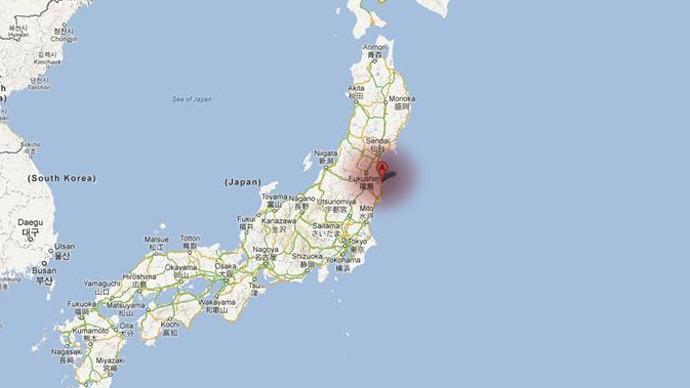
An earthquake with a magnitude measured at 5.9 by Japan’s Meteorological Agency has struck the northeast of the country. The epicenter was close to the Fukushima coast and only 200km from Tokyo, causing buildings in the capital to shake.
The quake struck at 2:48 pm (05:48 GMT) in the Pacific Ocean, approximately 50km (31 miles) from land. The United States Geological Survey recorded the earthquake as being of magnitude 6.1, with a depth of 33km (20.5 miles).
No tsunami warning has been issued, despite the offshore quake’s close proximity to Fukushima prefecture, where the magnitude 9.0 quake in March 2011 instigated the Tsunami, which led to the deaths of at least 16,000 people and nuclear meltdown at the Fukushima Daiichi plant.
Tokyo Electric Power Co.’s two nuclear plants in the prefecture reported no immediate irregularities as a result of the quake, according to the local Kyodo news agency.
Miyagi prefecture, further north, suffered the strongest impact from the quake. No information has been released on potential injuries. However, its Onagawa nuclear plant also recorded no irregularities, according to its operator Tohoku Electric Power Co.
“We have received no reports of damage so far,” an official from Fukushima prefecture told AFP.
5.9 earthquake strikes Japan off Fukushima coast ? RT NewsLife should not be a journey to the grave with the intention of arriving safely in a pretty and well preserved body, but rather to skid in broadside in a cloud of smoke, thoroughly used up, totally worn out, and loudly proclaiming "Wow! What a Ride!"
-
07-07-2013, 04:28 PM #1690Thailand Expat
- Join Date
- Aug 2007
- Last Online
- @
- Posts
- 1,405
Japan set to restart reactors after nuclear crisis
Jul 07, 2013
TOKYO (AP) — Japan is moving a step closer to restarting nuclear reactors as utilities are set to ask for safety inspections at their idled reactors, the clearest sign of Japan’s return to nuclear energy nearly two and a half years after the Fukushima disaster.
With all but two of its 50 reactors off line since the crisis, Japan has been without nuclear energy that once supplied about a third of its power.
Four of nine Japanese nuclear plant operators — supplying the regions of Hokkaido, Kansai, Shikoku and Kyushu — will apply for safety inspections by the Nuclear Regulation Authority for a total of 10 reactors at five plants Monday, when new safety requirements take effect. Kyushu Electric Power Co. is expected to apply for two more reactors at another plant later in the week.
The new standards are stricter than in the past and for the first time compulsory, and only reactors that pass the inspections will be allowed to reopen — possibly early next year. Each inspection could take several months, according to the watchdog, plus obtaining local consent may take another few weeks. Critics say the rules have loopholes, including grace periods for some safety equipment.
Hit by soaring gas and oil costs to run conventional power generation plants to make up for the shortfall, Japanese utility companies have desperately sought to put their reactors back online.
Nearly all the utilities owning nuclear power plants reported huge losses last fiscal year due to higher costs for fuel imports. Hokkaido Electric Power Co., for example, said it has been hit with additional daily fuel costs of 600 million yen ($6 million) to make up for three idled reactors. Nuclear operators have already requested rate hikes or plan to do so.
Prime Minister Shinzo Abe, who took office in December, scrapped a phase-out plan set by the previous government. Resumption of nuclear power plants is part of his ruling party’s campaign platform in parliamentary elections in two weeks.
The new requirements specify for the first time that plants must take steps to guard against radiation leaks in the case of severe accidents, install emergency command centers and enact anti-terrorist measures. Operators are required to upgrade protection for tsunamis and earthquakes, as well as tornadoes and aviation accidents.
Safety was previously left up to the operators, relying on their self-interest in protecting their own investments as an incentive for implementing adequate measures. Tokyo Electric Power Co. came under fire for underestimating the risk of a tsunami and building a seawall that was less than half the height of the wave that hit the Fukushima Dai-ichi plant on March 11, 2011, knocking out power and cooling systems, which led to meltdowns in three of its reactors. About 160,000 evacuees still cannot return to their homes.
“We decided to apply because we’re confident about the safety measures we’ve taken,” said Shota Okada, a spokesman at Hokkaido Electric Power Co., filing for the triple-reactor Tomari plant. “We’ll do everything to accommodate a smooth inspection process.”
Hokkaido Electric hopes to restart them in time for the long, cold winter on the northern main island, said company president Katsuhiko Kawai recently.
Critics say the requirements still have loopholes that make things easier for operators, including a five-year grace period — given to reactors known as PWRs that come with larger containment chambers considered less likely to suffer from pressure buildup than ones like those ravaged at Fukushima — for installing some mandated new equipment and a full-fledged command center. This means about half of the 48 reactors that are PWRs, or pressurized water reactors, could operate without the safety features up to five years.
All 10 reactors set for inspections are PWRs, and filtered vents and command centers are reportedly still under way at many of them.
Opponents say the approvals are aimed at resuming reactor operations, although nearby communities lag in enacting needed emergency and evacuation procedures.
asiancorrespondent.com
-
10-07-2013, 08:50 AM #1691Member
- Join Date
- Jun 2013
- Last Online
- 22-07-2013 @ 08:31 PM
- Posts
- 220

Masao Yoshida: Fukishima Hero Dies Of Chancer - Business Insider
Masao Yoshida, the manager of the Fukushima Daiichi power in Japan during its meltdown in 2011, has died of cancer, the New York Times reports. He was 58 years old.
The plant’s operator, Tokyo Electric Power, said that Yoshida died of esophageal cancer. Experts have denied a link to the nuclear meltdown due to the speed of his illness.
Yoshida is best known for a series of key decisions made after the plant began melting down after a powerful earthquake and tsunami crippled the plant's cooling systems, including using seawater to cool overheating fuel rods.
Importantly, the first day after the earthquake, Yoshida ignored a requests from both Prime Minister Naoto Kan and senior Tepco officials to stop injecting seawater into the reactors. While there were fears that the seawater might cause fission chain reaction, Yoshida's plan proved successful and he was never reprimanded for his disobedience.
In a video released last year, Yoshida is shown disagreeing with an unnamed company official at Tepco headquarters two days after the quake. The official wants to use fresh water to cool the remaining fuel rods, hoping that they might be reused. Yoshida responded, "We don't have the option to use fresh water. That will cause further delays."
While Yoshida has faced some criticism for failing to prepare the plant for the risk of tsunami, his solemn response to handling the disaster led to a reputation as a hero. He reportedly asked staff left at the plant to write their names on a blackboard to keep a record of who was there, and had to be dissuaded from leading a "suicide mission" to try and pump more water in to one of the reactors himself.
“If Yoshida wasn’t there, the disaster could have been much worse,” Reiko Hachisuka, the head of a business group in Okuma town and one of a panel that investigated the accident, told Bloomberg today. Former Prime Minister Naoto Kan also tweeted a tribute, saying, “I bow in respect for his leadership and decision-making.”
-
10-07-2013, 09:34 AM #1692Thailand Expat
- Join Date
- Feb 2008
- Last Online
- 19-12-2015 @ 05:51 PM
- Location
- Paese dei Balocchi
- Posts
- 7,833
^This guy did his best after the fact, and did far too little before it (see link below).
Btw, looking back over this thread, not naming any names but I see a few posters who should be feeling a bit sheepish.
TEPCO is finding it harder and harder to get workers because there is a shortage of construction workers and laborers in Japan as well as many other projects going in Tohoku and elsewhere that pay as much. The situation at Fukushima is not improving, and is in fact far from under control- it is getting worse. The only mitigating factor is that mercifully there have been no major quakes in the area since the event, which was, let's be clear, a man-made disaster: Fukushima nuclear disaster not result of earthquake: expert | Latest | FOCUS TAIWAN - CNA ENGLISH NEWS (maybe this should go in the main Fuk thread). We might all pray that there are none for the next couple of years (at least) if praying did any good, which it don't.
-
08-09-2013, 07:28 AM #1693Thailand Expat
- Join Date
- Aug 2007
- Last Online
- @
- Posts
- 1,405
SKorea bans fish from NE Japan on radiation fears
Sep 06, 2013
SEOUL, South Korea (AP) — South Korea announced Friday that it was banning all fish imports from along Japan’s northeastern coast because of what officials called growing public worry over radioactive water leaking into the Pacific Ocean near the crippled Fukushima Dai-ichi nuclear power plant.
Fisheries in Fukushima prefecture (state) are closed, and fish caught in nearby prefectures are sold on the market only after tests have shown them to be safe for consumption.
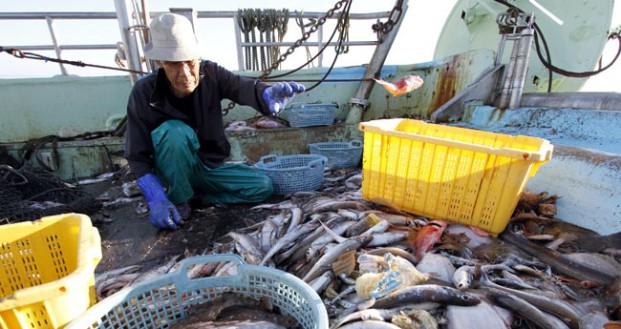
Fisherman Choji Suzuki sorts out fish he caught aboard his boat Ebisu Maru in the waters off Iwaki, about 40 kilometers (25 miles) south of the tsunami-crippled Fukushima Dai-ichi nuclear power plant, Japan.
Pic: AP.
However, South Korea’s ban applies a total of eight prefectures with a combined coastline of more than 700 kilometers (430 miles), regardless of whether the fish pass safety standards or not.
The South Korean government made the move because of insufficient information from Tokyo about what steps will be taken to address the leakage of contaminated water from the Fukushima Dai-ichi nuclear power plant, according to a statement by the Ministry of Oceans and Fisheries.
Tokyo Electric Power Co., the plant’s operator, acknowledges that tons of radioactive water has been seeping into the Pacific from the plant for more than two years after the March 2011 earthquake and tsunami led to meltdowns at three reactors at the plant. Recent leaks from tanks storing radioactive water used to cool the reactors have added to fears that the amount of contaminated water is getting out of hand.
Japan’s chief Cabinet secretary, Yoshihide Suga, said Friday that fish and seafood that go to market are tested for radiation and shown to be safe. Suga also stressed that the contaminated water flowing into the ocean is limited to a small area off the coast of the Fukushima plant.
“There is an international standard on food, including fish, and we are carrying out stringent safety controls based on those standards. We ask South Korea for a response based on science,” he told reporters.
South Korea Vice Fisheries Minister Son Jae-hak said in a briefing that the eight prefectures in 2012 exported to South Korea 5,000 metric tons of fishery products, or about 13 percent of the 40,000 total tons imported last year from Japan. Fish will be banned from the following prefectures: Aomori, Iwate, Miyagi, Fukushima, Ibaraki, Gunma, Tochigi and Chiba.
Hisashi Hiroyama, a Japanese Fisheries Agency official, said Japan exports about 9.2 billion ($92 million) of fish a year to South Korea. The most common fish exported from Japan to South Korea was Alaskan Pollock.
Scientists have long believed that contaminated water was reaching the ocean, based in part on continuing high levels of radioactive cesium found in fish living at the bottom of the sea. Scientists have also noted a rise in strontium-90 and tritium levels in the past few months. Strontium accumulates in fish bones and remains longer than cesium in fish and the humans that eat them.
Hiroshi Kishi, chairman of the Japan Fisheries Cooperatives, called on Energy Minister Toshimitsu Motegi Friday morning to tackle the contamination issue as soon as possible, and to release appropriate information to international community to avoid the further negative groundless reputation over Japan fishery products.
“This is a structurally difficult and complex issue. We will not rely on TEPCO, but the government will come to the forefront in resolving the issue,” Motegi said.
Earlier this week, the Japanese government announced that it would spend 47 billion yen ($470 million) to build an underground “ice wall” around the reactor and turbine buildings and develop an advanced water treatment system in an attempt to contain the leaks and limit the amount of contaminated water.
asiancorrespondent.com
-
08-09-2013, 11:08 AM #1694god
- Join Date
- Nov 2006
- Last Online
- @
- Location
- Bangladesh
- Posts
- 28,207
I suppose they've got seven years to clean things up before the olympic games.
-
08-09-2013, 11:48 AM #1695R.I.P.

- Join Date
- Jun 2005
- Last Online
- 23-07-2020 @ 06:41 AM
- Location
- Location: Location: Three sausages went to the station, and wound up at immigration!
- Posts
- 6,283
Disturbing article: Fukushima: At the Very Least, Your Days of Eating Pacific Ocean Fish Are Over
-
08-09-2013, 07:22 PM #1696Thailand Expat

- Join Date
- Jul 2008
- Last Online
- 19-11-2016 @ 07:57 PM
- Posts
- 7,636
Wally D R ,thanks for the Helen video. first one i've seen explaining this disaster and fallout.
a disaster like this has always been a possibility.
nowhere left to hide now.
what a mess.
The House is burning. and calling the fire brigade will only pour more flames onto it.
Man is a fucking idiot.
-
09-09-2013, 07:19 PM #1697R.I.P.
- Join Date
- Jun 2005
- Last Online
- 23-07-2020 @ 06:41 AM
- Location
- Location: Location: Three sausages went to the station, and wound up at immigration!
- Posts
- 6,283
Prolly take more like 700. Originally Posted by ENT

-
16-09-2013, 03:32 PM #1698god
- Join Date
- Nov 2006
- Last Online
- @
- Location
- Bangladesh
- Posts
- 28,207
Japan tells 300,000 households to evacuate
Japan tells 300,000 households to evacuate
20:25 Mon Sep 16 2013AAP
Typhoon Man-yi has battered central Japan, forcing the evacuation of almost 300,000 households amid fears the storm could go on to hit the crippled Fukushima nuclear plant.
The typhoon made landfall in Toyohashi, Aichi prefecture, shortly before 8.00am (0900 AEST) on Monday, packing gusts of up to 162 kilometres an hour, the Japan Meteorological Agency said.
Public broadcaster NHK said four people were missing in landslides or floods, while at least 65 people were injured and more than 860 houses flooded.
The typhoon was moving north-northeast at a speed of 55km/h, with the eye of the storm passing within 50 kilometres north of the capital around noon.
The meteorological agency issued the highest alert for "possibly unprecedented heavy rain" in Kyoto and neighbouring prefectures, while Kyoto and other local authorities advised a total of some 291,000 households to evacuate.
Japan tells 300,000 households to evacuate
-
18-09-2013, 12:54 PM #1699Tax Consultant

- Join Date
- Jul 2007
- Last Online
- @
- Location
- Bangkok
- Posts
- 9,890
Probably not. Originally Posted by ENT
Seismic activity of this magnitude causes rock to melt at great depths below the surface. Gradually over the coming years that molten rock makes its way to the surface, eventually releasing through existing volcanoes.
I believe Japan has an even bigger horror story coming between now and the Olympics.
Fuji is dormant ... not extinct.I see fish. They are everywhere. They don't know they are fish.
-
18-09-2013, 01:07 PM #1700Thailand Expat
- Join Date
- Feb 2008
- Last Online
- 19-12-2015 @ 05:51 PM
- Location
- Paese dei Balocchi
- Posts
- 7,833
^Seismologists seem to expect Fuji to blow as a kind of cherry-on-top for the coming Nankai Trough event: Nankai Trough quake predicted to cause more damage than 2011 disaster - The Japan Daily Press
Not if but when.

 Reply With Quote
Thread Information
Users Browsing this Thread
There are currently 2 users browsing this thread. (0 members and 2 guests)
