

http://www.nationmultimedia.com/2010...-30144126.html
Mekong panel wants 10-year freeze on dam building
By Pongphon Sarnsamak
The Nation
Published on December 10, 2010
The Mekong River Commission, in its Strategic Environmental Assessment, has urged Thailand, Laos, Cambodia, and Vietnam to delay megahydropower dams for 10 years due to massive risk concerns associated with the projects.
According to Carl Middleton, programme director of the conservation group International Rivers, the report was released in October.
He said it has studied the environmental impact and ecological systems in 12 dams planned for the mekong River.
It has also consulted government agencies, nongovernmental organisations and the private sector.
The report found that if built, the dams would cause irreversible and permanent ecological change to a mighty river that feeds millions of people.
It said 50 per cent of the length of the mekong River would become reservoir and the rapid change in river levels would destroy the natural flow of water.
The proposed dams would block a vital fish migration route and damage the habitat and ecosystem of the Mekong, placing at risk its rich diversity of species. Fishery activities would reduce by 26 per cent to 42 per cent of present levels, at a cost of Bt 15 billion.
The report said at least 100 of the river's aquatic animal species - such as the Irrawaddy dolphin and iconic mekong giant catfish- would be at risk of extinction due to severe change in their habitat.
The 12 dams would inundate half the river's bank gardens with damage estimated at Bt630 million a year, affecting over 3 million people along the Mekong.
The report said such mainstream projects were likely to result in serious and irreversible environmental damage, losses in longterm health and productivity of natural systems and losses to biological diversity and ecological integrity.
The largest impact on the riverine terrestrial system would be to the wetlands. Almost 40 per cent lie within reaches of rivers where projects are located - 17 per cent would be permanently inundated by the Lower mekong Basin mainstream projects.
The report established that 96 per cent of power demand, up to 2025, stems from Thailand and Vietnam. These two countries are expected to purchase close to 90 per cent of the power generated by the mainstream projects.
If Thailand and Vietnam decided not to buy mainstream power, the projects - all designed for export - would likely not go ahead.
According to the report, 10 proposed mainstream projects would involve constructing dams across the entire river channel - eight in Laos, two of which are on the LaoThailand reaches of the mainstream, and two in Cambodia.
Two other projects near the Khone Falls in Laos involve either partial damming (Don Sahong) or a diversion (Thakho). In China's Yunnan province, eight dams spanning the Lancang River already exist, or are under construction.
China's decision to develop the mekong River in Yunnan - and the resulting changes in seasonal flows - has eased previous reluctance to dambuilding in the Lower mekong Basin (LMB) and made mainstream projects more economically viable. Other international factors, such as reduced greenhouse gas emissions compared to fossil fuel generation options, and efforts to reduce reliance on imported energy and increase supply diversity, make hydropower an increasingly attractive renewable energy resource for LMB countries.
Xayaburi hydropower dam is the most advanced of the large dams planned for the lower Mekong, Middleton said.
Thailand's Ministry of Energy and electricity utility Egat will play a role in determining whether the Xayaburi dam is built or not.
Middleton said the mekong River Commission and regional decisionmakers should halt the Xayaburi dam, while adhering to recommendations of the Strategic Environmental Assessment to defer a decision over the mekong for at least 10 years.
Significant knowledge gaps about the mekong River, and the regional decisionmaking process, have failed to meet international standards of transparency, public participation and accountability, Middleton said.
Consequently, an informed decision over the fate of the river cannot be made and the region risks jeopardising the very resource that brings benefit to millions of people, he added.
Results 76 to 100 of 158
Thread: Mekong : Dams disrupt lives
-
10-12-2010, 02:12 PM #76Out there...



- Join Date
- Jul 2009
- Last Online
- @
- Location
- BKK
- Posts
- 40,029
"Slavery is the daughter of darkness; an ignorant people is the blind instrument of its own destruction; ambition and intrigue take advantage of the credulity and inexperience of men who have no political, economic or civil knowledge. They mistake pure illusion for reality, license for freedom, treason for patriotism, vengeance for justice."-Simón Bolívar
-
04-03-2011, 04:47 PM #77Days Work Done!

- Join Date
- Oct 2007
- Last Online
- Yesterday @ 07:49 PM
- Location
- Roiet
- Posts
- 36,049
Vietnam, Laos split over Mekong dam
Rice farms and fishermen will be disturbed, Vietnam says of ambitious plans by its ally, Laos.

Scientists and journalists in communist Vietnam have spoken out against the dam projects [GALLO/GETTY]
The first in a new series of 11 dams planned across the Mekong, South-east Asia’s largest river, could break a special bond between two communist-ruled countries.
Critics in Vietnam see red over a 1,260-megawatt hydropower project planned by their smaller, poorer, land-locked neighbour, Laos. They call it an environmental disaster.
Laos, however, wants to be the powerhouse of the region – to sell power to its neighbours and earn enough to help the poor, that is a third of its population of 5.8 million.
The dam in an idyllic hill setting in the north Laos province of Xayaburi (or Sayaboury), will be built by a Thai developer. Thailand is expected to buy 95 per cent of its power to fuel its booming economy.
Environmentalists say the Xayaburi dam and 10 more such constructions planned on the Mekong's mainstream, nine in Laos, make a Faustian bargain.
Communist opposition
The dam will "reduce fresh water and silt downstream in Vietnam and devastate fishing among others," stated Tuoi Tre, the country's largest circulating newspaper paper, published by the Communist Youth Organisation from Ho Chi Minh City (former Saigon) in the south.
The potential threat of the $3.5bn dollar dam in the Mekong delta, Vietnam’s "biggest rice producing and fish farming area", has been highlighted by The Saigon Times too.
Vietnam’s government officials have raised their voice against the 32-metre- tall, 820-metre-wide dam. "If built, Laos' Xayaburi dam will greatly affect Vietnam's agriculture production and aquaculture," deputy minister of natural resources and environment Nguyen Thai Lai reportedly said in a meeting of the country's Mekong River experts.
Such criticism goes against the spirit of a 1977 treaty of friendship and cooperation that binds them in a 'special relationship'. The treaty followed the communist triumph against the US in the Vietnam War.
Towards the end of the Cold War conflict from 1954 to 1975 the communist North Vietnam defeated and annexed the US supported South Vietnam. The protracted conflict left a long trail of death and destruction in the former French Indochina territory that includes Laos and Cambodia.
(more in link)
Vietnam, Laos split over Mekong dam - Features - Al Jazeera English"Whenever you find yourself on the side of the majority, it is time to pause and reflect,"
-
04-03-2011, 04:58 PM #78Days Work Done!
- Join Date
- Oct 2007
- Last Online
- Yesterday @ 07:49 PM
- Location
- Roiet
- Posts
- 36,049
Being last at the water trough not the best position to be in.
With all the damns, irrigation and pollution upstream Vietnam will continue to suffer when one of the currently "cooperating" countries decides it's in their best interest to build a damn. Laos certainly needs the money but at what long term cost?
The deal is between Thailand and Laos so Vietnam will have to deal with both to stop the project. Thailand could care less about environmental concerns as related to Laos and Laos is between a rock and a hard place so badly needing near term economic boost.
The deal will naturally have a component making Laos politicians favor it.
Too what degree will Vietnam go to prevent building of the damn? Perhaps some incentive to make politicians change their minds. Time will tell.Last edited by Norton; 04-03-2011 at 05:07 PM.
-
09-03-2011, 04:20 PM #79Member

- Join Date
- Aug 2008
- Last Online
- 19-03-2013 @ 08:50 AM
- Posts
- 469
"The dam will "reduce fresh water and silt downstream in Vietnam"
What rubbish bullshit. Just where will the water go? Silt of course, of course, forms above a dam not below. The Vietnamese are not stupid even though they are liars and thieves.
.
-
13-03-2011, 09:26 AM #80Out there...
- Join Date
- Jul 2009
- Last Online
- @
- Location
- BKK
- Posts
- 40,029
http://www.bangkokpost.com/news/loca...-ailing-spirit
Mekong residents reach out to river's ailing spirit
Villagers fear the worst as the Xayaburi Dam project in Laos takes shape
- Published: 13/03/2011 at 12:00 AM
- Newspaper section: News
The Mekong River looks a pale imitation of the mighty waterway it once was. The water flows sluggishly in a channel which has shrunken to only a few metres wide in some parts of Loei province.
FLOW WITH IT: Bu Pengkham leads villagers in a ceremony to improve the health of the Mekong River in Loei.
(a lot more at the link, longish report)
-
02-04-2011, 10:54 AM #81Thailand Expat

- Join Date
- Aug 2007
- Last Online
- @
- Posts
- 1,405
The mighty Mekong River is about to face its greatest test. This month, the governments of Laos, Thailand, Cambodia and Vietnam will decide whether to give approval to the first ever dam planned for the lower Mekong mainstream, the Xayaburi Dam.
Peter Bosshard: Mighty Mekong to Be Dammed?
http://www.internationalrivers.org/e...-dams/xayaburi
-
09-04-2011, 07:11 PM #82Thailand Expat
- Join Date
- Aug 2007
- Last Online
- @
- Posts
- 1,405
Activists fight to stop dam across Mekong
DENIS D. GRAY
April 8, 2011
A plan for the first dam across the Mekong River anywhere in its meandering path through Myanmar, Laos, Thailand, Cambodia and Vietnam has set off a major environmental battle in Southeast Asia.
The $3.5 billion Xayaburi dam is slated for the wilds of northern Laos and would generate power mostly for sale to Thailand. The project pits villagers, activists and the Vietnamese media against Thai interests and the Laotian government in its hopes of earning foreign exchange in one of the world's poorest countries.
A decision on whether the dam gets the green light, is axed or deferred for further studies is expected April 19 during a meeting in the Laotian capital among Laos, Thailand, Vietnam and Cambodia.
Opponents warn it could open the way for 10 more dams being considered along the lower Mekong.
"Our lives and livelihoods depend on the health of the Mekong River," said Kamol Konpin, mayor of the Thai riverside town of Chiang Khan.
"As local people have already suffered from dams built upstream in China and watched the ecosystem change, we are afraid that the Xayaburi dam will bring more suffering."
China has placed three dams across the upper reaches of the Mekong, but otherwise its 3,000-mile (4,900-kilometer) mainstream flows free.
The Xayaburi would cut across a stretch of the river flanked by forested hills, cliffs and hamlets where ethnic minority groups reside, forcing the resettlement of up 2,100 villagers and impacting tens of thousands of others.
Environmentalists say such a dam would disrupt fish migrations, block nutrients for downstream farming and even foul Vietnam's rice bowl by slowing the river's speed and allowing saltwater to creep into the Mekong River Delta.
A Thai firm would build the 1,260 megawatt hydroelectric project. However, Thai villagers along the river are staging protests and planning to deliver letters to Thai Prime Minister Abhisit Vejjajiva and the Lao Embassy in Bangkok, where the Thai government has maintained an official silence on the issue.
Pianporn Deetes, of the U.S.-based International Rivers, said environmentalists are ready to take their case to court if Abhisit doesn't deliver a positive response.
Last month, 263 non-governmental organizations from 51 countries sent letters to the governments of Laos and Thailand urging that the project be shelved.
Laos said in February that the Xayaburi would be the "first environmentally friendly hydroelectric project on the Mekong" and that will "not have any significant impact on the Mekong mainstream."
"We are excited about this project," the statement said.
Vietnam's official media, in a rare disagreement with its communist neighbor, has blasted the dam, while scientists and environmental groups have called for its construction to be delayed for 10 years until more research is conducted.
"It seems that countries of the lower Mekong still haven't learned lessons from the impact of the Chinese dams," Pianporn said. "Xayaburi is so important because it could set off the destruction of the lower Mekong."
Since 2007, there have been proposals to put up 11 mainstream dams in Cambodia and Laos.
The Mekong River Commission, set up by the four Southeast Asian neighbors in 1995 to manage the river, has expressed serious reservations about Xayaburi. A study by the group recommended a 10-year moratorium on all mainstream dams, a stand supported by U.S. Secretary of State Hillary Clinton during a Southeast Asian trip earlier this year.
The commission cited feared damage to migrations of between 23 and 100 fish species, among a host of other environmental problems.
Another MRC document showed nobody spoke in favor of the dam during public consultations this year in Vietnam, Cambodia and Thailand, while many officials, academics and residents cited problems or lack of information about the project. No consultation was held in Laos.
"If this project goes ahead it would be unimaginably irresponsible," said Ame Trandem of Rivers International.
Somkiat Khuengchiangsa, who has spent his life along the river and heads The Mekong-Lanna Natural Resources and Culture Conservation Network, said governments are more interested in the economics of the project than its effect on residents.
"Rivers are not the property of nations or groups of people. They belong to all mankind," he said.
businessweek.com
-
10-04-2011, 12:30 PM #83Ocean Transient

- Join Date
- Apr 2010
- Last Online
- 23-07-2024 @ 03:25 AM
- Location
- Untied from dock. Heading South Down West Coast of Canada.
- Posts
- 3,631
Sorry to disagree. The theoretical scientific reality is that he amount of sediment carried depends on the velocity of the current. When that velocity is lessened then the sediment settles. Rainy seasons have a scouring effect, higher volumes of water can transport higher sediment loads. Dams control escapement and the ability of the river to naturally flush its sediment seaward. Aqua dynamics like most sciences are complex, and every river is different. The Aswan Dam on the Nile has had a detremental effect on many down river areas, but for different reasons. Originally Posted by who

Sorry dams change eco systems. Large scale damming as propossed will dramaticaly modify the natural cycle of the aqua-domain, the new flow dynamics will dictate how the landscape and ecoscape of the down stream region re-evolve. So the sad reality is that the economic benefits for some will be at the detriment of others, that my friend is not bull shit it is a reality.
-
14-04-2011, 06:02 PM #84Thailand Expat
- Join Date
- Aug 2007
- Last Online
- @
- Posts
- 1,405
WWF blasts environmental impact studies on proposed Lao dam
Apr 14, 2011
Bangkok - Environmental impact studies conducted for the proposed Xayaburi dam in Laos have failed to fully assess the project's disruption to fish migration and food supplies for the region, the World Wide Fund for Nature (WWF) said Thursday.
A report commissioned by the WWF concluded that the environmental impact assessment study compiled by Thai and Swiss consultants was 'woefully inadequate and fell well below international standards for such studies.'
The Xayaburi hydro-power dam is one of 11 planned on the lower Mekong mainstream.
Officials from Cambodia, Laos, Thailand and Vietnam, through which the lower Mekong flows, are to decide whether the project is to proceed on April 22.
The WWF and 263 international non-governmental organizations have called for a 10-year moratorium on all lower Mekong dams, until full assessments are made on their impact on fisheries and on the livelihoods of an estimated 2 million people who rely on the river for food and irrigation.
WWF's review of the Xayaburi dam found the project's final environmental impact assessment had ignored past studies and relied heavily on 'a very light field sampling' that captured 'less than a third' of the biodiversity in the impact area.
The review, conducted by the WorldFish Centre and the UN Food and Agriculture Organization, found that just five migratory species were mentioned in the assessment, although there are 229 fish species whose spawning and migratory patterns could be affected.
One of the species threatened by the project is the Mekong's giant catfish, already endangered.
The environmental impact assessment for Xayaburi dam, a joint project between the Lao government and Thailand's CH Karnchang Public Co Ltd construction company, was made available only in March.
China has already built four hydropower dams in Yunnan province on the upper mainstream of the Mekong, the longest waterway in mainland South-East Asia.
monstersandcritics.com
-
17-04-2011, 06:23 AM #85Thailand Expat
- Join Date
- Aug 2007
- Last Online
- @
- Posts
- 1,405
Wait be dammed
Xayaburi dam work begins on sly
THAI CONSTRUCTION GIANT, LAOS IGNORE MEKONG CONCERNS
17/04/2011
Construction work around a controversial dam in Laos which is expected to provide cheap energy to Thailand is well underway despite the project not yet receiving official approval.
DIGGING IN: A backhoe digs the earth on a road leading to the proposed dam site, about 20km from Tha Dua pier.
An investigation by the Bangkok Post Sunday which visited the area surrounding the Xayaburi dam on the Lower Mekong River last week found major road works under construction and villagers preparing to be relocated.
Several of the villagers said they were to receive as little as US$15 (450 baht) in compensation for moving from the area.
Trucks and backhoes bearing the name of Ch Karnchang, the Thai company jointly involved in the $3.5 billion project with the Lao government, were seen clearing and grading roads.
Mekong River Commission (MRC) members Thailand, Laos, Vietnam and Cambodia are due to meet this Tuesday to decide whether to approve the project.
Vietnam and Cambodia are opposed to the dam, which has also raised concerns among environmentalists and activists who say it has circumvented proper environmental impact studies.
However, the decision is not binding on any of the countries and any one member can go ahead with a project if it wants.
WE MEAN BUSINESS: A fleet of more than 20 Ch Karnchang trucks, along with 10 backhoes. The trucks carry the company’s logo.
Our investigation revealed road work being undertaken over more than 30km from Ban Nara village to Ban Talan and Ban Houay Souy, which is near the proposed site for the dam.
According to villagers living near the dam site, the road work started about five months ago.
This was one month after the Lao government submitted the documents required for consultation to the MRC, which included an environmental impact assessment, for review.
From Ban Nara village, about 17km from the Tha Dua pier where people cross the Mekong River to gain access to Xayaburi, there is a potholed two-lane road running parallel to the river.
But as the road veers to Ban Talan and Ban Houay Souy on the mountainside of the river, it has been widened to five to eight metres with a hard level surface.
YOU’LL HAVE TO GO: Ban Talan village below the road at the campsite.
Backhoes were seen digging by the roadside, and about 10km from Ban Nara village, dozens of trucks and backhoes were parked at a temporary construction camp. They bear the name Ch Karnchang, which has set up a subsidiary in Laos called Xayaburi Power to carry out construction and operate the dam project.
About 3km further on, there is a larger camp with heavy machinery, fuel tanks, cement mills, food stalls and grocery shops. Some workers were seen at the site and 500m away, there is a checkpoint with a sign saying "construction area" which bars entry.
The newly levelled road continues about 15km before abruptly ending at Ban Houay Souy, which is now accessible only by boat.
HOME, SWEET HOME: One family which has been asked to move to make way for the dam.
"They want to finish it before the rain comes," said one worker.
Laotians from other parts of the country have already come to seek work. Some have set up grocery shops and food stalls, while others have taken jobs as road workers or are waiting for construction work on the dam to start.
One man from Vientiane said he and several others from the capital had come looking for work. He said they had been told that an office would open next month.
The relocation of villagers is also ready to begin. At Ban Talan, villagers said Lao authorities had come to see them. They were told they would have to move but no date was specified. The villagers said they were promised new concrete houses allotted by the government on a nearby mountain.
They said they were also promised $15 in compensation. "The authorities said so, so we have to do it," said one villager. Ch Karnchang was unavailable for comment.
In September 2010, the Lao government petitioned the MRC to begin the formal process of approving the Xayaburi, the first of 11 proposed dams across the lower Mekong.
PAVING PARADISE: A cement mill on the road.
This initiated the required procedure for all such projects as stipulated in the MRC agreement signed by member countries in 1995.
Under the agreement, development projects with potential transboundary impacts should be subject to review and consultation before proceeding.
Prasarn Marukpitak, a retired senator working on social development in the region, said it was evident preparation work for the dam was in full swing.
Mr Prasarn said if the project went ahead without agreement from all MRC member countries, it could escalate into an international confrontation. "Laos is one of the MRC's members. The international community is keeping an eye on whether it is overriding the agency's rules.
"It has apparently ignored the region's strategic impact assessment and the consultation process," said Mr Prasarn.
The Xayaburi dam project plans to start commercial operation in January 2019.
In December last year, Thailand's National Energy Policy Committee approved the electricity purchase agreement, paving the way for the state electricity supplier Egat to sign a contract with Ch Karnchang's subsidiary Xayaburi Power. About 95% of the project's 1,260MW capacity is set for export to Thailand at a rate of 2.15 baht per unit.
bangkokpost.com
-
18-04-2011, 12:49 PM #86Out there...
- Join Date
- Jul 2009
- Last Online
- @
- Location
- BKK
- Posts
- 40,029
Southeast Asian Nations to Discuss Laos Dam - WSJ.com
Southeast Asian Nations to Discuss Laos Dam
By PATRICK BARTA
BANGKOK—A battle over plans for a giant dam across the Mekong River is highlighting the increasingly complex energy issues facing developing-world economies, especially after hopes for more nuclear power have dimmed following the recent tsunami disaster in Japan.
Thailand, Vietnam, Cambodia and Laos are expected to meet Tuesday in the Laotian capital of Vientiane to debate and possibly decide whether Laos should proceed with the $3.5 billion 1,260-megawatt dam, called Xayaburi, as part of a wider effort to turn the Mekong into the world's next big source of power. Laos hopes to use revenues from Xayaburi and other dams to drive economic growth in what remains one of the world's least-developed countries, while Thailand is expected to be the main buyer.

International Rivers, Piaporn Deetes/Associated Press The Mekong River near the site of the proposed Xayaburi Dam in Laos
But environmentalists and some government officials, especially in Vietnam, are wary. They say the project will damage downstream fishing areas—a major worry given the rising anxiety over food security in Asia—and force some residents to abandon river communities.
The dam also could set a precedent for further development on the Mekong, activists fear, and accelerate the construction of 10 or more other dam projects proposed in recent years for the river's main stream, mainly in Laos and Cambodia. A study released by the Mekong River Commission, created by the four Southeast Asian countries in 1995 to help manage the river, found late last year that if the dams were built, they would "fundamentally undermine the abundance, productivity and diversity of the Mekong fish resources," affecting millions of people, and jeopardize farming operations, further threatening food supplies.
The group said the dams also would widen the gap between rich and poor, and it recommended a 10-year moratorium on dam-building so that more study can be done.
Southeast Asian nations "are in a position to cut their own throats," with the proposed Mekong dam projects, said Richard Cronin, director of the Southeast Asia program at the Stimson Institute, a Washington, D.C.-based non-profit group that studies security issues. "It's not in anybody's interests to see a disaster in food security" caused by hydro dams, he said.
Southeast Asian nations have long argued over how best to develop the Mekong, which remains one of the last major rivers world-wide that isn't dammed through most of its length, though it has dams in its upper reaches in China. Under the 1995 deal that created the Mekong River Commission, Laos, Thailand, Cambodia and Vietnam agreed to consult one another whenever one of them planned a major dam project.
Although no country can veto another's plans, analysts believe it would be hard for one of them—especially a country as small as Laos—to proceed if a neighbor strongly objected.
It wasn't immediately possible to reach a Laos government spokesman for comment on the project. In a statement in February, the government said Xayaburi, to be located in the jungles of northern Laos, was an "environmentally friendly hydroelectric project" that would "not have any significant impact on the Mekong mainstream," the Associated Press reported. It added, "we are excited about this project."
Vietnam, by contrast, has made clear it fears the dam could hurt its famous Mekong River delta, where residents rely heavily on its waters for survival.
"There still is a lack of appropriate and comprehensive assessments of the transboundary and cumulative impacts of the project," said Truong Hong Tien, deputy director general of the Vietnam National Mekong Committee, a division of Vietnam's environment ministry. He said he "strongly recommends" the dam be delayed.
A Thai government spokesman confirmed the country's energy ministry is interested in buying power from Xayaburi but said officials want more information on environmental impacts. It wasn't immediately possible to reach a spokesman for Cambodia.
Despite some of the misgivings in Vietnam and elsewhere, Southeast Asian nations have a long history of avoiding interference in one another's affairs, and they may ultimately decide to let the project go ahead given their expected energy demand—and declining options for meeting it.
Power demand in the region is expected to grow 6%-7% a year through 2025, driven mainly by Thailand and Vietnam, its two dominant economies. Both countries expect to face significant energy shortfalls in the future, and hydropower is seen as one of the most reliable ways to close the gap—especially as worries over nuclear power grow in the aftermath of Japan's Fukushima Daiichi disaster in recent weeks.
In Thailand, especially, tapping Laos's hydropower potential would allow officials to bypass more controversial alternatives at home. As the country of 65 million has become wealthier, its population has also become more environmentally conscious, with residents vigorously opposing new coal-fired and domestic hydroelectricity plants because of fears they would create pollution or upset ecosystems.
As for nuclear power, Prime Minister Abhisit Vejjajiva and other officials have indicated in recent weeks that they are rethinking whether to proceed with the country's first-ever nuclear plant by 2020.
Vietnam has said it intends to continue developing several nuclear-power plants, but analysts have said they believe the projects could face delays.
Interest in developing the Mekong and its tributaries as power sources has intensified in recent years. China has added three dams across upper portions of the Mekong outside of Southeast Asia, despite opposition from downstream governments. Laos and Myanmar have launched numerous dam projects on their rivers in recent years, including tributaries of the Mekong, such as a $1.3 billion Nam Theun 2 project in central Laos that was built with support from the World Bank over the past several years despite criticism from environmentalists. That project officially opened last year.
Environmentalists say it's still too early to tell the full long-term impacts of those dams.
—Nguyen Anh Thu contributed to this article.
-
18-04-2011, 01:42 PM #87Out there...
- Join Date
- Jul 2009
- Last Online
- @
- Location
- BKK
- Posts
- 40,029
Bangkok Post : Shame on the dam builders
EDITORIAL
Shame on the dam builders
- Published: 18/04/2011 at 12:00 AM
- Newspaper section: News
The dispute over whether to build the first hydro-electric dam on our region's share of the Mekong River has reached an abysmal low point.
Governments, businesses and bankers have broken their understanding with Lao residents and civil society. Backers of the Xayaburi dam in northern Laos were to submit plans to this week's meeting of the Mekong River Commission (MRC) in Vientiane.
Instead, as eyewitnesses reported in this newspaper yesterday, preparatory work on the dam is well under way, and residents are already being moved out.
Presumably, officials will now weasel and warp the intent of the process. We can expect something along the line of, well, workmen are not working on the actual dam, just preparing the way.
And, well, local residents are resigned to moving and so approached authorities to offer to leave the area. No one will believe such statements, but there is no chance that anyone connected with this sneaky endeavour will actually play straight with the public.
Laos, of course, has the right to build what it wants, when it wants, on its territory. But the international community has a huge stake in this Mekong River project, especially the countries downstream.
Thailand has given effective political backing to the decision of the Lao government.
That is because Thailand stands to be the major beneficiary of the Xayaburi dam, from start to finish. Thai firms are already at work on the project, and Thailand will receive all or most of the electricity produced by the finished dam.
The next two countries along the river are strongly and publicly opposed to construction of the dam. Cambodia and Vietnam fear the project will block, slow or alter the flow of the mighty Mekong.
Scientists and government authorities in both countries have protested the plans by Laos to build Xayaburi, and by inference have also blamed Thailand for backing it. Both countries need the Mekong to flood their bountiful rice fields in Cambodia's northwest, and in Vietnam's south, where the river finally flows into the South China Sea.
They are not alone. Many local governments along the river are as vehemently opposed. In Chiang Khan district of Chiang Rai, the local government headed by Kamol Konpin already blames China for shifting and altering the river's flow. He fears ''more suffering'' because of Xayaburi. And the effect on one of nature's marvels, the giant catfish, has not been studied.
Last month, activists and opponents tried to demonstrate there is strength in numbers. These dam sceptics mustered 263 non-government groups from 51 countries in a single, impressive effort. Their letter to Prime Minister Thongsing Thammavong of Laos, however, went unacknowledged. Likewise, there is no sign of any change of heart because of the sudden high-profile opposition to the dam last week by US Senator Jim Webb, who was last seen in the region talking to the Burmese regime about human rights.
The MRC is to hold a four-day meeting in Vientiane beginning tomorrow. By Friday, the group is supposed to be able to announce its final recommendation to the members on whether to build the Xayaburi dam.
That announcement is clearly going to be an anti-climax. The sham promise to consult and then to decide whether to build Xayaburi should stand as an example of how not to proceed with huge public projects.
Authorities involved should be ashamed of misleading their people and civil society.
-
18-04-2011, 01:50 PM #88Days Work Done!
- Join Date
- Oct 2007
- Last Online
- Yesterday @ 07:49 PM
- Location
- Roiet
- Posts
- 36,049
Understand it takes unanimous approval by all member countries. My money is on this happening in spite of environmental concerns and protests. Far too many downsides for any country which does not approve. Originally Posted by StrontiumDog
-
18-04-2011, 07:06 PM #89Thailand Expat
- Join Date
- Aug 2007
- Last Online
- @
- Posts
- 1,405
Call for delay on dam
Thomas Miller
Monday, 18 April 2011
Cambodia will ask Laos to delay a controversial US$3.8 billion dam on the lower Mekong tomorrow, an official said yesterday, after a United States senator warned of the project’s “devastating consequences” for the region. Infrastructure construction near the site was said to be underway.
Te Navuth, secretary general of the Cambodia National Mekong Committee, said the request would be made by the Kingdom’s delegation to a crunch meeting in Vientiane, where representatives from Cambodia, Laos, Thailand and Vietnam will decide whether to endorse the Xayaburi dam.
“We would ask for additional information [and] more studies, because we see that the current design [and] current operations are lacking some information requirements,” he said, adding that they would need more time to consider the project.
Te Navuth said the current proposal for the dam would prevent a number of fish species from migrating up and down the river, echoing concerns by experts and environmentalists.
The Mekong River Commission, a regional inter-governmental body created to jointly manage the Mekong, said in a review of the dam project published last month that proposed fish ladders – a series of ascending pools that help fish to migrate over a dam – were “ineffective”.
It concluded further that a lack of knowledge about how the dam would impact upon fish raised “significant questions” about whether its effects could be measured or controlled.
Te Navuth also said the environmental impact assessment prepared by CH Karnchang Public Company Limited, the Thai company heading the project, did not account for the dam’s cross-border impact.
The assessment, made public last month, considered the project’s impact only within 10 kilometres of the dam. The World Wildlife Fund released an analysis of the report’s conclusions about fish and fisheries last week, concluding that it was “woefully inadequate”.
Tomorrow’s meeting comes amid mounting international concern.
An American senator, who chairs the subcommittee on East Asian and Pacific affairs for the Senate Committee on Foreign Relations, said last week that the dam could have “devastating consequences” for Southeast Asia.
“To avoid irreversible damage to the region, I believe it would be prudent to delay the construction of any any mainstream dam along the river, including those along the Upper Mekong River, until adequate planning and multilateral coordination can be guaranteed,” Senator Jim Webb said in a statement issued on Thursday.
“Absent this collaborative approach, the stability of Southeast Asia is at risk,” Webb said.
Meanwhile, an investigation released yesterday by the Bangkok Post found major road construction well underway near the site of the project and a fleet of trucks and diggers with CH Karnchang’s logo, some of which could be seen clearing and grading roads.
Several villagers said Lao officials told them they would receive US$15 in relocation compensation. Other people had moved in, seeking jobs and opening shops.
Roads were being built over an area more than 30 kilometres from the project site, the Bangkok Post said. Residents said road construction began about five months ago.
The evidence of infrastructure construction supporting the dam follow statements by Laos and CH Karnchang indicating they would move ahead with the project regardless of the Mekong River Commission outcome.
Laos submitted the Xayaburi dam proposal to the MRC in September. That notification initiated a process of consultation among the four countries – required by the treaty – to take place before major infrastructure projects on the river proceed, particularly if they could have significant cross-border impacts.
Lao officials said at a meeting of the MRC in February that the dam “will not have any significant impact on the Mekong mainstream”, and there was “no need for any extension of time” for its approval.
“The final decision as how to further proceed with the project development would of course be solely subject to the Lao PDR Government,” the statement said.
A deadline for the decision on the project is April 22, though an extension is possible.
Surasak Glahan, communications officer at the MRC, said yesterday that the four countries “will reach a conclusion” on the consultation process at tomorrow’s meeting. “There will be a conclusion on whether or not this process should be complete, or if it should be extended or if the project should be delayed,” he said, “and if the project will proceed, on what conditions it will proceed.”
International Rivers, a conservation group, estimates that 2,100 people will be forcibly resettled by the dam, while another 202,000 people will be directly affected. The Xayaburi dam is one of 11 proposed for the lower Mekong.
A study commissioned by the MRC recommended in October, however, that decisions on all mainstream dams be delayed for another decade.
phnompenhpost.com
-
19-04-2011, 03:08 AM #90Out there...
- Join Date
- Jul 2009
- Last Online
- @
- Location
- BKK
- Posts
- 40,029
Bangkok Post : Dam constructor faces human rights probe
Dam constructor faces human rights probe
- Published: 19/04/2011 at 12:00 AM
- Newspaper section: News
The company behind the pending construction of the controversial Xayaburi dam could face an investigation into whether the work will breach human rights.
Members of a people’s network representing riverside communities in eight provinces along the Mekong rally in front of the Lao embassy in Bangkok to protest the construction of Xayaburi dam. TAWATCHAI KEMGUMNERD
Sripapha Phetmeesri of the Asean Intergovernmental Commission on Human Rights (AICHR) said yesterday she would ask the commission to examine the practices of Ch Karnchang Plc, which is set to build the dam in conjunction with the Lao government.
The US$3.5 billion (105 billion baht) project, if approved by the Mekong River Commission (MRC), will see the dam built in Xayaburi, Sainyabuli province, Laos, but will likely also affect eight northeastern Thai provinces along the Mekong River.
The Chiang Khong Conservation Network, a group of villagers from these eight provinces, submitted a petition to Ms Sripapha in Bangkok yesterday to oppose the dam construction.
Ms Sripapha said the AICHR has no authority to directly examine human rights violations of any company in Southeast Asian countries.
However, it can be done through a channel of the AICHR's corporate social responsibility (CSR) framework, which will be endorsed by the commission next month.
"We will not look into the details on how people living along Mekong River will suffer as a result of the dam construction," she said. "But we can examine whether the project's owner, contractor and loan providers have gone against the principle of CSR, which covers the issues of environmental impacts and basic human rights protection."
She said the report's findings will be distributed to the Asean Secretariat Office in Indonesia and related governments.
MRC members Thailand, Laos, Vietnam and Cambodia are due to meet today to decide whether to approve the dam construction.
Laos signed a memorandum of understanding on the construction of the Xayaburi dam with Ch Karnchang in 2008.
If it goes ahead, the hydropower dam will sell 1,220 megawatts of electricity to the Electricity Generating Authority of Thailand (Egat) via Loei province once operational.
The Chiang Khong Conservation Network also handed a protest letter to the Lao embassy in Bangkok and to Prime Minister Abhisit Vejjajiva yesterday.
Network member Niwat Roikaew said the Thai government should convince Laos to suspend the project in accordance with an MRC study which recommends halting all dam construction on the Mekong for at least 10 years.
The network also pointed out that construction of the dam would have a severe impact on the river's sensitive ecological system, especially affecting the endangered Mekong giant catfish and the millions of people who make their livelihood from the river.
Pianporn Deetes, a Mekong campaigner with the International Rivers non-government organisation, said the project should not go ahead as a result of the negative findings in environmental impact assessment studies,
-
19-04-2011, 11:43 AM #91Out there...
- Join Date
- Jul 2009
- Last Online
- @
- Location
- BKK
- Posts
- 40,029
BBC News - Mekong Xayaburi dam decision due
19 April 2011 Last updated at 04:09 GMT
Mekong Xayaburi dam decision due
By Guy Delauney
BBC News, Cambodia
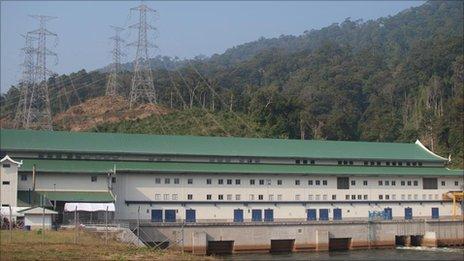
Hydro power should help Laos become the "battery" for this increasingly power-hungry region, the government hopes
The four member countries of the Mekong River Commission are meeting to make a final decision on whether to allow the construction of a controversial dam.
The proposed hydropower project at Xayaburi would be the first to be built on the main-stream of the lower Mekong.
Laos is hoping to become "the battery of southeast Asia".
The Mekong River Commission's ruling may determine whether the river stays a food resource for millions of people, or becomes a source of power instead.
Laos's plans mean using its rivers to generate electricity for export, thereby gaining income to develop the country - which is fine when the waterways in question are wholly within Laos.
It is rather more complicated when they are shared with neighbouring countries, as is the proposed Xayaburi dam and power station.
It would be the first hydro project on the mainstream of the lower Mekong.
Countries downstream are understandably concerned about the possible effects on them.
Cambodian concern
In Cambodia, fishing communities are worried that they might see a disastrous decline in stocks.
Sen Salim lives in a fishing community on the outskirts of Phnom Penh.
"This river is very important - when there are many fish it helps us to make a better living. When there are fewer fish it is bad for us," he says.
"If they made a dam in the big river, it would block the water flow - then the fish wouldn't be able to get through to migrate and breed."
It is a matter of national importance.
Fish provides about four-fifths of the average Cambodian's protein intake, and millions of people rely on the Mekong for their livelihoods.
World Wildlife Fund says the consequences of mainstream dams have not been studied properly.
The Mekong River Commission's own report suggested a 10-year moratorium on construction.
That has been backed by community organizations - they are suggesting alternative ways of generating electricity.
"We could have solar energy, biomass, bio-gas - and also small dams not on the mainstream. The mainstream would have a big impact on millions of people.
"It's going to be a disaster if the decision is not considered carefully," said Chhith Sam Ath from the umbrella group, the NGO Forum on Cambodia.
Cambodia is planning mainstream Mekong dams of its own and many more have been proposed in Laos.
The decision on the Xayaburi project is the key to them all.
-
19-04-2011, 01:29 PM #92Days Work Done!
- Join Date
- Oct 2007
- Last Online
- Yesterday @ 07:49 PM
- Location
- Roiet
- Posts
- 36,049
Originally Posted by StrontiumDog
After "careful consideration" Laos and Cambodia will strike a deal. Originally Posted by StrontiumDog
-
20-04-2011, 12:52 AM #93Out there...
- Join Date
- Jul 2009
- Last Online
- @
- Location
- BKK
- Posts
- 40,029
Mekong countries urge delay of Laos dam project amid ecological concerns
Mekong countries urge delay of Laos dam project amid ecological concerns
By Supalak Ganjanakhundee
The Nation
Published on April 20, 2011
Laos needs to delay the controversial Xayaburi hydropower project on the mainstream Mekong for more consultation, representatives of neighbouring countries said at an international meeting yesterday.
They claimed Laos had failed to convince the other three riparian countries on the lower Mekong River over the dam's possible impact on the environment and ecological system.
Representatives of Laos, Thailand, Cambodia and Vietnam discussed the project at a special session of the Mekong River Commis-sion Joint Committee (JC) in Vientiane.
The MRC received notification of the Xayaburi project from Laos last September. Under the Procedures for Notification, Prior Consultation and Agreement (PNPCA), the four countries would consult one another on the proposal and then reach a conclusion, within six months of the notification, on how to proceed with the project.
Laos proposed to build the dam in its northern province of Xayaburi to generate foreign currency for its economy.
The hydroelectric power project provides for an installed capacity of 1,280 megawatts, with a dam 810 metres long and 32 metres high, and a reservoir area of 49 square kilometres and live storage of 225 million cubic metres. Major Thai construction firm Ch Karnchang is the developer.
There is still a difference in views from each country on whether the prior consultation process among MRC members for the project should come to an end, said JC chairman Te Navuth.
As the joint committee failed to reach common ground, it handed over any decision to the ministerial level, he said.
The MRC council (at ministerial level) is to have its next annual meeting in October. "But I cannot predict how and when the council will make a final decision for the project," Te Navuth said in a phone interview from Vientiane.
Laos insisted there was no need to extend the process, since this option would not be practical, and environmental impacts across the boundaries of other riparian countries were unlikely. However, Laotian authorities promised to accommodate all comments and recommendations on the project.
"We appreciate all comments, [and] we will consider accommodating all concerns," said Viraphonh Viravong, head of the Laotian delegation.
An extension to conduct further studies would require much longer than six months and it would not be possible to satisfy all parties' concerns, he said.
The Xayaburi project will comply with the MRC Secretariat Prelim-inary Design Guidance and best practices based on international standards, he said. Major impacts on navigation, fish passage, sediment, water quality and aquatic ecology and dam safety could be mitigated to acceptable levels.
Cambodia, which is downstream from the proposed dam, said there was a need for a comprehensive study and assessment of the cross-boundary and cumulative environmental impacts.
Thailand, a major electric purchaser, raised concerns over how the lives of people who depend on the river would be affected.
"Therefore, we would like to see public views and concerns are well taken into consideration," Jatuporn Buruspat, director-general of Thai Department of Water Resources, said in an official response to the project.
Meanwhile, Vietnam expressed serious concern for the lack of adequate, appropriate and comprehensive assessments of cross-boundary and cumulative impacts that the project may cause downstream, especially in the Mekong Delta.
Vietnam recommended the deferment of this and other planned hydropower projects on the Mekong mainstream for at least 10 years.
-
21-04-2011, 11:15 AM #94Out there...
- Join Date
- Jul 2009
- Last Online
- @
- Location
- BKK
- Posts
- 40,029
Bangkok Post : Energy Ministry backs Xayaburi dam debate
Energy Ministry backs Xayaburi dam debate
Claims by NGOs of river damage are 'unproven'
- Published: 21/04/2011 at 12:00 AM
- Newspaper section: News
The costs and benefits of the controversial Xayaburi dam on the Mekong River still needed to be explained, says the Energy Ministry.
Activists' claims that the dam would damage the environment had yet to be proven, said permanent secretary Norkhun Sitthipong.
The Mekong River Commission (MRC) on Tuesday delayed a decision on construction of the dam, proposed by the Laos government.
Laos's neighbours have raised concerns about insufficient environmental studies of the dam's likely impact, according to a statement released after the meeting, while Laos said there was no need for further consultation.
A Mekong ministerial meeting will now consider the dam at a meeting late this year. The MRC members are Cambodia, Vietnam, Laos and Thailand. Vietnam in particular has raised serious environmental fears. Mr Norkhun said the National Resources and Environment Ministry, which represents Thailand on the commission, should explain the issues.
"We need to look at the EIA [environmental impact assessment] report to see whether the project will cause the kind of serious impact which NGOs claim.
"So far we do not have enough proof of such claims," he said.
Ch Karnchang (CK), Thailand's second largest contractor, has been awarded a concession to develop the dam, which would be built 80 kilometres from Luang Prabang. Thailand, represented by the Electricity Generating Authority of Thailand (Egat), is likely to buy 95% of the dam's output.
An Egat official said the run-off river dam would cause "much less environmental impact" than a conventional dam.
"Power plants need EIA approval, no matter whether they are our projects, or those belonging to private developers. Otherwise, we won't sign a power purchase agreement with the owner," he said.
Egat has not seen the EIA.
It had completed talks with Laos on the volume and the price of the electricity, but had yet to sign a purchase contract. It is waiting for the MRC's approval of the project's EIA.
Sources at private Thai companies taking part in the project said the dam only needed enough water flow to allow power generation.
Claims by critics that the dam would cause the river to run dry did not make sense.
Prasert Bunsumpun, chief executive of PTT Plc, which holds a 25% share of Xayaburi, said the NGOs' claims had yet to be proved.
Chavalit Pichalai, deputy director-general of the Energy Policy and Planning Office, said if the project harmed the environment, it would not receive funding from the Asian Development Bank (ADB).
"Run-off river dams normally do not require many people to move out," he said.
Regarding concerns that the project would threaten several fish species, Mr Chavalit said developers could always add fish to the river. "Building the Chao Phraya dam in Chai Nat province did not wipe out fish from the river," he said.
Laos is likely to seek funding from the ADB for the project.
The ADB has said more information on the environmental impact was needed before any decision could be made.
"The ADB has no plans to finance any project on the mainstream Mekong River," said Craig Steffensen, country director of ADB Thailand Resident Mission."The potential impacts of such activity on countries in the Mekong region have not been clearly determined and there is a potential for severe and irreversible negative social and environmental consequences," he added.
-
21-04-2011, 11:17 AM #95Out there...
- Join Date
- Jul 2009
- Last Online
- @
- Location
- BKK
- Posts
- 40,029
Pause to consider before doing permanent damage
EDITORIAL
Pause to consider before doing permanent damage
By The Nation
Published on April 21, 2011
Thailand will be complicit if the proposed Xayaburi dam on the Mekong in Laos turns out to be an ecological disaster, as many forewarn
Concern over the degradation of the ecological system in and around the Mekong River - which flows through China, Laos, Thailand, Cambodia and Vietnam - has grabbed the attention of a leading lawmaker in the United States. Senator Jim Webb, chairman of the powerful Senate Committee on Foreign Relations and its Subcommittee on East Asian and Pacific Affairs, issued a statement recently saying he was troubled by the proposed construction in Laos of the Xayaburi Dam on the Mekong mainstream.The planning behind the dam, said Webb, set "a dangerously harmful precedent as it relates to the environmental health of Southeast Asia. Numerous scientific studies have concluded that construction of the Xayaburi Dam and other proposed mainstream dams will have devastating environmental, economic and social consequences for the entire Mekong sub-region".
The senator continued: "To avoid irreversible damage to the region, I believe it would be prudent to delay the construction of any mainstream dam along the river, including those along the upper Mekong River, until adequate planning and multilateral coordination can be guaranteed. Absent this collaborative approach, the stability of Southeast Asia is at risk."
Senator Webb will be asking the US State Department to "invigorate its efforts to support sustainable infrastructure and water security in Southeast Asia".
Meanwhile, a new report by WWF seems to offer a way out. According to a study on aquatic ecosystem connectivity, the Mekong region could have equivalent power generation but with dramatically less damage to the river's functioning by opting for tributary rather than main channel dams.
"No part of the Mekong River still provides connectivity to all the 13 ecosystem types classified by a recent WWF study," said Nikolai Sindorf of the WWF Conservation Science Programme. "The impact of continuing incremental dam development will disconnect more and more ecosystem processes.
"Where it gets alarming is the disproportional amount of negative effects from dam construction on the lower mainstream of the river such as at Xayaburi, a dam proposed in northern Laos. The Mekong is extremely sensitive to the impacts of mainstream dams because of its [geographical] - a very long mainstream fed by relatively short tributaries."
According to WWF, Xayaburi, the first of 11 dams proposed for the Mekong mainstream, is projected to produce 1260 megawatts of power while reducing the river's basin's total connectivity by five per cent. In contrast the 1070 megawatt Nam Theun 2 dam on the Nam Theun River in Laos took only 0.8 per cent out of the Mekong's connectivity, and the 1540 megawatt Se San cascade of six dams decreased connectivity by just 1.2 per cent.
The proposed Xayaburi dam would cut off nine aquatic ecosystems upstream, out of a total of 13, using WWF's classification, while both the Nam Theun 2 and the Se San cascade only block a single ecosystem in relatively smaller parts of the basin.
Ecosystem connectivity is critical to maintain the river and its reproductive processes. Unfortunately, nobody seems to be looking at the dam projects, including Xayaburi, in the context of a basin-wide impact that is measured against ecosystem connectivity.
WWF and others are calling for a ten-year delay before the approval of any mainstream dams, in order to give time to fully consider the costs and benefits of their construction.
Thailand, one of the main stakeholders behind the funding and proposed building of the Xayaburi dam project, is complicit in this controversial project and cannot sit idly by and pretend that this is all Laos' doing.
In fact, if this project goes ahead, it could go down as one of the worst environmental tragedies of our time.
-
21-04-2011, 07:01 PM #96Out there...
- Join Date
- Jul 2009
- Last Online
- @
- Location
- BKK
- Posts
- 40,029
Bangkok Post : House panel damns Xayaburi dam
House panel damns Xayaburi dam
- Published: 21/04/2011 at 04:06 PM
- Online news: Local News
The House committee on political development, mass communications and public participation is unanimously opposed to the construction of Xayaburi dam on the lower Mekong River in Laos, Democrat MP and committee spokesman Watchara Phetthong said on Thursday.
Mr Watchara said the panel believed the dam would harmfully affect the lives of local people and be detrimental to the environment.
The electricity purchase agreement between the Electricity Generating Authority of Thailand (Egat) and Laos might also violate Article 190 of the 2007 constitution, he said.
Members of a people’s network representing riverside communities in eight provinces along the Mekong rally in front of the Lao embassy in Bangkok to protest the construction of Xayaburi dam on April 19, 2011. (Photo by Tawatchai Kemgumnerd)
The Mekong River Commission (MRC) - comprising Thailand, Laos and Vietnam - had postponed its decision on the dam's construction and resolved that further studies on the likely impact must be conducted, he said.
House committee secretary and Democrat MP for Bangkok Boonyod Sukthinthai said the committee will send a letter to Prime Minister Abhisit Vejjajiva, related ministries and contractor Ch Karnchang, calling them to clarify the facts regarding the Xayaburi dam project, delay the construction plan and study the legitimacy of the electricity purchase agreement.
Mr Boonyod said the committee will examine the reasons Krung Thai Bank granted loans to Laos to build the dam.
Prasarn Marukpitak, former chief of the Senate subcommittee on the Mekong River impact on development, said the dam would affect fish species and food resources.
"If the dam is built, 11 more dams would follow.
"China has already constructed four dams [on the Mekong] and the environment in every country along the Mekong would be affected if more dams are built," Mr Prasarn said.
The House panel's announcement follows Bangkok Post revelations that preparation work for the dam is already well under way, without official approval.
-
22-04-2011, 11:56 AM #97Thailand Expat
- Join Date
- Aug 2007
- Last Online
- @
- Posts
- 1,405
* Thailand's second-largest building contractor expects to sign a deal for the Xayaburi dam project in Laos in May, Chief Executive Officer Plew Trivisvavet told reporters
* There were earlier concerns over a possible delay of the $3.5 billion dam project due to environmental fears
BRIEF-Thai builder CK hopes to sign Xayaburi project in May | Reuters
-
25-04-2011, 11:09 AM #98Out there...
- Join Date
- Jul 2009
- Last Online
- @
- Location
- BKK
- Posts
- 40,029
Bangkok Post : The dam disunited
The dam disunited
Bickering among members of the Mekong River Commission has done nothing to stop the construction of the Xayaburi dam, with the fates of those affected hanging in the balance
- Published: 24/04/2011 at 12:00 AM
- Newspaper section: Spectrum
The peace dividend that came with the end of the Cold War in the early 1990s spawned alliances in unlikely places amid a seismic realignment of international politics. Regional deals were done among countries that politicians had previously only dreamed about; among them was the formation of the Mekong River Commission (MRC).
END OF THE ROAD: The failure of the MRC to reach agreement last week on a moratorium on the Xayaburi dam could spell the end of Talan village on the Mekong in northern Laos.
For the last 16 years, the MRC has weighed exploitation of the Mekong's resources against the health of the river, attempting to ensure sustainable development aimed at alleviating poverty for the 60 million people who rely on its mainstream and vast tributaries for their livelihoods.
Now a split is emerging within the ranks of MRC's member states _ Thailand, Cambodia, Laos and Vietnam _ and it shouldn't come as a surprise to anyone who has followed the unveiling of plans to dam the world's 10th longest river, which also traverses China and Burma. Meeting in Vientiane early last week, a joint committee special session of the MRC was expected to finalise its position and proceed with a massive dam in northwest Laos, near the Thai border.
That meeting, however, ended abruptly. No agreement was reached, instead the decision was bumped up to ministerial level with the Vietnamese calling for a 10-year moratorium of all dam construction along the Mekong's mainstream.
MAKING WAY: A ‘Bangkok Post Sunday’ report revealed road work under way near the proposed site of the Xayaburi dam.
"The deferment should be positively seen as a way to provide much-needed time for riparian governments to carry out comprehensive and more specific quantitative studies on all possible cumulative impacts," said Le Duc Trung, head of the Vietnamese delegation.
He said current timeframes were inadequate, adding: "The deferment would enable the country to secure better understanding and the confidence of the public and local communities."
Thailand suitably played the role of a concerned regional citizen and _ aware of growing opposition within the MRC _ agreed that the stipulated timeframe for the prior consultation process is insufficient and should be extended.
"Therefore, we would like to see that public views and concerns are well taken into consideration," said Jatuporn Buruspat, director-general of the Thai Water Resources Department in his official response.
Cash-strapped and isolated, Laos has been dubbed the "Battery of Southeast Asia" because of its ambitions which now appear to undermine the spirit of the MRC.
LOUDER THAN WORDS: Construction of the Xayaburi dam has started despite a lack of agreement between the members of the Mekong River Commission.
Vientiane has already issued the order for work to begin around the site. The country's steep mountains, valleys and caverns, which the Mekong carves through on its southward journey, are ideal for hydro-electric power generation. Of the 12 dams planned for the lower Mekong Basin, Laos wants to build 10.
With that in mind, and with the support of Bangkok, Laos announced it would construct a US$3.5 billion (105 billion baht) dam at Xayaburi. In all, a 1,260MW hydropower project to be built by Thai construction company Ch Karnchang. Thailand will buy 95% of the power produced by the project.
Laos has argued all the correct boxes regarding legal and environmental issues have been ticked and under the initial MRC agreement signed in 1995, all four countries retained the right to build dams with or without agreement from neighbouring countries.
At the end of the day, it's simply none of their business, the Laotians might say. Hanoi, however, sees its farmers and fishermen in the Mekong Delta as being hurt directly by the dam. As one seasoned observer put it: "Why should the Vietnamese government be forced to compensate its people for a dam being constructed in Laos by a Thai company for Thai electricity consumption?"
As a result, tensions between Laos and Vietnam _ normally the closest of neighbours _ are being sorely tested. The Xayaburi dam now has the attention of the politburo in Hanoi and the Thais could be out of pocket despite a deal that was signed off on in 2007.
Vietnam's next move, with Cambodian assistance if required, will be an attempt to cajole and persuade Laos into at least accepting the decade-long deferral.
According to an independent report prepared for the MRC by the International Centre for Environmental Management (ICEM) planned dam construction along the Mekong would be devastating, and it highlighted what many see as the single most important issue for the region _ food security.
It said if 11 mainstream dams were built, the total loss in fish resources would be 550,000-880,000 tonnes or 26-42% compared to the 2000 baseline _ 340,000 tonnes of that estimate directly due to mainstream dams.
The amount of protein at risk of being lost annually if 11 mainstream dams were built by 2030 represents 110% of the current total annual livestock production of Cambodia and Laos.
"The mainstream projects would fundamentally undermine the abundance, productivity and diversity of the Mekong fish resources, affecting the millions of rural people who rely on it for nutrition and livelihoods," it warned. Governments in Vietnam, Laos, Cambodia and Thailand are acutely aware of events in the Middle East where peaceful protests have toppled totalitarian governments or turned violent against the likes of Libyan dictator Colonel Moammar Gadhafi.
Those events can be traced to the rising costs of food, particularly flour, and serve as a potent reminder to governments here that a contented population depends very much on access to food.
Chinese dams in the upper Mekong reaches have already been blamed for droughts in recent years, with water shortages causing conflict within farming communities.
Australia _ a chief financial supporter of the MRC _ has backed previously voiced concerns by Vietnam and Cambodia over the project.
Environmental groups are pressing Australia's Foreign Minister Kevin Rudd to pressure the MRC into declaring a suspension on hydropower along the river. The World Wide Fund for Nature (WWF) and International Rivers want the Xayaburi dam scrapped, calling it an environmental disaster.
"Any decision made will have implications for generations to come," said Jian-hua Meng, a WWF international sustainable hydropower specialist after the meeting.
"It is clear that the governments of Cambodia, Thailand and Vietnam are acknowledging the gaps in knowledge of the expected impacts from the dam."
He said a WWF-commissioned review of the Xayaburi project found that the environmental impact assessment and feasibility study for the proposed dam were woefully inadequate and fell well below international standards for such studies.
Changes in flows, sediment and nutrients need to be further studied, it says.
The US has also entered the fray, initially calling for the 10-year deferral on any developments to allow for environmental impact studies to be undertaken. Yet despite political pressure from its neighbours, Washington and Canberra, Laos is likely to hold out.
The response from Laos so far has been curt, if glib: "We appreciate all comments, but we will consider to accommodate all concerns," said Viraphonh Viravong, head of their delegation, after the meeting. The Laos delegation, however, failed to mention that work around the Xayaburi site has been under way since November, one month after the ICEM report was sent to the MRC.
An investigation published last weekend by the Bangkok Post Sunday which visited the area surrounding the Xayaburi dam found major road works under construction and villagers preparing to be relocated. Several said they were to receive as little as $15 in compensation for moving. Trucks and backhoes bearing the name of Ch Karnchang were seen clearing and grading roads.
The investigation also revealed road work being undertaken over more than 30km from Ban Nara village to Ban Talan and Ban Houay Souy, which is near the proposed site for the dam.
According to villagers living near the dam site, the road work started about five months ago.
Given the mounting political pressure Laos is facing over the dam and its promises to at least listen to the international community, it's a construction strategy the government might want to rethink.
-
25-04-2011, 02:07 PM #99Ocean Transient
- Join Date
- Apr 2010
- Last Online
- 23-07-2024 @ 03:25 AM
- Location
- Untied from dock. Heading South Down West Coast of Canada.
- Posts
- 3,631
Its sad comment on further destruction of a fragile planet. The down river effects will have an incredable effect on many people who have no say, and will soon be forgoten as the next international issue continues. The effect on the millions down river will have a much longer detremental effect than the present Japanese crisis.
-
26-04-2011, 10:17 PM #100Out there...
- Join Date
- Jul 2009
- Last Online
- @
- Location
- BKK
- Posts
- 40,029
Vietnam calls on Laos to delay Mekong River dam for 10 years
Vietnam calls on Laos to delay Mekong River dam for 10 years
Hanoi - The Vietnamese government has urged Laos to postpone construction of a controversial dam on the mekong River, a senior official said Tuesday.
Vietnam asked Laos not to build the Xayaburi dam for a period of 10 years to enable a full impact assessment, Minister of Natural Resources and Environment Pham Khoi Nguyen told the German Press Agency dpa.
Nguyen, who is the chairman of mekong River Committee, said the government expressed concern over the dam, which would affect Vietnam's mekong Delta, and asked Laos to provide documents relating to its construction.
He said the documents that Vietnam had received lacked realistic statistical assessments.
Nguyen said the four-country committee would hold a ministerial level meeting in November to discuss the issue.
The mekong River Committee failed on April 19 to reach agreement on the proposed 3.5-billion-dollar dam, which environmentalists warn could have a disastrous impact on downstream countries.//DPA

 Reply With Quote
 [/SIGPIC]
Thread Information
Users Browsing this Thread
There are currently 1 users browsing this thread. (0 members and 1 guests)
